
Mobile Specialty Vehicles • Long-Term Ownership
How to Plan Preventive Maintenance and Minimize Service Disruptions
Coordinate vehicle, system, and equipment care with the program’s route
Quick answer
Plan mobile clinic preventive maintenance by listing the actual chassis, upfit systems, and installed equipment, then organizing the applicable manufacturer and builder instructions into an owned schedule. Track dates, mileage, operating hours, tasks, records, and service contacts where relevant. Coordinate planned work with the route and define how the program responds to faults or downtime. Maintenance planning can reduce avoidable interruptions but cannot guarantee uninterrupted service.
The mobile program depends on more than the engine. Access features, power, climate systems, plumbing, equipment, storage, and the operating team all need an organized ownership plan.
Build maintenance into the schedule before the route becomes busy. A clear register and reporting process help the team identify work due, arrange service, and communicate changes to host partners.
Magnum Mobile can discuss configurable layouts, commercial-grade materials, and integrated vehicle systems around your operating plan. Explore our mobile specialty vehicles and request the Mobile Healthcare Buyer Guide through its guide page.
1. Create a register for the actual delivered configuration
Start with the vehicle and equipment your organization owns. Do not rely on a generic checklist as the sole description of the unit.
Assets: List the chassis, upfit, major systems, access equipment where installed, and service equipment used by the program.
Identification: Record relevant vehicle and equipment identifiers, models, applicable instructions, service contacts, and where records are stored.
Ownership: Assign responsibility for each item, including buyer-supplied equipment and work carried out by outside providers.
Updates: Revise the register when equipment, configuration, contacts, or operating requirements change. Keep the current information accessible to the team.
2. Build the schedule from applicable instructions
Use the current manufacturer, builder, and equipment guidance for the actual unit. Have the responsible personnel resolve differences or unclear requirements before setting the schedule.
Triggers: Record whether tasks depend on calendar time, mileage, operating hours, condition, use, or another stated trigger. Do not assume one interval applies to every component.

| Schedule field | What to record |
|---|---|
| Asset and task | The applicable item, instruction, and work required |
| Due trigger | The relevant date, mileage, hours, or other specified condition |
| Responsibility | Owner, qualified provider where needed, and booking contact |
| Completion | Date, reading where relevant, work record, and next action |
3. Connect staff observations with a clear reporting process
Operators often notice an issue during setup or closing. Give them a defined way to record and route it without asking them to diagnose work outside their role.
Routine tasks: Define the checks and care assigned to operators under applicable instructions and organizational procedures. Provide role-specific training.
Fault records: Capture the affected item, observed symptoms, conditions, relevant readings, and when the issue occurred.
Operating decisions: Identify who assesses an issue and determines whether the vehicle or equipment remains available for the planned services.
Escalation: Keep the appropriate builder, chassis, equipment, and service contacts easy to find. Follow the applicable process for technical review or warranty questions.
4. Coordinate planned work with the deployment calendar
Maintenance and route planning should share information. A vehicle cannot support visits while it is unavailable for required work.
Booking: Review upcoming due work before confirming route commitments. Assign someone to arrange service and track its status.
Time: Include transport to service, inspection, work, parts or follow-up requirements, and the return-to-use process appropriate to the item.
Supplies: Plan approved maintenance supplies or replacement items through the relevant instructions and organizational purchasing process.
Conditions: Discuss storage, seasonal changes, operating environment, and unusual use with the relevant professionals so the schedule reflects applicable requirements.
Communication: Give program coordinators and host partners timely information about confirmed availability or necessary changes. Keep responsibility for rescheduling clear.
5. Prepare for interruptions and learn from the record
Even an organized maintenance program needs a response plan for unexpected downtime. Keep assumptions realistic and review experience over time.
Contingency: Define how the team communicates cancellations, adjusts services, or coordinates an alternative through approved program procedures. Do not assume a replacement vehicle is immediately available.
Support scope: Distinguish routine maintenance, repair work, warranty questions, and new configuration requests when contacting providers.
Patterns: Review recurring faults, missed service tasks, scheduling problems, and interruptions. Ask the appropriate specialists to evaluate technical patterns.
Improvement: Update training, records, scheduling, or support arrangements based on findings. Use the evidence in longer-term equipment and vehicle planning.
6. Plan ownership support with Magnum Mobile
Magnum Mobile provides support information and maintenance resources for specialty vehicle customers. Use them with the instructions and service arrangements applicable to your configuration.
Before purchase: Discuss service access, installed systems, equipment responsibilities, documentation, and the operating conditions your team expects.
After delivery: Keep the relevant support contacts, maintenance information, coverage documents, and vehicle records organized for the people coordinating care of the unit.
Resources: Review Magnum’s support and maintenance information and our consultation-to-delivery process. Ask which guidance applies to your actual vehicle.
Discuss your vehicle ownership requirements with Magnum Mobile. Bring the route, equipment, service-access needs, and support questions behind your program.
Mobile Clinic Preventive Maintenance FAQs
Is one maintenance schedule suitable for every mobile clinic?
No. Use the instructions for the actual chassis, upfit systems, and equipment, including their applicable service triggers and operating conditions. Resolve unclear requirements with the relevant professionals.
Who should own the maintenance calendar?
Assign a coordinator who tracks due work and records, with clear responsibility for each asset and the appropriately qualified providers needed for service.
Does preventive maintenance eliminate downtime?
No. Planning can reduce avoidable interruptions, but the program still needs a response plan for faults, repairs, unavailable equipment, and changes to host visits.
What records should the team keep?
Maintain asset identifiers, current instructions, due triggers, relevant readings, completed work, fault reports, service contacts, and follow-up actions within the organization’s record system.
Plan for the Full Life of Your Mobile Vehicle
Magnum Mobile can discuss configuration and ownership-support questions around your operating plan. Bring the route, equipment, maintenance-access needs, and team responsibilities to review a vehicle your organization can support over time.
Explore Magnum’s mobile specialty vehicles and compare configurations for your program.
Discuss Your Vehicle
Build maintenance into the route and assign an owner for every asset.
Keep instructions, service records, support contacts, and interruption plans together.
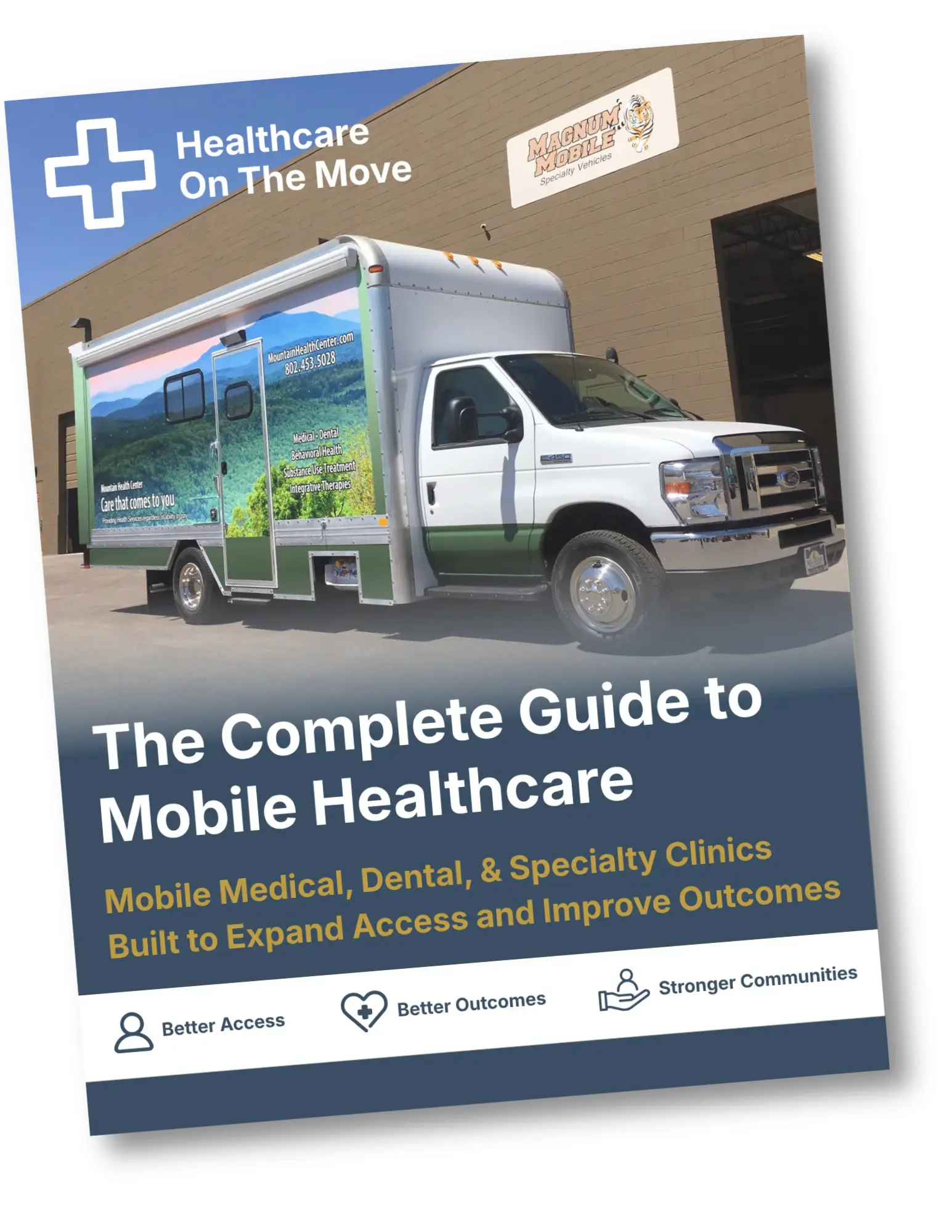
Get the Free Buyer Guide
Request the Mobile Healthcare Buyer Guide through the guide page.
Latest From Our Blog
Trusted Nationwide
Trusted by Leading Organizations
Trusted by healthcare providers, animal care programs, public agencies, universities, and nonprofit organizations for mobile specialty vehicles.







Built to Support
Organizations Across Every Sector
Delivering mobile solutions for healthcare, education, government, nonprofit, and commercial applications.
Healthcare
Education
Government
Non-Profit
Public Safety
Corporate
Ready to Get Started
Let’s Build a Solution That Moves Care Forward
Tell us about your operation and our team will help build the right mobile vehicle solution for your needs.