
Mobile Healthcare Funding Research
How to Research Funding for a Mobile Healthcare Program
Find opportunities by the health need, check eligibility and allowable costs, and prepare a sustainable program proposal.
Research mobile clinic funding by starting with the health need, the population served, the applicant organization, and the costs that need support. Then check official funding notices for eligibility, allowable expenses, deadlines, and application requirements.
Searches limited to “mobile clinic grants” can miss opportunities organized around rural access, preventive care, dental services, community outreach, or a particular population. The vehicle is the delivery tool; the program’s purpose should guide the search.
A grant that supports healthcare services does not automatically permit a vehicle purchase. Likewise, funding for a vehicle may not cover staffing and ongoing operations. Confirm both the purpose and the eligible costs of each opportunity.
This guide gives healthcare organizations a practical research process, official starting resources, and a checklist for deciding which opportunities deserve a closer review.
Funding availability and requirements change. Use the current official notice and the funding organization’s guidance for decisions. Magnum supplies vehicles and purchasing information; it does not administer grant programs or determine eligibility.
Define the Program Before Searching for Funding
Write a short funding brief first
- What health need will the program address?
- Who will receive services, and in which locations?
- Which organization will apply and operate the program?
- What vehicle, equipment, and services need funding?
- How will the program continue after the initial award?
Describe the access problem using information your organization can support. Explain why bringing services to the planned locations addresses that need.
Define the clinical services, staffing approach, host partners, and proposed schedule. A vehicle request is easier to evaluate when it belongs to a clear delivery plan.
Separate confirmed partners and resources from proposed ones. Identify the information still needed to establish demand, operating feasibility, and the program’s budget.
Use the same brief for internal discussions and funding research. It gives your team consistent search terms and a basis for checking whether an opportunity matches the program.
Start with Official Funding Resources
Grants.gov is an official starting point for researching federal funding opportunities for organizations and eligible entities. Review the opportunity itself rather than treating a search result as confirmation of eligibility.
HRSA’s grants page links to funding opportunities and application guidance. Its listings include open and closed opportunities, so check the current status and deadline of any program you find.
Research state and local agencies, community foundations, hospital or health-system partners, and mission-aligned donors as additional possibilities. Check each organization’s own published funding priorities and application process.
Search by Health Need, Population, and Location
Use several groups of search terms instead of relying on the vehicle name alone. Start with the health need and add the population or geography.
For example, a rural preventive-care program could research rural health access, community screening, and outreach funding alongside mobile healthcare. These are research terms, not claims that a particular award is available.
A dental program may also research oral health, school-based services, or underserved-community access, depending on its actual scope. Match the language to the services you plan to deliver.
Add your state, service area, eligible organization type, and relevant population when searching. A promising national summary may lead to an opportunity restricted to a particular applicant or location.
Use directories and search tools to discover possibilities, then return to the funder’s current notice. Record the official source and the date you reviewed it.
Screen Eligibility and Allowable Costs
Screen each opportunity before investing substantial time in an application. Begin with who can apply, where the project can operate, and the services or outcomes the funder supports.
Check whether your organization type and service area qualify. If the notice requires a partnership, consortium, or other arrangement, have the responsible team confirm how it applies to your proposal.
Check allowable costs separately: vehicle purchase, equipment, installation, staffing, supplies, travel, administration, and other operating expenses may be treated differently.
Review the project period, award timing, matching or cost-sharing requirements, reporting duties, and any conditions relevant to purchasing. Keep unclear requirements on an open-question list.
Ask the funder’s designated contact when the notice does not clearly explain whether the vehicle or equipment scope is eligible. Keep the response with your opportunity notes.
For federal applications, review registration and submission requirements early. HRSA’s application guidance directs applicants to mandatory registration, eligibility, preparation, and application-process resources.
Separate Vehicle Funding from Operating Support
Keep vehicle and equipment costs, other launch expenses, and recurring operating costs in separate subtotals. This makes it easier to match each requested cost to the funding notice.
Obtain a configured vehicle quote rather than relying only on an advertised starting price. Identify options, customer-supplied equipment, delivery, and unresolved scope decisions.
Use staffing and supply estimates from your own teams and vendors. Tie recurring costs to the service calendar and state the assumptions behind projected activity.
Identify any other funding sources and whether they are confirmed or still being sought. Ask the responsible finance team to review restrictions and the proposed use of each source.
Plan for the period after the initial award. Explain who will fund staff, supplies, vehicle upkeep, and equipment service when launch funding ends.
Track Opportunities and Prepare the Project Package
Keep a funding opportunity tracker
Record the funder, official link, program purpose, eligible applicants, service area, allowable costs, deadline, project period, open questions, and the person responsible for the next step.
Classify each opportunity as a potential fit, a confirmed mismatch, or needing clarification. A long list of links is less useful than a short list your team has screened.
Prepare a reusable project summary, budget, vehicle scope, partner descriptions, and supporting information about the need. Adapt the application to each notice rather than sending the same narrative unchanged.
Have the clinical, operations, finance, and grants teams review the proposal together. Confirm that the service commitments and requested resources match a program the organization can operate.
Magnum’s financing and funding resources offer additional starting links. Distinguish grant research from financing: financing has a separate provider review and repayment or other contractual obligations.
Mobile Clinic Funding FAQs
Where can we research mobile clinic funding?
Start with official federal resources such as Grants.gov and HRSA, then research state and local agencies, foundations, and partners aligned with your services and community. Verify current requirements with the funder.
Should we search only for mobile clinic grants?
No. Also search by the health need, services, population, geography, and applicant type. Opportunities may be organized around healthcare access or a specific service rather than the vehicle used to deliver it.
Can a healthcare grant pay for a mobile clinic vehicle?
It depends on the opportunity’s allowable costs and conditions. Review the official notice and confirm unclear vehicle or equipment expenses with the funder before including them in the request.
Does Magnum obtain grants for organizations?
Magnum manufactures mobile specialty vehicles and can provide vehicle scope and quote information. It does not administer grant programs or determine funding eligibility; applicants work with the funding organization.
Turn Funding Research into a Clear Next Step
Begin with a short program brief and a budget that separates the vehicle, launch needs, and recurring care costs. Use those documents to screen opportunities and prepare targeted questions.
Confirm the official notice, applicant eligibility, allowable costs, deadline, required registrations, and internal approval steps before starting a full application.
Explore Magnum’s mobile healthcare vehicles and the Mobile Healthcare Buyer’s Guide to clarify the vehicle requirements behind your proposal.
Request a configured vehicle quote for your planned services. An itemized purchase scope gives your funding team a clearer basis for discussing the project and its capital needs.
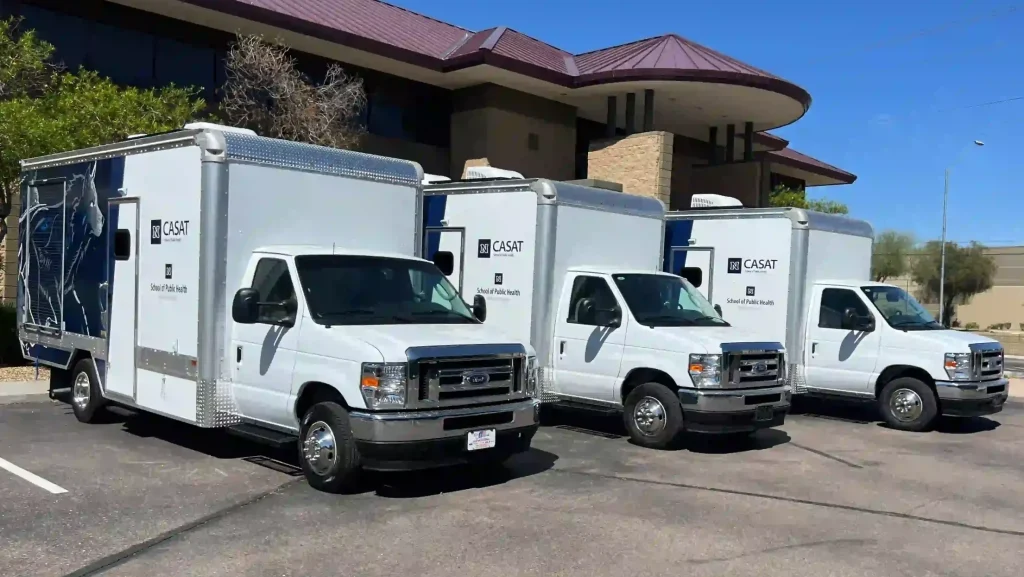
Clarify Your Healthcare Vehicle Scope
Define the vehicle, equipment, utilities, and access features your healthcare program needs.
Use a configured quote to support the vehicle portion of your program budget.
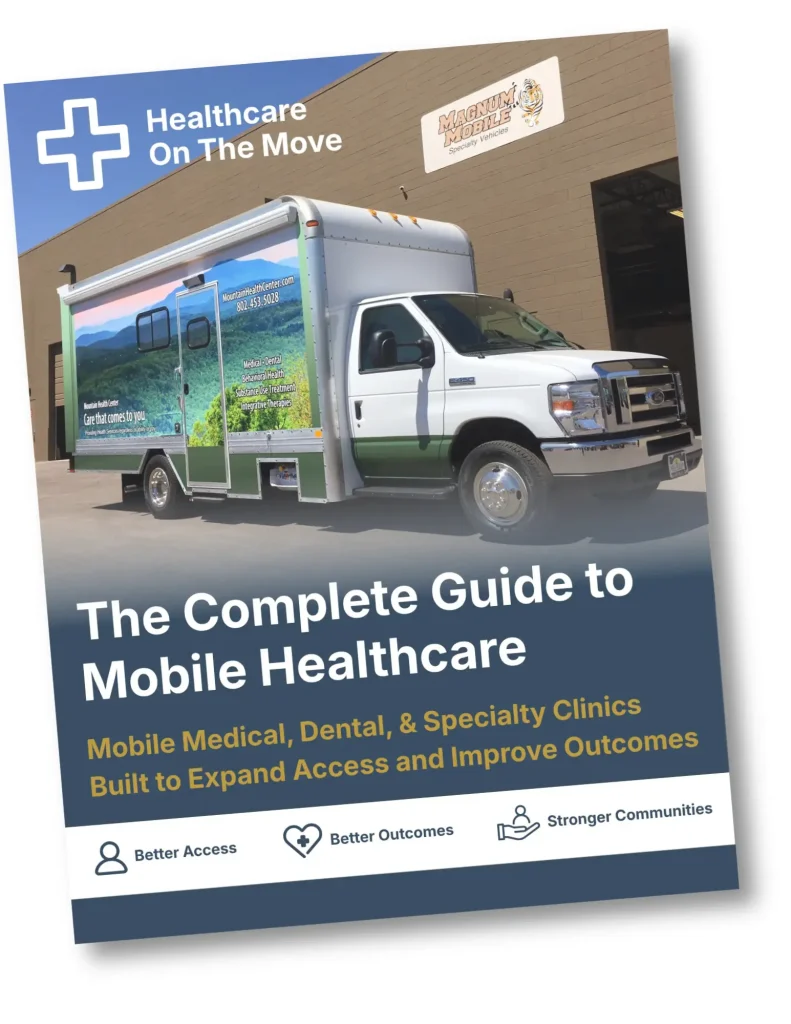
Prepare Your Healthcare Program
Organize your services, staffing, host sites, and purchasing questions with the buyer’s guide.
Latest From Our Blog
Trusted Nationwide
Trusted by Leading Healthcare Organizations
Trusted by healthcare providers, public agencies, universities, and nonprofit organizations to deliver high-quality mobile specialty vehicles.






Built to Support
Organizations Across Every Sector
Delivering mobile solutions for healthcare, education, government, nonprofit, and commercial applications.
Healthcare
Education
Government
Non-Profit
Public Safety
Corporate
Ready to Get Started
Let’s Build a Solution That Moves Care Forward
Tell us about your operation and our team will help build the right mobile vehicle solution for your needs.