
Mobile Clinic Solutions
What Makes a Mobile Medical Clinic Feel Like a Real Healthcare Facility?
See how thoughtful design turns a mobile clinic into a fully functional healthcare environment.
A mobile medical clinic is more than a vehicle with medical equipment inside. The right design creates a professional healthcare environment that supports patient care, staff workflow, privacy, comfort, and the day-to-day needs of the organization operating it.
When organizations begin exploring mobile healthcare, one of the first questions is often, “How much space do we need?”
But the better question is: “How do we want that space to work?”
A successful mobile medical clinic has to accomplish a lot within a limited footprint. Exam rooms, work areas, storage, equipment, technology, utilities, and patient spaces all have to work together. The layout needs to support the people providing care while creating a comfortable and professional environment for patients.
That means good mobile clinic design starts long before the vehicle is built.
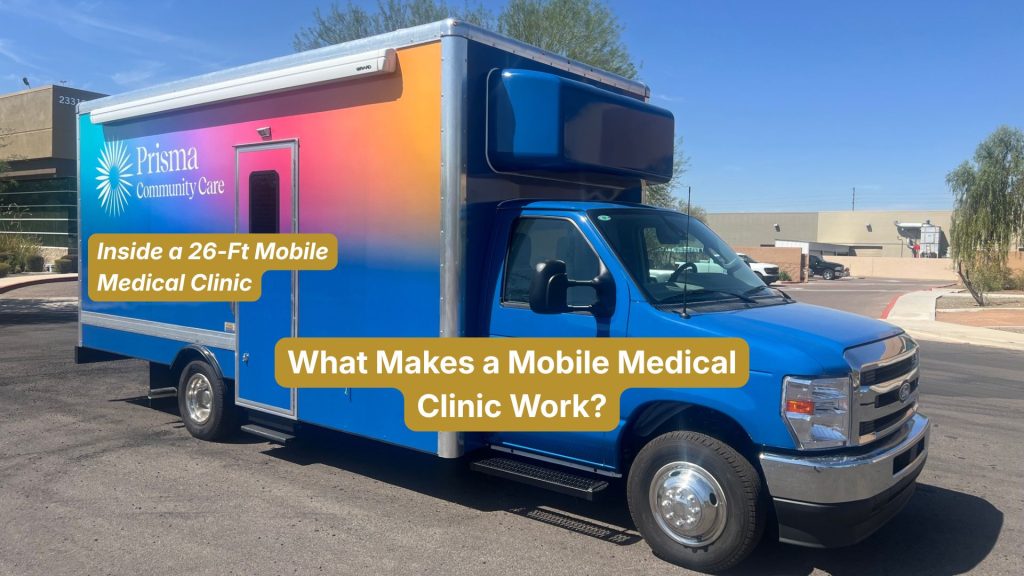
A Mobile Clinic Is More Than a Vehicle
The purpose of a mobile medical clinic is to bring healthcare services beyond the walls of a traditional facility.
Mobile clinics can help organizations expand access to care, reach different communities, support outreach programs, and bring healthcare services directly to patients. Magnum Mobile’s healthcare guide highlights applications including community health centers, hospitals and health systems, public health agencies, nonprofits, dental practices, and corporate or occupational health programs.
Because every organization operates differently, there isn’t one layout that works for every mobile clinic.
A clinic designed for preventative screenings may have different requirements than one focused on primary care. A program serving high patient volumes may prioritize a different workflow than a specialized healthcare program.
The vehicle should ultimately be designed around the mission, patients, services, and operational needs of the organization.
A Look Inside a 26-Ft Mobile Medical Clinic
One of the best ways to understand mobile clinic design is to see it in practice.
This 26ft mobile medical clinic shows how a compact space can become a professional healthcare environment with dedicated clinical areas, work surfaces, and storage.
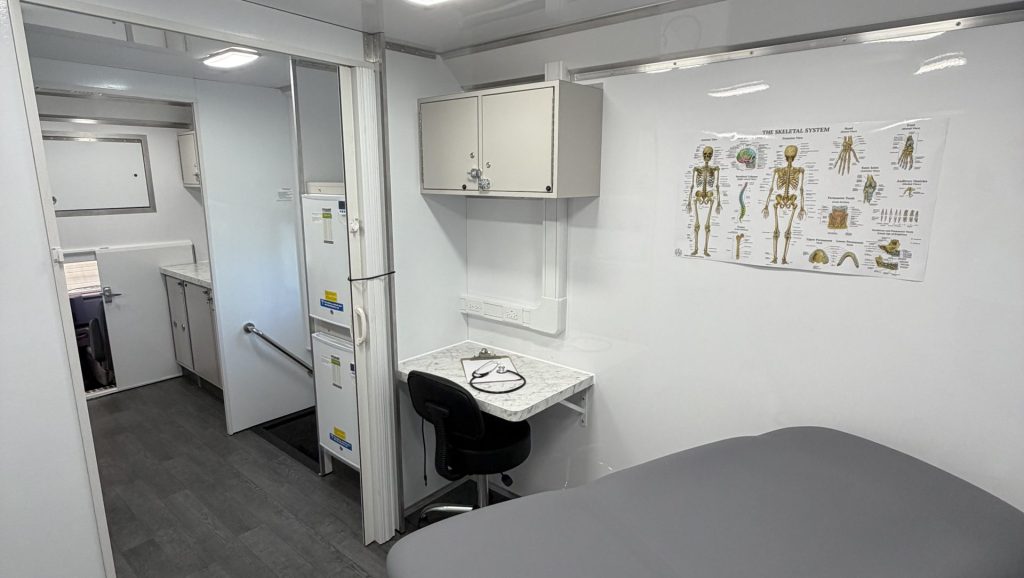
The goal isn’t just to fit equipment inside it’s to make every component work together to support patient care and daily operations.
Start With the Way Care Will Be Delivered
Before deciding how a mobile clinic should look, it helps to determine how it will actually be used.
What happens when a patient walks through the door? Where do they go first? Where does the provider work? Where are supplies stored? What equipment needs to be accessible? How does the patient move from one part of the clinic to another?
These questions might seem simple, but they can have a major impact on the final design.
Magnum’s Mobile Healthcare Buyer Guide recommends starting with several foundational questions, including the services the clinic will provide, expected patient volume, required equipment and technology, and where the clinic will operate.
Thinking through those details before construction allows the layout to be designed around the actual workflow rather than trying to fit the workflow into a predetermined space.
Make Every Square Foot Work
Space is one of the biggest considerations in a mobile medical clinic.
Unlike a traditional healthcare facility, a mobile clinic has a defined footprint. Every cabinet, counter, doorway, piece of equipment, and workspace needs to serve a purpose.
But maximizing space doesn’t mean simply putting more into the vehicle.
The goal is to create a layout where the available space feels organized and functional. Staff need enough room to perform their responsibilities, patients need a comfortable environment, and equipment and supplies need to be accessible without interfering with movement.
This is where thoughtful floor-plan design becomes especially important.
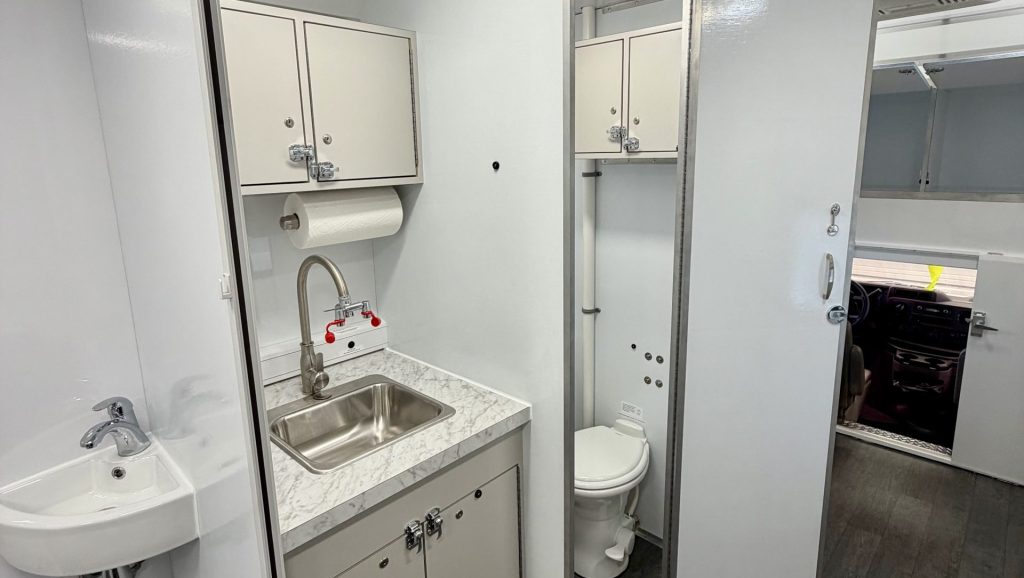
A few feet or even a few inches can influence how efficiently people move through the clinic.
Design Around Patient Care and Privacy
A mobile clinic still needs to feel like a healthcare environment.
Patients should be able to enter the clinic, receive care, and move through the space in a way that feels organized and professional.
Privacy is also an important part of the design. Exam areas need to be positioned and configured appropriately for the services being provided, while the overall layout should support a clear separation between patient areas and staff workspaces where necessary.
The goal is to create an environment where mobility doesn’t mean sacrificing the fundamentals of patient care.
The interior of a mobile medical clinic should be designed around patient care, patient comfort, efficient workflow, privacy, and safety.
Storage Should Be Part of the Workflow
Storage is easy to overlook during the planning process.
A clinic may require medical supplies, equipment, consumables, technology, cleaning supplies, and other materials. If those items aren’t organized properly, staff can spend unnecessary time searching for what they need or working around clutter.
Good storage design isn’t simply about having enough cabinets.
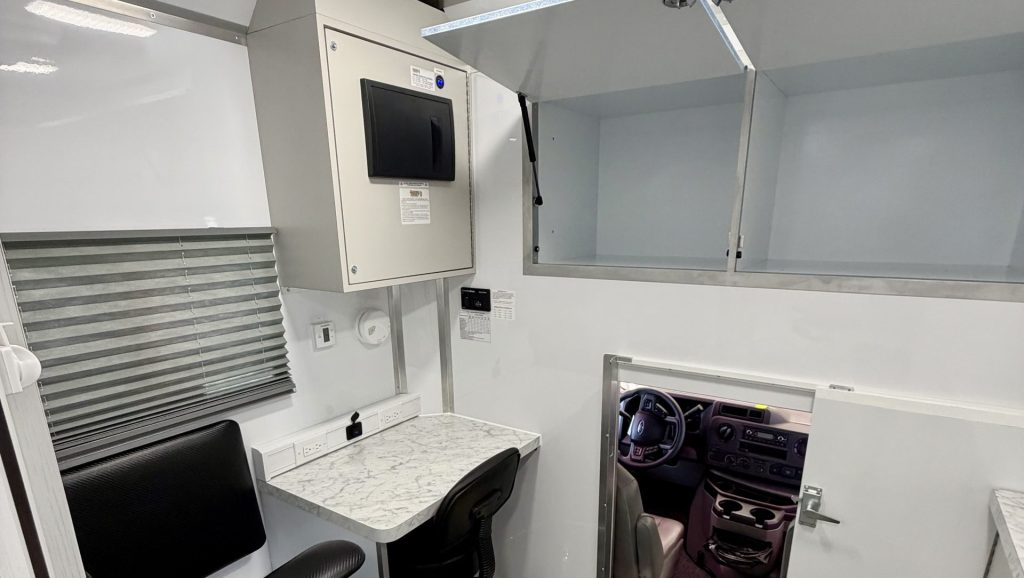
It’s about putting the right things in the right places.
Frequently used supplies should be accessible to the people who need them. Equipment should have an appropriate place when it’s not being used. Storage should also be incorporated into the overall layout rather than added as an afterthought.
Don't Forget the Systems Behind the Clinic
Much of what makes a mobile medical clinic functional isn’t immediately visible in photos.
Power, electrical systems, climate control, technology integration, and other infrastructure are all important parts of the finished environment.
Medical equipment and daily operations require reliable power. Patients and providers need a comfortable environment regardless of the conditions outside. Modern healthcare programs may also depend on connectivity, communications, and technology.
These systems have to be considered alongside the floor plan rather than treated as separate projects.
Ready to Design Your Mobile Medical Clinic?
If your organization is considering a mobile medical clinic, the process starts with understanding your goals and how you plan to deliver care.
Magnum Mobile Specialty Vehicles works with healthcare organizations to develop custom mobile clinics around their services, equipment, workflow, and operational requirements.
If you’re ready to begin planning your project, contact our team today or download our free Mobile Healthcare Buyer’s Guide to learn more about selecting the right mobile clinic for your organization.
If you’re still evaluating your budget, read our guide on How Much Does a Mobile Clinic Cost? before starting your project.
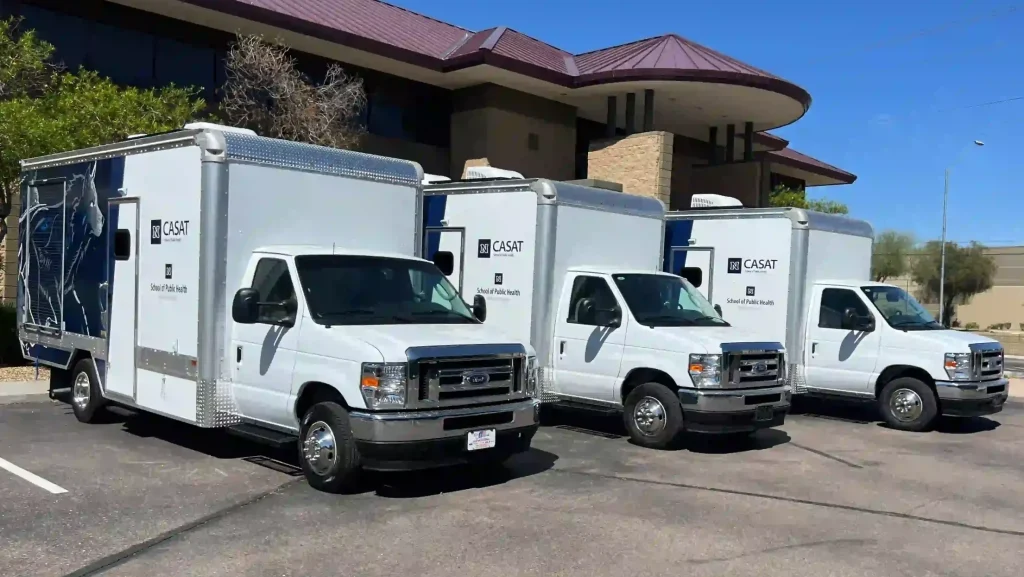
Which Is Right for You?
The best choice depends on your services, team size, budget, and where you’ll be providing care.
Our team can help you compare options and design the perfect mobile clinic for your mission.
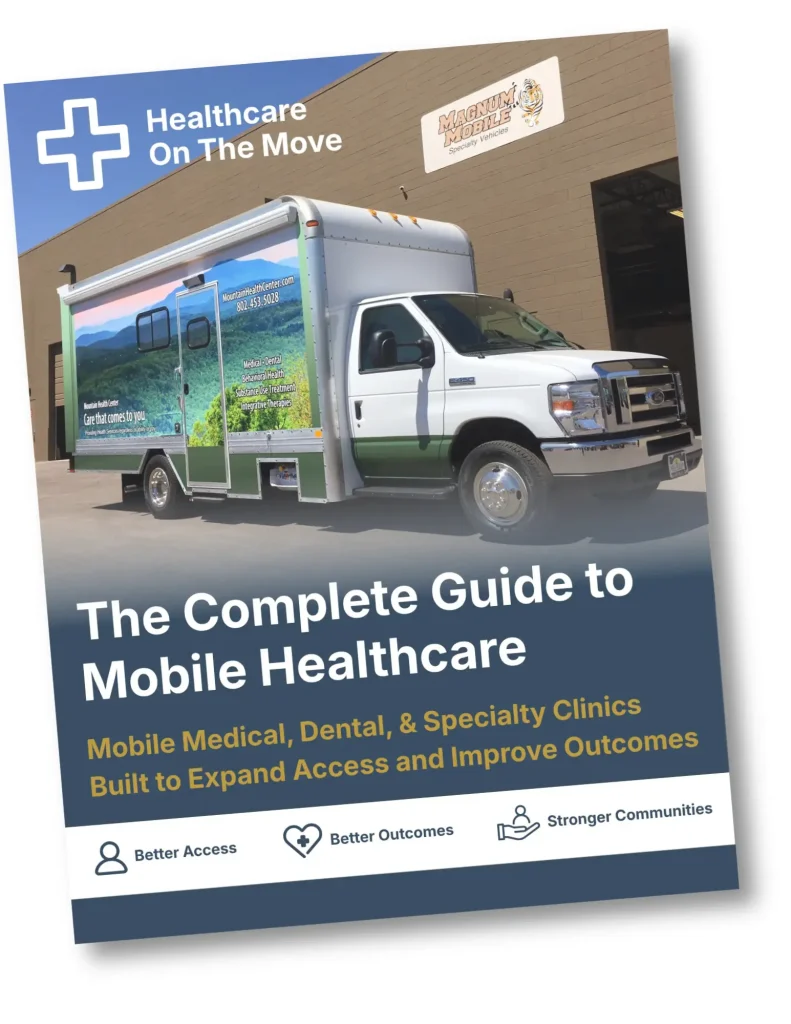
Need Help Deciding?
View our FREE Buyer’s Guide for expert insights, planning tips, and key considerations to help you make an informed decision.
Latest From Our Blog
Trusted Nationwide
Trusted by Leading Healthcare Organizations
Trusted by healthcare providers, public agencies, universities, and nonprofit organizations to deliver high-quality mobile specialty vehicles.







Built to Support
Organizations Across Every Sector
Delivering mobile solutions for healthcare, education, government, nonprofit, and commercial applications.
Healthcare
Education
Government
Non-Profit
Public Safety
Corporate
Ready to Get Started
Let’s Build a Solution That Moves Care Forward
Tell us about your operation and our team will help build the right mobile vehicle solution for your needs.