
Mobile Specialty Vehicles • Construction & Selection
Commercial Mobile Clinic vs. RV Conversion
Compare documented vehicle capabilities against the work your program requires
Quick answer
Compare a commercial mobile clinic and an RV conversion by reviewing the actual vehicle’s construction, condition, loading, layout, utilities, equipment installation, service access, documentation, and support. Labels alone do not establish suitability or reliability. Evaluate each proposed unit against your service model, route, staffing, equipment, and ownership requirements.
Buyers often use commercial mobile clinic and RV conversion as shortcuts for very different vehicle designs. A useful comparison goes beyond those labels to examine what the particular unit can support and what evidence is available.
Use the same operating brief for both options. That helps your team compare complete configurations and identify requirements that need inspection, supplier confirmation, or further review.
Magnum Mobile can discuss configurable layouts, commercial-grade materials, and integrated vehicle systems around your operating plan. Explore our mobile specialty vehicles and request the Mobile Healthcare Buyer Guide through its guide page.
1. Begin with a defined operating requirement
Describe the services and deployment pattern before judging a vehicle format. Include the work that occurs between visits and while the unit is in storage.
Use: List services, people or animals served, staff roles, planned equipment, and the complete visit workflow.
Deployment: Document travel frequency, roads and access conditions, host sites, storage, utilities, and the expected operating environment.
Ownership: Identify who handles driving, setup, maintenance, equipment care, records, and service coordination.
Comparison: Give the same requirements to each seller or builder. Mark differences in scope so a lower price is not mistaken for an equivalent configuration.
2. Review construction and condition with evidence
Ask for specific construction information and appropriate inspection of the actual unit. A vehicle description does not replace documentation or a condition review.
Materials and installation: Review the surfaces, cabinetry, equipment mounting, system arrangement, and intended use with qualified reviewers. For a used unit, include evidence of prior alterations and maintenance.

| Area | What to compare |
|---|---|
| Construction | Documented materials, installation, condition, and intended use |
| Vehicle capacity | Actual loading information and applicable manufacturer limits |
| Operation | Workflow, site access, utilities, storage, and servicing |
| Ownership | Records, available support, actual coverage, and maintenance needs |
3. Evaluate the complete layout and equipment installation
Review the actual drawing or vehicle with the people who will operate it. Empty floor space and vehicle length do not establish usable service capacity.
Workflow: Trace patient or animal access, staff movement, records, supplies, cleanup, and departure using a representative visit.
Equipment: Confirm exact models, dimensions, operating clearances, utility requirements, mounting, and suitability for the intended installation with relevant suppliers.
Loading: Have appropriate vehicle professionals review the proposed operating load, including equipment, supplies, people, and fluids where applicable.
Changes: Ask what alterations would be required for your program and have their feasibility and scope reviewed before assuming they are simple additions.
4. Compare utilities, maintenance access, and site fit
A useful clinic must support its selected equipment at the sites on its route. Review those interfaces on each actual option.
Systems: Compare the proposed electrical, climate, water, connectivity, and other required arrangements with equipment specifications and operating assumptions.
Simultaneous use: Identify what the team intends to operate together and ask the relevant professionals to assess the proposed configuration.
Service access: Check how technicians reach major components and what must be moved or removed for maintenance.
Site footprint: Include entrances, access features, doors, connections, and other deployed equipment when reviewing parking and host compatibility.
Travel: Confirm how equipment, supplies, and work areas are prepared and secured for movement under the vehicle and equipment instructions.
5. Compare the full ownership commitment
Include the work and costs required to put the unit into service and keep it available. Avoid inferring long-term reliability from the format alone.
Records: Request relevant vehicle, upfit, equipment, modification, and service information. Identify missing documents that affect the evaluation.
Support: Confirm service contacts, parts access, actual warranty terms, and responsibilities for the chassis, upfit, and equipment separately.
Budget: Include necessary configuration work, repairs, equipment, training, delivery, maintenance, and operating needs in the comparison.
Decision: Document why the chosen option fits the requirements and what remains subject to inspection, approval, or further supplier information.
6. Review your requirements with Magnum Mobile
Magnum Mobile offers configurable layouts, commercial-grade materials, and integrated vehicle systems around the program being planned. Discuss those features against specific operating requirements.
Bring the brief: Share services, staff roles, equipment specifications, route, host sites, and maintenance priorities.
Request a concrete comparison: Ask how the proposed Magnum configuration addresses the requirements and what is included in the written scope.
Explore options: Review Magnum’s specialty vehicles and our consultation-to-delivery process. Compare actual configurations rather than relying on labels.
Discuss your mobile clinic requirements with Magnum Mobile. A clear brief helps the vehicle review focus on fit, usable workflow, and ownership needs.
Commercial Clinic and RV Conversion FAQs
Is every RV conversion unsuitable for mobile care?
No. Suitability depends on the actual unit, installation, condition, documentation, and operating requirements. Evaluate specific evidence rather than making a decision from the label alone.
Does a commercial label guarantee reliability?
No label replaces a review of construction, configuration, maintenance, records, and support. Assess the actual proposed vehicle and ownership plan.
What should an inspection cover?
Use qualified reviewers for the relevant chassis, upfit, equipment, loading, systems, condition, and proposed alterations. Define the inspection scope around the intended operation.
How can we compare proposals fairly?
Use the same service and operating brief, identify inclusions and exclusions, and compare the full work needed to launch and operate each option.
Compare Vehicle Construction Around Your Program
Bring Magnum Mobile the requirements behind your vehicle decision. The team can discuss configurable layouts and integrated systems around the actual workflow, equipment, route, and ownership plan.
Explore Magnum’s mobile specialty vehicles and compare configurations for your program.
Discuss Your Vehicle
Compare actual construction, configuration, condition, and support.
Bring a defined operating brief to your Magnum vehicle review.
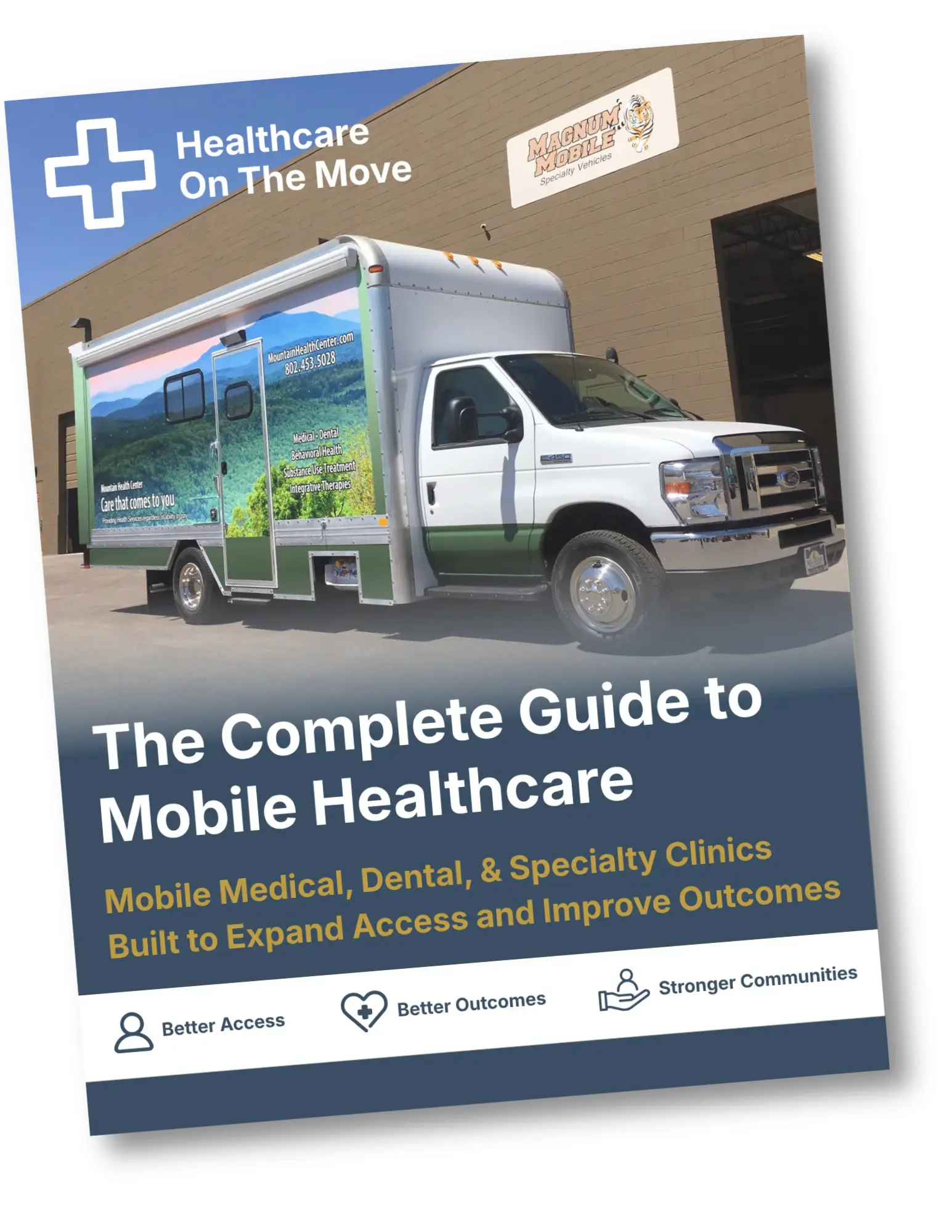
Get the Free Buyer Guide
Request the Mobile Healthcare Buyer Guide through the guide page.
Latest From Our Blog
Trusted Nationwide
Trusted by Leading Organizations
Trusted by healthcare providers, animal care programs, public agencies, universities, and nonprofit organizations for mobile specialty vehicles.







Built to Support
Organizations Across Every Sector
Delivering mobile solutions for healthcare, education, government, nonprofit, and commercial applications.
Healthcare
Education
Government
Non-Profit
Public Safety
Corporate
Ready to Get Started
Let’s Build a Solution That Moves Care Forward
Tell us about your operation and our team will help build the right mobile vehicle solution for your needs.