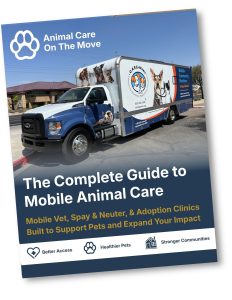
The best mobile spay and neuter clinic for a municipal partnership is the unit that fits the participating communities’ clinical plan, staffing, animal flow, host sites, and operating responsibilities. Compare a trailer and drivable layouts against the same requirements. Magnum Mobile Specialty Vehicles offers configurable spay/neuter vehicles that give municipalities and their veterinary partners concrete options to evaluate.
A city, county, shelter, and nonprofit may support the same outreach goal while contributing different resources. One partner might own the vehicle, another provide clinical staff, and a third manage appointments. Choose the operating arrangement before finalizing the floor plan so the vehicle supports the partnership you can actually run.
What Should a Municipal Partnership Decide Before Choosing a Clinic?
Write a shared service brief with the communities to be served, intended patients, host locations, clinical services, staffing assumptions, and proposed visit schedule. Identify one program coordinator who can collect decisions and keep the vehicle specification current.
Keep the outreach goal separate from an untested production target. A surgery table or cage count does not establish daily procedure capacity. The veterinary lead should determine a suitable schedule using the clinical team, patient mix, preparation, recovery, and follow-up arrangements.
If you are still deciding how organizations will work together, our guide to sharing a mobile animal care unit covers broader partnership planning. This article focuses on translating that arrangement into vehicle selection.
On a small screen, swipe the table sideways to see every column.
| Decision | Agree before specifying the vehicle | Vehicle implication |
|---|---|---|
| Ownership and coordination | Name the owner, program coordinator, and partners authorized to approve changes. | One approved layout, equipment list, and point of contact. |
| Clinical operation | Identify the veterinary provider and the services it will deliver. | Workspace, equipment, animal holding, and recovery requirements. |
| Host locations | Assign site approval, parking coordination, utilities, and arrival access. | Operating footprint and power connections that fit actual sites. |
| Transport and storage | Name the driver or towing team and the overnight storage provider. | Drivable versus trailer selection and fleet review. |
| Care-day support | Assign scheduling, client communication, intake support, and follow-up coordination. | Intake location, storage, documentation workspace, and circulation. |
| Ownership costs and downtime | Agree who handles service bookings, repairs, consumables, and visit changes. | Support contacts, maintenance access, and a workable contingency plan. |
Should Municipal Partners Choose a Trailer or a Drivable Clinic?
Compare complete deployments. A trailer needs a suitable towing arrangement, maneuvering space, and a plan for positioning and securing it at each stop. A drivable clinic combines transport and clinical space, while still requiring an appropriate driver, route review, parking, and storage.
- A trailer may fit a repeated host-site arrangement when towing resources and setup responsibilities are clear.
- A drivable clinic may fit a route between communities when the operating team can manage the selected vehicle and its travel schedule.
- A larger layout may provide more working space, but it must still fit the sites and the team’s operating plan.
Have the fleet team review the selected configuration, loaded vehicle or towing requirements, and applicable driving requirements before purchase. Do not choose by the label “mobile clinic” alone.
Which Magnum Spay and Neuter Layouts Should You Compare?
On a small screen, swipe the table sideways to see every column.
| Option | Published layout starting point | Partnership question |
|---|---|---|
| 25ft Spay and Neuter Clinic Trailer | Separate exam/preparation and surgery areas, recovery space, and onboard utilities. | Who will tow, position, connect, store, and maintain the trailer? |
| 26ft Mobile Spay and Neuter Clinic | A Ford E-450 drivable platform with exam/treatment space, an enclosed surgery area, and recovery cage space. | Does the proposed layout fit the clinical team and planned community route? |
| 37ft Mobile Spay and Neuter Clinic | A Ford F-650 platform with expanded working and recovery space. | Can the sites accommodate the larger operating footprint, and which stations are included in the quote? |
Review current floor plans and itemized equipment with Magnum. Published descriptions and option lists can cover different configurations; confirm table quantities, anesthesia-related equipment, clinical devices, cages, access features, and utility scope in the selected proposal.
What Should Each Host Site Confirm?
Ask each host for measurements and photos showing the approach, parking position, overhead or side obstacles, and the space around doors, steps, ramps, or lifts where specified. Include the tow vehicle and setup area for a trailer. Your operating footprint is larger than the vehicle’s parked outline.
Document the available power connection and the clinic’s proposed power source, water arrangements, waste handling, public waiting area, communications, and restroom arrangements for the team. Have the appropriate facilities and vehicle specialists confirm compatibility.
A site used for one configuration may not work for another. Keep a separate approval record for each location and selected unit. Use the host-site planning checklist to organize the review.
An Example of Turning a Partnership Into a Vehicle Brief
Illustrative scenario, not a Magnum customer case study: two municipalities want a nonprofit veterinary team to visit community sites on alternating weeks. Before ordering a two-table configuration, the partners identify who owns the unit, where it stays overnight, who drives or tows it, and how clinical staffing and recovery will work.
They give Magnum the service brief, equipment list, host-site photos, and route assumptions. The team then compares a trailer and drivable floor plan using the same requirements. The decision is based on the shared operation, rather than a presumed number of surgeries per day.
Why Include Magnum in the Selection Process?
Magnum’s value in this discussion is the ability to connect the program brief to actual vehicle formats, configurable workspaces, equipment integration, and onboard systems. Its build process provides a path from consultation and configuration through manufacturing, delivery, and support.
Ask Magnum to walk the municipal, fleet, and clinical representatives through the proposed floor plan together. Request a written scope that distinguishes included items, options, customer-supplied devices, and responsibilities after delivery.
Municipal Mobile Spay and Neuter Clinic FAQs
Can more than one municipality use the same mobile clinic?
A shared route can be considered when the partners agree on ownership, scheduling, staffing, transport, host sites, costs, and coordination. Review the selected vehicle against the combined service plan before committing to it.
What size clinic is best for a municipal partnership?
There is no universal size. Compare the team, services, patient flow, recovery needs, travel, and available sites with dimensioned layouts. Additional space is useful only when it supports the program and can be deployed at its locations.
Does a second surgery table guarantee more procedures?
No. A table is one part of the workflow. Clinical staffing, patient selection, preparation, monitoring, recovery, and the available operating day must support the planned schedule. Confirm whether the second table is included or optional.
Who determines the clinical and licensing requirements?
The veterinary provider and the relevant professional or regulatory advisers should resolve applicable requirements. A vehicle proposal documents the physical configuration; it does not replace clinical oversight or program approvals.
What should we send Magnum first?
Send the partner roles, proposed services, team outline, equipment list, typical host sites, route, storage arrangement, funding stage, and target launch window. Identify the open decisions so the consultation can address them.
Discuss Your Municipal Spay and Neuter Vehicle With Magnum
Start with a vehicle scope your partners can evaluate together. Explore Magnum’s mobile spay and neuter clinics, request the free Mobile Animal Care Buyer Guide, or discuss your municipal partnership with Magnum.
Vehicle details reviewed November 10, 2026 against the linked Magnum product pages. Your veterinary lead can also consult the AVMA’s spay/neuter resources when defining the clinical program.