
Animal Care Partnerships • Shared Vehicle Planning
How Municipalities and Shelters Can Share a Mobile Animal Care Unit
Agree on the operating model before choosing a vehicle for several organizations
Quick answer
Municipalities and shelters can evaluate a shared mobile animal care unit by agreeing on its services, responsible operator, partner roles, calendar, costs, clinical oversight where needed, and upkeep. Compare each partner’s animals, equipment, workflows, sites, and staffing before choosing a configuration. A shared purchase only becomes a workable program when the partners can operate and support it consistently.
A shared unit can bring several organizations into one vehicle project, but each partner may arrive with a different idea of what the vehicle should do. One may prioritize veterinary outreach, another adoption events, and another transport or emergency support.
Start by deciding which uses belong in the launch program. Document the operating responsibilities and constraints before combining every partner’s wish list into the vehicle specification.
Magnum Mobile can discuss configurable layouts, commercial-grade materials, and integrated vehicle systems around your operating plan. Explore our mobile animal care vehicles and request the Mobile Animal Care Buyer Guide through its guide page.
1. Agree on a shared purpose and initial service scope
Hold an operating-planning meeting with the people responsible for each proposed use. Include veterinary leadership when clinical services are under consideration.
Community purpose: Describe the service or access problem the partnership intends to address, the animals and communities served, and how each organization contributes.
Launch services: Separate confirmed first-phase uses from future possibilities. Veterinary care, adoption events, and transport can create different equipment, space, staffing, and animal-care needs.
Service boundaries: Identify what happens onboard, what happens at a host site, and what remains with another facility. Confirm that the proposed activities work together operationally.
Decision rule: Agree how partners will evaluate a request to add services later. A shared vehicle should have an approved operating purpose rather than change scope with every event request.
2. Assign responsibility for the complete operation
Identify who will own or administer the unit and who will operate it at each deployment. Give each task a named organizational owner and an escalation contact.
Working agreement: Document decision authority, operator responsibilities, staffing, host commitments, equipment use, records, costs, upkeep, and the response when the planned arrangement is unavailable. Have the responsible teams review the agreement before launch.
| Responsibility | Question partners should resolve |
|---|---|
| Vehicle and equipment | Who maintains the inventory, authorizes changes, and coordinates support? |
| Service delivery | Who supplies staff, clinical leadership where applicable, supplies, and follow-up? |
| Deployment | Who drives, checks readiness, coordinates hosts, and completes shutdown? |
| Program decisions | Who resolves conflicts, approves new uses, and reviews results? |
3. Build a calendar around real deployment constraints
Create a shared calendar that includes more than event dates. Review the time and resources needed before, during, and after each deployment.
Booking rules: Define how partners request dates, confirm staffing and sites, change bookings, and handle competing priorities. Identify when a request becomes a confirmed event.
Travel and turnover: Allow for driving, setup, cleaning, restocking, equipment changes, shutdown, and return to storage. Different uses may require a defined changeover process.
Site readiness: Obtain parking measurements, access photos, utility details, client or public waiting arrangements, and host contacts. Check the unit’s complete operating footprint at representative sites.
Downtime: Reserve time for preventive maintenance, inspections, equipment service, training, and unexpected repairs. Agree who communicates a service interruption to the affected partners.
4. Compare each partner’s space and equipment needs
Ask every partner to provide the same service-and-equipment brief. Compare the requirements before choosing one vehicle configuration for the group.
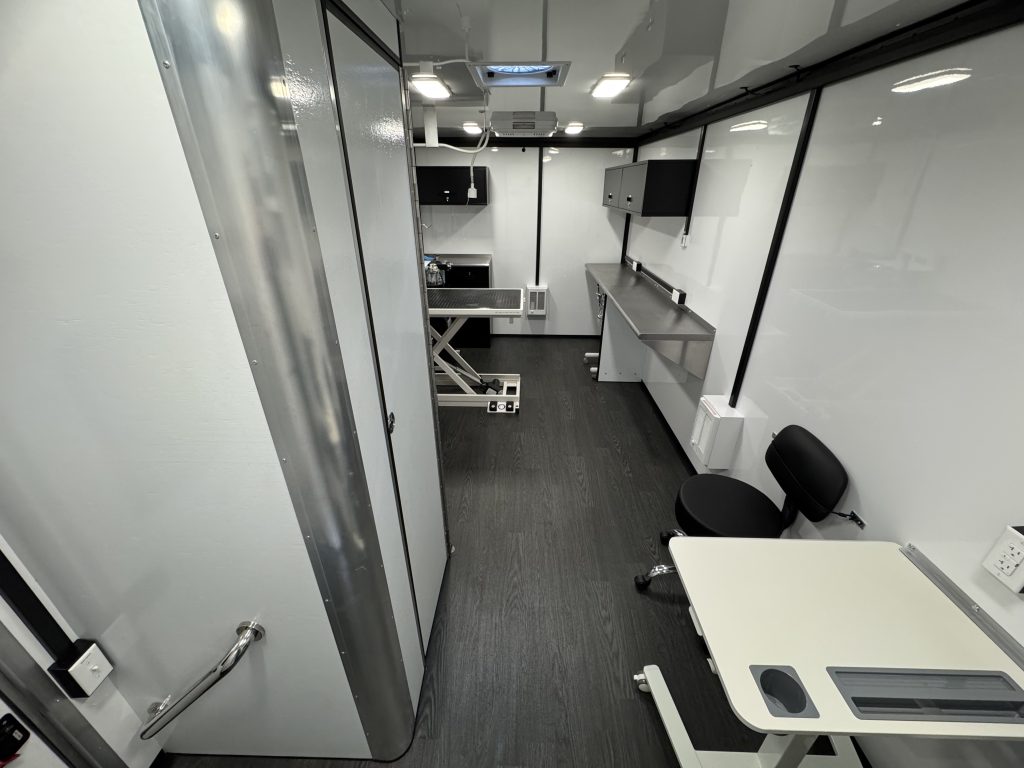
Animal flow: Map animal arrival, handling, any holding, care or public interaction, and departure. Record species, size ranges, supervision, and care-team requirements for each use.
Equipment: Provide device dimensions, weights, mounting needs, utilities, working clearances, and service access. Identify who supplies each item and whether it stays installed.
Storage: Plan secure spaces for supplies, records or devices, handling equipment, cleaning materials, and used items or waste under the operating procedures. Decide what remains onboard between partners.
Service changes: Describe the work required to change from one use to another. Review cleaning, stocking, equipment movement, staff preparation, and any limitations with the builder and clinical team.
Scope discipline: If requirements conflict, compare a narrower shared launch scope with other ways to deliver the remaining services. A larger vehicle does not automatically resolve incompatible workflows.
5. Plan recurring resources and performance review
Build a combined operating plan alongside the acquisition proposal. Make the assumptions visible so each partner understands the resources the schedule depends on.
Recurring costs: Identify staffing, supplies, fuel, storage, utilities, communications, cleaning, maintenance, equipment service, and administrative coordination. Record which costs are estimated and which are supported by quotes or experience.
Partner commitments: Distinguish confirmed contributions from possible grants, donations, volunteers, or future funding. Identify who tracks commitments and reviews gaps before events are scheduled.
Records and reporting: Decide how partners will keep operational information, manage access to relevant records, and share program results. Have responsible clinical and administrative teams define their requirements.
Review measures: Track deployments, services delivered, cancellations, staff workload, animal-care or client feedback, operating costs, and downtime. Review results in context and update the schedule or scope when assumptions change.
6. Present Magnum with one coordinated vehicle brief
Magnum Mobile can discuss a configured animal-care vehicle around the partnership’s agreed operating plan. A coordinated brief helps keep the design conversation clear across organizations.
Program information: Bring launch services, animals served, workflows, staffing, supervision requirements, sites, calendar assumptions, storage, and the proposed operator.
Technical information: Consolidate equipment specifications, utility needs, working clearances, supplies, changeover requirements, and the division of supply and installation responsibilities.
Configuration review: Explore Magnum’s mobile animal-care vehicle options and our planning-to-delivery process. Identify one group contact to coordinate decisions and written scope reviews.
Discuss your shared animal-care vehicle project with Magnum Mobile once partners have defined the operation the unit must support.
Shared Mobile Animal Care Unit FAQs
Can a municipality and shelter use one animal-care vehicle?
They can evaluate a shared arrangement when the intended services, animals, equipment, staffing, sites, calendar, and care requirements are compatible with a specific configuration. Define operating responsibilities before purchasing.
What should partners decide before requesting a vehicle quote?
Agree on launch services, the responsible operator, staff and host commitments, equipment needs, scheduling, upkeep, recurring resources, decision authority, and the point of contact for the vehicle project.
Can the unit switch between veterinary care and adoption events?
Review the actual workflows, equipment, animal care, cleaning, staffing, and changeover requirements with the builder and responsible veterinary team. Do not assume every configuration supports every use.
Who should coordinate the vehicle discussion with Magnum?
Choose a lead contact who can consolidate the partners’ requirements and obtain decisions from the responsible teams. Bring one coordinated service, equipment, and deployment brief to the consultation.
Plan a Shared Animal-Care Vehicle With Magnum
Magnum Mobile helps organizations connect an agreed operating plan with configurable animal-care spaces, commercial-grade materials, and integrated vehicle systems. Bring your partners’ requirements together so our team can discuss a configuration around the shared program.
Explore Magnum’s mobile animal care vehicles and compare configurations for your program.
Request the free Mobile Animal Care Buyer Guide to prepare your purchase planning questions.

Discuss Your Vehicle
Agree on services, partner roles, scheduling, and support before selecting a shared vehicle.
Bring one coordinated animal-care workflow, equipment list, and deployment brief to Magnum.
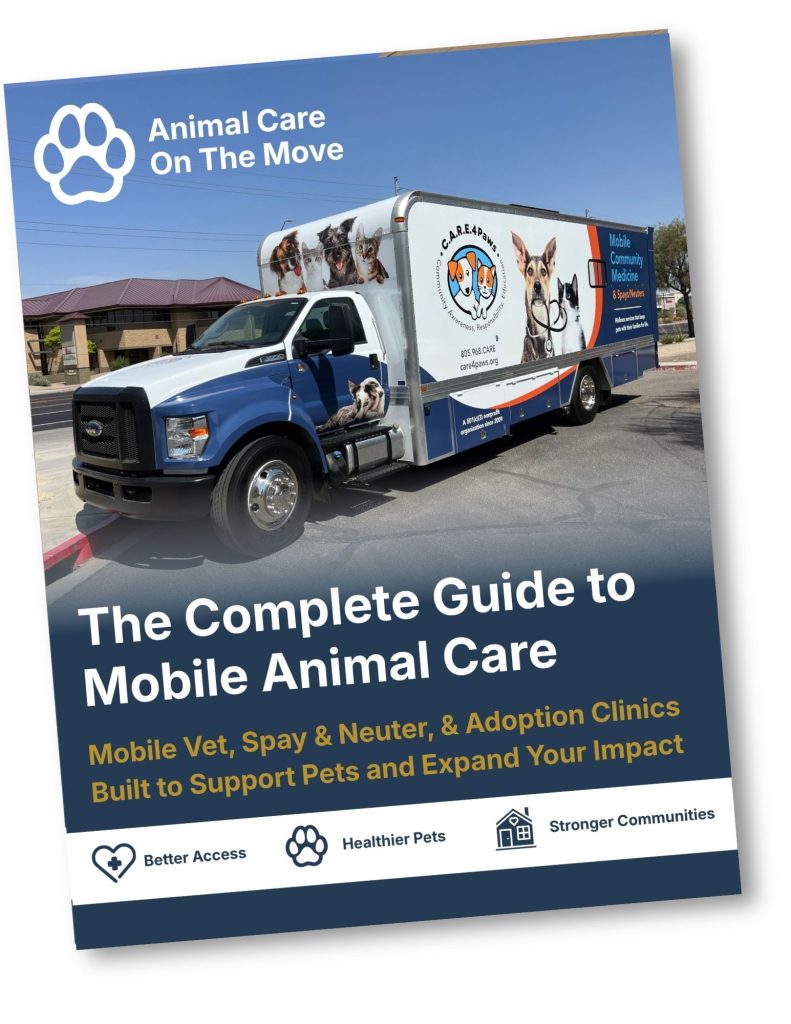
Get the Free Buyer Guide
Request the Mobile Animal Care Buyer Guide through the guide page.
Trusted Nationwide
Trusted by Leading Organizations
Trusted by healthcare providers, animal care programs, public agencies, universities, and nonprofit organizations for mobile specialty vehicles.







Built to Support
Organizations Across Every Sector
Delivering mobile solutions for healthcare, education, government, nonprofit, and commercial applications.
Healthcare
Education
Government
Non-Profit
Public Safety
Corporate
Ready to Get Started
Let’s Build a Solution That Moves Care Forward
Tell us about your operation and our team will help build the right mobile vehicle solution for your needs.