
Mobile Clinic Service Planning
How to Define the Services Your Mobile Clinic Will Offer
Choose Your Services Before Choosing Your Vehicle
Define your mobile clinic’s services by matching a specific community need with the care your team can deliver consistently. Document who you serve, what happens during each visit, the staff and equipment required, and how follow-up works. Use that service plan to guide vehicle selection and layout.
A broad idea such as “mobile healthcare” or “animal care outreach” is a starting point. A builder needs a more specific picture of the work: examinations, treatment, screening, wellness visits, surgery, adoption events, or another defined service.
Different services create different demands on rooms, storage, utilities, scheduling, and staffing. Adding a service late in design can introduce requirements the original configuration was never intended to support.
Magnum Mobile builds specialty vehicles around an organization’s operating goals and equipment needs. A clear service brief gives your team and Magnum a practical basis for discussing configurations and project scope.
Use these steps to define an initial service offering, identify boundaries, and separate launch requirements from possible future additions.
Identify the Audience and the Access Gap
Start with the people or animals the program intends to serve and the problem it addresses. Review community feedback, existing service availability, partner observations, and your organization’s experience.
Audience: Describe the intended patients, clients, or animals and the needs the team expects to encounter. Include communication, access, and appointment considerations.
Access gap: Explain why current services are difficult to use. Consider location, transportation, timing, or another documented barrier rather than assuming mobility solves every problem.
Initial reach: Choose a practical service area and schedule. Your opening plan should fit the staff, partners, and operating resources available.
Write a purpose statement in plain language: “Our mobile program will provide these services to this group at these locations, with this path for ongoing care.”
Write a Specific Initial Service List
Create a service list with enough detail to plan a visit. For each service, describe the task, expected appointment format, clinical or operational roles, equipment, supplies, and follow-up steps.
A medical program might distinguish screening from continuing primary care. A dental team might separate assessments from treatment. An animal-care program might distinguish wellness visits, surgery, transport, and adoption activities.
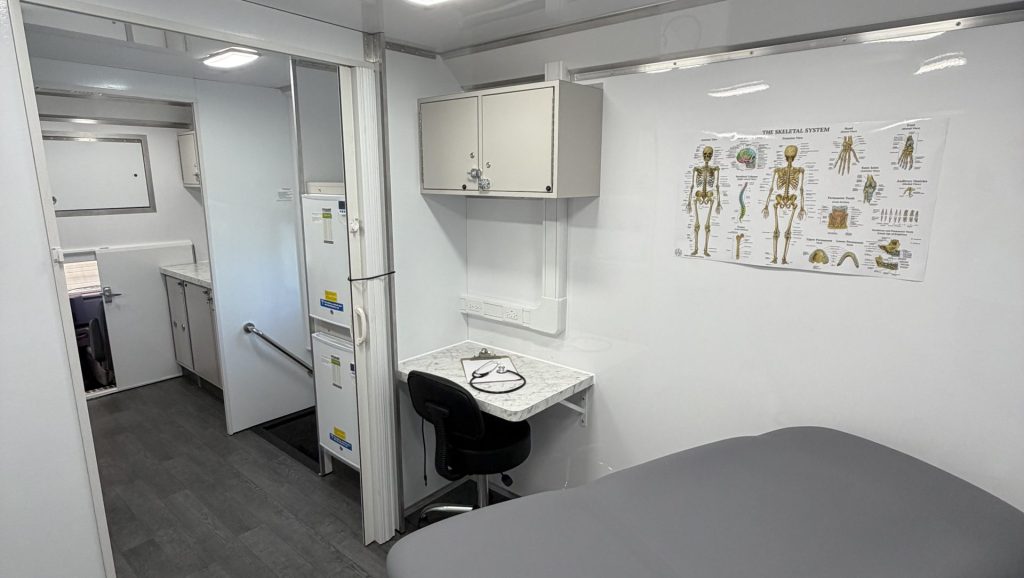
Have the qualified clinical or animal-care team define the service scope and protocols. The vehicle brief translates those decisions into physical requirements; it does not replace professional program planning.
Test Each Service Against Available Resources
Test every proposed service against the resources needed to deliver it reliably. A useful idea may still belong in a later phase if staff, equipment, partners, or recurring funding are unresolved.
Staff capability: Identify the roles needed for the visit and support tasks. Confirm who provides coverage and how the schedule fits existing responsibilities.
Equipment and supplies: List the actual equipment and replenishment needs. Discuss installation and utility requirements before treating the service as part of the final build.
Operating time: Estimate appointments alongside travel, setup, documentation, cleaning, restocking, and shutdown. Avoid using the entire day as available visit time.
Follow-up capacity: Define how results, referrals, repeat visits, client questions, or other service-specific handoffs will be handled after deployment.
Map the Visit and the Full Operating Day
Map a complete operating day for the proposed services. Follow the patient, client, animal, staff, and supplies through each step to reveal where space or responsibility is missing.
Before arrival: Explain booking, eligibility or appointment instructions where applicable, communication, records preparation, and coordination with the host.
During the visit: Map intake, waiting, assessment, care, documentation, and departure. Identify privacy and accessibility needs within the expected workflow.
Between visits: Include turnover, cleaning, equipment readiness, supply replenishment, and staff tasks that affect the next appointment.
After the event: Assign follow-up, restocking, waste handling where applicable, shutdown, vehicle storage, and preparation for the next deployment.
Review this map with the people doing the work. A short walk-through can expose conflicts between simultaneous services before those conflicts become layout problems.
Translate Services Into Vehicle Requirements
Convert the agreed workflow into a vehicle requirements list. Distinguish features necessary for launch from preferences and possible additions.
Spaces: Identify intake, examination or treatment, storage, privacy, and any other areas required by the service plan. Describe what happens in each area.
Equipment: Provide models, dimensions, clearances, weight, mounting needs, and utilities. State who supplies each item and which specifications remain open.
Deployment: Include routes, driving or towing needs, parking and setup space, host utilities, weather exposure, and overnight storage.
Review Magnum’s specialty vehicle options against this list. Discuss the configuration around your confirmed services rather than adding services to fit a vehicle chosen too early.
Separate Launch Services From Future Additions
Separate the launch offering from future ambitions. A phased plan gives the organization a way to learn while keeping the first build and operating budget clear.
Launch now: List the services the team is prepared to staff, equip, fund, and support at the opening schedule.
Consider later: Record possible additions and the resources or evidence needed before proceeding. Ask the builder which future ideas would affect today’s design decisions.
Review performance: Compare demand, staff workload, visit completion, follow-up, costs, and feedback with the assumptions used to define the offering.
Keep a dated service brief and decision list. When the plan changes, review the effect on staffing, equipment, utilities, layout, and launch timing before expanding the scope.
Mobile Clinic Service Planning FAQs
Should we offer every service our community needs?
Start with services your team can deliver and support consistently. Use community needs to set priorities, then evaluate staff, equipment, operating resources, and follow-up capacity for each proposed service.
Can one mobile clinic support multiple services?
That depends on the configuration and service requirements. Discuss shared spaces, equipment, utilities, storage, and whether activities occur together or on separate schedules.
Should the service plan come before the floor plan?
Yes. The service workflow and equipment requirements give the builder a basis for planning rooms, circulation, storage, and systems around the intended work.
What if we want to add services after launch?
Document likely additions and discuss them early with the builder. Later expansion may require different equipment, space, staffing, or vehicle changes, so do not assume every addition is straightforward.
Turn Your Service Plan Into a Magnum Vehicle Discussion
Magnum Mobile helps organizations connect service goals with specialty vehicle design. Bring your initial offering, workflow map, equipment list, and future priorities to a consultation.
Review Magnum’s consultation-to-delivery process and use it to organize the decisions your team needs to make as the project develops.
For service and vehicle planning considerations, request the Mobile Healthcare Buyer Guide or the Mobile Animal Care Buyer Guide for your program.
Ready to turn your service plan into a vehicle discussion? Contact Magnum Mobile and explore a configuration built around the work your team plans to deliver.
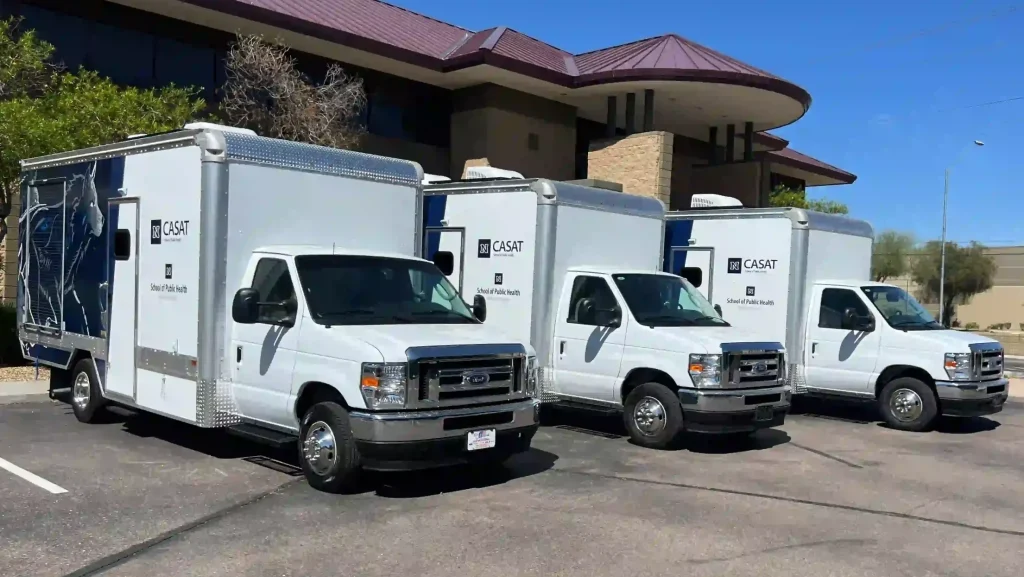
Discuss Your Mobile Services
Bring your service priorities, operating workflow, and equipment needs to a Magnum consultation.
Explore medical, dental, and animal-care vehicle configurations for your proposed services.
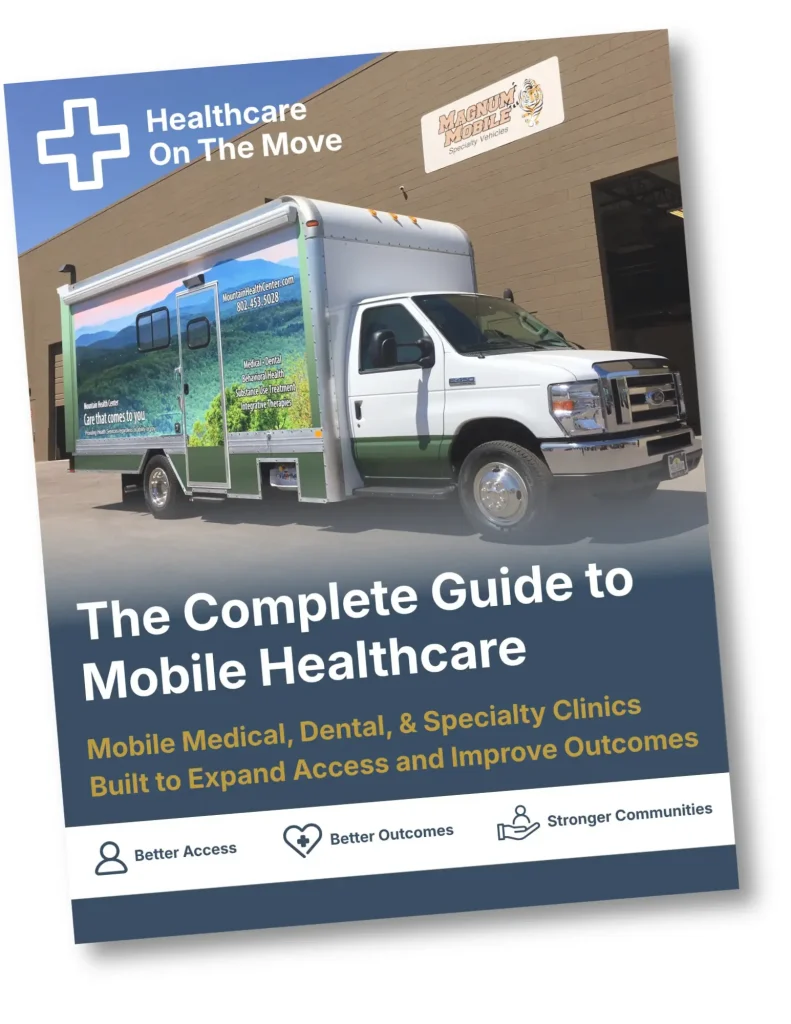
Explore Specialty Vehicle Options
Request a buyer guide to prepare your service and vehicle planning questions.
Trusted Nationwide
Trusted by Leading Healthcare Organizations
Trusted by healthcare providers, public agencies, universities, and nonprofit organizations to deliver high-quality mobile specialty vehicles.







Built to Support
Organizations Across Every Sector
Delivering mobile solutions for healthcare, education, government, nonprofit, and commercial applications.
Healthcare
Education
Government
Non-Profit
Public Safety
Corporate
Ready to Get Started
Let’s Build a Solution That Moves Care Forward
Tell us about your operation and our team will help build the right mobile vehicle solution for your needs.