
Mobile Dental Clinics • Vehicle Selection
Mobile Dental Trailer vs. Drivable Clinic
Compare the whole deployment plan before choosing the vehicle format
Quick answer
Choose between a mobile dental trailer and a drivable clinic by comparing the complete deployment plan: travel frequency, towing or driving arrangements, available staff, site access, setup tasks, equipment requirements, and maintenance. Review actual configured dimensions and layouts. Neither format is automatically less expensive, easier to operate, or better for patient care.
Trailer and drivable formats can support different operating plans. The useful comparison begins with how your dental team will reach sites and deliver services, rather than with the vehicle label.
Evaluate representative visits from departure through return. Include the people, transportation equipment, host arrangements, and support tasks required by each option.
Magnum Mobile can discuss configurable layouts, commercial-grade materials, and integrated vehicle systems around your operating plan. Explore our mobile dental vehicles and request the Mobile Healthcare Buyer Guide through its guide page.
1. Describe the route and length of each visit
Write down the locations you expect to serve, travel frequency, and whether the unit will remain at a site between clinic days. These assumptions shape the comparison.
Travel pattern: Distinguish frequent location changes from longer deployments at one host. Include the trip to storage or servicing locations.
Host agreements: Confirm where the unit may park, how long it may stay, and whether overnight storage is permitted by the host.
Daily tasks: List loading, travel, positioning, setup, closing, and return. Assign the person responsible for each step in both scenarios.
Site evidence: Gather access photos, turning constraints, utility information, and operating-footprint requirements for representative sites.
2. Compare transportation responsibilities
A trailer requires a compatible towing arrangement; a drivable unit has its own chassis and driving requirements. Review the actual specifications with the appropriate transportation professionals.
Complete combination: Evaluate the proposed trailer and tow vehicle together, including manufacturer ratings, loading, hitch equipment, and operator requirements. Confirm applicable licensing and operating rules with the responsible authorities.

| Planning issue | Dental trailer | Drivable clinic |
|---|---|---|
| Transportation | Compatible tow vehicle and towing plan | Driver and chassis operation plan |
| Positioning | Trailer access and maneuvering requirements | Vehicle access and maneuvering requirements |
| Service | Trailer systems plus tow-vehicle responsibilities | Vehicle systems plus chassis responsibilities |
| Deployment | Review actual setup and retrieval tasks | Review actual setup and departure tasks |
3. Review the complete operating footprint
Parking dimensions alone do not show whether the dental clinic can operate at a host site. Review the equipment and access features in their deployed positions.
Patient access: Show the entrance, stairs or lift where specified, circulation, and any designated waiting or check-in area.
Vehicle features: Include doors, service compartments, utility connections, and any other deployed equipment in the site review.
Movement: Check the route into and out of the site, including the actual vehicle or towing combination and any positioning needs.
Host coordination: Assign a contact to confirm parking, utilities, visitor access, and any restrictions before each visit.
4. Compare layouts using the same dental brief
Give both configuration options the same service, staffing, and equipment requirements. Otherwise a format comparison can hide differences in what is included.
Treatment positions: Compare usable chair space, clinician and assistant access, and the patient journey in the actual drawings.
Supporting work: Review instrument processing, supplies, documentation, and storage. Check how those functions support the intended appointment schedule.
Equipment: Use selected model specifications to compare fit, mounting, utilities, and maintenance access. Confirm mobile-installation requirements with suppliers.
Environment: Discuss expected climate and storage conditions with the builder. Review the proposed systems and operating assumptions for each option.
Scope: Identify equipment, transportation components, and services included or excluded from each proposal. Avoid comparing headline prices with different scopes.
5. Evaluate ownership and interruption plans
Consider the work required to keep each format available for the program. The maintenance plan should reflect the whole deployment system.
Responsibilities: Identify who manages vehicle servicing, equipment care, towing equipment where applicable, records, and inspection requirements.
Training: Include driving or towing preparation, site setup, utilities, shutdown, and secure travel procedures for the relevant staff.
Downtime: Discuss what happens when the chassis, tow vehicle, trailer, or clinical equipment needs service. Do not assume that a substitution will be available or suitable.
Long-term fit: Consider expected route changes, staffing stability, storage arrangements, and future services. Record the assumptions behind the preferred option.
6. Bring a route-based comparison to Magnum
Magnum Mobile can discuss vehicle configurations around the program you intend to operate. A route-based brief gives the team more useful information than a format preference alone.
Bring the evidence: Share site details, deployment frequency, staff responsibilities, equipment specifications, and any transportation arrangements already available.
Ask about fit: Discuss which proposed configurations can support those requirements and what needs further verification with equipment or transportation specialists.
Review actual options: Explore Magnum’s mobile dental clinics and ask about the configurations available for your program. Compare drawings and documented scope.
Discuss your dental deployment plan with Magnum Mobile. Use the consultation to connect the route, staff, equipment, and vehicle selection.
Dental Trailer and Drivable Clinic FAQs
Is a dental trailer always cheaper than a drivable clinic?
No. Compare configured scope and the full transportation and operating plan, including a suitable tow vehicle where required. Costs depend on the actual options and program.
Is a drivable clinic always faster to set up?
Setup depends on the configuration, host site, utility arrangement, and trained staff. Walk through the actual tasks for each proposed option.
Can the same dental equipment fit either format?
That requires a configuration review using exact dimensions, installation requirements, utilities, loading, and service access. Do not assume interchangeability.
What information makes the comparison useful?
Bring representative site details, travel frequency, staff roles, transportation arrangements, equipment specifications, and comparable written proposal scopes.
Choose a Dental Vehicle Around Your Deployment Plan
Magnum Mobile can help you discuss the connection between vehicle configuration and daily operation. Bring the route and equipment requirements to compare practical options for the dental program you want to run.
Explore Magnum’s mobile dental vehicles and compare configurations for your program.
Discuss Your Vehicle
Compare transportation, site access, setup, and care delivery together.
Use your actual route and equipment brief in a Magnum configuration discussion.
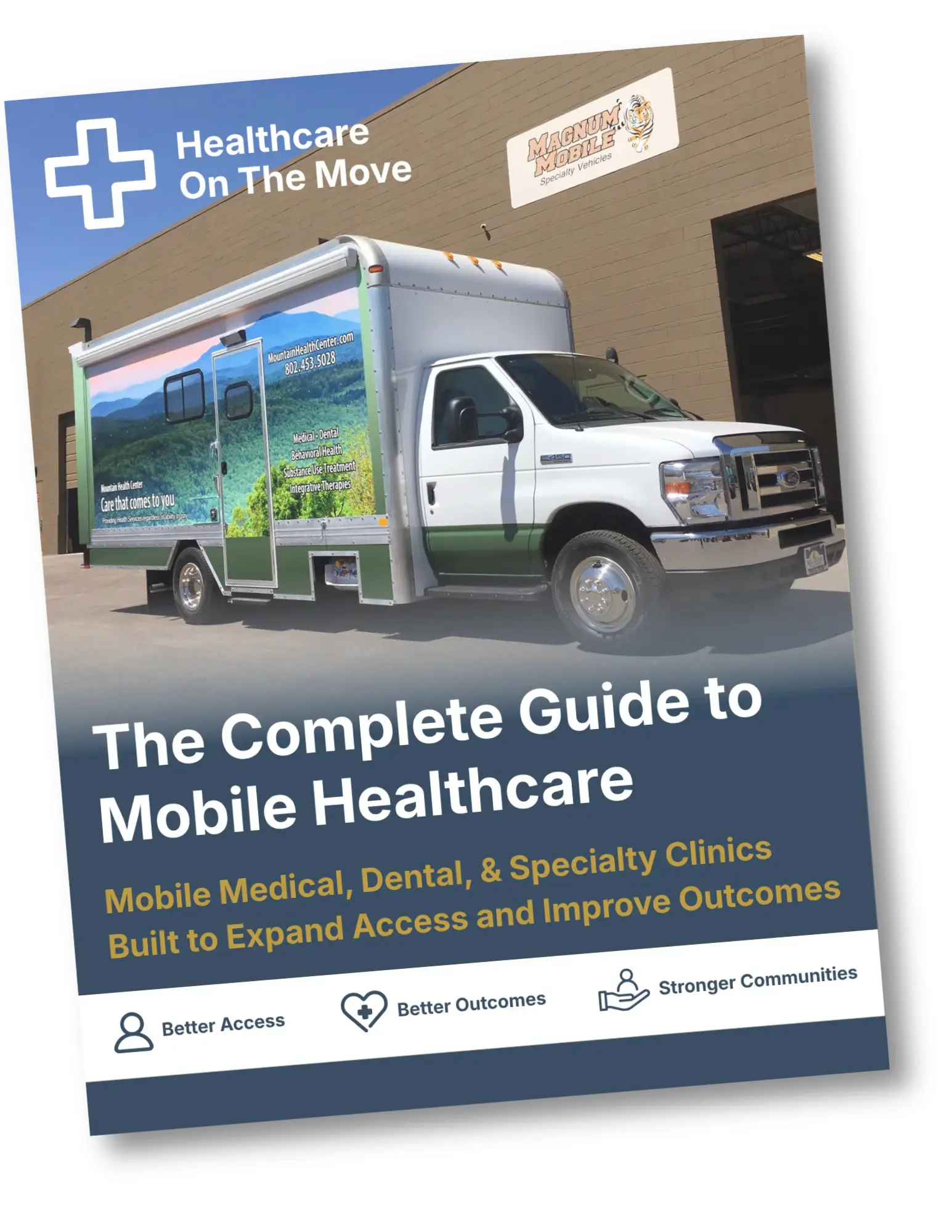
Get the Free Buyer Guide
Request the Mobile Healthcare Buyer Guide through the guide page.
Trusted Nationwide
Trusted by Leading Organizations
Trusted by healthcare providers, animal care programs, public agencies, universities, and nonprofit organizations for mobile specialty vehicles.







Built to Support
Organizations Across Every Sector
Delivering mobile solutions for healthcare, education, government, nonprofit, and commercial applications.
Healthcare
Education
Government
Non-Profit
Public Safety
Corporate
Ready to Get Started
Let’s Build a Solution That Moves Care Forward
Tell us about your operation and our team will help build the right mobile vehicle solution for your needs.