
Mobile Dental Clinics • Utility Planning
What to Ask About Dental Water, Suction, and Compressed Air
Confirm how the selected equipment will be supported at your operating sites
Quick answer
Before choosing mobile dental utility systems, ask how the proposed water supply, suction, compressed air, and power arrangement supports your exact equipment and intended simultaneous use. Confirm capacity assumptions, host-site connections, servicing access, maintenance responsibilities, shutdown procedures, and training. Have the vehicle builder and equipment supplier review the requirements together.
Utility questions are easiest to resolve before equipment and cabinetry are fixed in place. A clinic can have the right treatment positions but still need a clearer plan for the systems behind them.
Use a written list of equipment and operating assumptions to guide the review. The right questions connect clinical equipment, vehicle systems, host sites, and staff responsibilities.
Magnum Mobile can discuss configurable layouts, commercial-grade materials, and integrated vehicle systems around your operating plan. Explore our mobile dental vehicles and request the Mobile Healthcare Buyer Guide through its guide page.
1. Begin with exact equipment and simultaneous demand
Give the equipment supplier and vehicle builder the same current equipment schedule. Specify the models and how the team intends to use them during the day.
Demand: Ask for the water, suction, air, electrical, and other requirements of each selected device. Do not size systems from chair count alone.
Overlap: Identify which equipment may operate together. Include support equipment as well as treatment positions in the review.
Operating conditions: Describe expected visit hours, climate, travel, and site utilities. Ask which assumptions influence the proposed system configuration.
Responsibilities: Identify who selects, supplies, installs, connects, tests, and trains staff on each system. Record unresolved interfaces before approving the design.
2. Review the complete water arrangement
Ask how the proposed vehicle supplies water, supports the selected dental equipment, and manages wastewater. Confirm each part with the people responsible for installation and operation.
Water quality: CDC guidance on dental unit water quality calls for routine maintenance and monitoring. Ask the clinical and equipment teams to define the applicable procedures for the selected installation.

| Water question | What to confirm |
|---|---|
| Supply | Source, connections, onboard arrangement, and planned operating assumptions |
| Equipment interface | Requirements of the exact dental equipment models |
| Wastewater | Collection, servicing, and approved handling arrangements |
| Maintenance | Written instructions, supplies, monitoring responsibilities, and records |
3. Ask how suction and compressed air are specified
Treat suction and compressed air as equipment-specific systems. Ask the supplier to document the requirements and the proposed installation.
Capacity: Confirm the operating demand the system was selected to support, including intended simultaneous equipment use. Ask how that assumption was established.
Location: Review where major components sit and how their installation affects treatment areas, cabinetry, and available storage.
Operating environment: Ask about manufacturer requirements for intake, exhaust, temperature, moisture management, and any other installation conditions that apply.
Service access: Show how staff or technicians reach filters, controls, service points, and components that may require replacement.
4. Connect utility planning with the route
A utility arrangement must work where the clinic actually operates. Evaluate representative host sites before relying on a particular connection.
Site power: Document available electrical connections and obtain an appropriate review of their compatibility with the proposed vehicle.
Water and servicing: Identify where supplies are obtained and systems are serviced under the program’s approved procedures. Do not assume every host provides these facilities.
Setup: Review the location of connections, cable or hose routes, access panels, and areas that must stay clear during a visit.
Weather: Discuss anticipated operating and storage conditions with the builder and equipment suppliers. Ask what preparation and limitations apply.
Backup plans: State what the team does if a host connection is unavailable or a shared utility system fails. Define which services can continue under approved procedures.
5. Make operation and maintenance part of delivery
Staff need to understand the installed configuration, not just recognize the equipment labels. Include system responsibilities in the delivery plan.
Written instructions: Request the applicable manuals, system information, and routine care requirements. Keep the current versions available to the operating team.
Training: Include startup, shutdown, travel preparation, connection checks, routine care, and fault reporting for the relevant staff.
Records: Assign an owner for maintenance schedules, monitoring records, supplies, and service contacts under program requirements.
Support: Confirm the contact for vehicle systems and for each equipment item. Review actual coverage and service arrangements rather than assuming one warranty covers everything.
6. Bring utility questions to Magnum early
Magnum Mobile can discuss integrated vehicle systems and configurable dental spaces around the equipment and operating plan your team provides. Early coordination helps reveal decisions that affect the layout.
Bring the details: Share selected models, supplier specifications, expected simultaneous demand, visit duration, and representative site conditions.
Request a documented review: Ask how the proposed configuration supports those assumptions and what remains the responsibility of the program or equipment supplier.
Review options: Explore Magnum’s mobile dental clinics and our consultation-to-delivery process. Resolve interfaces before finalizing equipment locations.
Discuss your dental utility requirements with Magnum Mobile. A clear equipment schedule and route plan give the team a useful starting point.
Mobile Dental Utility System FAQs
Can utilities be sized only by the number of dental chairs?
Chair count is only one input. Use exact equipment requirements, intended simultaneous operation, support equipment, and operating conditions to guide the system review.
Can every host site supply the clinic’s utilities?
No assumption should be made without checking. Document the site’s available connections and have the relevant professionals confirm compatibility with the vehicle.
Who defines dental water maintenance procedures?
The responsible clinical team should work with equipment manufacturers and suppliers to define applicable maintenance and monitoring procedures for the selected installation.
What should delivery training cover?
Include the installed systems’ startup, shutdown, connection checks, travel preparation, routine care, records, and fault-reporting responsibilities for the people operating the clinic.
Review Your Dental Vehicle Systems With Magnum
Bring Magnum Mobile your equipment specifications and host-site requirements to discuss a configuration built around the complete operating day. Review utilities alongside the layout, storage, staffing, and maintenance plan.
Explore Magnum’s mobile dental vehicles and compare configurations for your program.
Discuss Your Vehicle
Ask how water, suction, air, and power support your exact equipment.
Share the route conditions and simultaneous operating requirements with Magnum.
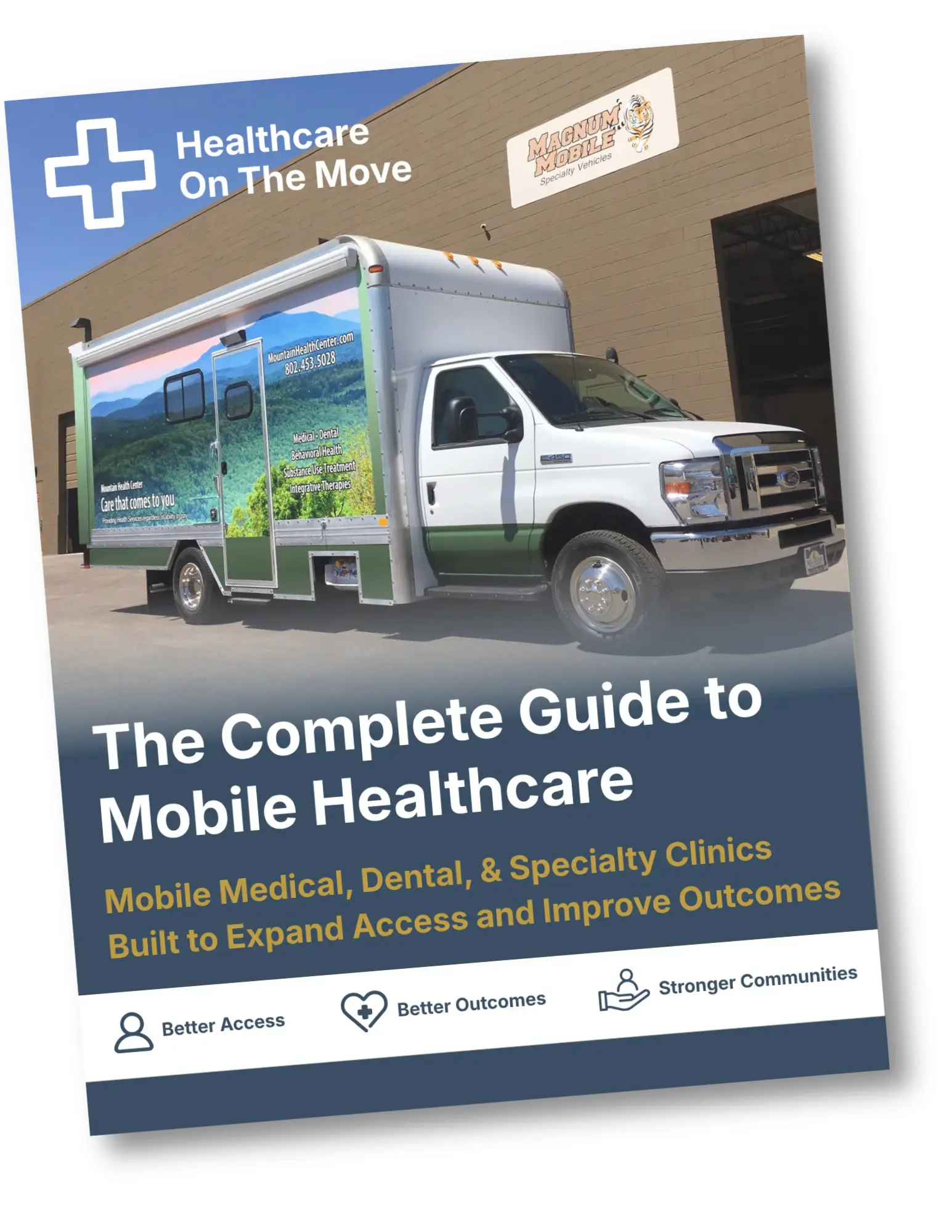
Get the Free Buyer Guide
Request the Mobile Healthcare Buyer Guide through the guide page.
Trusted Nationwide
Trusted by Leading Organizations
Trusted by healthcare providers, animal care programs, public agencies, universities, and nonprofit organizations for mobile specialty vehicles.







Built to Support
Organizations Across Every Sector
Delivering mobile solutions for healthcare, education, government, nonprofit, and commercial applications.
Healthcare
Education
Government
Non-Profit
Public Safety
Corporate
Ready to Get Started
Let’s Build a Solution That Moves Care Forward
Tell us about your operation and our team will help build the right mobile vehicle solution for your needs.