
Hospital and Health System Planning
How Hospital Networks Should Evaluate a Mobile Clinic Investment
Evaluate the Program, the Resources, and the Vehicle Together
Hospital networks should evaluate a mobile clinic investment by matching a documented community need with a defined service model, realistic operating resources, accountable leadership, and measurable goals. Assess the vehicle purchase within that complete program, including staffing, travel, follow-up, maintenance, and its connection to existing care.
A mobile clinic can give a hospital another way to reach patients beyond its buildings. The investment case becomes stronger when it explains which access problem the unit addresses and what the network will do after each visit.
Start with one proposed program rather than a broad promise to serve everyone. A defined population, service area, schedule, and care pathway give leadership something practical to assess.
Magnum Mobile helps organizations turn their clinical and operational plans into specialty vehicle requirements. The most useful early conversations connect your service model with the layout, equipment, and deployment conditions it needs.
Use this evaluation structure to prepare an investment discussion and identify decisions that should be resolved before approving a vehicle purchase.
Define the Access Problem and Investment Goal
State the problem in terms patients and your operating teams can recognize. Review local needs assessments, appointment patterns, community feedback, and partner observations to explain where access is difficult.
Identify the intended patients: Describe who the mobile program will serve, where they are located, and which barriers prevent or complicate access to existing services.
Choose the initial service: Define the care delivered on the vehicle and the services handled elsewhere. Avoid treating a screening program and a continuing treatment program as interchangeable.
Connect to an organizational goal: Explain how the program supports the network’s access, outreach, patient experience, or other stated priorities. Select measures that match that purpose.
Mobile Health Map’s startup resources emphasize community input, a business plan, and partnerships. Use those resources alongside your own data to test the proposed model rather than assuming another organization’s results will transfer to yours.
Compare Mobility With Other Practical Options
Compare the mobile proposal with other feasible ways to address the same need. These might include adjusting fixed-site hours, supporting transportation, adding a partner location, or changing how existing outreach is delivered.
For each option, consider patient convenience, required resources, care coordination, launch dependencies, and flexibility. Record the assumptions that make an option practical or unsuitable.
Explain why mobility helps the specific program. A vehicle should have a planned schedule and operating role; its visibility alone does not establish an investment case.
Review Acquisition and Operating Costs Together
Build a budget that separates acquiring the unit from operating it. The purchase scope and recurring program expenses answer different questions and should be reviewed together.
Acquisition and setup: Identify the vehicle configuration, equipment, graphics, delivery, technology setup, initial supplies, and other items that apply. Confirm what each quote includes.
Recurring operations: Include staff time, fuel, supplies, insurance, technology, storage, servicing, and maintenance. Assign an owner to each estimate and its supporting assumption.
Capacity assumptions: Estimate the schedule using appointment length, travel, setup, downtime, documentation, and follow-up. Distinguish available appointments from expected attendance.
Sensitivity review: Ask what changes if attendance is lower, staffing costs rise, a host cancels, or the vehicle is unavailable. Review funding and any revenue assumptions with the network’s finance team.
Assign Ownership Across the Hospital Network
Decide who owns the program across departments. A vehicle can sit between clinical services, community outreach, facilities, fleet management, and finance; those responsibilities should be explicit.
Executive sponsor: Identify who keeps the project aligned with the network’s priorities and resolves decisions that cross department boundaries.
Program lead: Assign responsibility for the schedule, partners, supplies, day-to-day coordination, and review of results.
Clinical and patient handoffs: Define documentation, results review, referrals, and the contact patients use after the vehicle leaves. Give each handoff a receiving team.
Vehicle responsibilities: Clarify driving, inspections, setup, utilities, storage, maintenance coordination, and coverage when the usual staff member is absent.
Have these teams review one full operating day together. That exercise often reveals resource needs and handoffs that a vehicle specification alone will not show.
Translate the Care Model Into Vehicle Requirements
Turn the operating model into a vehicle brief before comparing configurations. The brief should explain services, staff roles, patient movement, equipment, host sites, routes, and utilities.
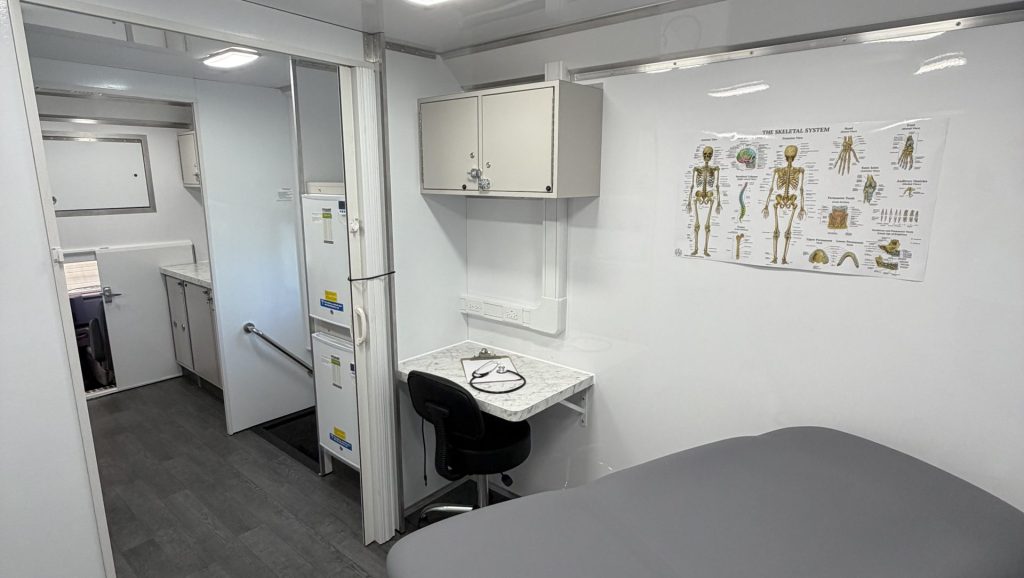
Clinical spaces: Assess registration, examination or treatment areas, privacy, accessibility options, and storage around the actual service workflow.
Equipment integration: List equipment models, dimensions, mounting requirements, power, water, and other utility needs. Identify what the organization supplies and what the builder includes.
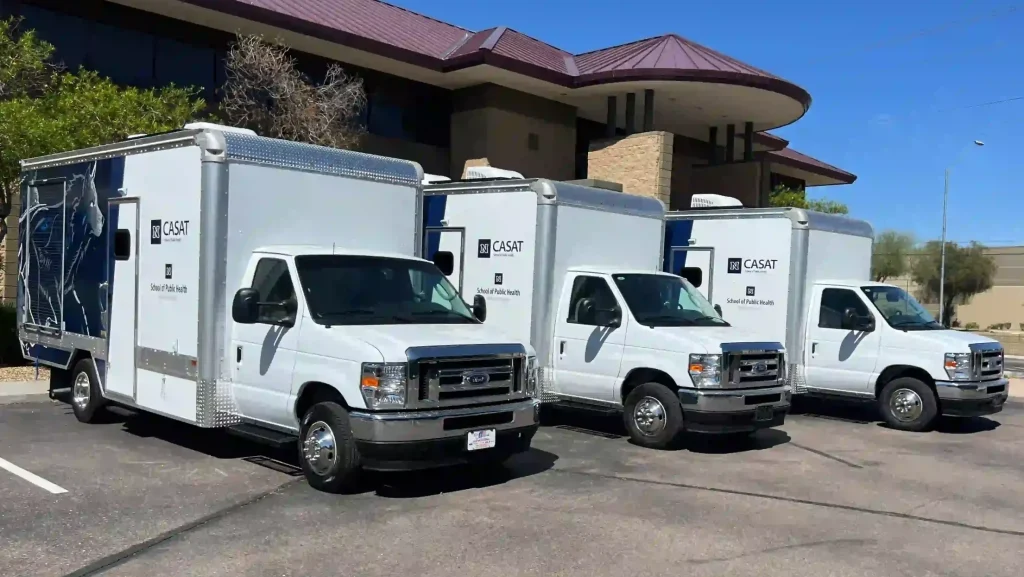
Deployment fit: Evaluate parking and setup space, access routes, driving or towing arrangements, weather exposure, and overnight storage alongside interior needs.
Explore Magnum’s mobile medical clinic configurations with that brief in hand. Confirm the proposed features, equipment scope, support arrangements, and delivery expectations for the selected build.
Set Measures and a Clear Review Decision
Define how leadership will judge the initial program. Use a small group of measures tied to the stated need, with a baseline where available and a person responsible for reporting.
Reach and use: Track the communities or groups served, visits completed, attendance, and patient feedback that helps explain barriers to use.
Connection to care: Review the follow-up measures appropriate to your services, such as referral completion or subsequent appointments. Avoid substituting visit volume for every intended result.
Operational performance: Compare the planned schedule, staff workload, costs, host reliability, and vehicle availability with actual experience.
Set a review date and decision criteria before launch. Leadership should know what evidence would support continuing, adjusting, expanding, or reconsidering the program.
Hospital Mobile Clinic Investment FAQs
What belongs in a hospital mobile clinic investment case?
Include the access problem, proposed services, alternatives, acquisition scope, operating resources, responsible teams, vehicle requirements, and measures used to evaluate the initial program.
Should hospitals assume a mobile clinic will produce a financial return?
No universal return applies to every program. Have your finance team evaluate the funding model, costs, and any revenue or savings assumptions using the proposed services and local data.
How should a mobile clinic connect to hospital services?
Define records access, documentation, referrals, results review, and patient follow-up. Identify the receiving teams so patients have a clear path beyond the mobile visit.
When should the network talk with a vehicle manufacturer?
Start once the initial service model and operating needs are clear enough to discuss. Early consultation can help identify layout, equipment, utility, and deployment questions before final approval.
Discuss Your Hospital’s Vehicle Plan With Magnum
Magnum Mobile brings specialty vehicle design and equipment planning into the investment conversation. Share your network’s initial service model so the vehicle discussion reflects the program leadership is actually evaluating.
Review Magnum’s process from consultation to delivery and identify the information your team will need at each stage. A clear scope supports a more useful proposal and internal review.
Request the Mobile Healthcare Buyer Guide for planning considerations covering services, layouts, equipment, and vehicle selection.
Ready to evaluate the vehicle requirements for your hospital’s outreach program? Contact Magnum Mobile to discuss the services, equipment, and operating conditions your team plans to support.
Plan Your Hospital’s Mobile Program
Discuss your hospital network’s service model and vehicle requirements with Magnum Mobile.
Explore mobile medical configurations that can be discussed around your clinical and operating needs.
Explore Mobile Medical Vehicles
Request the Mobile Healthcare Buyer Guide to prepare for your vehicle planning discussion.
Latest From Our Blog
Trusted Nationwide
Trusted by Leading Healthcare Organizations
Trusted by healthcare providers, public agencies, universities, and nonprofit organizations to deliver high-quality mobile specialty vehicles.







Built to Support
Organizations Across Every Sector
Delivering mobile solutions for healthcare, education, government, nonprofit, and commercial applications.
Healthcare
Education
Government
Non-Profit
Public Safety
Corporate
Ready to Get Started
Let’s Build a Solution That Moves Care Forward
Tell us about your operation and our team will help build the right mobile vehicle solution for your needs.