
Mobile Clinic Planning
How to Plan a Mobile Clinic
Turn services, workflow, equipment, sites, resources, and launch responsibilities into a practical plan.
Plan a mobile clinic by defining the services, patients, staff workflow, equipment, operating sites, resources, and launch responsibilities before approving the vehicle configuration. Bring those requirements to the builder so the layout and installed systems support the program you intend to operate.
The most useful early plan describes a working program. It explains whom you will serve, what a representative service day looks like, where the unit will operate, and which resources your organization will commit.
This guide focuses on preparing that plan for a medical or dental program. The clinical team defines the services and professional requirements; operations, finance, community partners, and the vehicle builder help turn those decisions into an achievable project scope.
Magnum’s healthcare buyer guide provides a starting point for the vehicle questions. Use the process below to gather answers your team can review and share during consultation.
Choose the vehicle around the work. You can explore options early, then refine the configuration as the services, equipment, staff positions, and operating locations become clearer.
Prepare Seven Useful Mobile Clinic Planning Outputs
Seven planning outputs to prepare
- A service and community brief
- A representative service-day workflow
- A demand and capacity assumption
- An equipment and installation list
- A host-site and travel plan
- A vehicle scope and resource plan
- A launch responsibility schedule
Give each output an owner and review date. Keep confirmed information separate from assumptions so the team knows which decisions can proceed and which need more work.
Use one shared version of the requirements. A change in services or equipment can affect layout, utilities, staffing, storage, and the budget, so bring the relevant people into that discussion.
Review the plan before requesting a configured proposal and again before approving the final scope. The quote, layout, and operating plan should describe the same project.
Start a Magnum consultation with your current brief and open questions. The design conversation can help identify the vehicle information needed for your next decision.
Define Services and the Community You Will Serve
Write a concise service and community brief. State the access need, intended patients, planned services, and the connection to existing care, referrals, and follow-up.
Gather local information your organization can support, such as community feedback, partner observations, existing service availability, or referral patterns. Explain how it informs the proposed locations and service calendar.
Separate the launch scope from possible future services. Identify which activities will happen onboard and which will take place through a host, partner, or existing facility.
Plan the Service Day, Staffing, and Capacity
Walk through a representative service day with the operating team. Include driving, arrival, setup, intake, service delivery, records, follow-up arrangements, cleaning, restocking, and departure.
Assign staff roles to that workflow. Note where each person works, where patients move, and where supplies or equipment must be available without interrupting another activity.
Build a capacity assumption from the proposed staffing, service mix, appointment pattern, and usable service hours. Label it as an estimate to test rather than a guaranteed daily patient count.
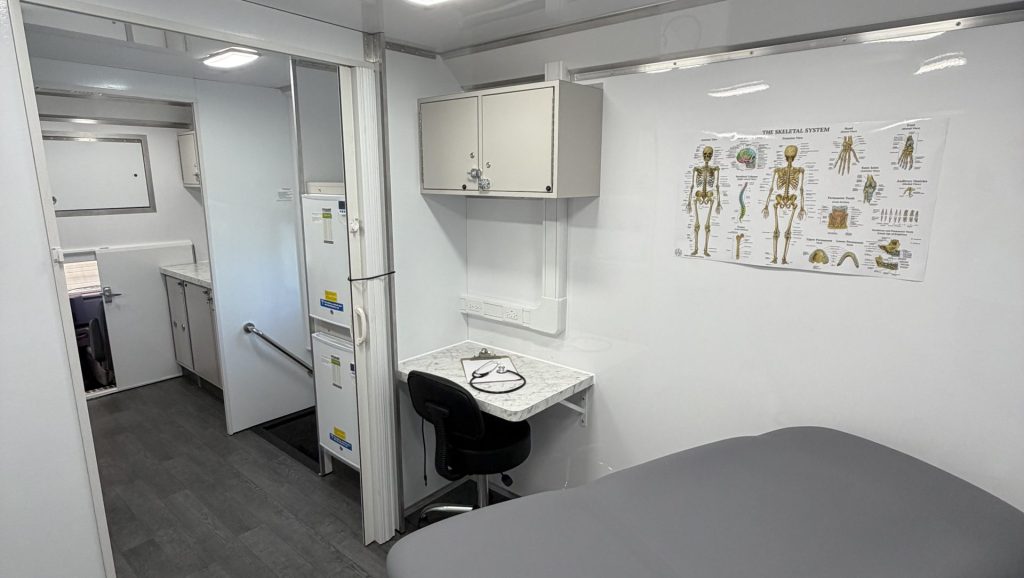
Use the workflow when reviewing Magnum’s medical clinic layouts or dental clinic options. A room or chair count alone does not describe the work the team can complete.
Identify privacy, patient access, storage, and workspace requirements during this review. Record the essential needs before comparing optional features.
Connect Equipment Requirements with Operating Sites
Prepare equipment information and operating-site requirements together. Installed equipment and the places you visit influence the vehicle’s space and utility needs.
List each equipment item, its source, available dimensions and weight, utility requirements, and installation or service-access information. Share manufacturer documentation for items affecting the design.
Identify items expected in the builder’s scope and items your organization will supply. Confirm those responsibilities in the proposal, including coordination of any items arriving during the build.
For each proposed host, record permission, usable setup space, access routes, and utility arrangements. Include clearance for the selected doors, steps, lifts, and equipment, not just the parked vehicle.
Discuss power loads, climate control, water, and connectivity with the builder and the people responsible for the operating sites. Clarify which arrangements depend on host resources.
Include travel, overnight storage, restocking, cleaning, and access for maintenance in the plan. Assign someone to confirm these arrangements before treating a location or route as settled.
Develop the Vehicle Scope and Resource Plan
Compare actual vehicle configurations against the requirements. Consider working areas, installed systems, storage, access, travel, and the locations where the program will operate.
Review van, truck, and trailer options through their proposed layouts and operating arrangements. Avoid assuming a particular format always has the largest treatment area or fits every host location.
Ask Magnum to explain the configured scope, included equipment, options, exclusions, and decisions still open. Connect each important feature to the service brief or workflow.
Prepare acquisition and recurring operation separately. The vehicle project and ongoing staffing, travel, supplies, insurance, servicing, and upkeep need resources your organization can review.
Involve finance in the resource plan and identify committed support, funding being sought, and relevant conditions. Use quotes and organization-specific assumptions to develop the estimate.
Coordinate the Build and Your Program Launch
Build a launch schedule around responsibilities and dependencies. Include your organization’s preparation as well as the vehicle-planning and build stages.
Magnum’s process moves through consultation, design and configuration, manufacturing, and delivery. Discuss timing for the actual project rather than assuming one standard timeline applies to every unit.
Assign owners for final requirements, equipment coordination, host confirmation, staff preparation, delivery arrangements, and the first service calendar. Identify approvals or information needed before the next step.
Plan the delivery walkthrough and the operating team’s familiarization with installed systems. Use Magnum’s support and training resources alongside the information for your selected equipment and configuration.
Define a first operating review period and the measures your team will collect. Use early service experience to refine scheduling, supplies, workflow, and resource needs.
Mobile Clinic Planning FAQs
What is the first step in planning a mobile clinic?
Define the community need and initial service scope. That brief guides staffing, patient flow, equipment, locations, and the vehicle requirements the team will investigate.
Should we choose a van, truck, or trailer first?
Explore formats early, then compare configured layouts against your service model, staff workflow, equipment, access, and operating sites. The requirements should guide the final choice.
How long does planning and building a mobile clinic take?
Timing depends on the project scope, decisions, equipment coordination, and production availability. Discuss the configured project with Magnum and account for your organization’s preparation.
What should we bring to a first consultation?
Bring the mission, proposed services, staff roles, equipment information, operating locations, resource framework, and launch goals. Include the questions your team still needs to resolve.
Develop Your Mobile Clinic Plan with Magnum
Build a mobile clinic plan with the vehicle’s daily work at the center. Magnum’s configurable clinics, integrated systems, and consultation-through-delivery process help organizations connect program needs with a practical vehicle scope.
Explore Magnum’s mobile medical clinics and mobile dental clinics as you develop the requirements.
Use the mobile healthcare buyer guide to prepare questions for the design and configuration discussion.
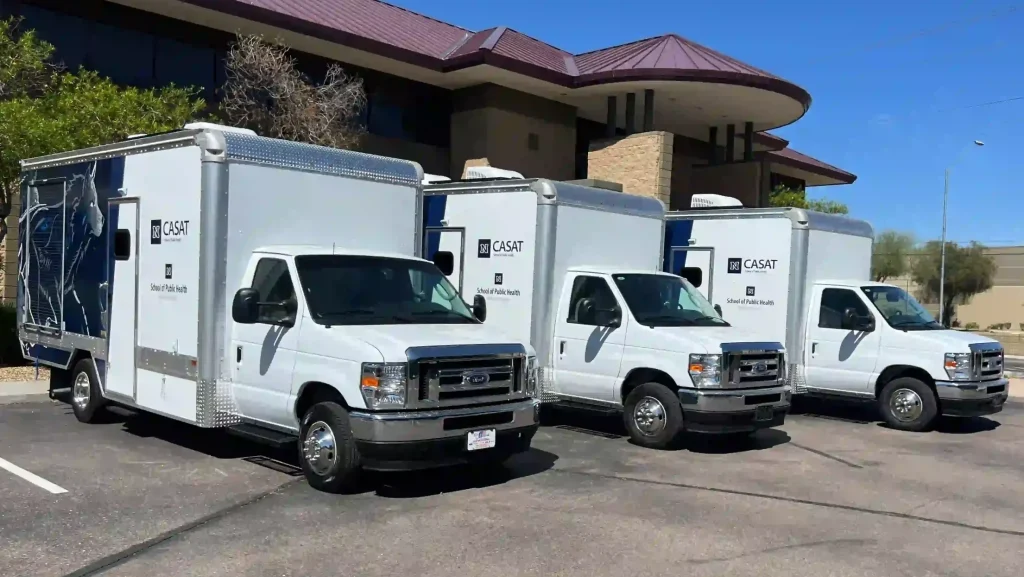
Explore Magnum Clinic Options
Match your services and workflow with a practical mobile clinic layout.
Explore Magnum’s vehicle options and develop a configuration around your program requirements.
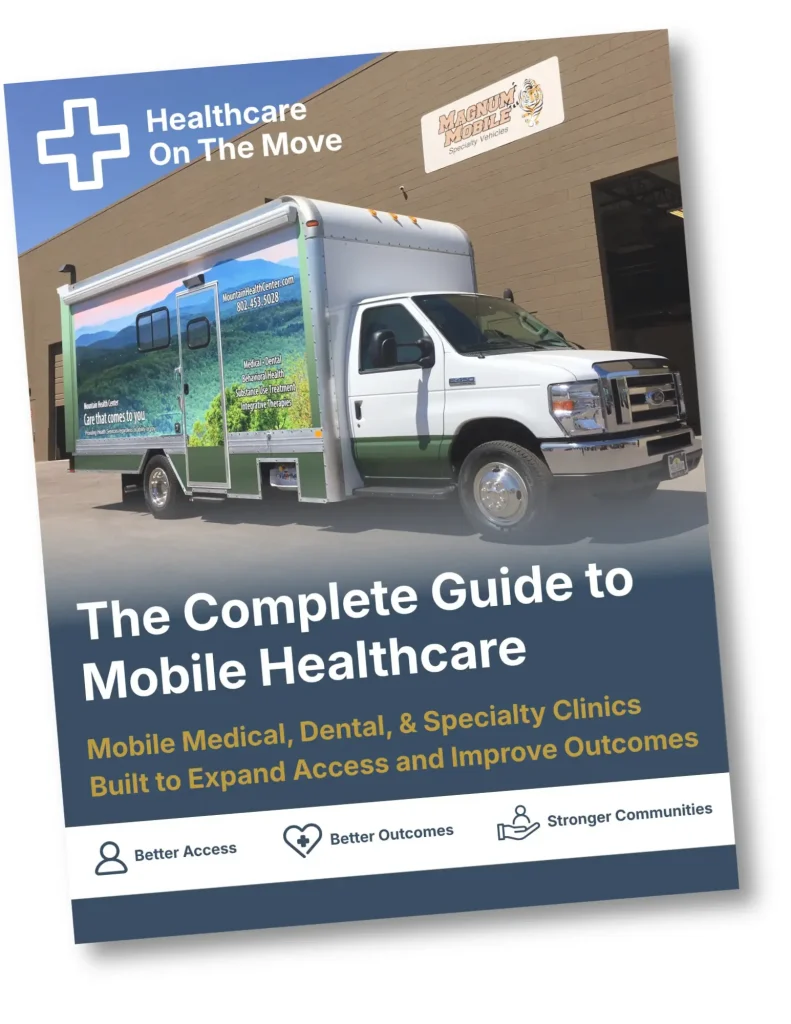
Mobile Healthcare Buyer Guide
Start your vehicle-planning brief with Magnum’s mobile healthcare buyer guide.
Trusted Nationwide
Trusted by Leading Healthcare Organizations
Trusted by healthcare providers, public agencies, universities, and nonprofit organizations to deliver high-quality mobile specialty vehicles.







Built to Support
Organizations Across Every Sector
Delivering mobile solutions for healthcare, education, government, nonprofit, and commercial applications.
Healthcare
Education
Government
Non-Profit
Public Safety
Corporate
Ready to Get Started
Let’s Build a Solution That Moves Care Forward
Tell us about your operation and our team will help build the right mobile vehicle solution for your needs.