
Animal Care Vehicle Selection • Adoption vs. Transport
Mobile Adoption Unit vs. Animal Transport Vehicle: What’s the Difference?
Choose the configuration around what happens during the journey and at the destination
Quick answer
A mobile adoption unit is planned around bringing animals and an adoption program to public-facing events. An animal transport vehicle is planned around moving animals between locations with the required care, loading, supervision, and handoffs. Some programs need both functions, but the same kennel count or vehicle label does not establish suitability. Compare actual layouts against the full operating plan.
Adoption outreach and animal transport both involve animals, enclosures, travel, and staff. The important purchasing distinction is how the program uses the vehicle before, during, and after the journey.
An event may require visitor circulation, staff conversations, records, and a defined animal-interaction area. A transport route may depend more heavily on loading and unloading, travel duration, animal oversight, and coordination with receiving organizations.
Magnum Mobile can discuss configurable layouts, commercial-grade materials, and integrated vehicle systems around your operating plan. Explore our mobile animal care vehicles and request the Mobile Animal Care Buyer Guide through its guide page.
1. Define the primary job of the vehicle
Start with the operation the vehicle must support most often. Describe the intended animals, staff, routes, service duration, and activities at each destination.
Adoption purpose: Explain whether animals remain onboard during public events, where people view them, how introductions happen, and where staff handle questions or adoption steps.
Transport purpose: Define the source and destination arrangements, loading process, travel plan, animal care during the trip, and the receiving handoff. Include return trips and empty travel in the schedule.
Mixed use: If both functions are required, describe when each occurs and which equipment or operating arrangements change. Confirm the combination against a specific configuration.
Scope: Separate adoption, transport, veterinary treatment, and emergency-support ambitions. Adding a different service later may affect equipment, spaces, staffing, and systems.
2. Compare public access with route and handoff needs
Map the people and animals through each use. Use the comparison to identify where the proposed layout needs public space, staff-only space, loading access, or host support.
Actual configurations: Vehicle labels are useful starting points, but compare floor plans, doors, enclosures, equipment, and the written scope. Do not assume every unit in a category has identical features.
| Planning area | Adoption-event review | Transport-route review |
|---|---|---|
| People | Visitors, staff conversations, records, and animal introductions | Drivers, handlers, senders, and receiving-team handoffs |
| Animal movement | Arrival, event holding, supervised interaction, and departure | Loading, travel, observation, unloading, and transfer of responsibility |
| Site needs | Public circulation, waiting, weather plans, and host space | Loading access, route conditions, destination readiness, and turnaround |
| Systems | Support while parked and operating an event | Support throughout the journey and at stops |
3. Review holding space and animal-care access
Have the responsible animal-care and veterinary staff define the care requirements for each intended use. Use those requirements to evaluate the enclosure arrangement and supporting workspace.
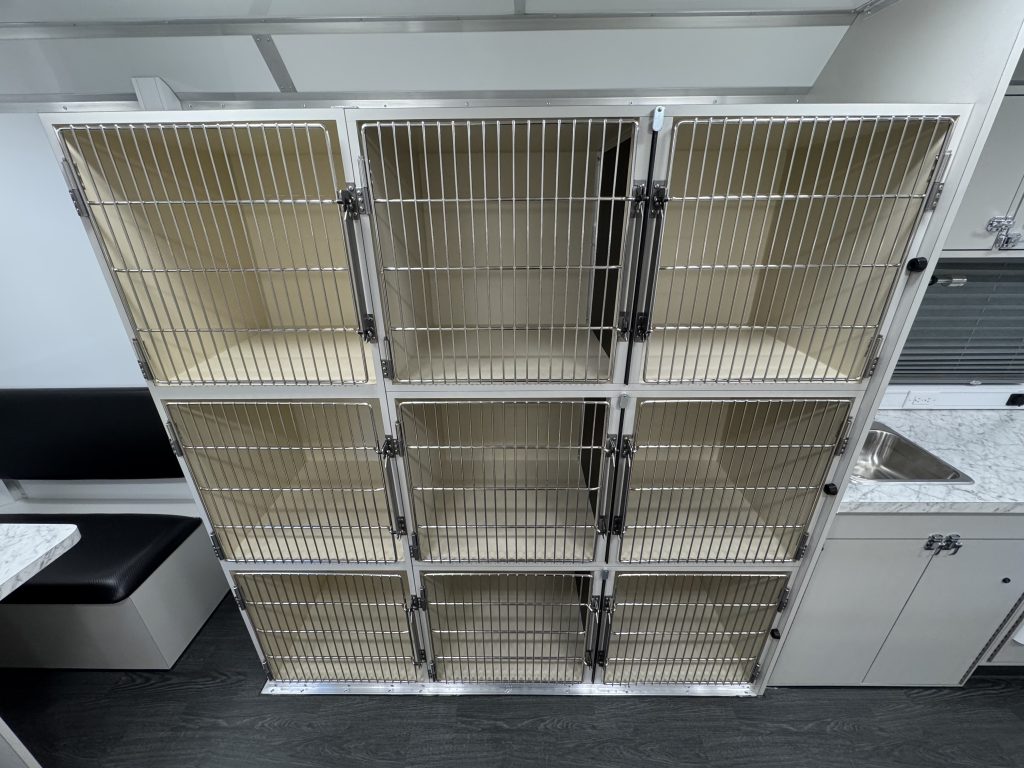
Animal fit: Provide species, size ranges, handling equipment, and any separation needs the care team identifies. Compare enclosure dimensions and access rather than capacity labels alone.
Staff access: Check how staff observe and reach animals while other tasks continue. Review enclosure doors, aisle use, handling routes, and the equipment needed for the approved operation.
Public interaction: For adoption events, define how people and animals meet and who supervises the activity. Clarify whether this occurs onboard or in a confirmed host area.
Transport care: The ASPCA’s animal-relocation position statement discusses monitoring animal welfare and environmental conditions during transport. Have the responsible team turn applicable guidance into its operating and equipment requirements.
4. Check the systems for travel and parked operation
Review the full operating period for each proposed use. A vehicle may spend hours at an event, travel between partners, or do both on the same day.
Climate and ventilation: Describe weather, occupied areas, animals, equipment loads, and duration. Ask how the proposed configuration supports the animal-care plan during travel, stops, and parked events.
Power: Identify systems that need to remain available throughout the operation. Review supply arrangements, host connections, onboard equipment, and the response to interruptions with the suppliers and operating team.
Integration: Provide equipment weights, mounting requirements, clearances, and maintenance access. Ask the builder to evaluate loading and weight distribution for the complete planned configuration.
Cleaning and supplies: Plan storage, turnover, restocking, water needs where relevant, and waste or used-item handling under the organization’s procedures. Include the changeover between event and transport uses.
Contingencies: Have the responsible team define responses to delays, unavailable host space, vehicle or equipment problems, and animal-care concerns. Review how communications, access, and equipment support those plans.
5. Compare staff, schedules, and complete operating costs
Compare configurations using the same service assumptions. Acquisition cost and kennel count do not describe the staff time and support needed to operate the program.
Adoption schedule: Include preparation, animal selection under your procedures, driving, setup, event staffing, public communication, cleanup, return, and follow-up.
Transport schedule: Include source coordination, readiness checks, loading, travel, required care and stops under the operating plan, unloading, receiving confirmation, cleaning, and return.
Recurring resources: Review staffing, fuel, supplies, storage, connectivity, utilities, cleaning, upkeep, equipment service, and coordination. Identify which partner supplies each resource.
Evidence: Review a pilot event or representative route where practical. Use actual staff workload, animal-care observations, site feedback, and operating experience to refine the vehicle brief.
6. Bring an adoption or transport brief to Magnum
Magnum Mobile can discuss animal-care configurations around the operation your organization defines. Bring a representative event or route to make the comparison concrete.
Service information: Provide primary and secondary uses, species and sizes, handling, holding, public interaction, oversight, records, and the animal movement sequence.
Deployment information: Include staff, source and destination commitments, event hosts, site measurements, doors and loading requirements, utilities, storage, schedule, budget, and timing.
Configuration review: Explore Magnum’s animal-care vehicle options and our consultation-to-delivery process. Confirm which requirements are included in the specific written proposal.
Discuss your adoption and transport requirements with Magnum Mobile before choosing a unit from its label or enclosure count alone.
Mobile Adoption Unit vs. Animal Transport FAQs
Can a mobile adoption unit also transport animals?
Evaluate the specific layout, enclosures, installation, systems, supervision, loading, and operating procedures for both uses. An adoption-event configuration should not be assumed suitable for every transport route.
Does an animal transport vehicle need public visitor space?
That depends on its intended uses. A route-focused program may have different people-flow needs from public adoption events. Define any visitor access or animal-introduction activities before choosing the layout.
Is kennel count the best way to compare the two?
No. Review animal fit, access, supervision, equipment, systems, staff workflow, travel and event duration, loading, and site requirements alongside the number of usable positions.
What should we bring to a Magnum consultation?
Bring the primary operation, animal sizes, event or route workflow, staffing, care requirements, equipment, loading needs, host or receiving arrangements, sites, utilities, budget, and launch goals.
Compare Animal-Care Vehicle Configurations With Magnum
Magnum Mobile offers configurable animal-care spaces, commercial-grade materials, and integrated vehicle systems. Share your adoption-event or transport workflow so our team can discuss a configuration around the animals, people, and sites your program needs to support.
Explore Magnum’s mobile animal care vehicles and compare configurations for your program.
Request the free Mobile Animal Care Buyer Guide to prepare your purchase planning questions.

Discuss Your Vehicle
Compare adoption events and transport routes using actual animal and staff workflows.
Bring your holding, public-access, loading, equipment, and deployment requirements to Magnum.
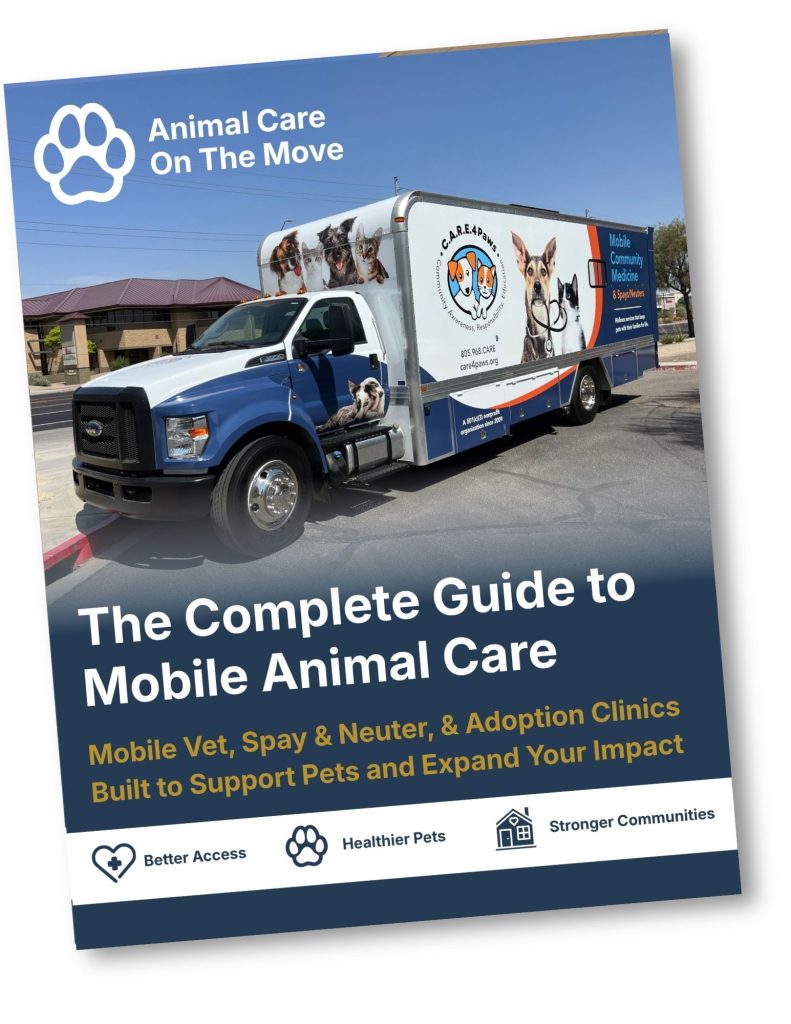
Get the Free Buyer Guide
Request the Mobile Animal Care Buyer Guide through the guide page.
Latest From Our Blog
Trusted Nationwide
Trusted by Leading Organizations
Trusted by healthcare providers, animal care programs, public agencies, universities, and nonprofit organizations for mobile specialty vehicles.







Built to Support
Organizations Across Every Sector
Delivering mobile solutions for healthcare, education, government, nonprofit, and commercial applications.
Healthcare
Education
Government
Non-Profit
Public Safety
Corporate
Ready to Get Started
Let’s Build a Solution That Moves Care Forward
Tell us about your operation and our team will help build the right mobile vehicle solution for your needs.