
Behavioral Health Programs • Privacy and Layout
Mobile Behavioral Health Spaces: Privacy and Layout Questions
Turn your care workflow into practical privacy and vehicle requirements
Quick answer
Plan a mobile behavioral health clinic around the approved services, people using the space, and private conversations that must happen onboard. Review sound, sightlines, check-in, patient entry, staff circulation, communications, and follow-up. Test the proposed layout with clinical and operational leaders before finalizing a vehicle specification.
A behavioral health vehicle may support a qualified team offering planned consultation or other approved services at community locations. Its usefulness depends on a workable care model and a space that supports the intended conversations.
Privacy needs extend beyond a closed door. The approach to the clinic, waiting arrangements, reception, staff workstations, equipment noise, and the next patient’s arrival can all affect how the visit feels and operates.
Magnum Mobile can discuss configurable layouts, commercial-grade materials, and integrated vehicle systems around your operating plan. Explore our mobile medical vehicles and request the Mobile Healthcare Buyer Guide through its guide page.
1. Define the care model before the floor plan
Begin with a written description of the services your team is approved and prepared to deliver. Distinguish individual consultation, remote consultation, care navigation, and any other intended uses instead of combining them into a vague requirement for a counseling room.
People in the room: Identify the expected clinician, patient, interpreter, companion, or additional staff roles for each type of visit. Review their seating and circulation needs using an actual floor plan.
Visit sequence: Map appointment booking, arrival, check-in, the private conversation, documentation, departure, and follow-up. Decide which tasks happen onboard and which can use an agreed host space.
Operational leadership: Have clinical, privacy, technology, facilities, and outreach teams review the brief. The vehicle builder needs concrete space and systems requirements from the people responsible for the program.
Community input: Ask participants and partners about preferred locations, communication, waiting, and entry arrangements. Use their input to test the proposed visit experience rather than assuming a mobile setting will suit everyone.
2. Evaluate sound and visual privacy
Review privacy in normal operating conditions, including a conversation in progress while another person checks in. Identify what can be seen and heard from the entrance, adjacent work areas, host site, and waiting location.
Sound questions: Ask about partitions, doors, equipment noise, heating and cooling operation, and the relationship between consultation and reception areas. Request a practical review of the proposed spaces; do not assume an untested layout is soundproof.
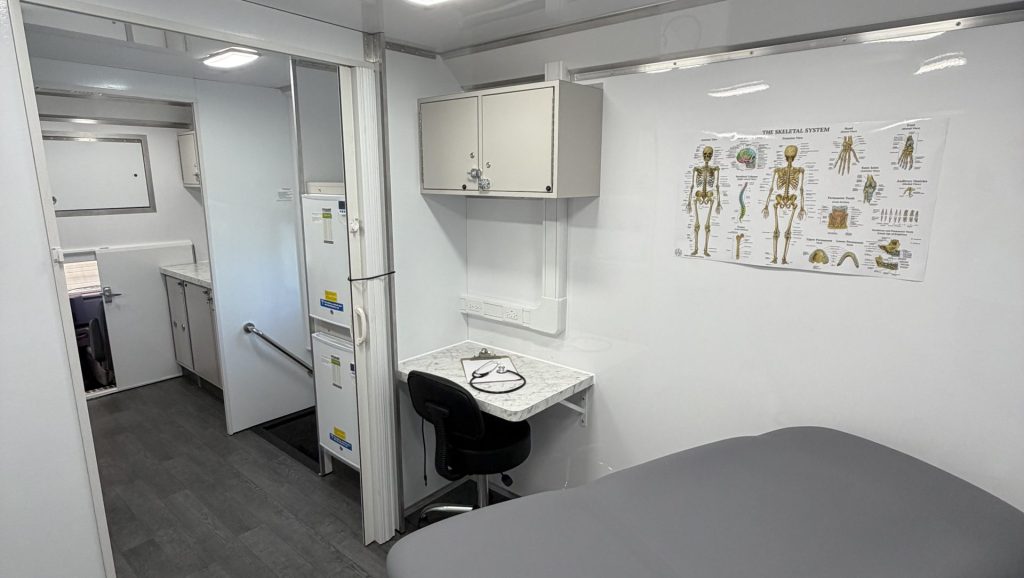
Sightline questions: Examine door openings, windows, workstation screens, and where staff or waiting visitors stand. Discuss privacy features and operating procedures together, including how interruptions will be handled.
3. Plan access and the arrival experience
Consider the complete route from the host site or drop-off point to the consultation space. A clear, predictable arrival process can help the team deliver the planned service consistently.
Site choice: Confirm permission, parking and turning room, entrance clearance, pedestrian paths, utilities, and emergency access. Review whether the public location and signage match the program’s approach to discretion and visibility.
Waiting: Decide where people wait and how they are called. Check weather protection, seating, restrooms, and separation from private check-in discussions; confirm any host-provided space is available throughout service hours.
Patient entry: Review boarding, assistance, mobility aids, interior movement, and companion arrangements. Discuss entry equipment and its full deployment footprint based on the people served.
Communication: Explain available services, appointment steps, expected staff, cancellations, and a contact method between visits. Review language and communication support with local partners and the operating team.
4. Match the layout and systems to the work
A mobile behavioral health clinic should be evaluated as a working environment. Magnum can discuss configurable spaces and integrated utilities using your approved workflow, equipment list, and site information.
Room arrangement: Review seating, work surfaces, entry and exit, staff circulation, storage, and cleaning access. Walk through a typical appointment and identify competing tasks that would use the same space.
Staff work: Identify where documentation, scheduling, team coordination, and supply storage occur. Include these tasks in the plan so consultation space is not repeatedly interrupted by routine work.
Connectivity: Define approved devices, network requirements, remote consultation needs, and privacy procedures. Have the technology team review what happens when a connection is weak or unavailable.
Power and comfort: Provide actual device loads and expected service conditions. Review heating and cooling, lighting, host connections, and onboard systems for the proposed deployment pattern.
Configuration scope: Confirm proposed furnishings, equipment integration, entry features, utilities, and exclusions in the written proposal. Review the physical layout with your organization’s responsible teams rather than treating a vehicle purchase as program approval.
5. Test staffing and continuity before launch
The program needs a dependable operating plan in addition to a private room. Use a manageable pilot route to test setup, appointment flow, staff workload, and the work between service days.
Responsibilities: Assign driving, setup, reception, care, documentation, closing, and follow-up. Review the organization’s established escalation and emergency procedures for the intended services and settings.
Budget: Include staffing, equipment, supplies, fuel, connectivity, insurance, maintenance, storage, and coordination alongside vehicle acquisition. Confirm the approvals and funding restrictions that apply.
Pilot observations: Record interruptions, waiting issues, sound or sightline concerns, connectivity problems, travel time, staff feedback, and participant feedback. Use the findings to adjust the workflow and configuration discussion.
Ongoing care: Identify results, referrals, return visits, and a contact method after the vehicle leaves. Plan how schedule changes and vehicle downtime will be communicated.
6. Prepare a behavioral health vehicle brief
A useful brief connects the care model with specific space, access, privacy, and systems requirements. Bring Magnum the decisions already made and the questions that need further configuration review.
Care and privacy: Share approved services, visit sequence, staffing, room occupants, seating, sound and visual privacy concerns, technology, and follow-up arrangements.
Deployment: Provide representative sites, measurements and photos, route distances, waiting arrangements, utilities, storage plans, budget, and timing.
Program resource: SAMHSA’s trauma-informed approaches overview discusses principles including safety, trust, and collaboration. Review relevant guidance with clinical leaders as part of your program planning; it does not replace a review of the actual vehicle and operating procedures.
Mobile Behavioral Health Clinic FAQs
What makes a mobile behavioral health clinic layout suitable?
Suitability depends on the approved services, room occupants, private conversations, patient access, staff work, utilities, and deployment sites. Review the actual layout with clinical and operational leaders before purchase.
Is a closed consultation room enough for privacy?
Review sound, sightlines, door openings, waiting locations, reception, screens, and interruptions as well as the room itself. Ask about the proposed construction and evaluate privacy during normal operation.
Can the vehicle support remote consultations?
That depends on the devices, connectivity, power, private space, and approved operating procedures. Provide the supplier with your technology requirements and a reviewed plan for connection interruptions.
What does Magnum need to discuss a configuration?
Bring the approved care model, visit flow, staffing, privacy and entry needs, equipment and technology, representative sites, utilities, budget, and timing.
Plan Your Behavioral Health Vehicle With Magnum Mobile
Magnum Mobile brings configurable clinical layouts, integrated vehicle systems, and a structured consultation-to-delivery process to your planning discussion. Share your care workflow and privacy requirements so our team can discuss a vehicle configuration around the work it needs to support.
Explore Magnum’s mobile medical vehicles and compare configurations for your program.
Request the free Mobile Healthcare Buyer Guide to prepare your purchase planning questions.
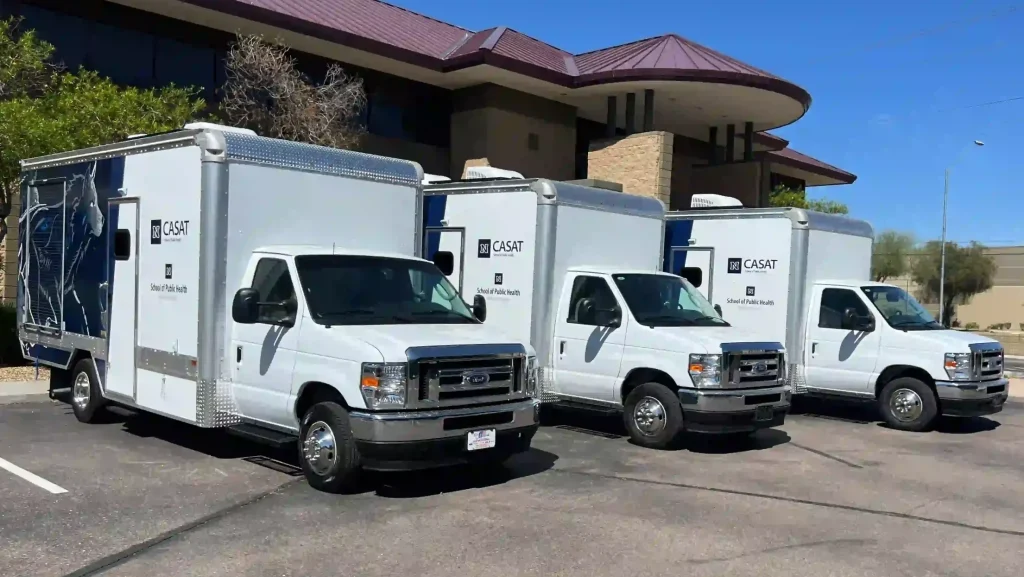
Discuss Your Vehicle
Compare consultation spaces around privacy, patient entry, and daily staff workflow.
Bring services, room occupants, technology, site conditions, and follow-up requirements to Magnum.
Get the Free Buyer Guide
Request the Mobile Healthcare Buyer Guide through the guide page.
Trusted Nationwide
Trusted by Leading Healthcare Organizations
Trusted by healthcare providers, public agencies, universities, and nonprofit organizations to deliver high-quality mobile specialty vehicles.







Built to Support
Organizations Across Every Sector
Delivering mobile solutions for healthcare, education, government, nonprofit, and commercial applications.
Healthcare
Education
Government
Non-Profit
Public Safety
Corporate
Ready to Get Started
Let’s Build a Solution That Moves Care Forward
Tell us about your operation and our team will help build the right mobile vehicle solution for your needs.