
Mobile Specialty Vehicles • Delivery Preparation
What to Include in Your Vehicle Delivery and Acceptance Checklist
Prepare a documented handover around the configuration your team agreed to review
Quick answer
A mobile clinic delivery acceptance checklist should cover the agreed vehicle and equipment scope, documents, walkthroughs, operating instruction, visible condition, specified functions, service contacts, and a written process for open items. Align the review with the project’s actual acceptance requirements. Keep the organization’s clinical and operational launch approvals separate from the vehicle handover.
Delivery brings the vehicle and operating team together. A prepared checklist helps the organization review the agreed configuration, learn the installed systems, and record questions consistently.
Build the checklist before the handover and share relevant questions with the builder. Use the current project documents as the baseline rather than expecting a general checklist to define contractual acceptance.
Magnum Mobile can discuss configurable layouts, commercial-grade materials, and integrated vehicle systems around your operating plan. Explore our mobile specialty vehicles and request the Mobile Healthcare Buyer Guide through its guide page.
1. Agree on the review scope and attendees
Confirm how the project’s delivery and acceptance process works. Identify which reviews, demonstrations, documents, and approvals are required.
Baseline: Gather the current agreed proposal, drawings, equipment schedule, approved changes, and relevant delivery requirements.
People: Include the authorized buyer representative and the staff responsible for driving, setup, systems, equipment, maintenance, and records as appropriate.
Schedule: Allow the agreed time for walkthroughs, questions, instruction, and documentation. Confirm any supplier participation needed for equipment.
Roles: State who records findings, who can approve decisions, and how unresolved items will be reviewed under the project process.
2. Check the delivered scope against the agreed documents
Use a structured list to compare the delivered configuration with the current project baseline. Have qualified reviewers handle technical checks within their responsibilities.
Specificity: Record the item, agreed requirement, observation, and any question requiring follow-up. Do not treat a casual walkthrough as a substitute for the required reviews.

| Checklist area | What to review |
|---|---|
| Vehicle and upfit | Identification, visible condition, agreed configuration, and supplied items |
| Equipment and systems | Specified items, installation information, demonstrations, and instruction |
| Documents | Manuals, coverage terms, service contacts, and project records |
| Open items | Written findings, ownership, next steps, and agreed follow-up |
3. Walk through the complete operating sequence
Use the organization’s planned workflow to organize the handover questions. Review the installed configuration rather than a generic operating description.
Arrival and setup: Review positioning, entrances, access features where specified, utility connections, controls, and required clear areas.
Service areas: Trace staff movement, equipment access, supplies, records, and storage during a representative visit.
Closing: Review the applicable instructions for shutdown, system care, cleaning arrangements, restocking, and securing items for travel.
Demonstrations: Ask the responsible builder or equipment personnel to explain the specified functions within the agreed handover scope. Record questions outside that scope for the correct specialist.
4. Collect documents and confirm training responsibilities
Make the handover information easy for the operating team to find after delivery. Assign someone to organize the current versions.
Manuals: Confirm the vehicle, upfit, system, and equipment instructions supplied for the actual configuration.
Coverage: Review the actual chassis, upfit, and equipment warranty documents and claim contacts separately. Note any registration or owner responsibilities stated in them.
Maintenance: Identify routine care, service intervals from applicable instructions, records, and contacts for arranging service.
Training: Record who received instruction, on which tasks, and what additional instruction remains necessary. Include backup operators in the broader training plan.
Project records: Keep agreed scope, drawings, approved changes, delivery observations, and follow-up correspondence together.
5. Record open items and prepare for launch separately
Use the agreed process to document and resolve questions. A clear record is more useful than relying on memory after the handover.
Finding: Describe the observation, relevant requirement, location, and supporting information. Distinguish a defect concern from a question, preference, or new requested change.
Next step: Confirm the responsible contact and agreed follow-up process. Do not assume an undocumented conversation resolves an item.
Operating decisions: Have the appropriate responsible people determine whether any unresolved issue affects use of the vehicle or equipment.
Launch readiness: Complete the organization’s staffing, supplies, sites, procedures, clinical or service approvals, and other applicable launch requirements alongside the vehicle review.
6. Prepare your Magnum delivery discussion early
Magnum Mobile’s process includes delivery walkthrough and support. Bring your operating team’s requirements into the project so delivery preparation starts before the vehicle arrives.
Share the checklist: Discuss the review scope, attendees, documents, and instruction questions relevant to your configured project.
Connect with the operation: Bring the route, host-site plan, equipment responsibilities, and tasks staff will perform during setup and closing.
Review resources: Explore Magnum’s vehicle process and support information. Confirm the handover arrangements for your project.
Discuss your vehicle delivery preparation with Magnum Mobile. A clear checklist helps the operating team ask useful questions and organize the next steps.
Vehicle Delivery and Acceptance FAQs
What should define the acceptance checklist?
Use the current project scope, agreed acceptance requirements, equipment schedule, approved changes, and the organization’s review process. A general checklist is a planning aid.
Who should attend the delivery walkthrough?
Include the authorized buyer representative and the people responsible for relevant operating, equipment, setup, maintenance, and documentation tasks. Confirm the scope in advance.
How should open items be recorded?
Document the item, observation, relevant requirement, responsible contact, and agreed follow-up process. Keep the record with the project documents.
Can services start immediately after delivery?
The organization must complete its broader staffing, training, site, supply, procedure, and applicable service-readiness requirements. Vehicle handover and program launch are separate reviews.
Prepare Your Team for a Clear Vehicle Handover
Magnum Mobile can discuss delivery preparation around your configured vehicle and operating requirements. Bring the people, documents, walkthrough questions, and training needs that matter to your program.
Explore Magnum’s mobile specialty vehicles and compare configurations for your program.
Discuss Your Vehicle
Use the agreed project scope to organize the delivery review.
Prepare people, documents, instruction questions, and open-item follow-up with Magnum.
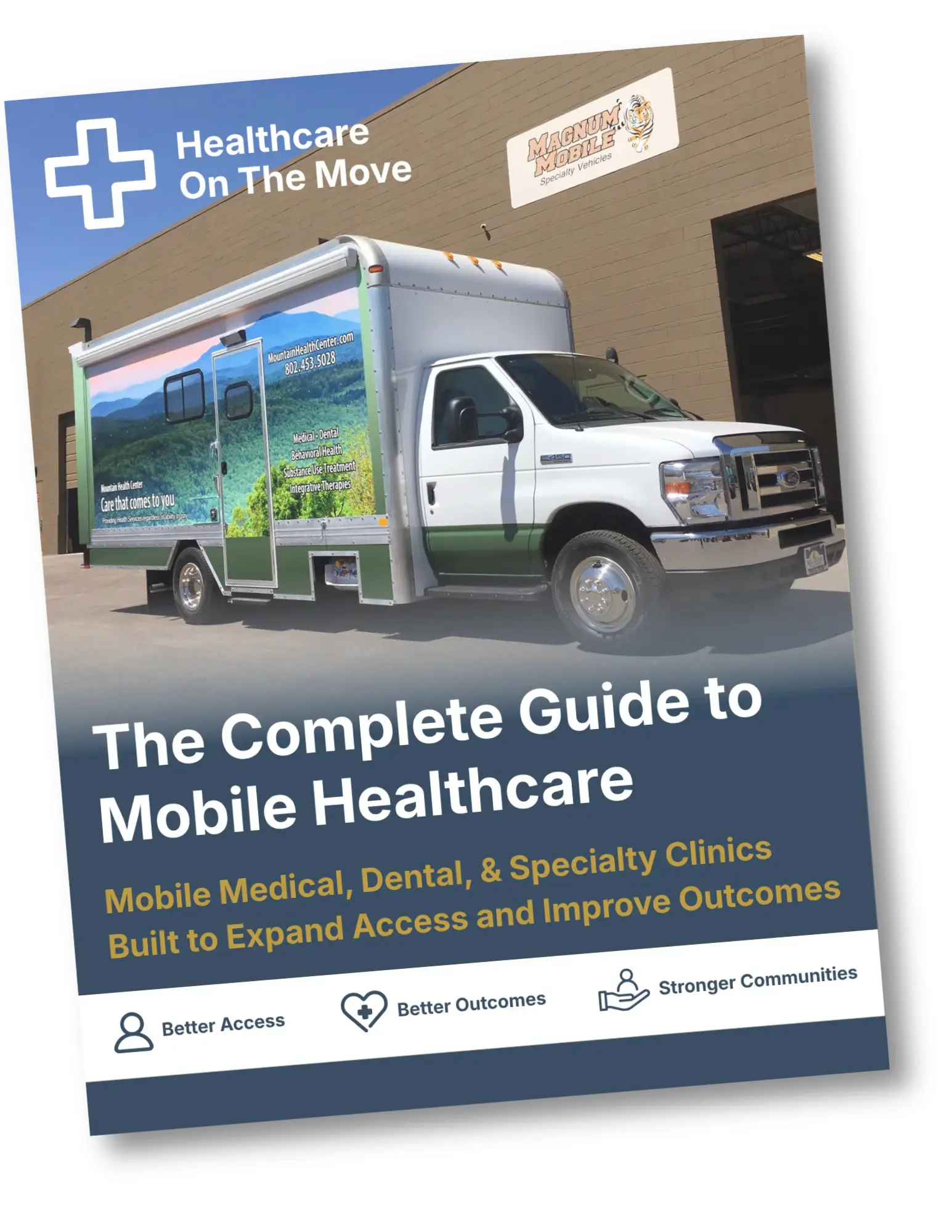
Get the Free Buyer Guide
Request the Mobile Healthcare Buyer Guide through the guide page.
Latest From Our Blog
Trusted Nationwide
Trusted by Leading Organizations
Trusted by healthcare providers, animal care programs, public agencies, universities, and nonprofit organizations for mobile specialty vehicles.






Built to Support
Organizations Across Every Sector
Delivering mobile solutions for healthcare, education, government, nonprofit, and commercial applications.
Healthcare
Education
Government
Non-Profit
Public Safety
Corporate
Ready to Get Started
Let’s Build a Solution That Moves Care Forward
Tell us about your operation and our team will help build the right mobile vehicle solution for your needs.