
Mobile clinic driving and towing planning
What Your Organization Needs to Know About Driving and Towing
Connect your vehicle choice with a practical transportation plan
Quick answer
Plan mobile clinic driving and towing using the final vehicle configuration, applicable ratings and loaded weights, intended routes, and qualified drivers. For trailers, verify the specific tow vehicle and towing equipment as a complete combination. Confirm licensing and operating requirements with the relevant authorities, then assign training, inspections, and deployment responsibilities.
Choosing a mobile clinic also means deciding how your organization will move it. The driver, route, tow vehicle where applicable, and operating routine belong in the purchase conversation.
A familiar chassis name or advertised towing maximum is a starting point for questions. Your team needs information for the actual completed vehicle and its intended use.
Magnum Mobile Specialty Vehicles offers mobile medical vehicle options and mobile dental vehicle options. Use this mobile clinic driving and towing checklist to prepare your deployment brief.
1. Confirm the completed vehicle
Ask Magnum for the information relevant to the completed vehicle. Keep it with your fleet records and use it when reviewing driver and deployment requirements.
Dimensions: Record height, width, length, and the configuration that will travel. Include exterior equipment affecting clearance.
Ratings and loads: Review the applicable vehicle ratings and how equipment, supplies, occupants, and fluids affect the loaded condition with the responsible vehicle team.
Travel arrangements: Confirm approved occupant positions and the manufacturer’s instructions for securing equipment and preparing the vehicle for travel.
Changes: Have additions or substitutions reviewed before assuming the earlier information still applies. Update the operating record when the configuration changes.
2. Verify driver requirements
Confirm licensing and other driver requirements for the final vehicle and the organization’s operation. Have your fleet lead verify the answer with the relevant licensing and transport authorities.
The FMCSA driver licensing overview describes federal CDL classifications. Review it alongside applicable state requirements and the actual vehicle or combination information rather than relying on a general “no CDL” assumption.
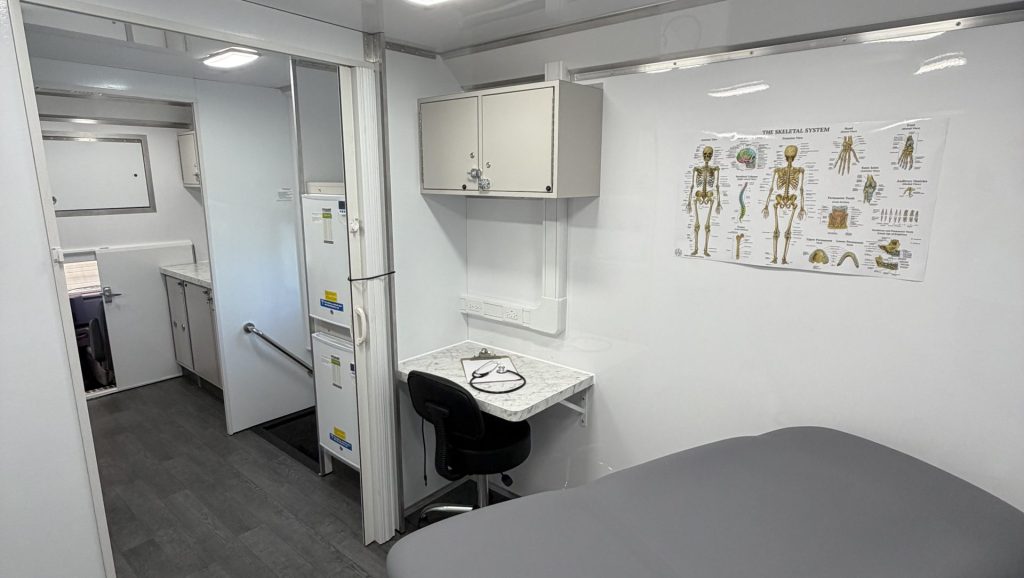
Identify the primary and replacement drivers early. Clarify any organizational, insurer, qualification, or training requirements before building the service calendar around their availability.
3. Review trailer compatibility
For a trailer, verify the specific tow vehicle and trailer together. The review must account for the chosen vehicle configuration and intended loading.
Tow vehicle: Provide the exact vehicle information and manufacturer documentation. An advertised maximum for a model family may not describe the organization’s truck.
Loaded combination: Have the responsible vehicle specialists review trailer weight, tow-vehicle loading, applicable ratings, and the effect of trailer attachment load on payload.
Towing equipment: Confirm the hitch, coupler, brakes, electrical connections, and other required equipment against the selected combination and manufacturer instructions.
Reference documents: Use the applicable owner’s manuals and manufacturer guidance. Ford’s towing resources provide configuration-based information for Ford vehicles; use the appropriate manufacturer for another tow vehicle.
4. Plan routes and training
Review the intended routes with the people who will drive or tow. Include the vehicle’s clearance, site entrances, turns, parking maneuvers, and departure arrangements.
Site access: Collect entrance and parking information before scheduling visits. Identify locations requiring further assessment by the responsible vehicle team.
Travel time: Allow for the route, arrival checks, setup, closing tasks, and return travel. Service hours are only part of the deployment day.
Practice: Arrange vehicle-specific familiarization with suitable qualified instruction. Include the maneuvers and setup tasks the organization’s operation requires.
Replacement staff: Plan how an alternate driver becomes ready to operate the actual vehicle. Do not rely on an informal handover to establish readiness.
Conditions: Have your team define route and scheduling decisions for weather, road restrictions, or site changes. Review those decisions through the organization’s operating process.
5. Assign operating responsibilities
Give driving and towing tasks clear owners. A vehicle can be ready for clinical use while the program still needs to resolve transportation and fleet responsibilities.
Readiness: Assign the applicable pre-trip checks and travel preparation from the vehicle documentation and fleet procedures.
Maintenance: Identify who manages chassis, trailer, towing equipment, and installed-system service records. Coordinate relevant Magnum support resources with manufacturer requirements.
Scheduling: Confirm driver availability, tow-vehicle availability where applicable, fuel arrangements, and host contacts for arrival.
Interrupted deployment: Record who handles a breakdown, unavailable driver, unsuitable site, or other disruption. Have the responsible team approve the response plan.
6. Prepare your deployment brief
Prepare a deployment brief that connects the vehicle choice with the people and resources needed to move it. Review the brief before committing to a service schedule.
Vehicle brief: Include the proposed configuration, relevant dimensions and ratings, loading assumptions, and trailer or tow-vehicle information.
People brief: Identify drivers, verification tasks, training needs, fleet responsibilities, and coverage for absences.
Site brief: List routes, parking locations, maneuvering questions, and unresolved host details. Discuss deployment needs before finalizing the vehicle.
Start planning: Explore Magnum’s build process and share your driving and towing questions with the team.
Mobile clinic driving and towing FAQs
Does every mobile clinic require the same driver’s license?
No. Verify requirements using the final vehicle or combination and the organization’s operation with the relevant licensing and transport authorities. Include applicable state and organizational requirements in the review.
Can our existing truck tow a mobile clinic trailer?
Have the specific tow vehicle, loaded trailer, applicable ratings, attachment load, and towing equipment reviewed as a combination. Use manufacturer documentation and qualified vehicle specialists before assuming compatibility.
What training should the driver receive?
Arrange vehicle-specific familiarization and suitable qualified instruction for the actual driving or towing tasks. Include travel preparation, site maneuvers, setup responsibilities, and the organization’s operating procedures.
What should we tell Magnum about transportation?
Share intended drivers, proposed tow-vehicle details where applicable, routes, host sites, loading needs, and unresolved requirements. These details help frame the discussion about vehicle format and configuration.
Plan vehicle transportation with Magnum
A practical transportation plan helps your organization connect vehicle selection with day-to-day deployment. Clear ownership also makes outstanding questions easier to resolve.
Compare Magnum’s medical vehicles and dental vehicles with your driving, towing, and host-site plans in mind.
Discuss your vehicle with Magnum Mobile and bring route information, driver-planning questions, and proposed tow-vehicle details.
Request the free Mobile Healthcare Buyer Guide through its landing page for broader purchase-planning questions.
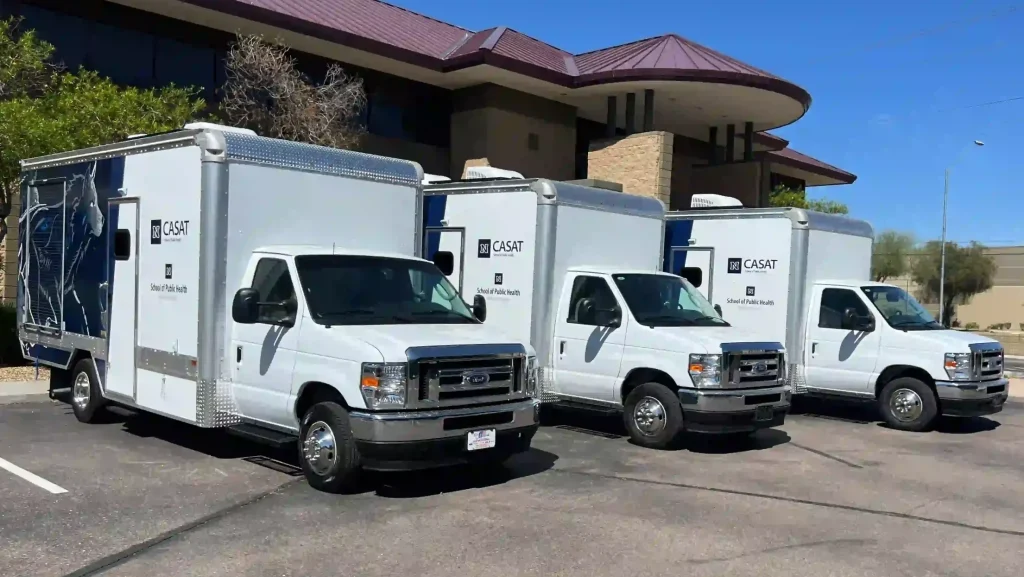
Discuss Your Vehicle
Planning transportation? Tell Magnum about your drivers, routes, host sites, and proposed towing resources.
Bring those requirements to a focused discussion about your vehicle format and configuration.
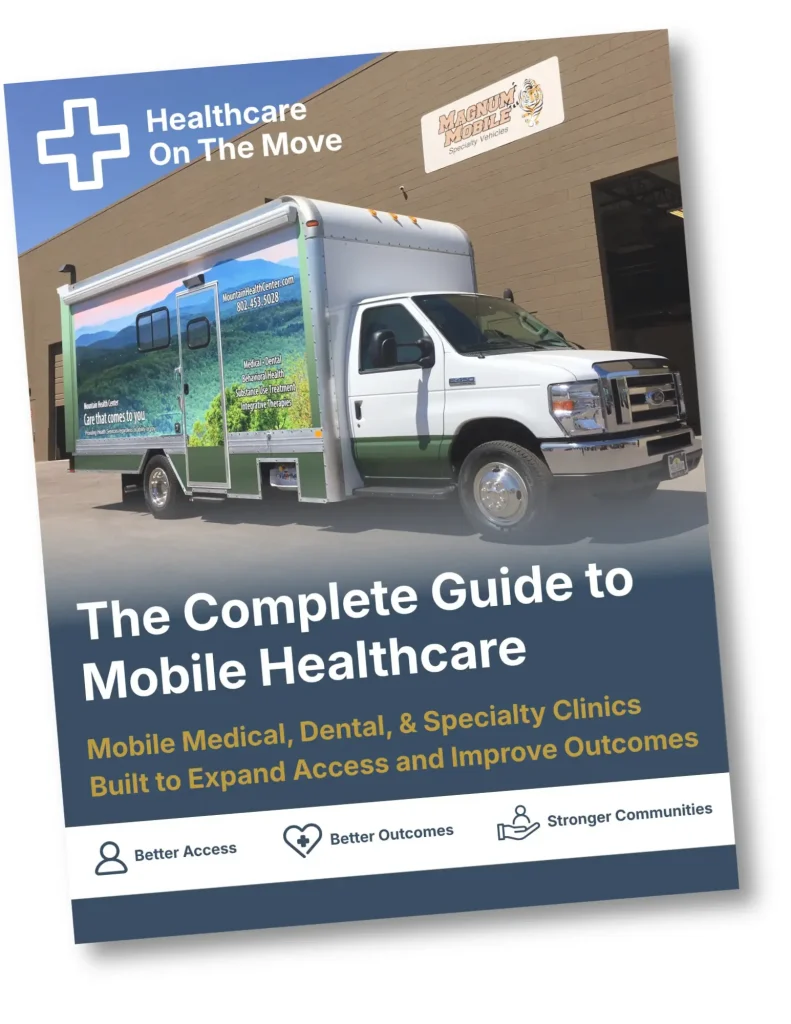
Get the Free Buyer Guide
Get the free Mobile Healthcare Buyer Guide to organize services, equipment, and deployment questions.
Trusted Nationwide
Trusted by Leading Healthcare Organizations
Trusted by healthcare providers, public agencies, universities, and nonprofit organizations to deliver high-quality mobile specialty vehicles.







Built to Support
Organizations Across Every Sector
Delivering mobile solutions for healthcare, education, government, nonprofit, and commercial applications.
Healthcare
Education
Government
Non-Profit
Public Safety
Corporate
Ready to Get Started
Let’s Build a Solution That Moves Care Forward
Tell us about your operation and our team will help build the right mobile vehicle solution for your needs.