
Mobile Specialty Vehicles • Factory Visit Planning
What to Inspect During a Mobile Clinic Factory Visit
Use the visit to understand the configuration behind your program
Quick answer
During a mobile clinic factory visit, review the agreed purpose of the visit, relevant construction and configuration details, workflow, equipment interfaces, utilities, access, storage, serviceability, and project documents. Bring your operating brief and questions. Confirm which vehicles or build stages will be available to review and distinguish a tour from a project inspection or delivery acceptance.
A factory visit is more useful when your team knows what it wants to learn. A general look around can be informative, but a focused review helps connect construction and layout details with the work your program will perform.
Agree on the visit’s scope with the builder in advance. A vehicle on display or in progress may represent a different configuration from the one proposed for your project.
Magnum Mobile can discuss configurable layouts, commercial-grade materials, and integrated vehicle systems around your operating plan. Explore our mobile specialty vehicles and request the Mobile Healthcare Buyer Guide through its guide page.
1. Set the purpose and scope before the visit
Tell the builder whether your team is researching options, reviewing a proposed configuration, or discussing a particular project stage. Confirm what can be reviewed during the appointment.
Participants: Bring the people responsible for workflow, equipment, vehicle operation, maintenance, and purchasing as appropriate to the visit.
Documents: Carry the operating brief, current drawings, scope, equipment list, and a short prioritized question list.
Availability: Ask which vehicles or build stages are expected to be available. Do not assume an example unit matches every detail of your proposed configuration.
Boundaries: Confirm site instructions and the review process. A tour does not replace the organization’s required technical inspections or acceptance steps.
2. Walk through a complete operating scenario
Use the relevant drawing or example layout to discuss a realistic visit. Consider people, equipment, and supplies in their working positions.
Sequence: Trace setup, access, service delivery, documentation, supplies, cleanup, closing, and travel preparation. Record questions about conflicts or missing information.

| Review area | Useful questions |
|---|---|
| Workflow | How do people and supplies move during the planned services? |
| Equipment | What information governs installation, operation, and access? |
| Systems | Which operating and host-site assumptions apply? |
| Ownership | How are maintenance, documents, training, and support handled? |
3. Ask about construction and equipment interfaces
Request explanations tied to the proposed project rather than relying on appearance alone. Include the relevant equipment suppliers in unresolved technical questions.
Materials: Discuss the specified surfaces, cabinetry, finishes, and their intended use. Confirm which examples apply to your configuration.
Installation: Ask how equipment specifications, mounting, connections, clearances, and travel preparation are reviewed.
Loading: Identify the information needed for the appropriate professionals to evaluate the proposed operating load and vehicle limits.
Changes: Ask how a different equipment model or layout choice would be reviewed and documented before assuming it can be accommodated.
4. Review systems and serviceability
Operating needs and maintenance access deserve attention alongside patient-facing spaces. Ask staff who will use and maintain the vehicle to identify their questions.
Utilities: Review power, water, climate, connectivity, and other specified systems against your equipment and route requirements.
Controls: Discuss how operators learn the installed configuration, including startup, shutdown, connections, and fault reporting.
Access: Ask how technicians reach major components and what service information will be available.
Storage: Review supply access, travel security, cleaning needs, and the support tasks behind the planned services.
Host sites: Discuss the complete deployed footprint, access features, connection locations, and representative site constraints.
5. Record questions and distinguish observations from approvals
Keep a structured record of what your team saw and what still needs confirmation. Avoid leaving the visit with different understandings of the project.
Relevance: Mark whether an observation concerns your actual project, an example vehicle, or a general discussion.
Open items: Record the question, responsible contact, information required, and agreed next step.
Approvals: Follow the project’s actual process for drawings, selections, scope, and changes. Do not assume a conversation during a tour changes the agreement.
Next stage: Confirm what the team should review next and which documents will form the baseline for later inspection or delivery discussions.
6. Prepare focused questions for a Magnum visit
Magnum Mobile can discuss configurable layouts, commercial-grade materials, and integrated systems around your operating brief. Use the visit conversation to connect those features with your program.
Bring the operation: Share services, staff roles, equipment specifications, host sites, route, storage, and maintenance priorities.
Prioritize: Choose the questions that matter most to program fit and ask what supporting information is needed to resolve them.
Plan ahead: Review Magnum’s factory tour information and our vehicle process. Contact the team to confirm visit availability and scope.
Discuss a vehicle review with Magnum Mobile. A focused operating brief helps make the visit more useful for the people evaluating the purchase.
Mobile Clinic Factory Visit FAQs
What should we bring to a factory visit?
Bring the operating brief, current project documents where applicable, equipment requirements, representative site information, and a prioritized list of questions.
Will every vehicle at the factory match our proposed configuration?
No assumption should be made. Ask which examples or build stages are available and which details apply to your actual project.
Is a tour the same as delivery acceptance?
No. Clarify the purpose of the visit and follow the project’s agreed inspection and acceptance process separately.
How should questions be documented?
Record the observation or question, its relevance to the project, the responsible contact, required information, and the agreed next step.
Make Your Magnum Vehicle Review More Useful
Bring Magnum Mobile the questions behind your vehicle decision. The team can discuss configuration and visit options around your workflow, equipment, deployment, and ownership requirements.
Explore Magnum’s mobile specialty vehicles and compare configurations for your program.
Discuss Your Vehicle
Use a factory visit to connect construction with your operating brief.
Prepare focused questions and confirm the visit’s scope with Magnum.
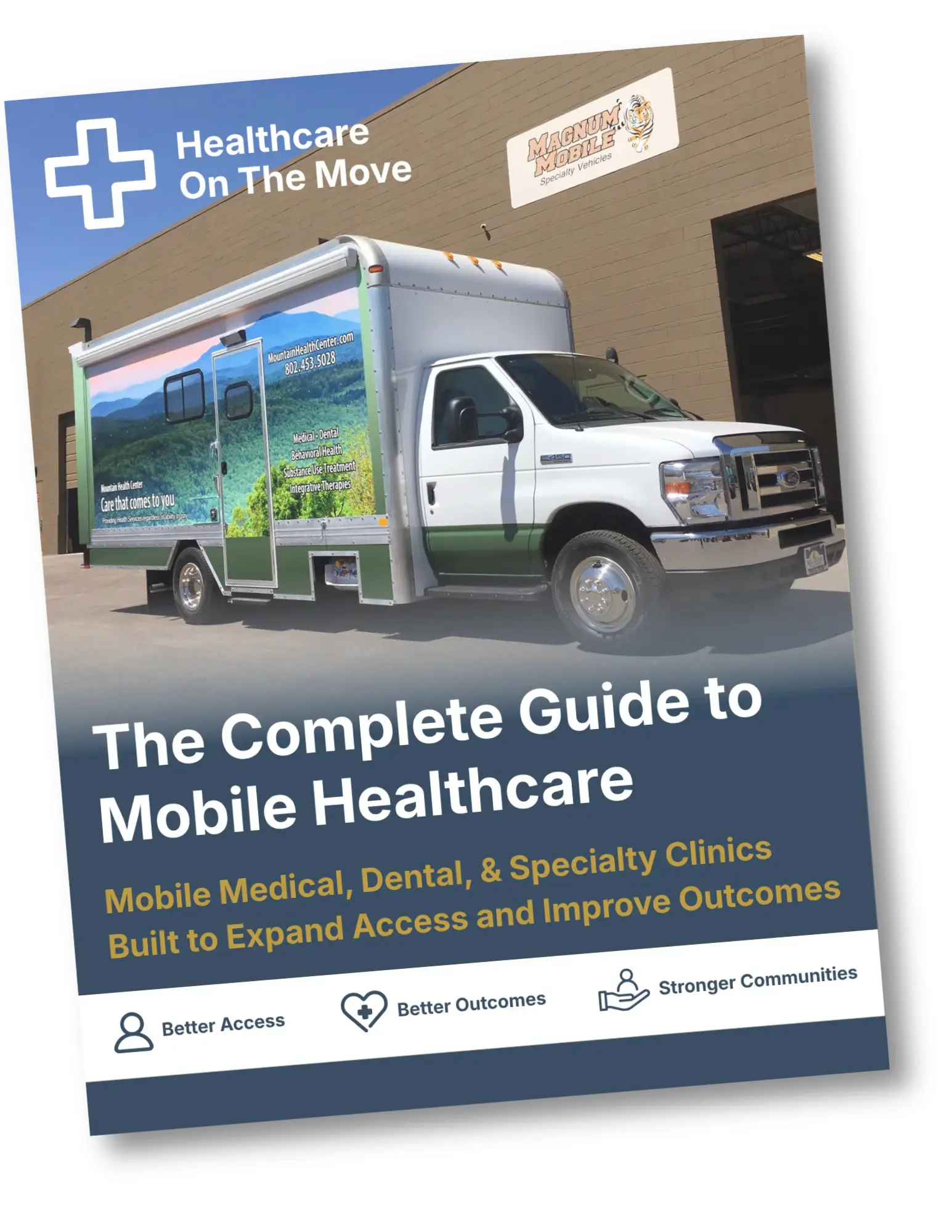
Get the Free Buyer Guide
Request the Mobile Healthcare Buyer Guide through the guide page.
Trusted Nationwide
Trusted by Leading Organizations
Trusted by healthcare providers, animal care programs, public agencies, universities, and nonprofit organizations for mobile specialty vehicles.







Built to Support
Organizations Across Every Sector
Delivering mobile solutions for healthcare, education, government, nonprofit, and commercial applications.
Healthcare
Education
Government
Non-Profit
Public Safety
Corporate
Ready to Get Started
Let’s Build a Solution That Moves Care Forward
Tell us about your operation and our team will help build the right mobile vehicle solution for your needs.