
Mobile Clinic Medical Supply Storage
How to Plan Medical Supply Storage in a Mobile Clinic
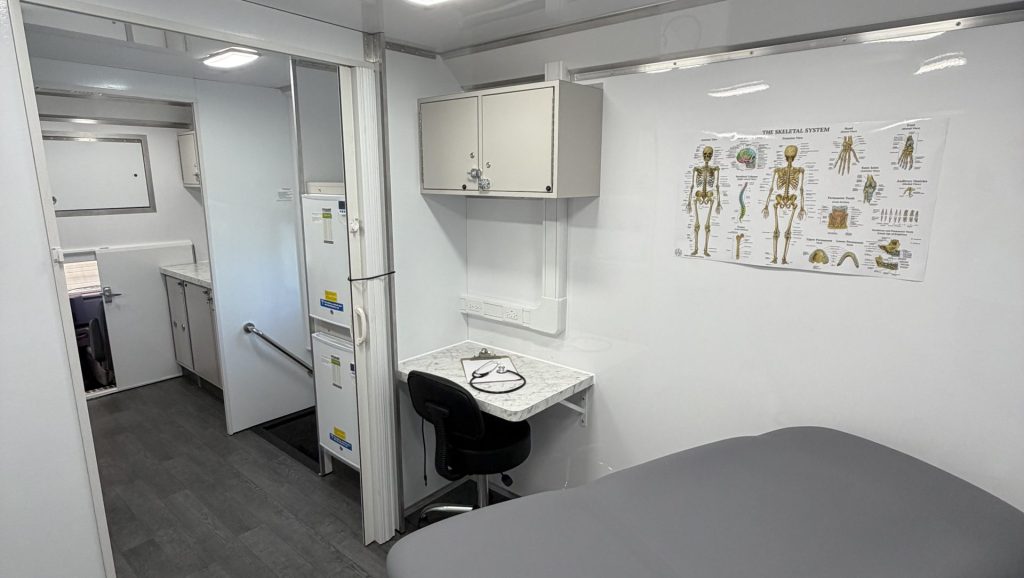
Connect Supply Inventory With the Vehicle Layout
Quick answer
Plan mobile clinic medical supply storage by listing the materials needed for each service, their quantities, dimensions, handling requirements, and replenishment schedule. Review where staff retrieve supplies during care, how items are secured for travel, and whether special storage equipment is needed. Bring those requirements to the builder before approving cabinets and the floor plan.
Useful storage starts with an inventory and a workflow. More cabinets do not automatically solve a storage problem if the team cannot reach the right materials when they are needed.
Map the supplies used during a typical service day and explain how the clinic is restocked. Include the materials, containers, equipment, and staff tasks that consume space beyond the exam area.
Magnum Mobile designs configurable medical vehicles with storage and equipment integration discussed around the program’s needs. A specific supply brief helps connect the cabinetry and supporting systems with the intended operation.
Build an Inventory Around the Planned Services
Build a supply inventory around the services the program intends to provide. Include items used frequently and materials needed to support the team throughout the day.
Clinical supplies: Have the responsible clinical team identify the materials used for each intended service and their handling requirements.
Supporting materials: Include approved cleaning supplies, paperwork, protective materials, and other items required by the operating plan.
Containers and equipment: Record the actual packages, bins, cases, and equipment that must fit in the proposed spaces.
List dimensions, approximate quantities, weights where relevant, and any product or supplier instructions that affect placement. A named item with its specifications gives the builder more useful information than a request for “plenty of storage.”
Estimate Quantities Between Replenishment Opportunities
Estimate how much supply inventory the vehicle needs between replenishment opportunities. The answer depends on services, appointment plans, deployment length, and access to the organization’s base inventory.
Use the team’s planned service quantities and experience to estimate consumption. Record the assumptions, including how the program handles a changed schedule or an unexpected need for additional materials.
Document where restocking happens and who performs it. A vehicle returning to base each day may have different inventory needs from a program traveling between sites before it can replenish supplies.
Map Supply Access Around the Clinical Workflow
Place supplies around the work they support. Review where staff stand, what equipment is in use, and which areas may be occupied when someone needs to retrieve an item.
Point of use: Identify materials needed within reach of each work area and the quantities that belong there.
Reserve inventory: Explain where additional supplies can be stored without interfering with patient or staff movement.
Working clearance: Check cabinet doors, drawers, equipment positions, and staff access while the clinical space is occupied.
Shared access: Identify supplies used by more than one work area and how the team will retrieve or replenish them during overlapping activity.
Review Special Storage and Equipment Requirements
Identify materials that need more than ordinary cabinetry. Have the responsible team review the applicable product instructions and program requirements before the vehicle’s storage equipment is selected.
Temperature-sensitive items: Bring product requirements and proposed equipment specifications into the systems discussion rather than assuming general climate control is sufficient.
Controlled access: Describe which materials need restricted access under the organization’s policies and which staff roles use them.
Separation: Have the clinical team define the handling, separation, and storage arrangements required for the materials used in its services.
Equipment integration: Ask about the power, ventilation, mounting, clearance, and operating requirements of any selected storage equipment.
For vaccination programs, review CDC’s vaccine storage and handling resources with the responsible clinical team. Use the relevant product and equipment requirements to inform the vehicle brief.
Plan Travel Preparation, Loading, and Restocking
Review storage during travel and at restocking time. Materials need an operating plan that covers loading, securement, use, replenishment, and removal according to the selected configuration and equipment instructions.
Travel preparation: Discuss cabinet closures, item securement, and the vehicle’s supplied preparation instructions with the builder.
Weight and loading: Bring realistic supply and equipment quantities to the configuration review so the builder can consider them in the vehicle plan.
Restocking access: Check how boxes, bins, and equipment enter the vehicle and reach their assigned spaces without unnecessary disruption.
Assign inventory and replenishment responsibilities. Review what the team checks before departure, during service, and at closeout so the storage layout supports a consistent routine.
Prepare a Storage Brief Before Layout Approval
Prepare a storage brief before cabinetry and floor-plan approval. It should show both what needs to fit and how the team plans to use it.
Inventory: Provide item types, packages, containers, quantities, dimensions, relevant weights, and special requirements.
Workflow: Mark point-of-use supplies, reserve inventory, shared access, occupied work areas, and replenishment tasks.
Deployment: Document service-day length, restocking opportunities, travel preparation, selected storage equipment, and assigned responsibilities.
Review the proposed cabinets and equipment locations with the people who will use them. Magnum can discuss storage and integration around these requirements, including the tradeoffs with work areas and other vehicle functions.
Mobile Clinic Medical Supply Storage FAQs
How much supply storage does a mobile clinic need?
Base it on the planned services, inventory quantities, packages, deployment length, and replenishment schedule. Measure what must fit rather than using cabinet count alone.
Should all supplies be stored in the exam room?
Review the workflow. Frequently used materials and reserve inventory may need different locations, with access checked against occupied work areas and patient movement.
Can a standard cabinet handle every medical supply?
No single storage arrangement suits every item. The responsible team should review handling, temperature, security, separation, and product requirements before selecting cabinetry or special equipment.
What should we give the builder for storage planning?
Provide the supply inventory, quantities, dimensions, equipment models, handling requirements, point-of-use locations, travel considerations, and replenishment plan.
Plan Medical Supply Storage With Magnum Mobile
Magnum Mobile helps organizations connect operational requirements with a configured specialty vehicle. A detailed storage brief supports useful design discussions about cabinetry, equipment integration, working clearance, and daily use.
Explore Magnum’s mobile medical clinics and build process to begin planning a configuration around your services.
Request the Mobile Healthcare Buyer Guide for planning considerations covering services, layouts, equipment, and vehicle selection.
Ready to discuss supply storage for your mobile clinic? Contact Magnum Mobile with your inventory and workflow brief to start a configured vehicle proposal.
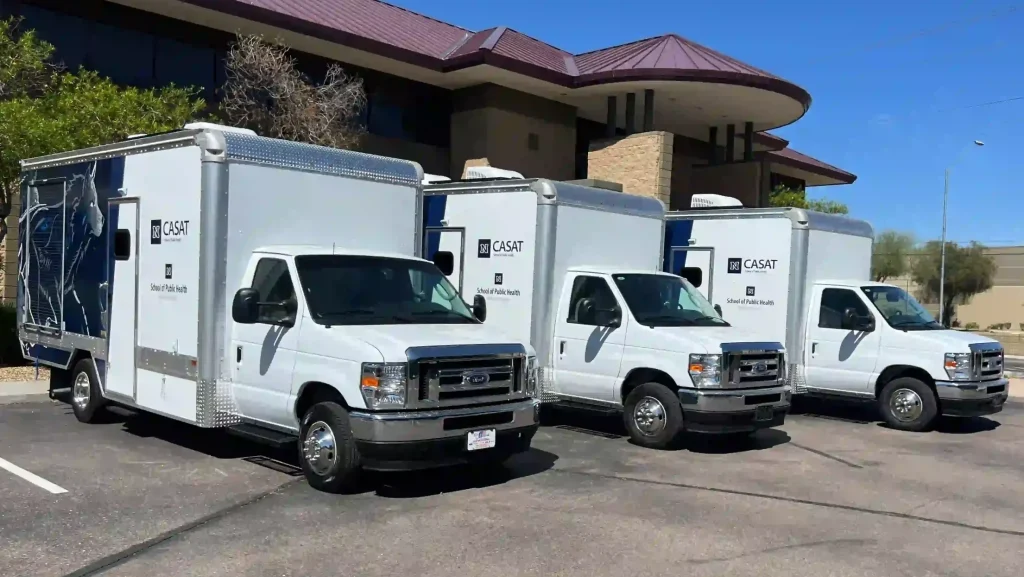
Discuss Your Vehicle
Bring your supply inventory, equipment specifications, and restocking plan to Magnum.
Discuss cabinetry and work-area arrangements around the way your team operates.
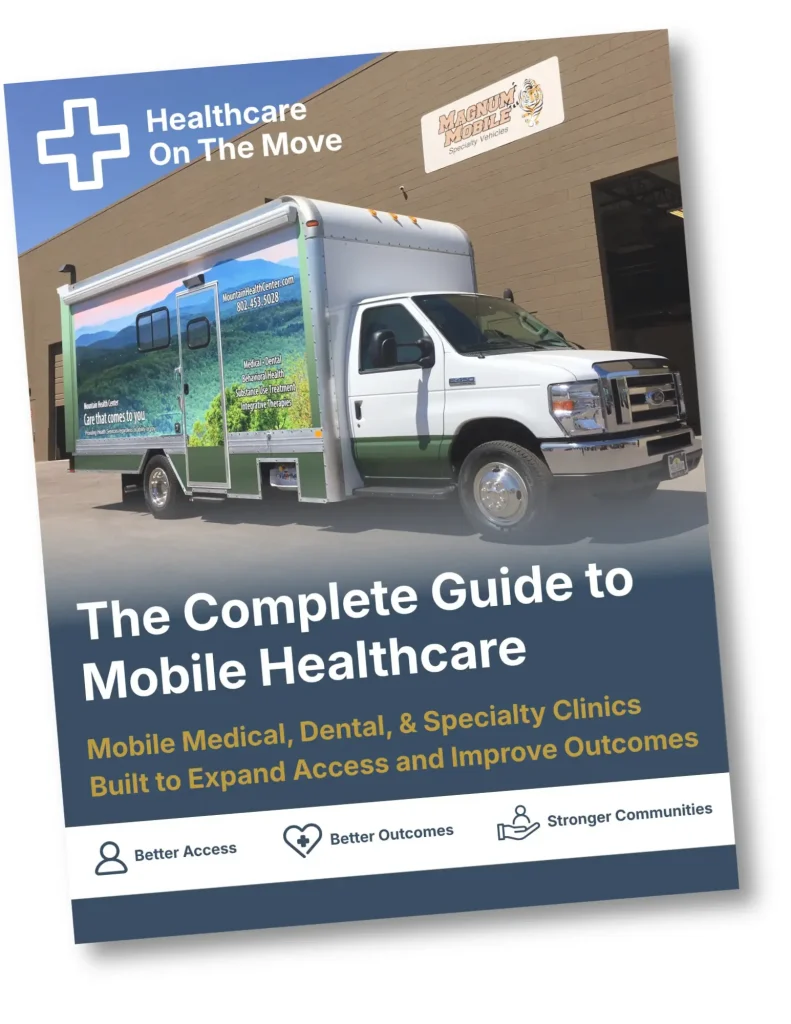
Get the Free Buyer Guide
Get planning considerations for supplies, equipment, layouts, and vehicle selection.
Trusted Nationwide
Trusted by Leading Healthcare Organizations
Trusted by healthcare providers, public agencies, universities, and nonprofit organizations to deliver high-quality mobile specialty vehicles.







Built to Support
Organizations Across Every Sector
Delivering mobile solutions for healthcare, education, government, nonprofit, and commercial applications.
Healthcare
Education
Government
Non-Profit
Public Safety
Corporate
Ready to Get Started
Let’s Build a Solution That Moves Care Forward
Tell us about your operation and our team will help build the right mobile vehicle solution for your needs.