
Mobile Clinic Restroom Planning
Does Your Mobile Clinic Need an Onboard Restroom?
Review Restroom Needs With the Complete Vehicle Plan
Quick answer
A mobile clinic may need an onboard restroom when the service plan, patient needs, staff workday, or limited host facilities make it useful. Compare that need with available floor-plan space, access, water and wastewater systems, cleaning, and servicing. Confirm the intended arrangement with your operating team and builder before approving the vehicle configuration.
Restroom planning affects more than convenience. It changes how the available vehicle space is used and adds operating tasks that the program must be ready to manage.
Start by explaining who will use the restroom, when they may need it, and which sites can reliably provide an alternative. A clear use case helps the team compare the practical tradeoffs.
Magnum Mobile offers configurable medical vehicles. Bring your service needs and host-site arrangements to the design conversation so the proposed restroom, supporting systems, and complete floor plan are reviewed together.
Define Who Needs a Restroom and When
Define why the program is considering an onboard restroom. Patient access, the service sequence, and staff needs can lead to different requirements.
Patient needs: Consider the intended population, visit length, accompanying people, and whether leaving the clinic area creates difficulty.
Service workflow: Have the clinical team identify activities that affect restroom access or require particular arrangements.
Staff workday: Include travel, setup, service hours, and closeout when reviewing the facilities the team will depend on.
Separate a preference from a defined operating requirement. Record who needs access and under what conditions, then have the responsible team review the requirements that apply to the planned services.
Review the Reliability of Host-Site Facilities
Review the host facilities at the actual types of locations the clinic expects to visit. A nearby building is useful only if the necessary facilities are available when the program operates.
Confirm opening hours, permission to use the facilities, the path from the vehicle, and the intended users. Review whether access remains practical during the full service day and for people who may need assistance.
Document the alternative if the building is closed, access changes, or a new location lacks suitable facilities. Compare the vehicle options against that deployment plan rather than assuming every host can fill the gap.
Compare Restroom Space With Other Layout Priorities
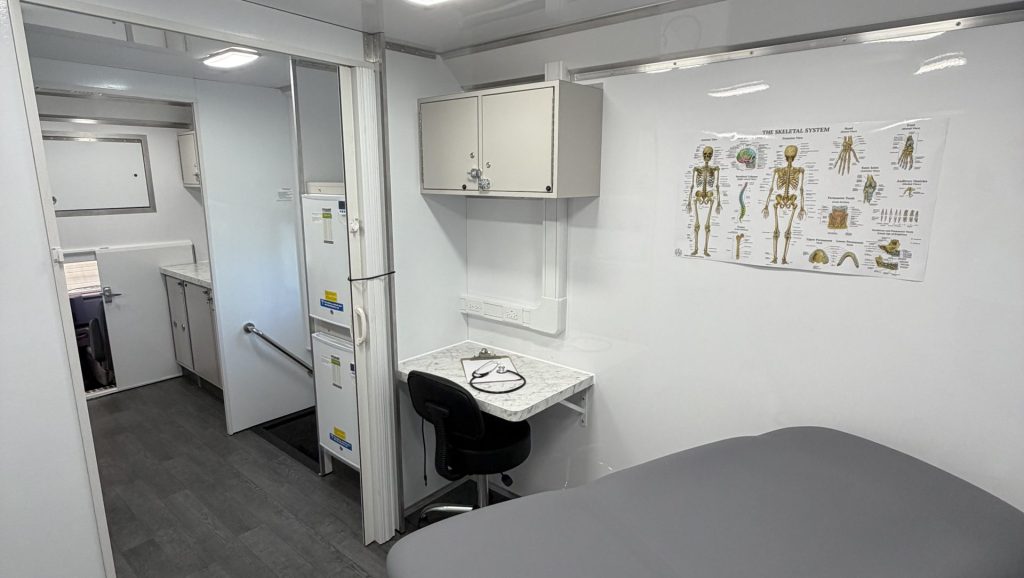
Compare the restroom within the complete floor plan. Space allocated to one function changes what can be provided for other activities in the chosen vehicle format.
Clinical workspace: Review exam areas, equipment positions, staff working clearance, and the intended service sequence.
Supporting areas: Compare intake, documentation, storage, and other functions alongside the proposed restroom location.
Access and privacy: Discuss who will enter the restroom, the route to it, door positions, and nearby occupied areas.
Configuration details: Ask the builder about the specific proposed arrangement and its limitations. Do not assume every onboard restroom has the same dimensions, equipment, or access features.
Plan Water Systems, Cleaning, and Servicing
Plan the supporting systems and servicing arrangements before choosing an onboard restroom. The organization needs a workable routine for using and maintaining the proposed configuration.
Fresh water: Discuss the water needs of the selected fixtures and other onboard activities with the builder and operating team.
Wastewater: Ask how the proposed system is used, monitored, and serviced, and which approved facilities the program will rely on.
Deployment schedule: Review service-day length, travel, sites, and replenishment or emptying arrangements rather than guessing the required system capacity.
Cleaning and supplies: Assign responsibility for the operating routine, materials, checks, and storage needed under the organization’s procedures.
Request the configuration’s operating and maintenance information during planning. Confirm responsibilities and suitable service arrangements with the relevant parties before the vehicle enters regular use.
Review Restroom Use During a Real Service Day
Walk through everyday use with the proposed layout. Review how the restroom interacts with patient appointments, staff activity, travel preparation, and the host site.
During appointments: Trace the route to the restroom while a clinical space or intake area is occupied.
At the site: Check the setup footprint, entry arrangements, utility assumptions, and any dependence on host facilities.
Before departure: Review the checks and securement tasks required by the vehicle and equipment operating information.
Include weather and storage conditions in the operating discussion. Ask the builder about the care required for the selected systems, with the program arranging its routine around the supplied instructions.
Prepare a Restroom and Deployment Brief
Prepare a restroom planning brief for Magnum and the operating team. It should connect the need for the feature with the proposed layout and a realistic servicing plan.
Use case: Identify intended users, service needs, visit length, staff hours, and any applicable requirements for responsible review.
Sites and access: Document host facilities, their availability, routes, alternatives, and the access needs of the intended users.
Systems and responsibilities: Describe other water uses, deployment duration, servicing locations, cleaning, supplies, and assigned team roles.
Review the proposed configuration against this brief before approval. Ask Magnum to explain the layout and system options being quoted so the program understands what it is selecting.
Mobile Clinic Onboard Restroom FAQs
Does every mobile medical clinic need an onboard restroom?
No single answer fits every program. Review services, patient and staff needs, host facilities, access, applicable requirements, and the intended deployment plan with the responsible team.
Can we use restrooms at the host location?
That may be workable when facilities, permission, hours, and access are dependable. Document the arrangement and the alternative if the facilities are unavailable.
What does an onboard restroom change in the floor plan?
It allocates space and affects movement, privacy, supporting systems, and servicing. Compare those tradeoffs with clinical workspace, storage, intake, and the selected vehicle format.
What should we ask the builder about restroom systems?
Ask about the proposed fixtures, access, fresh water and wastewater arrangements, monitoring, operating instructions, maintenance, and servicing requirements for the specific configuration.
Discuss Restroom Options With Magnum Mobile
Magnum Mobile designs configurable specialty vehicles around operational requirements. A clear restroom use case helps the design conversation connect patient needs, layout priorities, system integration, and deployment.
Explore Magnum’s mobile medical clinics and build process to begin comparing configurations for your program.
Request the Mobile Healthcare Buyer Guide for planning considerations covering services, layouts, equipment, and vehicle selection.
Ready to discuss your clinic’s restroom and layout needs? Contact Magnum Mobile with your service plan and host-site information to start a configured vehicle proposal.
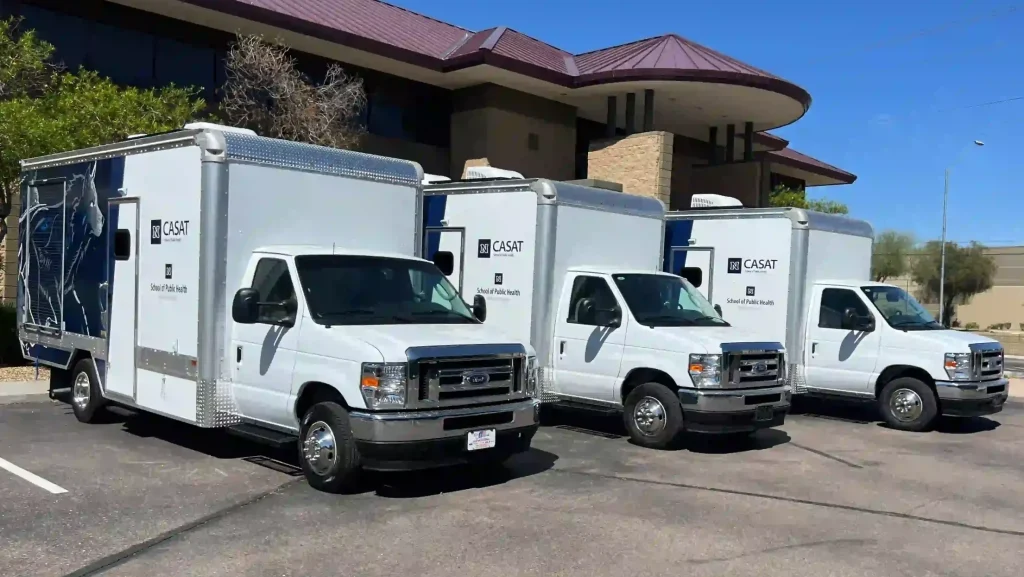
Discuss Your Vehicle
Bring your restroom use case, host-site arrangements, and layout priorities to Magnum.
Discuss vehicle and system options around your program’s operating needs.
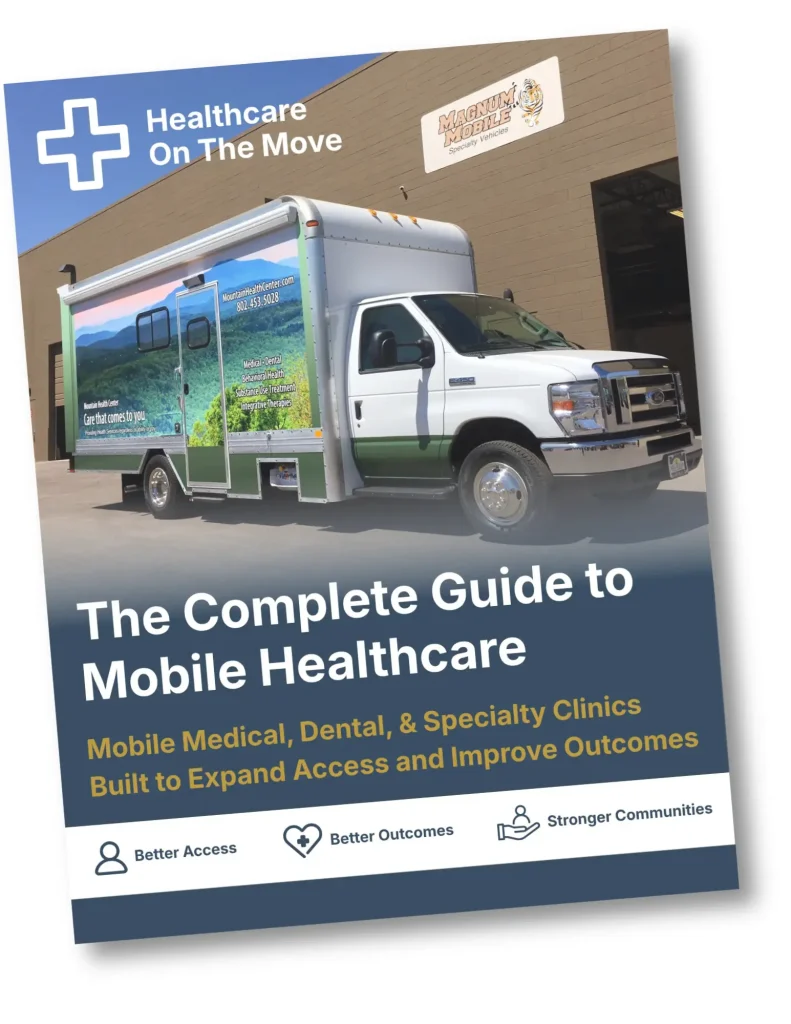
Get the Free Buyer Guide
Get planning considerations for services, layouts, utilities, and vehicle selection.
Trusted Nationwide
Trusted by Leading Healthcare Organizations
Trusted by healthcare providers, public agencies, universities, and nonprofit organizations to deliver high-quality mobile specialty vehicles.







Built to Support
Organizations Across Every Sector
Delivering mobile solutions for healthcare, education, government, nonprofit, and commercial applications.
Healthcare
Education
Government
Non-Profit
Public Safety
Corporate
Ready to Get Started
Let’s Build a Solution That Moves Care Forward
Tell us about your operation and our team will help build the right mobile vehicle solution for your needs.