
Mobile Clinic Wheelchair Access
Wheelchair Access: Questions to Resolve Before Choosing a Vehicle
Review Access From the Host Site to the Clinical Workspace
Quick answer
Plan mobile clinic wheelchair access as a complete route: the host site, vehicle entry, interior movement, clinical workspace, and departure. Review the selected lift or entry arrangement, equipment specifications, working clearance, assistance needs, and deployment footprint. Have the responsible team review applicable requirements before approving the vehicle and operating plan.
A lift or other entry feature is one part of the access plan. The patient also needs a workable path to the vehicle and to the services the program intends to provide inside.
Start with the people your organization plans to serve and the actual service sequence. Discuss mobility devices, equipment use, staff assistance, and host-site conditions together.
Magnum Mobile offers configurable medical vehicles with access options depending on the format and application. Bring specific access requirements to the design discussion so the complete proposed configuration can be reviewed.
Define Patient Access Needs Around Your Services
Define access needs before comparing vehicle features. The intended services and population help the team identify what patients must be able to reach and use.
Service sequence: Describe intake, clinical activities, any room changes, instructions, and departure.
Mobility needs: Identify the mobility devices, assistance, accompanying people, and movement requirements relevant to the planned population.
Clinical equipment: Have the operating team identify equipment and any transfer or positioning arrangements needed for the intended services.
ADA.gov’s medical-care access guidance covers equipment, space, and staff considerations. Use it as a reference for the responsible team’s review; vehicle entry alone does not address every aspect of access to care.
Review the Complete Host-Site Approach and Setup
Review the path from the host location’s arrival area to the vehicle. The site layout and setup position can support or undermine the access features selected for the clinic.
Gather measurements and photos showing the approach, parking position, surfaces, nearby obstacles, and the space needed to use the proposed entry arrangement. Confirm the intended patient route with the host.
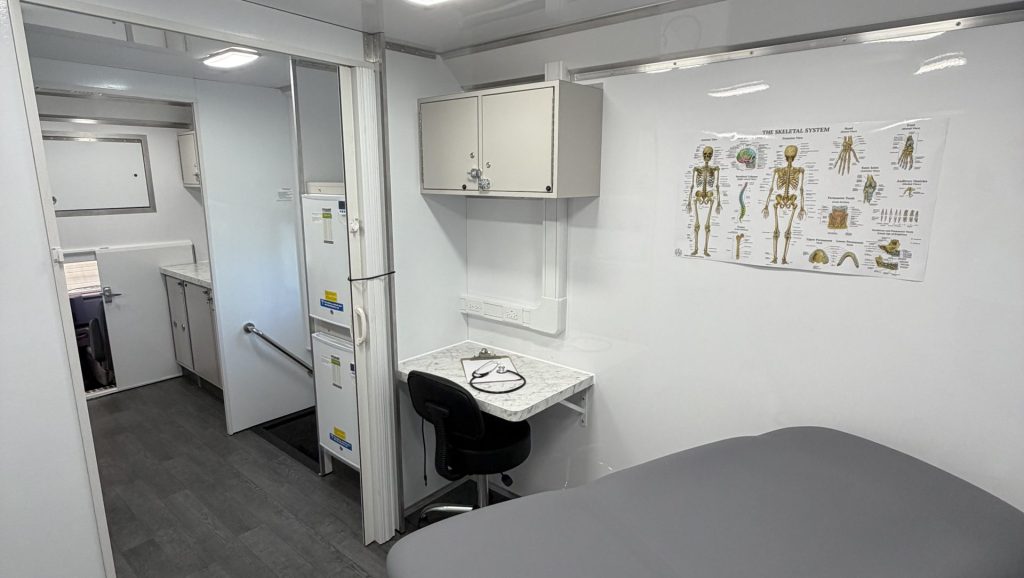
Review how the setup works while doors, steps, or a lift are deployed. Include the space for people to approach, wait, and move without relying on the vehicle’s parking dimensions alone.
Ask About the Proposed Vehicle-Entry Arrangement
Ask about the specific vehicle-entry arrangement in the proposed configuration. Compare its requirements with the program’s patients, sites, staffing, and operating routines.
Selected equipment: Confirm the lift or other entry model being proposed, its specifications, and the intended operating method.
Deployment clearance: Ask what exterior space, surface conditions, and vehicle positioning are needed for its use.
Staff operation: Identify the training, checks, and assistance responsibilities described in the supplied operating information.
Configuration limits: Ask which access features and interior arrangements are available for the particular vehicle format. Avoid assuming that every unit has the same equipment or capabilities.
Review Interior Movement and Clinical Equipment
Review the path inside the vehicle and the services at the end of it. Entry access is useful only when the interior and equipment support the intended patient visit.
Interior movement: Trace the route through intake, doors, turns, rooms, and departure with the proposed equipment and furniture in place.
Clinical workspace: Review room clearances and staff working space for the intended activity and selected medical equipment.
Equipment use: Discuss accessible equipment and any transfer arrangements with the clinical team and suppliers. Bring model specifications to the builder.
Supporting functions: Review workstations, storage, restroom access where relevant, and the movement of accompanying people or staff.
Ask the responsible team to review the complete floor plan against the intended service plan. Record unresolved items rather than treating a feature label as confirmation that all requirements are satisfied.
Plan Equipment Operation, Training, and Support
Plan how the organization will operate and maintain the selected access features. The vehicle configuration and the team’s routine need to work together at each host site.
Training: Assign operators and arrange training on the specific equipment and supplied instructions.
Upkeep: Review inspection, maintenance, and support information for the proposed equipment, with responsibilities built into the program’s schedule.
Site review: Include the complete access route and deployment clearance in the process for accepting a new host location.
Discuss how the team will respond when a site, route, or equipment condition prevents the intended access arrangement from being used. Have the responsible organization define and review its operating response.
Prepare an Access Brief Before Choosing the Vehicle
Prepare an access brief for the builder, operating team, and relevant reviewers. Make the service and site assumptions visible before selecting the vehicle configuration.
Patient visit: Provide services, mobility needs, staff roles, room transitions, and the equipment used at each activity.
Sites and entry: Include approach photos, measurements, deployment space, surfaces, and the proposed entry equipment specifications.
Interior and operation: Document working clearance, assistance needs, equipment requirements, training, upkeep, and assigned reviewers.
Bring these details to Magnum during design review. Ask how the proposed format supports the brief, what alternatives are available, and which questions need the operating team’s further review.
Mobile Clinic Wheelchair-Access FAQs
Does a wheelchair lift make the entire mobile clinic accessible?
No single entry feature answers the complete access question. Review the host-site route, entry, interior movement, clinical equipment, staff assistance, and the intended services together.
What host-site information should we gather?
Gather approach and parking photos, measurements, surfaces, obstacles, patient routes, and clearance for the selected entry arrangement. Confirm how the vehicle will be positioned for service.
Should we choose clinical equipment before reviewing access?
Bring proposed equipment models and supplier requirements into the review. Their dimensions, use, and any transfer arrangements affect the room layout and working space.
What should we ask Magnum before choosing a vehicle?
Ask about available access configurations, selected equipment, exterior deployment clearance, interior layout, operating information, training, and support for the specific proposal.
Discuss Your Access Requirements With Magnum
Magnum Mobile helps organizations connect their operating requirements with a configured specialty vehicle. A complete access brief supports discussions about entry features, floor plans, equipment integration, and deployment.
Explore Magnum’s mobile medical clinics and build process to start reviewing options for your program.
Request the Mobile Healthcare Buyer Guide for planning considerations covering services, layouts, equipment, and vehicle selection.
Ready to discuss access requirements for your mobile clinic? Contact Magnum Mobile with your service plan, equipment list, and host-site information to begin a configured proposal.
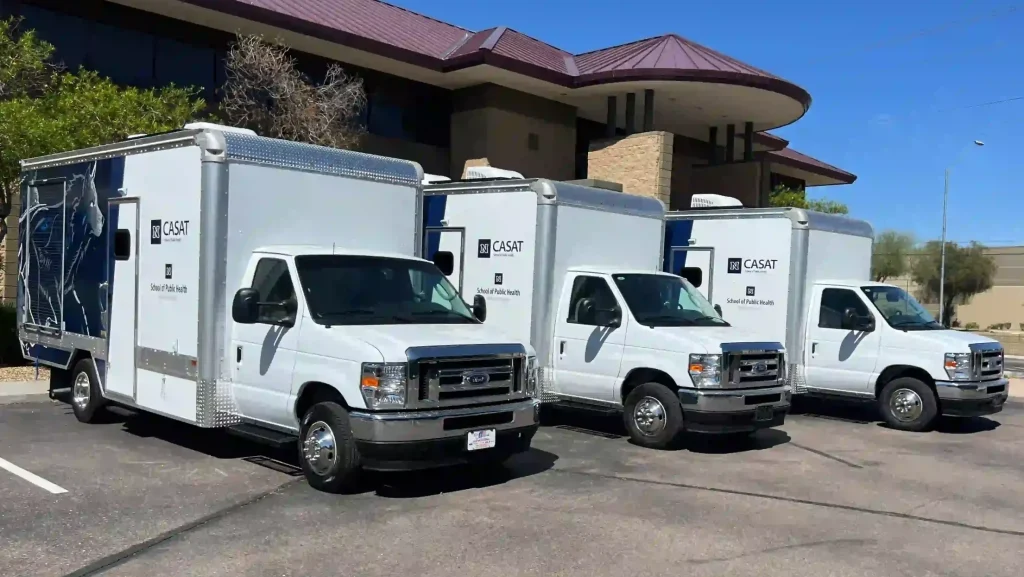
Discuss Your Vehicle
Bring your patient access needs, equipment specifications, and site information to Magnum.
Discuss available entry and layout options for the vehicle format you are considering.
Get the Free Buyer Guide
Get planning considerations for services, access, layouts, and vehicle selection.
Trusted Nationwide
Trusted by Leading Healthcare Organizations
Trusted by healthcare providers, public agencies, universities, and nonprofit organizations to deliver high-quality mobile specialty vehicles.







Built to Support
Organizations Across Every Sector
Delivering mobile solutions for healthcare, education, government, nonprofit, and commercial applications.
Healthcare
Education
Government
Non-Profit
Public Safety
Corporate
Ready to Get Started
Let’s Build a Solution That Moves Care Forward
Tell us about your operation and our team will help build the right mobile vehicle solution for your needs.