
Homeless Healthcare Outreach • Mobile Program Planning
Planning a Mobile Clinic for People Experiencing Homelessness
Connect trusted outreach with private care and reliable follow-up
Quick answer
Plan a mobile clinic for people experiencing homelessness around community input, trusted outreach partners, approved clinical services, private and accessible visits, and dependable follow-up. Define the team’s workflow, host sites, equipment, utilities, and operating budget before asking Magnum Mobile to discuss a vehicle configuration.
A mobile clinic can provide a planned space for a healthcare team working with people who face barriers to fixed-site care. The vehicle should support an established outreach approach and connections to ongoing services.
Begin by listening to people with lived experience, outreach staff, and local care partners. Their input can shape locations, schedules, entry arrangements, privacy, and the follow-up process before the floor plan is finalized.
Magnum Mobile can help connect an approved outreach program with configurable clinical spaces and integrated vehicle systems. Explore our mobile medical clinics and request the free Mobile Healthcare Buyer Guide to prepare for a vehicle discussion.
1. Define the service with the community
Choose a defined initial service area and clinical scope. Your qualified clinical team should establish which services the program can support, which staff are required, and how patients reach additional care.
Community input: Ask potential patients and outreach partners about practical access needs, preferred locations, service hours, and concerns about using a mobile clinic. Build a way to collect feedback after launch.
Clinical scope: Describe the approved appointment workflow, equipment, staffing, documentation, and referral needs. Separate onboard services from care delivered elsewhere by partner organizations.
Outreach model: Decide how the vehicle fits existing outreach, shelter-based services, and fixed-site clinics. A parked clinic and a team providing care away from the vehicle have different operating requirements.
Success measures: Agree on measures such as engagement, attended visits, completed referrals, patient feedback, and reliable return visits. Do not treat the number of people approached as the number who received care.
2. Build the partnership and follow-up network
A mobile clinic needs a partnership network beyond the vehicle. Identify clinical providers, outreach teams, community hosts, and organizations that can help patients reach continued care and other requested support.
Named responsibilities: Clarify who coordinates sites, explains services, provides language support, schedules visits, maintains records, and handles referrals. Avoid relying on an informal handoff without an owner.
Continued contact: Ask patients about their preferred, workable contact methods. Plan how results and referrals can be followed up when phone access or location changes, using your organization’s approved privacy and documentation processes.
3. Design a respectful, workable visit
Walk through the visit from first contact to departure. A clear, respectful process should make it understandable what services are offered, how to ask questions, and what the next step will be.
Site selection: Evaluate locations with community partners and people who may use the service. Confirm host permission, operating hours, vehicle access, pedestrian approaches, and emergency access.
Private conversations: Identify where check-in, care discussions, interpretation, and departure instructions happen. Review sound, sightlines, and waiting arrangements with the operating team.
Entry and waiting: Review the proposed entrance, assistance needs, and interior movement. Consider practical arrangements for belongings and companions as part of a visit rather than leaving them unresolved.
Predictable schedules: Establish how return visits, cancellations, and route changes will be communicated. Patients and partners need a consistent way to find the program when the vehicle is at another location.
4. Match the vehicle to the outreach model
The vehicle specification should follow the outreach workflow. Bring Magnum your service plan, staff responsibilities, equipment list, typical locations, and expected deployment conditions.
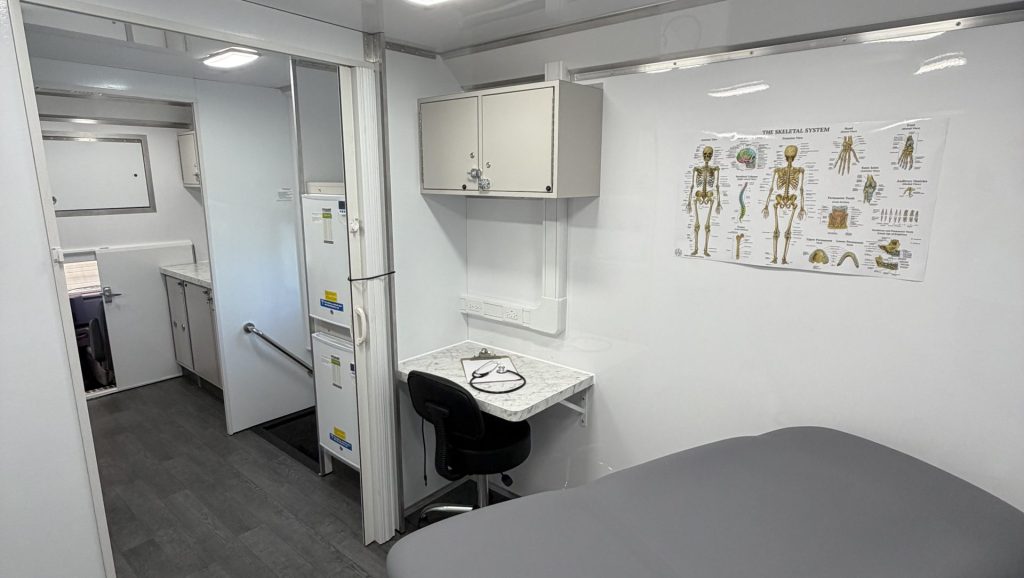
Clinical spaces: Review the areas needed for approved services, private consultation, staff circulation, cleaning, and secure storage. Compare actual floor plans with the people who will use the vehicle.
Equipment integration: Provide model dimensions, electrical requirements, installation instructions, and operating clearances. Identify builder-supplied and organization-supplied equipment in the proposal.
Utilities and records: Define power, heating and cooling, plumbing, communications, and connectivity needs. Confirm what the host provides and what must work independently onboard.
Deployment footprint: Check parking dimensions, turning space, entrance or lift clearance, pedestrian paths, and site conditions. The vehicle’s full operating footprint may exceed its parked dimensions.
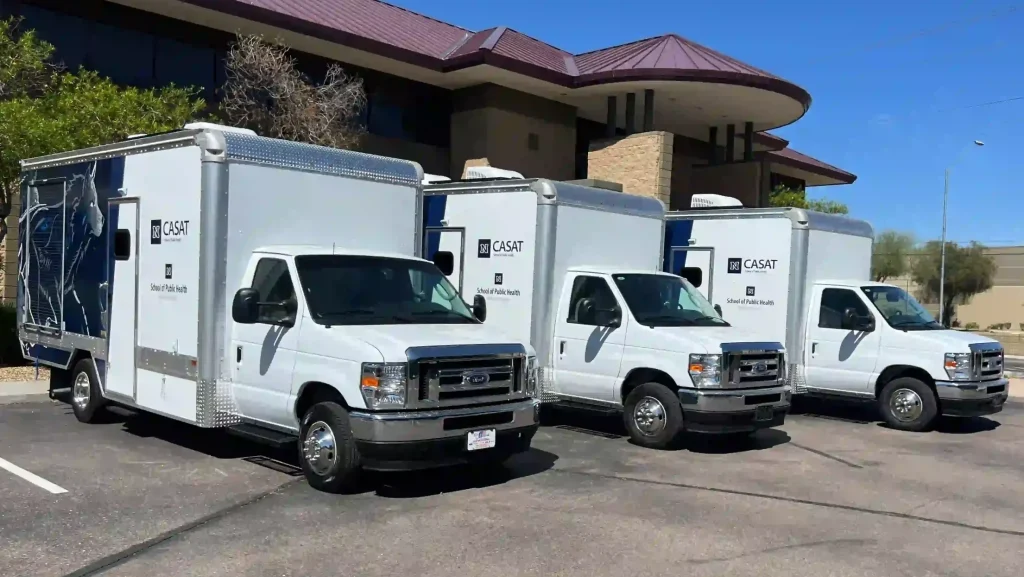
Vehicle choice: Evaluate vans, drivable clinics, and trailers around usable space, access, equipment, and the route. A trailer needs an appropriate towing and setup plan as part of the comparison.
5. Test operations and long-term funding
Test the operating plan with a manageable route before expanding. Include the coordination and follow-up work that happens between service days when evaluating capacity and cost.
Staff preparation: Assign roles for driving, setup, clinical work, outreach, records, closing, and follow-up. Use your organization’s established training and escalation processes for the services and settings involved.
Budget: Separate vehicle acquisition from equipment, staffing, supplies, fuel, maintenance, insurance, connectivity, parking or storage, and coordination. Check which costs each funding source can support.
Pilot review: Track travel time, site access, visit flow, workload, patient feedback, and completed follow-up. Address practical barriers before adding locations or additional services.
Program continuity: Plan for maintenance, staff absence, weather, host changes, and the end of initial funding. Confirm how patients will reach care during a vehicle outage.
6. Prepare an outreach vehicle brief for Magnum
A useful outreach vehicle brief explains how your team engages people, delivers approved care, and supports continued services. Magnum can use that operating picture to discuss vehicle configuration and a proposal.
Care and access: Bring the population served, approved scope, staffing, appointment sequence, privacy needs, entry needs, equipment specifications, and referral arrangements.
Deployment and resources: Share representative sites, parking and utility details, travel distances, service hours, storage, available budget, and target delivery timing.
Program resource: The National Health Care for the Homeless Council’s mobile healthcare publication shares learning from organizations operating mobile services. Review it with your outreach and clinical partners alongside local community input.
Mobile Clinic and Homeless Outreach FAQs
How can a mobile clinic support people experiencing homelessness?
A qualified care team can use a mobile clinic to provide approved services at agreed outreach locations. Its usefulness depends on community engagement, access, appropriate clinical spaces, partner relationships, and continued care.
Is a mobile clinic the same as street medicine?
Programs can use different outreach models. Some care occurs onboard a parked clinic; other teams work away from the vehicle. Define your model with clinical leadership before choosing equipment and a floor plan.
What happens when the mobile unit leaves?
The operator should have an assigned results, referral, and return-visit process. Give patients and partners a workable way to contact the program and identify alternate care arrangements during interruptions.
Which vehicle should an outreach program choose?
Compare actual configurations around services, staff, equipment, private spaces, entry needs, and operating sites. Magnum can discuss those requirements with your team before preparing a configured vehicle proposal.
Plan Your Outreach Vehicle With Magnum Mobile
Bring Magnum Mobile an outreach plan shaped by community input and your care partners. Our configurable layouts and integrated vehicle systems can be evaluated around the services, access needs, and daily workflow of your program.
Explore Magnum’s mobile medical vehicles for community outreach.
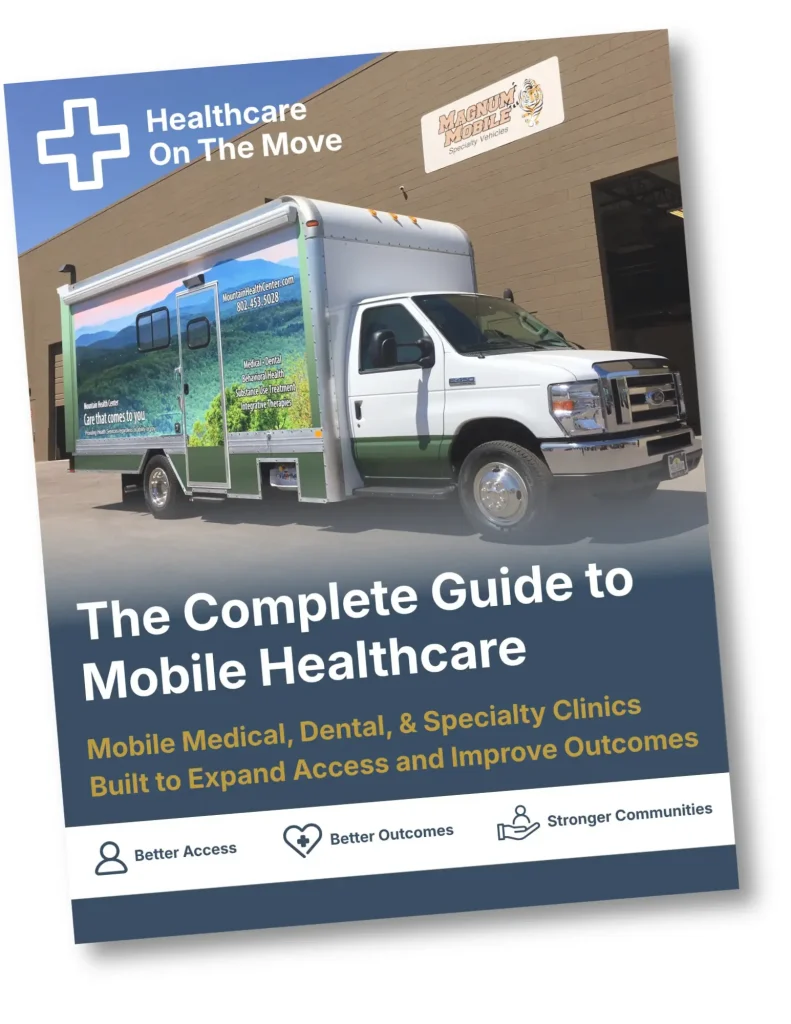
Request the free Mobile Healthcare Buyer Guide to prepare broader purchase planning questions.
Discuss Your Vehicle
Compare medical clinic layouts around your approved outreach services and operating sites.
Bring staffing, equipment, private care, access, utilities, and follow-up plans to Magnum.
Get the Free Buyer Guide
Request the Mobile Healthcare Buyer Guide through the guide page.
Latest From Our Blog
Trusted Nationwide
Trusted by Leading Healthcare Organizations
Trusted by healthcare providers, public agencies, universities, and nonprofit organizations to deliver high-quality mobile specialty vehicles.







Built to Support
Organizations Across Every Sector
Delivering mobile solutions for healthcare, education, government, nonprofit, and commercial applications.
Healthcare
Education
Government
Non-Profit
Public Safety
Corporate
Ready to Get Started
Let’s Build a Solution That Moves Care Forward
Tell us about your operation and our team will help build the right mobile vehicle solution for your needs.