
Tribal Health Programs • Mobile Healthcare Planning
How Tribal Health Programs Can Evaluate Mobile Healthcare Vehicles
Build the vehicle brief around community priorities and daily operations
Quick answer
Evaluate a tribal mobile clinic by starting with the priorities and decisions of the community it will serve. Define approved services, local leadership and operating responsibilities, routes, staffing, patient access, privacy, utilities, and ongoing costs. Then compare vehicle configurations with the people who will deliver care and manage the program.
A mobile healthcare vehicle can give a tribal health program a planned clinical space at agreed community locations. The purchasing question is how that vehicle will support the community’s own care model, including the work that happens before and after an outreach visit.
Tribal health programs have different governance, partnerships, geography, resources, and service priorities. Avoid assuming one program’s vehicle or operating arrangements will suit another. Start with local input and an approved service plan before deciding on size, layout, or equipment.
Magnum Mobile helps teams discuss configurable layouts, equipment integration, and vehicle utilities around a defined operating plan. Explore our mobile medical clinics and request the Mobile Healthcare Buyer Guide through its guide page.
1. Start with community priorities and decision owners
Before requesting a vehicle proposal, identify who defines the program’s purpose and who approves its operation. Community engagement should shape the brief rather than follow a completed vehicle purchase.
Community priorities: Ask local leadership, care teams, and community representatives which access problems a mobile service should address. Describe the specific service gap, preferred locations, and expectations for a reliable return schedule.
Decision owners: Identify the people responsible for clinical scope, procurement, finance, facilities, technology, and daily operations. Clarify how approvals and proposed changes move through your organization’s processes.
Local relationships: Involve community health staff and established care partners early. Their knowledge can guide communication, scheduling, patient navigation, and the practical arrangements needed at each host site.
Success criteria: Agree on what the program should improve and how the team will evaluate it. Useful measures may include reliable service days, completed visits, patient feedback, referral completion, and actual travel or setup time.
2. Define services and connections to ongoing care
Write down the services the qualified care team is approved and prepared to deliver onboard. The list should explain the visit sequence, required equipment, staffing, and what will remain with another facility or provider.
Follow the patient journey: Map scheduling, arrival, check-in, private consultation, the planned clinical work, departure instructions, and follow-up. Identify who owns each step and how records move through approved systems.
Connect to ongoing care: Assign responsibility for results, referrals, prescriptions when relevant to the approved service, and future appointments. A vehicle visit should fit into the program’s care pathways, including a workable contact method between route stops.
3. Evaluate routes, sites, and patient access
Build a representative route and site list before choosing a vehicle. Distances, road conditions, weather, parking, and available services can affect the format and equipment that will work for your team.
Route feasibility: Include travel, fueling, setup, closing, cleaning, restocking, and staff schedules. Review vehicle suitability for expected roads and access points with the supplier; do not assume every clinic configuration fits every route.
Host readiness: Confirm permission, parking dimensions, turning space, entrance or lift clearance, utility access, and emergency access. Obtain photos and measurements for representative locations instead of relying on the number of parking spaces.
Patient access: Review boarding, assistance needs, waiting, mobility aids, companions, and interior circulation with the operating team. Discuss suitable entry equipment and its full deployment footprint during configuration review.
Community communication: Let local partners guide language, signage, outreach channels, and schedule announcements. Explain what care is available, how to contact the team, and how cancellations or changed stops will be communicated.
4. Match the layout and utilities to your work
A tribal mobile clinic should be configured around approved services and actual operating conditions. Magnum can discuss how clinical spaces, storage, integrated utilities, and equipment requirements fit together in a proposed vehicle.
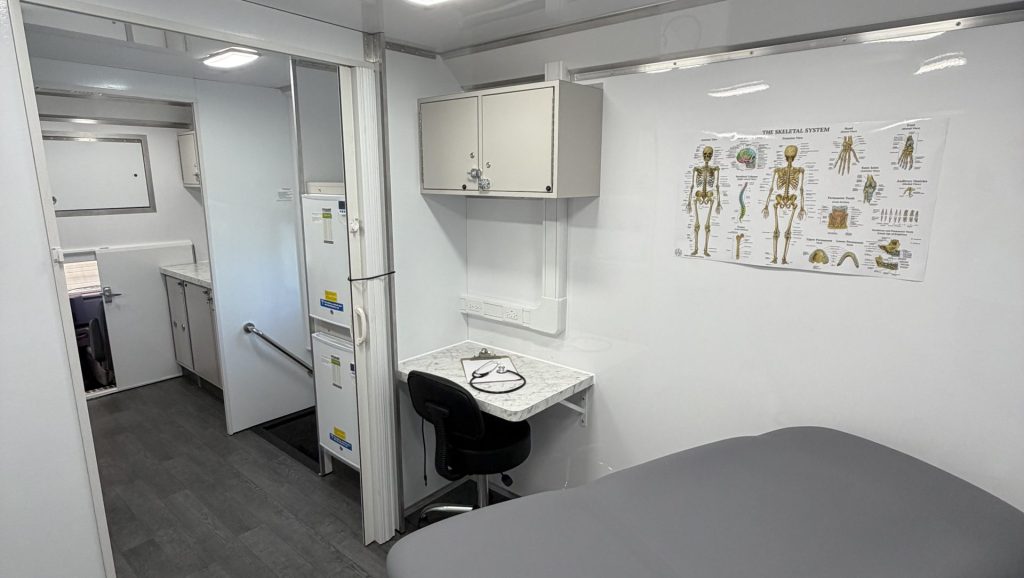
Layout: Review private consultation areas, staff movement, patient entry, work surfaces, cleaning access, and storage. Walk through a typical visit with the team and identify where conversations or tasks could overlap.
Equipment: Provide dimensions, weights, power requirements, installation instructions, and service clearances for proposed equipment. Confirm what the vehicle builder supplies and what your organization will supply in the written scope.
Utilities: Define electrical loads, heating and cooling, plumbing, and water or waste needs for the planned work. Compare host-provided connections with onboard systems, and review operation at locations with limited utilities.
Records and connectivity: Identify approved technology, network needs, privacy procedures, and the plan for a weak or unavailable connection. Review these requirements with your technology and clinical teams before specifying onboard workstations.
Vehicle format: Compare a van, drivable clinic, or trailer using usable clinical space, site access, equipment, and operating workload. Include driver preparation, towing when relevant, parking, storage, and daily setup in the comparison.
5. Test the budget and operating plan
Separate vehicle acquisition from the resources required to operate a dependable service. Use a realistic pilot plan to test the assumptions behind both the budget and the proposed configuration.
Total operating budget: Include staff, equipment, supplies, fuel, insurance, connectivity, maintenance, storage, cleaning, and coordination. Confirm allowable costs and approval requirements with each funding or purchasing authority involved.
Staffing: Assign driving, setup, clinical, administrative, closing, and follow-up responsibilities. Plan for staff absence and the time needed to prepare the vehicle between community visits.
Pilot review: Test a manageable set of locations. Record site issues, travel time, workflow, patient and staff feedback, utility performance, and follow-up completion before expanding the service area.
Continuity: Plan for vehicle downtime, seasonal conditions, host changes, and funding transitions. Identify where patients can reach the program and how service changes will be communicated.
6. Prepare your vehicle brief for Magnum
A clear vehicle brief helps Magnum discuss a configuration that reflects your program’s priorities. Bring the operational decisions already made and the questions still needing a joint review.
Program information: Share approved services, staffing, expected visit flow, privacy needs, patient entry requirements, equipment specifications, and connections to ongoing care.
Deployment information: Bring representative sites, route distances, road and weather conditions, utilities, storage plans, budget range, approval process, and target delivery timing.
Planning resource: The Indian Health Service’s Division of Planning, Evaluation, and Research describes its work with Area and Tribal Planning Officers and its support for evidence-informed program evaluation. Use relevant planning resources alongside your community’s own priorities and approval processes.
Review Magnum’s consultation-to-delivery process and discuss your mobile healthcare vehicle with our team.
Tribal Mobile Clinic FAQs
What should a tribal health program evaluate before buying a mobile clinic?
Start with community priorities, approved services, decision owners, staffing, routes, patient access, privacy, utilities, follow-up, and ongoing costs. Use that operating plan to review floor plans and equipment rather than selecting a vehicle by size alone.
Does every tribal mobile clinic need the same configuration?
No. Communities and programs have different care models, geography, partnerships, and resources. The appropriate layout and vehicle format depend on your approved scope and daily operation.
Can a mobile clinic operate at sites with limited utilities?
That depends on the vehicle configuration and the planned services. Provide the supplier with electrical, water, climate-control, and connectivity requirements, then review the available onboard systems and site conditions.
What information does Magnum need for a vehicle proposal?
Bring a service plan, staffing and visit flow, equipment specifications, access needs, representative sites, utilities, route conditions, budget, and timing. Magnum can discuss these requirements and clarify the proposed scope with your team.
Plan Your Mobile Healthcare Vehicle With Magnum Mobile
Magnum Mobile combines configurable clinical layouts with integrated vehicle systems and a structured consultation-to-delivery process. Bring us your community-led operating plan so we can discuss a mobile medical vehicle around your program’s work.
Explore Magnum’s mobile medical vehicles and compare configurations for your service plan.
Request the free Mobile Healthcare Buyer Guide to prepare broader purchase planning questions.
Discuss Your Vehicle
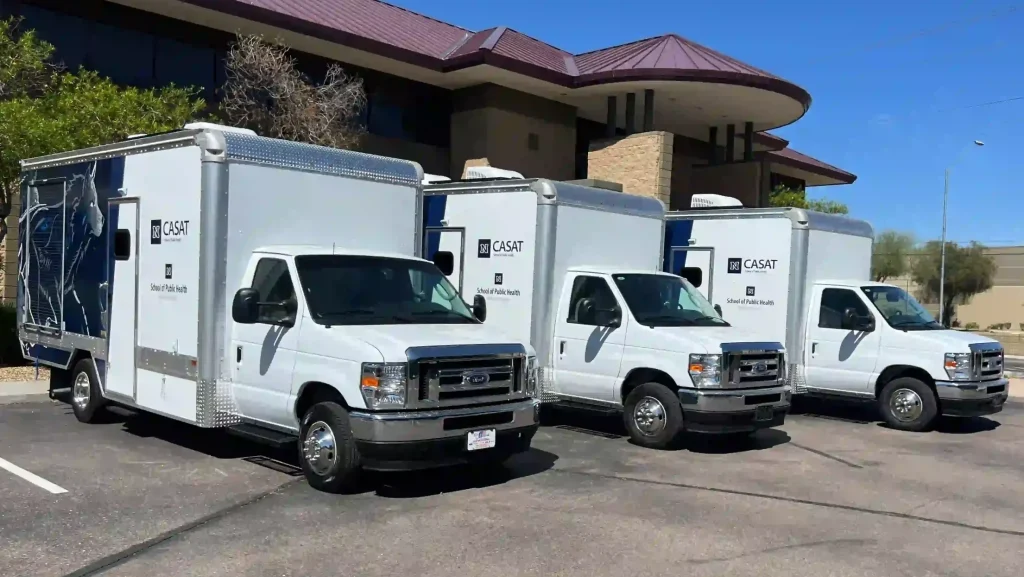
Evaluate mobile medical layouts around your community priorities, approved services, and operating routes.
Bring staffing, equipment, access, privacy, utilities, and ongoing care requirements to Magnum.
Get the Free Buyer Guide
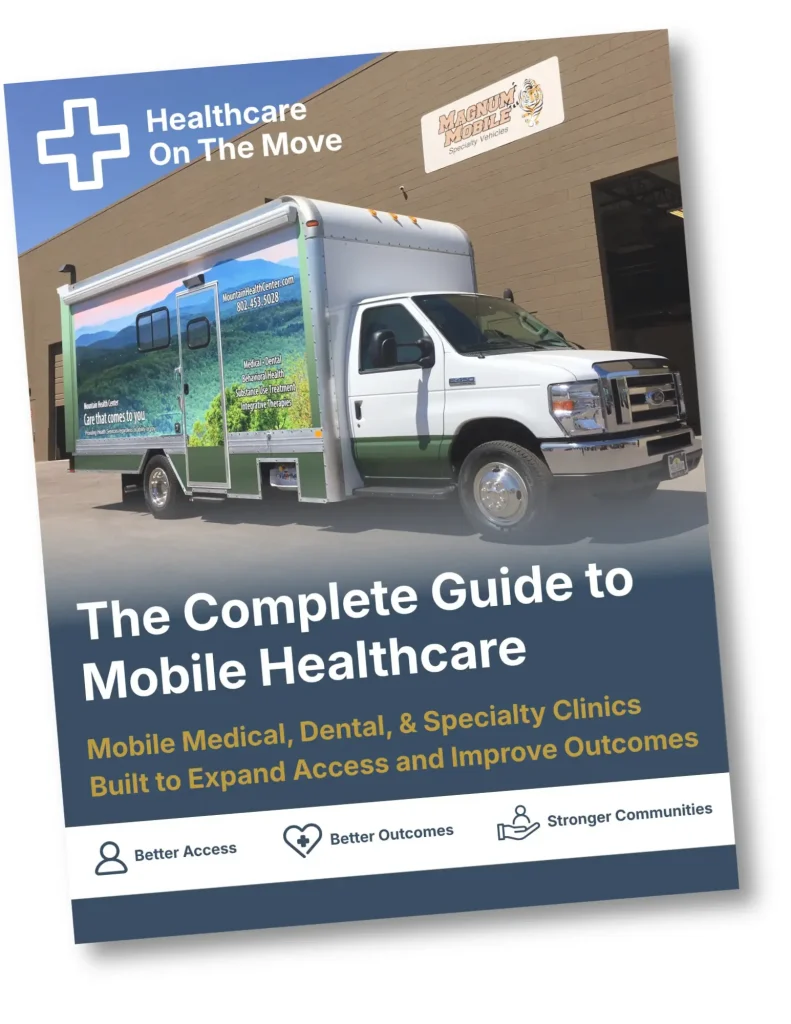
Request the Mobile Healthcare Buyer Guide through the guide page.
Latest From Our Blog
Trusted Nationwide
Trusted by Leading Healthcare Organizations
Trusted by healthcare providers, public agencies, universities, and nonprofit organizations to deliver high-quality mobile specialty vehicles.







Built to Support
Organizations Across Every Sector
Delivering mobile solutions for healthcare, education, government, nonprofit, and commercial applications.
Healthcare
Education
Government
Non-Profit
Public Safety
Corporate
Ready to Get Started
Let’s Build a Solution That Moves Care Forward
Tell us about your operation and our team will help build the right mobile vehicle solution for your needs.