
Public Health Partnerships • Shared Mobile Services
How Public Health Departments Can Plan Shared Mobile Services
Align partners, scheduling, and vehicle requirements before purchase
Quick answer
Plan shared mobile health services by defining who owns the vehicle, who operates each service, how partners reserve time, how costs are allocated, and who handles care, records, maintenance, and follow-up. Agree on site requirements and a documented vehicle handoff. Use those decisions to review a configuration with Magnum Mobile before purchase.
A public health department may consider one mobile clinic serving several communities, programs, or partner organizations. Sharing a vehicle can broaden the proposed use of an asset, but the operating arrangements determine whether the schedule is practical and the service dependable.
The first task is to define what is shared: the vehicle alone, the vehicle and staff, or a coordinated service delivered by a lead operator. These models create different needs for scheduling, equipment, records, training, and daily responsibility.
Magnum Mobile can discuss configurable clinical spaces and integrated utilities around the agreed service model. Explore our mobile medical clinics and request the Mobile Healthcare Buyer Guide through its guide page.
1. Define the shared operating model
Write a short operating summary before comparing vehicles. Name the participating organizations, the communities served, the intended services, and the lead contact for decisions and day-to-day coordination.
Lead operator: Decide whether one team delivers services across all locations or each partner brings its own staff. Identify who manages the vehicle when it is between assignments.
Service scope: List the services each partner is approved and prepared to provide. Identify shared equipment, program-specific supplies, and any work requiring a different vehicle setup.
Common priorities: Agree on the access problem the partnership will address. Use community needs, realistic travel time, and staffing capacity to assess the proposed use instead of treating every available day as a clinical service day.
Decision process: Name who approves new uses, equipment changes, route changes, and exceptions. Establish an escalation contact when partners have conflicting requests or a service day cannot proceed.
2. Agree on responsibilities and costs
Document the operating responsibilities through your organizations’ established approval processes. Have the appropriate finance, procurement, clinical, risk, and legal teams review the arrangements that apply to the participating programs.
Ownership and care: Clarify vehicle ownership, authorized operators, insurance arrangements, maintenance coordination, storage, and repair approval. Separately identify responsibility for clinical services, patient records, consent procedures, results, and follow-up.
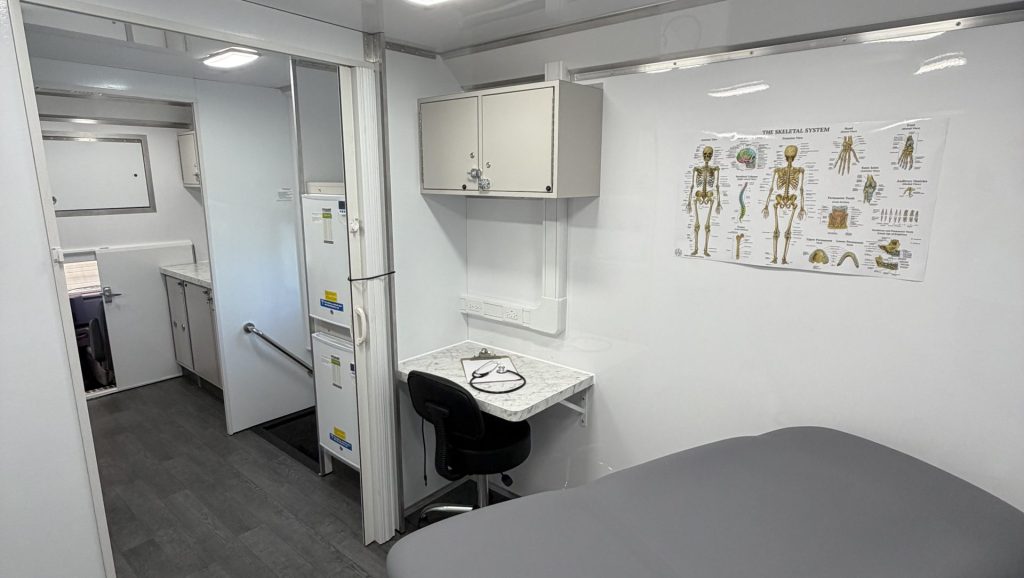
Cost allocation: Agree how acquisition, equipment, fuel, staffing, supplies, connectivity, cleaning, maintenance, and unexpected repairs will be funded. Check restrictions and approval requirements for each funding source before assuming costs can be pooled.
3. Build a workable shared schedule
A shared calendar needs to account for the entire operating cycle. Block time for travel, setup, closing, cleaning, restocking, handoffs, and maintenance as well as patient appointments.
Reservation rules: Define how partners request dates, how far ahead schedules are confirmed, and how competing requests are resolved. Set a cancellation process and a way to communicate changes to patients and hosts.
Route grouping: Compare nearby stops and avoid unnecessary transfers between distant partners. Test travel and setup assumptions before promising a frequency or number of visits.
Host readiness: Require consistent site information: permission, measurements, access photos, parking and turning space, entrance or lift clearance, utilities, waiting arrangements, and emergency access.
Reliable capacity: Reserve time for restocking, inspections, repairs, staff preparation, and unexpected delays. A fully booked calendar can leave no room to recover from a late return or vehicle outage.
4. Configure the vehicle for partner needs
The floor plan should support the agreed services without depending on an unrealistic changeover between programs. Bring the complete shared-use scenario to Magnum, including equipment that moves in and out of the unit.
Shared clinical spaces: Walk through each partner’s visit sequence. Review private conversations, patient entry, staff movement, cleaning access, work surfaces, and storage for the proposed configuration.
Equipment compatibility: Supply model dimensions, weights, installation instructions, power loads, and clearances. Identify fixed equipment and removable items, with a reviewed plan for secure storage and transport.
Utilities: Define power, plumbing, heating and cooling, water or waste, and communications needs across the approved uses. Confirm which locations provide connections and which require onboard systems.
Technology and privacy: Review workstations, access controls, network connectivity, record systems, and approved data-handling procedures with the responsible teams. Shared use of a vehicle does not by itself establish permission to share patient information.
Format and deployment: Compare a van, drivable clinic, or trailer using clinical space, expected routes, host access, staffing, storage, and setup. Include a suitable towing plan when evaluating a trailer.
5. Standardize handoffs and pilot evaluation
Use a documented handoff whenever the vehicle or operating team changes. Make the checklist practical enough to complete consistently, and name who can accept the unit or pause a service day.
Before release: Confirm assigned cleaning and restocking tasks, equipment status, utility condition, fuel or charging needs where relevant, vehicle issues, keys, and required operating documents. Record any unresolved problem with an owner and next action.
At acceptance: The receiving team reviews the reported condition, planned route, site readiness, required supplies, and authorized operators. Use your organization’s procedures for patient records; keep clinical information out of a general vehicle condition log.
Pilot example: Start with a limited rotation among agreed sites. Review travel and handoff time, days canceled, staff workload, utility needs, supply shortages, partner feedback, and the completion of follow-up before adding more programs.
Continuity and change: Agree on alternate service arrangements during downtime and a review process if a partner exits or requests a new use. Reassess the operating plan when services or equipment change.
6. Prepare a joint vehicle brief for Magnum
A joint vehicle brief gives Magnum a clearer basis for discussing a configuration. Resolve the shared operating assumptions and identify open questions before requesting a proposal.
Service information: Provide the lead contact, participating programs, approved services, staffing, visit sequence, access and privacy needs, equipment list, and expected changeover between uses.
Deployment information: Include a representative schedule, route distances, site measurements, utility availability, storage, operating responsibilities, acquisition budget, and approval timeline.
Public health resource: The CDC’s Division of Jurisdictional Support describes its work supporting public health infrastructure and local decision-making. Review relevant agency resources with your partners; confirm purchasing and funding requirements through the authorities responsible for your program.
Shared Mobile Health Services FAQs
Can public health departments share a mobile clinic?
A shared model may be worth evaluating when participating organizations can agree on approved uses, ownership, operating responsibilities, scheduling, costs, and care coordination. Have the relevant organizational teams review the arrangement before committing to a purchase.
What should a shared mobile clinic schedule include?
Include service time, travel, setup, closing, cleaning, restocking, handoffs, inspections, and maintenance. Establish reservation and cancellation rules so patients, hosts, and partner teams receive consistent information.
Can one vehicle support several public health programs?
Possibly, depending on the services, equipment, privacy, access, and utility requirements. Review each workflow and the changeover between uses with the supplier rather than assuming one layout can support every program.
How should partners divide mobile clinic costs?
Partners should agree on a reviewed method for acquisition and ongoing expenses, including repairs and downtime. Finance and funding authorities should confirm applicable restrictions; projected savings should be tested against the actual operating plan.
Plan Your Shared Public Health Vehicle With Magnum Mobile
Magnum Mobile brings configurable layouts, integrated vehicle systems, and a consultation-to-delivery process to the purchasing conversation. Share your partnership’s services, schedule, equipment, and responsibilities so our team can discuss a vehicle around the work it needs to support.
Explore Magnum’s mobile medical vehicles for your shared service model.
Request the free Mobile Healthcare Buyer Guide to prepare for a joint purchase planning discussion.
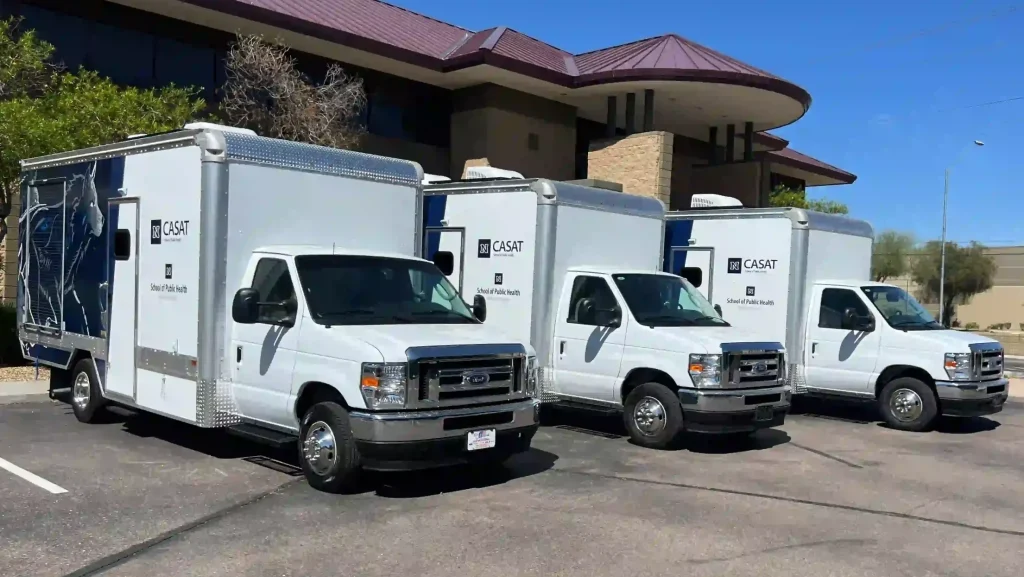
Discuss Your Vehicle
Compare mobile clinic configurations around partner services, shared schedules, and operating sites.
Bring equipment, staffing, changeover, access, utility, and ownership questions to Magnum.
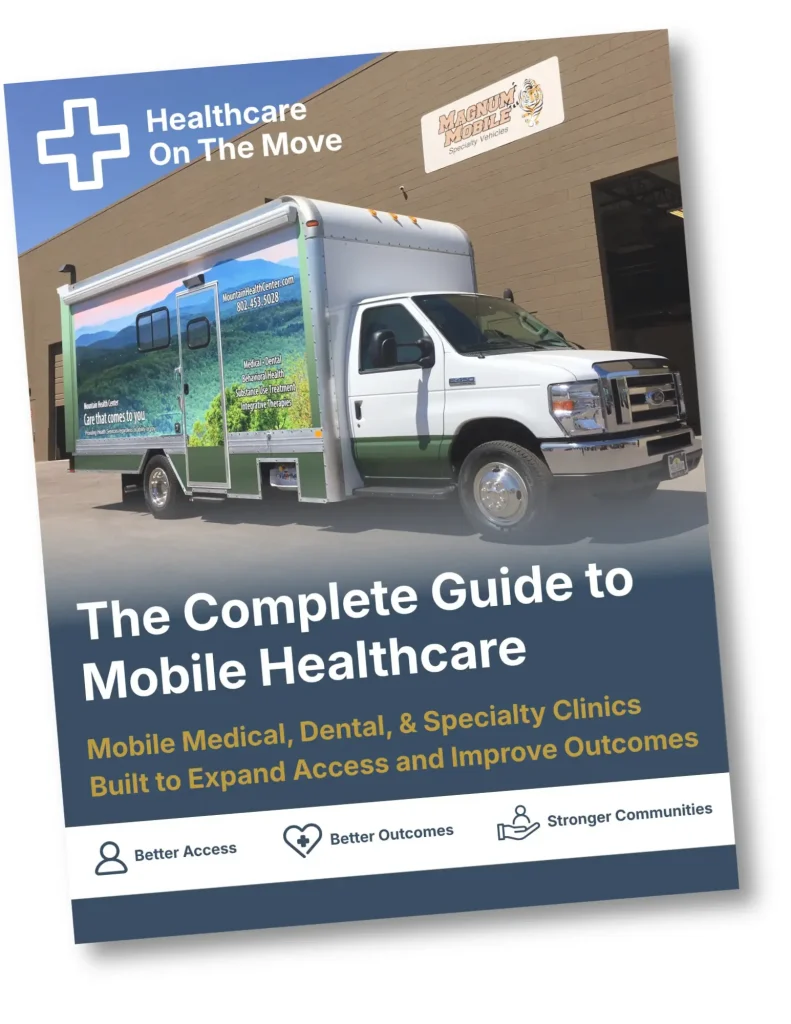
Get the Free Buyer Guide
Request the Mobile Healthcare Buyer Guide through the guide page.
Latest From Our Blog
Trusted Nationwide
Trusted by Leading Healthcare Organizations
Trusted by healthcare providers, public agencies, universities, and nonprofit organizations to deliver high-quality mobile specialty vehicles.







Built to Support
Organizations Across Every Sector
Delivering mobile solutions for healthcare, education, government, nonprofit, and commercial applications.
Healthcare
Education
Government
Non-Profit
Public Safety
Corporate
Ready to Get Started
Let’s Build a Solution That Moves Care Forward
Tell us about your operation and our team will help build the right mobile vehicle solution for your needs.