
Mobile Program Readiness
Is Your Organization Ready to Go Mobile? A Planning Checklist
Review services, people, sites, equipment, and resources before your next vehicle-planning decision.
A mobile clinic planning checklist should connect your services, staff, operating locations, equipment, resources, and vehicle requirements. Your organization is ready for the next planning step when it can describe those needs, identify the important open questions, and assign people to resolve them.
Readiness develops in stages. A team can be ready for a builder consultation while it is still gathering quotes or confirming hosts. A purchase decision requires a clearer scope and resource commitment than an exploratory conversation.
This checklist helps healthcare, dental, and animal care organizations organize that work. Use it with the people responsible for delivering the services rather than completing it only from the purchasing side.
Magnum’s buyer guides start with questions about services, staffing, equipment, operating needs, and launch goals. Bringing those answers together gives the design team a stronger starting point for the vehicle conversation.
Record each item as confirmed, in progress, or unresolved. Add an owner and next action. A checklist becomes useful when it shows how your team will close the gaps.
Use the Checklist for Your Next Planning Step
Five readiness areas to review
- Purpose, demand, and service scope
- Staffing and daily workflow
- Sites, travel, and utilities
- Equipment and vehicle requirements
- Acquisition, operation, and launch ownership
Start with the decision ahead of you. Decide whether this review supports a consultation, a pilot, a configured proposal, or an acquisition request. The information needed should match that stage.
Keep one shared planning document with the current answers and sources. Update it as clinical, operations, finance, and partner teams confirm their requirements.
Use specific descriptions where possible. “Two staff working at community host sites twice a week” gives the team more to investigate than “a flexible mobile program.”
Bring the requirements you know and the questions still open to a Magnum consultation. The discussion can help your team identify the vehicle decisions that need more detail.
Confirm the Purpose and Service Scope
Can you explain the need and the services you intend to provide? Identify the community or animal population, the access problem, and the activities the program will offer.
Document the local information supporting the plan, such as partner feedback, service availability, or referral demand. Describe how the mobile schedule connects with existing services and follow-up.
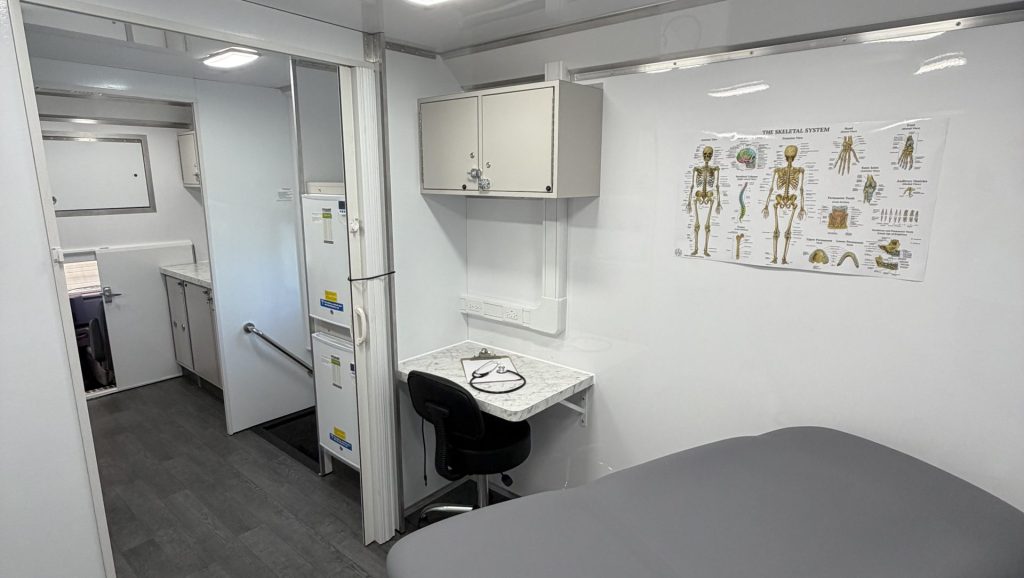
List what belongs in the initial service scope and what might be added later. An undefined mix of services makes it harder to plan staff roles, equipment, space, and operating resources.
Review Staffing and Daily Workflow
Have the people doing the work reviewed the proposed day? Walk through scheduling, arrival, setup, intake, service delivery, follow-up, cleaning, restocking, and travel.
Identify staff roles and the people responsible for driving, coordination, records, supplies, equipment checks, and maintenance. Confirm how those responsibilities fit the expected service calendar.
Map the movement of patients, staff, supplies, and equipment. For animal care, include intake, holding, treatment, and the recovery or adoption activities in the selected service model.
Review Magnum’s vehicle options alongside that workflow. The best configuration to investigate is the one that supports the work your team has defined.
Ask the operating team to identify privacy, storage, access, and working-space requirements before a layout is approved. Record which requirements are essential and which are preferences.
Confirm Sites, Travel, and Utility Needs
Do you know where the unit will operate and how it will get there? Identify potential hosts, routes, expected travel, parking, and the activities required at each stop.
Confirm host permission and the usable setup area, including access for doors, steps, lifts, or other equipment in the proposed configuration. A parking space alone may not describe the full operating footprint.
Identify the power arrangements and the installed systems your program needs. Discuss electrical loads, climate control, water, and connectivity with the builder and the people responsible for each site.
Review who will coordinate sites, explain arrival needs, and respond when a location changes. Document what has been confirmed and which sites still require assessment.
Include overnight storage, restocking, cleaning, and service access in the operating plan. The unit needs a workable home between community visits.
Consider seasonal conditions, travel constraints, and likely schedule changes. Assign someone to review the arrangements with the operating team before the launch calendar is treated as fixed.
Define Equipment and Vehicle Requirements
Can you give the builder a usable equipment and space brief? List the equipment needed for the services, its source, installation requirements, and where staff will use or store it.
Identify items expected in the builder’s scope and items your organization plans to supply. Confirm those responsibilities in the configured proposal rather than assuming every pictured item is included.
Gather available equipment dimensions, weights, utility requirements, and service-access needs. Share manufacturer information for items that affect installation or system planning.
Connect vehicle format and size to staff positions, equipment, storage, access, and operating sites. Compare actual configurations instead of choosing by vehicle length alone.
Use Magnum’s consultation and design process to develop those requirements into a layout and installed-system scope your team can review.
Review Resources and Launch Responsibilities
Are acquisition and recurring operation both supported? Review the vehicle project separately from staffing, travel, supplies, upkeep, and the resources required to keep the program running.
Identify committed resources, support being sought, and the conditions affecting either. Involve finance in reviewing the assumptions and the period covered by the operating plan.
Assign a launch lead and owners for partner confirmation, staff preparation, equipment coordination, vehicle decisions, delivery, and the first service calendar.
List the important dependencies and the next decision for each. A target launch date becomes more useful when the team understands what must happen before it.
Agree on a few measures and a review schedule for the program’s first operating period. Use the results to refine service days, workflow, and resource needs as your team learns.
Mobile Program Readiness FAQs
Do we need every answer before contacting Magnum?
No. Bring your mission, proposed services, requirements you know, and open questions. A consultation can help identify the information needed for the next vehicle-planning step.
What should we prepare before requesting a configured quote?
Prepare the service scope, staff roles, equipment information, operating locations, access and utility needs, budget framework, and launch goals. Identify decisions still affecting the configuration.
Does a secured vehicle budget mean we are ready to launch?
It addresses one part of the project. Your team also needs workable arrangements for staffing, sites, supplies, procedures, recurring costs, and delivery preparation.
Can this checklist help veterinary or dental programs?
Yes. The planning areas apply across service types, while the specific workflow, equipment, and space requirements differ. Involve the people responsible for the selected services.
Prepare Your Next Conversation with Magnum
Turn your checklist into a productive vehicle-planning conversation. Magnum’s configurable layouts, integrated systems, and consultation-through-delivery approach help organizations develop a vehicle around their program requirements.
Explore Magnum’s mobile clinic and specialty vehicle options and bring your checklist to the team.
Choose the mobile healthcare buyer guide or mobile animal care buyer guide for planning questions relevant to your program.
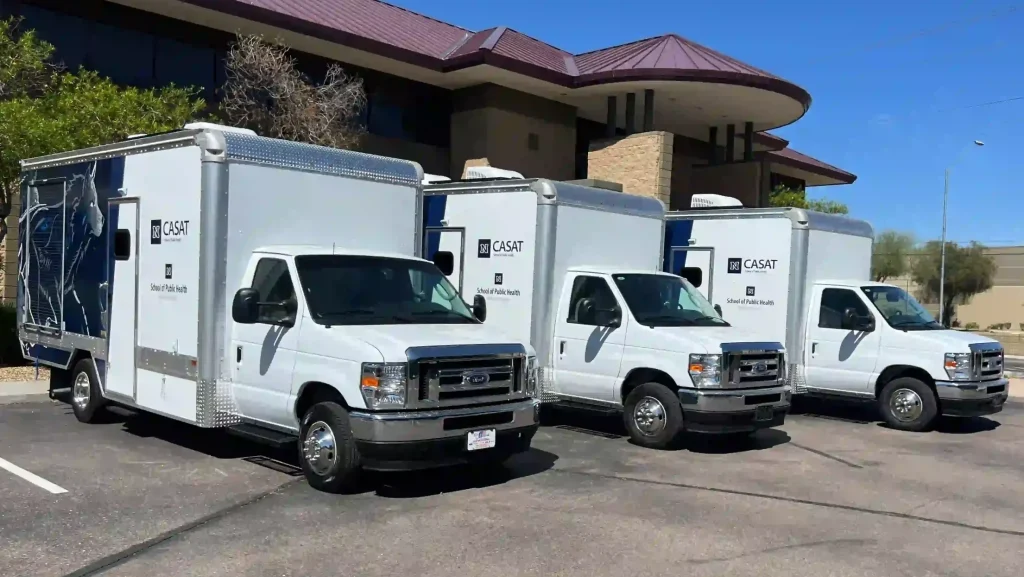
Explore Magnum Vehicle Options
Connect your program requirements with a practical vehicle configuration.
Explore Magnum’s options and bring the team your confirmed needs and open questions.
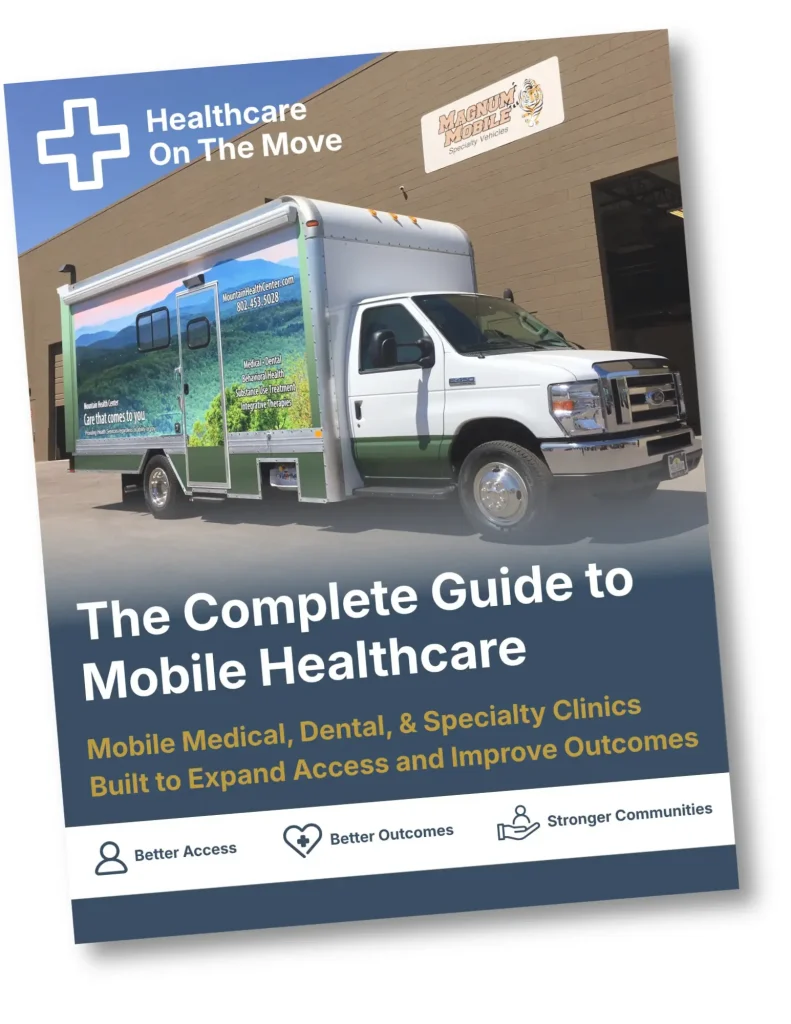
Mobile Healthcare Buyer Guide
Organize your healthcare vehicle requirements with Magnum’s buyer guide.
Trusted Nationwide
Trusted by Leading Healthcare Organizations
Trusted by healthcare providers, public agencies, universities, and nonprofit organizations to deliver high-quality mobile specialty vehicles.







Built to Support
Organizations Across Every Sector
Delivering mobile solutions for healthcare, education, government, nonprofit, and commercial applications.
Healthcare
Education
Government
Non-Profit
Public Safety
Corporate
Ready to Get Started
Let’s Build a Solution That Moves Care Forward
Tell us about your operation and our team will help build the right mobile vehicle solution for your needs.