
Rural Mobile Clinic Outreach
How to Choose a Mobile Clinic for Rural Outreach
Match the vehicle to local services, trusted hosts, travel routes, utilities, and follow-up arrangements.
Choose a mobile clinic for rural outreach by matching the services, staff workflow, travel routes, host sites, utility arrangements, and follow-up model to an actual vehicle configuration. Begin with the communities you intend to serve, then compare layouts and installed systems around the work your team will perform.
A rural service area can include communities with different needs and operating conditions. Treat each proposed stop as a place to understand rather than assuming one setup will work everywhere on the route.
Magnum’s configurable medical and dental clinics give organizations vehicle options to discuss around those requirements. The strongest starting point is a defined service model, a realistic calendar, and information about the locations where the unit will operate.
HRSA’s data resources include tools for finding health centers, examining shortage areas, and exploring data by geography. Use them as context alongside local feedback and your organization’s own information.
Keep the patient’s access journey in view. Where the unit parks, when it returns, and how people receive follow-up matter alongside the space inside the vehicle.
Prepare a Rural Outreach Vehicle-Selection Brief
Rural outreach vehicle-selection brief
- The communities and services to support
- Trusted hosts and follow-up arrangements
- Travel routes and usable service time
- Site access and utility needs
- Staff, equipment, storage, and vehicle configuration
Prepare the brief with clinical, operations, and community partners. The people delivering the services and hosting the unit can identify requirements that are easy to miss in a vehicle-only comparison.
Record confirmed information separately from assumptions. Identify who will check the sites, review the routes, estimate demand, and confirm the resources for the proposed calendar.
Use a representative service day to connect those answers. The planned arrival, setup, appointments, follow-up work, restocking, and departure should fit the same operating model.
Bring that brief to a Magnum consultation and discuss configurations around the requirements you have identified.
Define the Community Need and Service Calendar
Start with the particular access need in each community. Identify whom the program will serve, which services belong in the launch scope, and how the proposed stop complements existing care.
Gather local feedback about practical barriers such as appointment timing, travel arrangements, awareness of available services, or difficulty connecting with follow-up. Use the findings to shape the proposed calendar.
Develop a demand assumption with the people responsible for referrals and community outreach. A broad service-area population does not automatically translate into a full appointment schedule.
Develop Hosts and Follow-Up Connections
Work with hosts who understand the community and the program. Potential partners can help identify suitable locations, communicate service dates, and explain how the mobile visit fits local resources.
Confirm who handles scheduling, arrival information, patient communication, referrals, and follow-up. Make those responsibilities clear before treating a partnership as an operating arrangement.
Discuss what happens after a visit, including how patients connect with results, ongoing care, or services outside the onboard scope. The clinical and operating teams define that process.
HRSA’s rural community programs describe the role of community networks and shared resources in improving access. That is useful context for identifying potential collaborators; it does not establish your program’s eligibility for funding.
Agree on a practical return schedule and a process for changes. Hosts and patients need a clear way to learn when the unit will be available and whom to contact with questions.
Review Routes, Site Access, and Usable Service Time
Estimate usable service time after accounting for the whole day. Include travel, arrival, setup, staff activities, appointments, restocking, and departure in the route plan.
Review actual routes with the driving and operations team. Identify access constraints, turning and parking arrangements, and conditions they need to assess for the proposed vehicle.
Consider whether one longer stop or several shorter stops better supports the service model. Compare the effect on staff workload, travel, preparation, and patient availability.
Confirm a usable setup area at each host. Include the selected vehicle’s doors, steps, lift, and equipment clearances as well as the parked footprint.
Record seasonal considerations and the process for reviewing changed conditions. Your team should know which locations or arrangements need another check before a visit.
Identify overnight storage, supply replenishment, cleaning, and maintenance access. These activities need workable arrangements even when the service stops are far from the organization’s main site.
Confirm Utilities, Connectivity, and Supply Storage
Confirm utilities at the places you expect to operate. Discuss the selected equipment, electrical loads, climate-control needs, water arrangements, and connectivity with the builder and each host.
Distinguish systems installed onboard from resources expected at the site. Ask how the proposed configuration supports the service day and what the host needs to provide.
Review connectivity at the actual locations and during the activities your team plans to carry out. The organization should define a workable approach when the expected connection is unavailable.
Match supplies and storage to the time between replenishment opportunities. Ask the operating team what needs secure storage, where it will be used, and how it will be restocked.
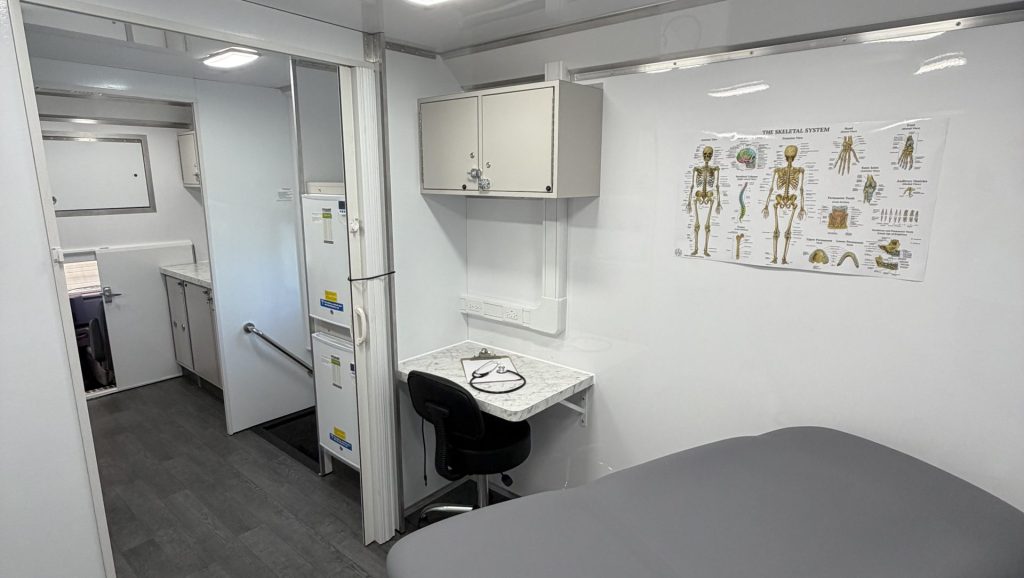
Bring these requirements into the layout review. A useful configuration connects staff positions, patient flow, equipment installation, storage, and utilities rather than treating them as unrelated options.
Compare Configurations Against the Operating Brief
Compare actual layouts against the rural operating brief. Review van, truck, and trailer configurations through their working spaces, access, travel arrangements, and site requirements.
Explore Magnum’s mobile medical clinic options or mobile dental clinics with the selected services and equipment in view.
Ask the design team which configurations deserve a closer look and why. Review how essential requirements are accommodated, along with options, exclusions, and decisions still affecting scope.
Estimate acquisition and recurring operation using the proposed staffing, calendar, routes, supplies, and upkeep. Involve finance in reviewing the resources needed for that same operating model.
Choose a first operating review period and collect relevant feedback, such as service days, attendance, follow-up connections, host experience, and operational workload. Use the findings to refine the route and services.
Rural Mobile Clinic Selection FAQs
Which vehicle format is best for rural outreach?
The right format depends on services, staff, equipment, travel, access, and host sites. Compare configured layouts and operating arrangements rather than choosing a van, truck, or trailer by label alone.
Should rural clinics rely on power at every host location?
Confirm the arrangements at each site and discuss them with the builder. Your selected equipment and installed systems determine the utility questions that need answers.
How often should a rural mobile clinic return?
Set the schedule around local need, demand, clinical follow-up, staff availability, travel, and resources. Review the calendar with community partners and refine it as the program gains experience.
What should we give Magnum when planning rural outreach?
Bring the service scope, staff workflow, equipment information, proposed routes and hosts, utility arrangements, resource framework, and open questions affecting the vehicle configuration.
Plan Your Rural Outreach Vehicle with Magnum
Develop a vehicle around the communities and services your team will support. Magnum’s configurable clinics, integrated systems, and consultation-through-delivery process help turn rural outreach requirements into a scope your organization can review.
Explore Magnum’s medical clinic configurations and discuss the layouts, utilities, and storage needs in your rural operating brief.
Use the mobile healthcare buyer guide to prepare the vehicle-planning questions behind your outreach program.
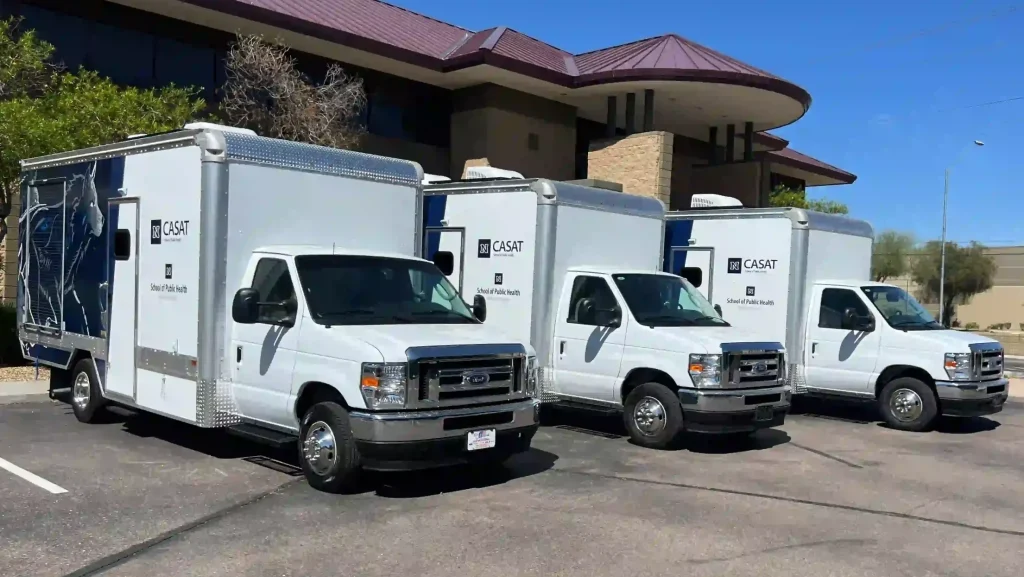
Explore Magnum Clinic Options
Connect rural outreach requirements with a practical clinic configuration.
Explore Magnum’s options and discuss your services, routes, hosts, equipment, and utilities.
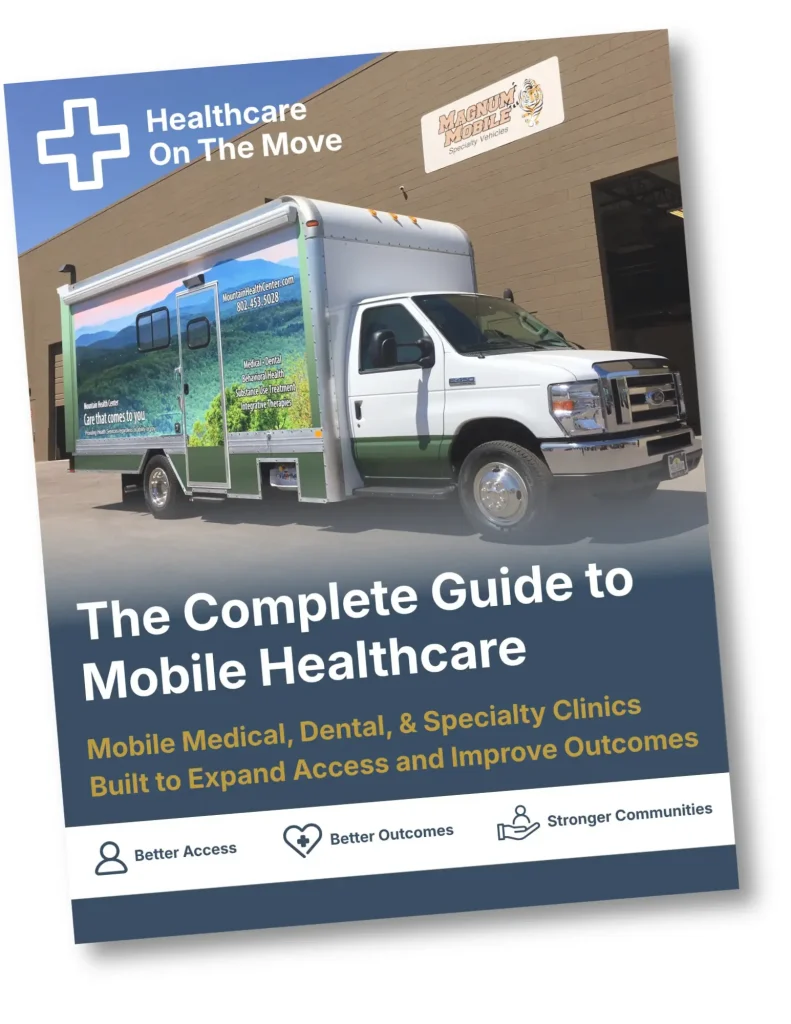
Mobile Healthcare Buyer Guide
Prepare your rural outreach vehicle brief with Magnum’s mobile healthcare buyer guide.
Trusted Nationwide
Trusted by Leading Healthcare Organizations
Trusted by healthcare providers, public agencies, universities, and nonprofit organizations to deliver high-quality mobile specialty vehicles.







Built to Support
Organizations Across Every Sector
Delivering mobile solutions for healthcare, education, government, nonprofit, and commercial applications.
Healthcare
Education
Government
Non-Profit
Public Safety
Corporate
Ready to Get Started
Let’s Build a Solution That Moves Care Forward
Tell us about your operation and our team will help build the right mobile vehicle solution for your needs.