
Mobile clinic utilities and deployment
Shore Power vs. Onboard Power: What Should Your Program Consider?
Plan power around your equipment and host sites
Quick answer
Mobile clinic shore power uses a suitable external electrical connection at the host site. Onboard power comes from systems installed in the vehicle, such as a generator or a configured battery system. Compare verified site connections, equipment loads, service hours, climate control, and operating responsibilities before choosing your configuration.
A power plan starts with where your vehicle will work and what your team needs to run. A familiar parking location and an unfamiliar outreach stop may offer very different electrical access.
Some programs can regularly use suitable shore power. Others need onboard capacity for locations without verified connections. Having both options still requires understanding the capabilities of the vehicle and the sites.
Magnum Mobile Specialty Vehicles builds configured mobile medical clinics and mobile dental clinics. Use this comparison to prepare a power-planning brief for your vehicle discussion.
1. Compare the power sources
Shore power connects the vehicle to an external electrical supply. Its usefulness depends on a compatible, verified connection that supports the intended operation at the actual parking location.
External supply: Ask what the host can provide, where the connection is located, and who verifies its suitability. “We have an outlet” is incomplete planning information.
Generator power: An installed generator can support operation away from suitable shore connections when configured for the vehicle’s requirements. Fuel, servicing, operating conditions, and site rules still matter.
Battery systems: Confirm what an installed battery system powers, its usable capacity under the proposed conditions, and how it recharges. An auxiliary battery does not automatically support a full service day.
Combined configurations: Ask the builder which sources are included and how the installed system is intended to be used. Capabilities differ across vehicle models and equipment packages.
2. Verify host-site connections
Create a site list before choosing how heavily your program will rely on mobile clinic shore power. Record the locations you expect to visit frequently and the ones still awaiting confirmation.
Have the host and appropriate qualified personnel verify the supply details required by the selected vehicle. Include connection location, access arrangements, permitted service hours, and any limits on use.
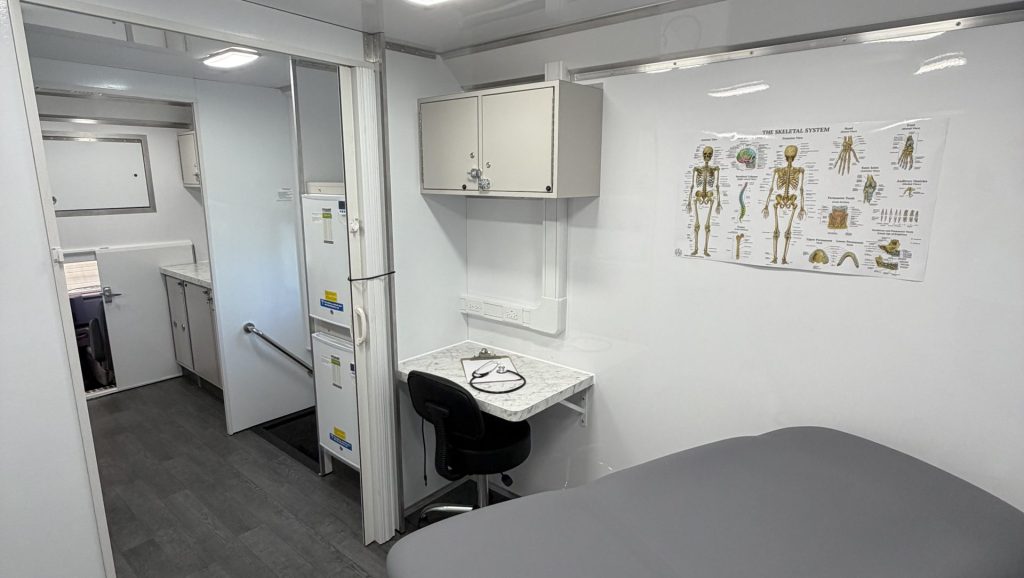
Discuss the proposed connection and parking arrangement with Magnum. Keep an unverified site marked as unverified rather than assuming the vehicle can operate there on shore power.
3. Define equipment loads
Prepare a model-specific equipment list for the builder’s load review. Include clinical devices, lighting, computers, refrigeration, climate control, and other systems your program expects to use.
Manufacturer information: Provide electrical specifications and operating requirements for each selected model. Nameplate information and installation documents are more useful than generic equipment descriptions.
Concurrent use: Describe what runs at the same time during a normal visit, room preparation, and setup. A list of equipment alone does not describe the full operating pattern.
Climate and hours: Explain the expected locations, seasons, daily service hours, and occupied periods. These assumptions help frame the power and climate-control discussion.
Future changes: Mark proposed additions separately. Ask the builder to review new equipment before purchasing it, since extra loads may affect the original configuration.
4. Plan onboard operation
Onboard power expands the locations a program can consider, but it also adds operating responsibilities. Review the actual system, documentation, and deployment routine before treating it as a complete plan.
Fuel or charging: Identify where replenishment will happen and who checks readiness before departure. Ask which systems need power during parking or storage.
Site suitability: Review generator-use permissions and the manufacturer’s placement, ventilation, and exhaust requirements with the responsible team. A host site must support the planned operating method.
Patient experience: Discuss the installed system’s sound and its relationship to waiting areas, neighboring activities, and service spaces. Evaluate the proposed setup at the sites you intend to use.
Maintenance: Establish the applicable inspections, service intervals, records, and support arrangements from the system documentation. Include this work in your operating calendar.
Training: Decide who will operate the system and how replacements learn the vehicle-specific routine. Magnum provides support and training resources, including generator and shore-cord topics.
5. Review interruptions and support
Review what the team should do if a site connection becomes unavailable or an onboard system cannot support the planned service. An alternative power source needs verified capability and an agreed operating process.
Essential equipment: Identify systems your program depends on and ask the responsible team to define interruption procedures. Do not assume every installed circuit has backup power.
Source changes: Confirm how the configured vehicle handles power-source selection and any interruption during a change. Follow its documentation and training.
Support contacts: Record who can assess a host connection and who supports the installed vehicle systems. Keep the relevant model and service information available to the team.
Scheduling decisions: Define when a visit should be relocated, rescheduled, or stopped under your program’s procedures. Power availability belongs in the site-readiness discussion.
6. Prepare your power brief
A clear power brief helps Magnum evaluate a configuration against your operating plan. Bring site information and equipment details together instead of selecting a system based on one advertised number.
Site assumptions: Identify verified shore connections, locations needing onboard operation, typical service hours, and unresolved host questions.
Equipment assumptions: Include exact models, electrical documents, expected simultaneous use, and planned additions for technical review.
Operating responsibilities: Assign readiness checks, replenishment, training, maintenance, and interruption planning. Confirm which items the proposed vehicle package includes.
Next step: Review Magnum’s build process and request a configured vehicle discussion using your site and equipment brief.
Mobile clinic power FAQs
What is shore power for a mobile clinic?
Shore power is a suitable external electrical supply connected to the vehicle at a host site. The connection must be verified against the selected vehicle’s requirements and the equipment your program intends to operate.
Can a mobile clinic operate without shore power?
A clinic can operate from onboard systems when its configuration supports the intended equipment and operating conditions. Confirm capability, fuel or charging needs, site suitability, and service duration with the builder.
Does an auxiliary battery power the whole clinic?
Not necessarily. Ask which systems the battery serves, how much usable capacity is available for your loads, and how it recharges. The presence of an auxiliary battery does not establish full-clinic runtime.
Should we choose a vehicle with both shore and onboard power?
Compare your verified host connections with the locations and service hours needing onboard operation. Ask Magnum to review the equipment loads, operating routine, and proposed system before choosing a configuration.
Plan your mobile clinic power with Magnum
Your power decision should reflect the sites you will visit, the services you will offer, and the systems your staff will operate.
Explore Magnum’s medical clinics and dental clinics as a starting point for discussing your requirements.
Discuss your vehicle with Magnum Mobile and share your site list, equipment specifications, and power-planning questions.
For broader planning, request the free Mobile Healthcare Buyer Guide through its landing page.
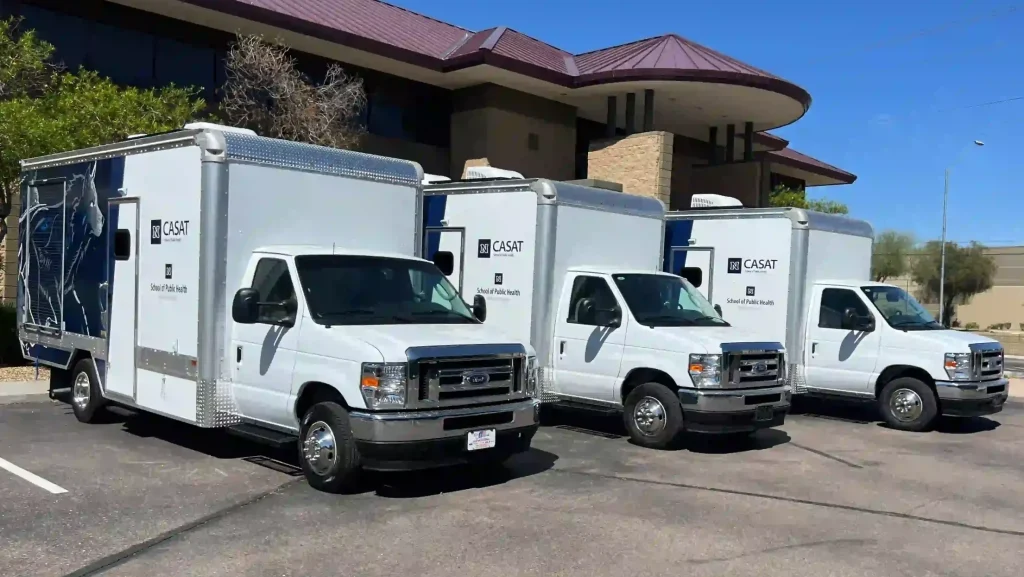
Discuss Your Vehicle
Planning shore or onboard power? Tell Magnum where the vehicle will operate and which systems your program needs to run.
Bring host-site details, equipment information, and service hours to your configured vehicle conversation.
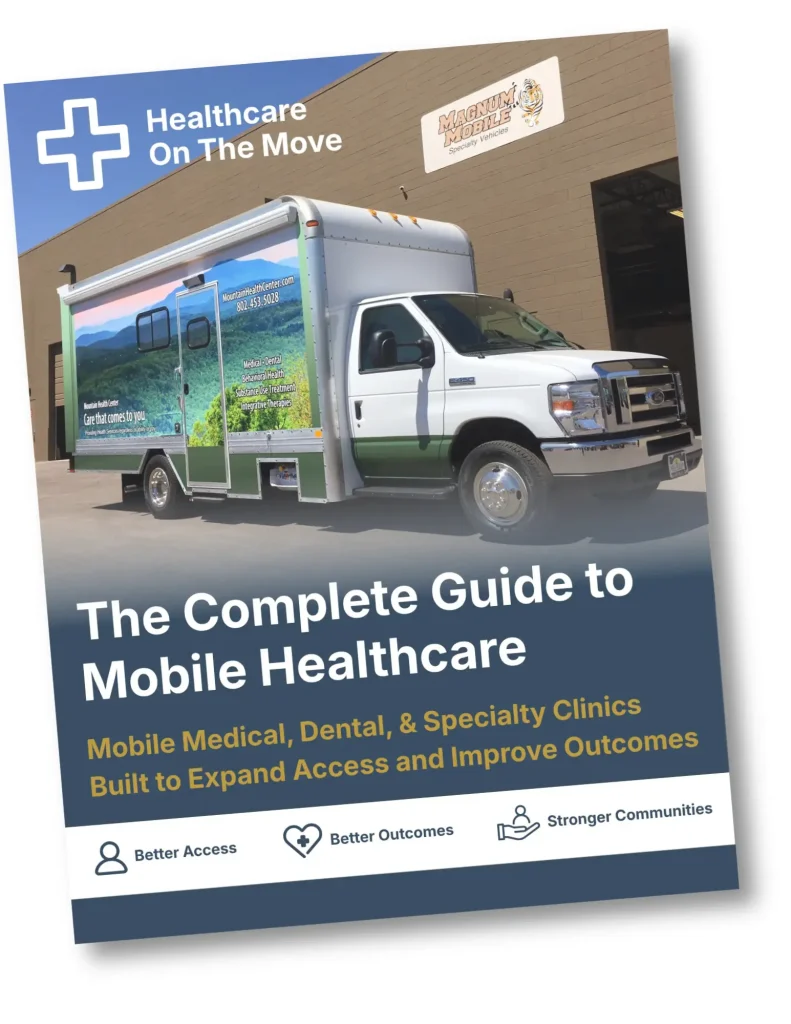
Get the Free Buyer Guide
Get the free Mobile Healthcare Buyer Guide to organize your services, equipment, and deployment questions.
Trusted Nationwide
Trusted by Leading Healthcare Organizations
Trusted by healthcare providers, public agencies, universities, and nonprofit organizations to deliver high-quality mobile specialty vehicles.







Built to Support
Organizations Across Every Sector
Delivering mobile solutions for healthcare, education, government, nonprofit, and commercial applications.
Healthcare
Education
Government
Non-Profit
Public Safety
Corporate
Ready to Get Started
Let’s Build a Solution That Moves Care Forward
Tell us about your operation and our team will help build the right mobile vehicle solution for your needs.