
Mobile Clinic Staffing and Workflow
How to Plan Staffing Around Your Mobile Clinic’s Services
Plan the Team and Workspace Around Your Services
Quick answer
Build a mobile clinic staffing plan by mapping each service from preparation through patient follow-up. Identify the skills, time, coverage, and workspace each task needs, including driving, setup, intake, care, cleaning, and closeout. Review the plan with your clinical leadership, then match the vehicle layout to the team’s actual workflow.
A vehicle floorplan does not determine the right staffing level on its own. Your services, appointment structure, travel schedule, and support arrangements shape how many people can operate the program effectively.
Start with a realistic service day. Include the work that happens before the first patient arrives and after the vehicle returns, rather than treating appointment hours as the entire shift.
Magnum Mobile can discuss how your team’s responsibilities translate into work areas, storage, equipment placement, and movement through a custom mobile clinic. Bring the staffing assumptions into the vehicle conversation early.
Map Every Service to the Tasks It Requires
List the services planned for the unit, then identify the tasks needed to deliver each one. Assign an owner and note which responsibilities require specific clinical skills or internal approval.
Patient-facing work: Include appointment coordination, arrival, intake, the service itself, patient instructions, and any necessary transition to another team.
Supporting work: Account for supplies, equipment checks, room preparation, cleaning, documentation, communication, and follow-up.
Deployment work: Identify who coordinates the host, drives or tows, sets up the unit, checks utilities, and secures the vehicle after the visit.
Use your organization’s clinical leadership to review role responsibilities and qualifications. Vehicle design should support the approved operating plan; it does not establish clinical staffing requirements.
Build a Schedule for the Entire Service Day
Put travel, setup, service hours, breaks, closeout, and return tasks onto one schedule. Identify which work can happen in parallel and which tasks depend on another person finishing first.
A team member who drives may also have another role, but that overlap needs to work across the full day. Avoid planning simultaneous tasks for one person or assuming travel time is available for patient care.
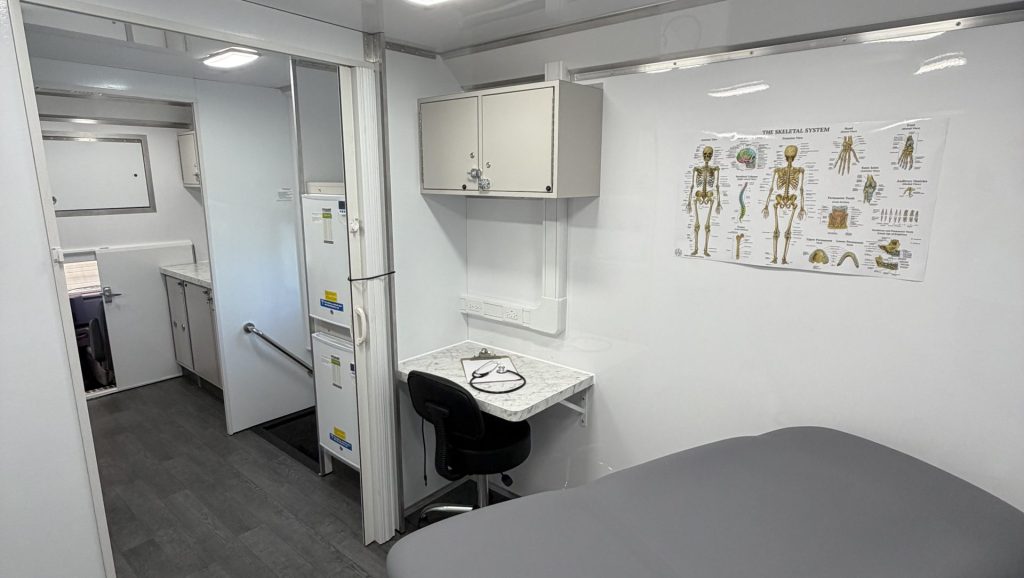
Allow for ordinary changes such as a late start, longer appointment, missing supply, or unavailable host contact. A schedule with no recovery room can make the staffing plan difficult to sustain.
Check Coverage, Overlapping Duties, and Handoffs
Review coverage at each stage rather than relying only on total headcount. Two people with different responsibilities are not interchangeable for every task.
Concurrent tasks: Check whether intake, care, cleaning, and patient questions are expected to happen at the same time.
Breaks and absences: Define what the program can offer when someone is away, and which services or appointments must be adjusted.
Care handoffs: Assign responsibility for results, referrals, patient questions, and records after the unit leaves the host location.
Host support: Confirm the tasks a partner will actually handle. Treat unconfirmed help as an open dependency rather than part of the core staffing plan.
Match the Vehicle Workspace to the Staffing Plan
Walk through the proposed floorplan using the team’s task map. Check where each person works, stores supplies, accesses equipment, and moves when patients are present.
Intake and documentation: Identify a usable work area and how conversations or records are kept appropriately private.
Clinical space: Review working clearance around the selected equipment and the space required by staff involved in the service.
Shared paths: Consider patient entry, staff movement, supply access, room transitions, and clearance for the chosen accessibility features.
Travel arrangements: Discuss the team’s transportation plan separately from work positions inside the parked clinic. Confirm the travel configuration for the selected vehicle.
Magnum’s mobile medical clinic configurations include different sizes and layouts. Use them as a starting point for a conversation about your operation, with the actual services and team requirements guiding the choice.
Test the Assumptions With Your Operating Team
Test the assumptions with the people who will perform the work. A discussion around a floorplan or a practice workflow can reveal overlapping duties and missing support before the design is finalized.
Trace a patient visit: Follow arrival, intake, service, room turnover, departure, and follow-up. Note who is responsible at each transition.
Trace a deployment: Follow preparation, loading, travel, host access, setup, shutdown, and return. Include the work outside appointment hours.
Review a disruption: Discuss an absence, unavailable room, delayed arrival, or equipment issue. Identify which part of the schedule needs to change.
Record the findings and revise the staffing and service plan together. Add capacity only when the team, workspace, and supporting processes can accommodate it.
Prepare a Staffing and Workflow Brief for the Builder
Turn the reviewed staffing plan into a short vehicle brief. Give the builder clear requirements rather than only a desired number of rooms or staff members.
Services and workflow: Describe the intended care, appointment sequence, concurrent tasks, and patient movement.
Team and equipment: List the roles working inside the parked unit, their work areas, exact equipment needs, and storage requirements.
Deployment conditions: Include host sites, travel arrangements, setup responsibilities, utilities, and any assumptions still awaiting confirmation.
Bring this brief to Magnum before selecting the final configuration. A concrete workflow helps the vehicle discussion focus on the spaces and systems your team will use.
Mobile Clinic Staffing Plan FAQs
How many staff members does a mobile clinic need?
There is no universal number. Services, role qualifications, patient flow, travel, setup, and follow-up determine the staffing plan. Have clinical leadership review the responsibilities, then check that the vehicle supports the approved workflow.
Can the driver also perform another role?
Possibly, if the responsibilities, qualifications, and schedule fit. Map driving, setup, care, breaks, and closeout so one person is not assigned conflicting tasks.
Does a larger vehicle automatically increase patient capacity?
No. More workspace may support additional activity, but capacity also depends on the available team, service times, equipment, room turnover, and follow-up processes.
When should staffing be discussed with the vehicle builder?
Discuss it while services and layouts are being defined. Share the roles, tasks, concurrent activities, and equipment requirements before approving the final floorplan.
Plan Your Team’s Mobile Workspace With Magnum
Magnum Mobile builds configurable specialty vehicles around operational needs. A reviewed staffing plan gives the design conversation a practical foundation for workspace, movement, equipment, and storage.
Explore Magnum’s vehicle configurations and the consultation-to-delivery process to start planning a unit around your team’s operation.
Request the Mobile Healthcare Buyer Guide for planning considerations covering services, vehicle selection, layouts, and equipment.
Ready to discuss the workspace your team needs? Contact Magnum Mobile with your service plan, staffing roles, and equipment requirements for a vehicle consultation.
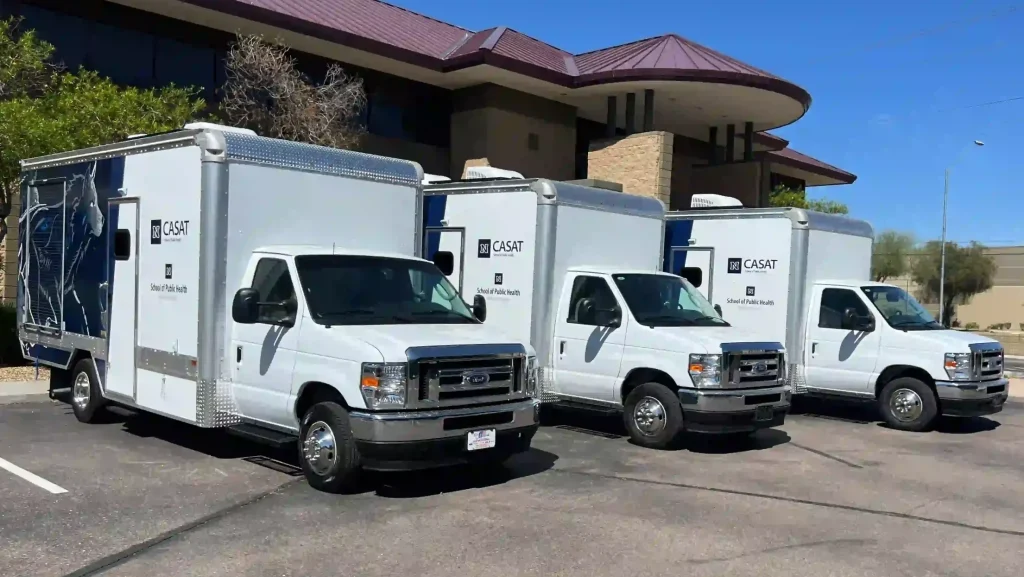
Discuss Your Vehicle
Bring your staffing plan, equipment list, and workflow to a Magnum vehicle consultation.
Discuss work areas and movement that fit the services your team plans to deliver.
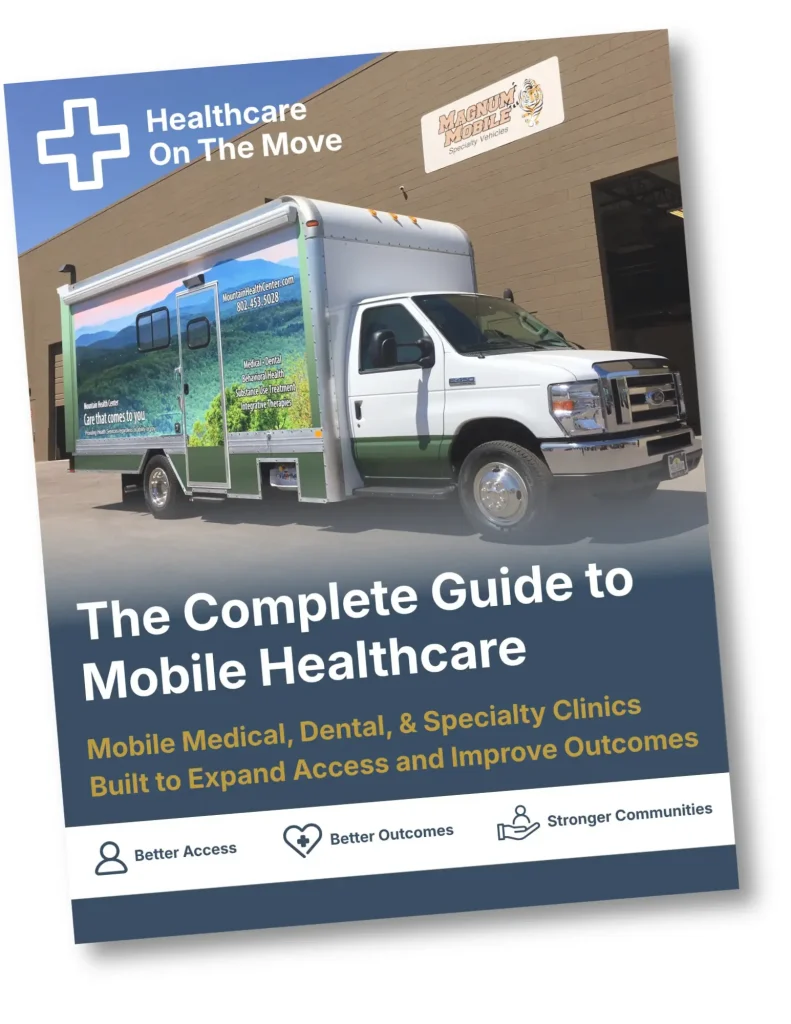
Get the Free Buyer Guide
Get planning considerations for services, layouts, equipment, and vehicle selection.
Trusted Nationwide
Trusted by Leading Healthcare Organizations
Trusted by healthcare providers, public agencies, universities, and nonprofit organizations to deliver high-quality mobile specialty vehicles.







Built to Support
Organizations Across Every Sector
Delivering mobile solutions for healthcare, education, government, nonprofit, and commercial applications.
Healthcare
Education
Government
Non-Profit
Public Safety
Corporate
Ready to Get Started
Let’s Build a Solution That Moves Care Forward
Tell us about your operation and our team will help build the right mobile vehicle solution for your needs.