
Mobile vs. Fixed-Site Planning
Mobile Clinic vs. Another Fixed Location: How to Compare the Options
Compare Both Options Around the Same Access Goal
Compare a mobile clinic with another fixed location by evaluating the same service goal, audience, schedule, staffing, care pathway, and operating budget for both options. Mobility may fit a program that needs to visit multiple communities, while a fixed site may fit a service that depends on a consistent location. The best choice follows your actual operating needs.
Start with the access problem, then compare how each option addresses it. Avoid choosing a vehicle or building first and trying to make the program fit afterward.
Your options may also work together. A mobile unit can be planned around outreach visits and handoffs to existing locations, provided the organization defines scheduling, records, referrals, and follow-up.
Magnum Mobile can help you evaluate the vehicle requirements within that broader decision. A clear service plan makes it easier to discuss layouts, equipment, utilities, routes, and deployment needs.
Use the following comparison questions to prepare a decision that leadership, clinical staff, operations, and community partners can assess together.
Start With the Patients and the Access Problem
Set one purpose for the comparison. Define who needs the service, which barrier you intend to address, and what successful access would look like.
For a mobile option: Identify the communities or host sites the program would visit and how the schedule brings care closer to the intended patients.
For a fixed option: Assess whether the proposed location is practical for the same patients, including travel, transportation, hours, and familiarity.
For both: Ask community partners and potential users which arrangements they would find useful. Document the reasons behind their preferences.
Mobile Health Map’s startup resources encourage community connection and reviewing local needs and assets. Use that approach to inform the mobile side of the comparison alongside your organization’s own evidence.
Compare Services, Workflow, and Space Requirements
Compare the same defined services, then note any differences each setting creates. A general promise of “more healthcare” is too broad for a useful design or budget comparison.
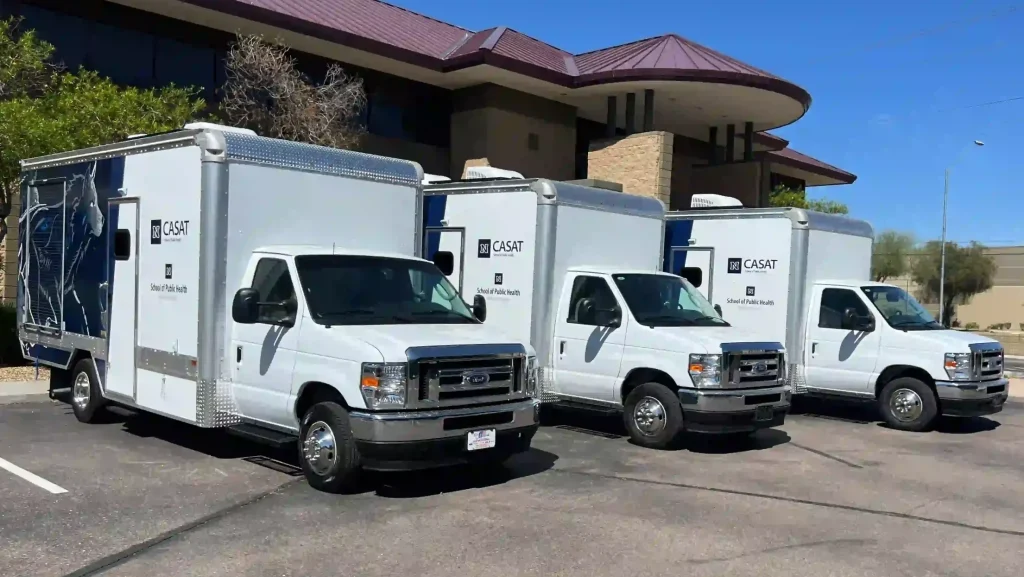
For the vehicle, review patient movement, examination or treatment spaces, privacy, equipment clearances, storage, and utilities. For the fixed site, review the equivalent workflow and the suitability of the proposed premises.
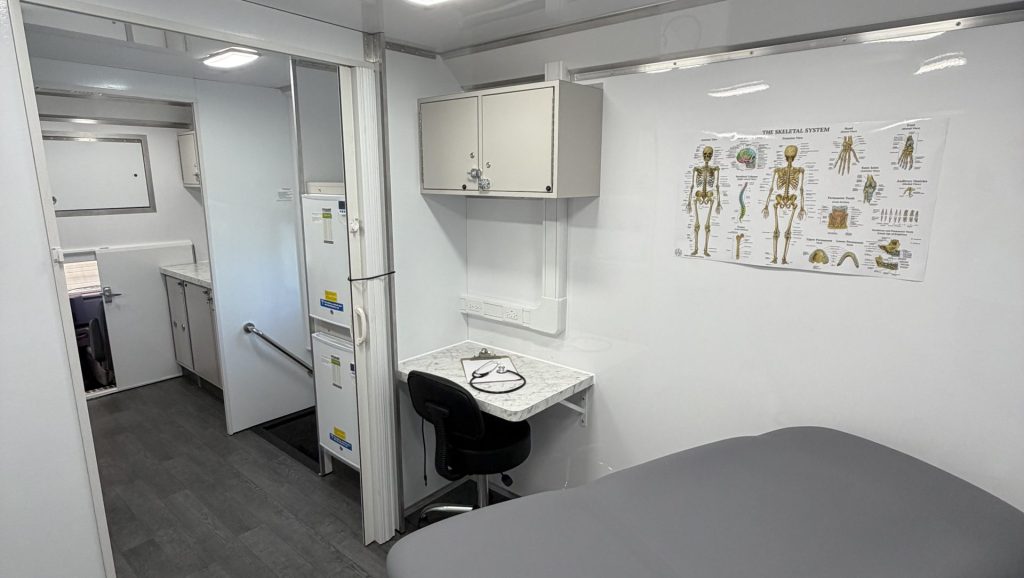
Ask the clinical team which tasks can be delivered in each setting and which require another location. Record the care pathway beyond the first visit so neither option depends on an undefined handoff.
Estimate Capacity and Continuity of Care
Calculate appointment capacity from the real operating plan for each option. Available space is one factor; staff, equipment, visit length, and support tasks can be equally important.
Mobile schedule: Include travel, setup, site changes, restocking, cleaning, documentation, and shutdown alongside patient time.
Fixed-site schedule: Include the hours the site will actually be staffed, appointment turnover, administrative work, and other operating constraints.
Attendance: Separate available slots from likely bookings and completed visits. Use local evidence for each setting where available.
Continuity: Explain how patients return, receive results, and move to further care. Compare the practical follow-up workload for both options.
Compare Complete Startup and Operating Budgets
Review startup and recurring costs using documented assumptions. The goal is to compare complete programs, not just a vehicle quote with a building lease.
Mobile setup: Consider the agreed vehicle and equipment scope, graphics, technology, delivery, initial supplies, and other program-specific items.
Fixed-site setup: Consider the premises arrangement, necessary preparation, equipment, technology, initial supplies, and other costs your project team identifies.
Recurring resources: Compare staffing, supplies, insurance, technology, utilities, servicing, and the other expenses applicable to each setting.
Setting-specific needs: Include fuel, vehicle maintenance, storage, and travel for the mobile plan, and relevant premises expenses for the fixed plan.
Have finance review the estimates and funding assumptions. Identify uncertain costs and test how the comparison changes with lower attendance, staffing changes, or unexpected downtime.
Review Launch Dependencies and Backup Plans
Compare what each option needs before it can open and how it will respond to disruptions. Neither is ready simply because an asset has been acquired.
Mobile dependencies: Confirm host arrangements, parking and setup space, utilities, routes, driving responsibilities, storage, supplies, and staff readiness.
Fixed-site dependencies: Confirm the premises, access, utilities, staffing, equipment readiness, and other applicable project requirements with the responsible team.
Backup arrangements: Explain how appointments are handled if the planned location, equipment, vehicle, or staff becomes unavailable.
For the vehicle side, review Magnum’s specialty vehicle configurations and planning-to-delivery process. Ask which requirements influence the selected build and its project schedule.
Record the Tradeoffs and the Next Decision
Create a short decision record using the same criteria for both options. Separate confirmed facts, working assumptions, and unanswered questions.
Reasons to prefer mobility: Describe the specific value of changing locations, reaching multiple hosts, or supporting a defined outreach schedule.
Reasons to prefer a fixed site: Describe why a consistent location, the proposed space, or the planned service workflow better fits the current need.
Possible combined model: Consider whether existing locations can support the mobile program’s referrals, supplies, staffing, or follow-up. Make those responsibilities explicit.
If the evidence remains uncertain, identify what a suitable pilot or additional local research could clarify. Choose the next step around the unanswered decision rather than forcing a premature purchase.
Mobile Clinic vs. Fixed Location FAQs
Is a mobile clinic always less expensive than a fixed location?
No universal cost comparison applies. Compare acquisition or premises costs, equipment, staff, recurring operations, and the proposed schedule for your specific program.
When should an organization consider a mobile clinic?
Consider it when changing locations serves a defined access or outreach goal and the team can support the travel, hosts, staffing, utilities, and follow-up required.
Can mobile and fixed-site services work together?
They can be planned together. Define which care occurs in each setting and how records, referrals, scheduling, supplies, and patient questions move between teams.
What should we compare before requesting a vehicle quote?
Clarify the audience, service list, schedule, workflow, staff, equipment, sites, operating budget, and open questions. These details help the builder discuss a relevant configuration.
Evaluate the Mobile Vehicle Option With Magnum
Magnum Mobile helps organizations explore the vehicle side of an access-expansion decision. Share the service model and practical requirements your comparison has identified.
Explore mobile medical clinics and mobile dental clinics with Magnum. Evaluate the proposed layout around the work your team intends to deliver.
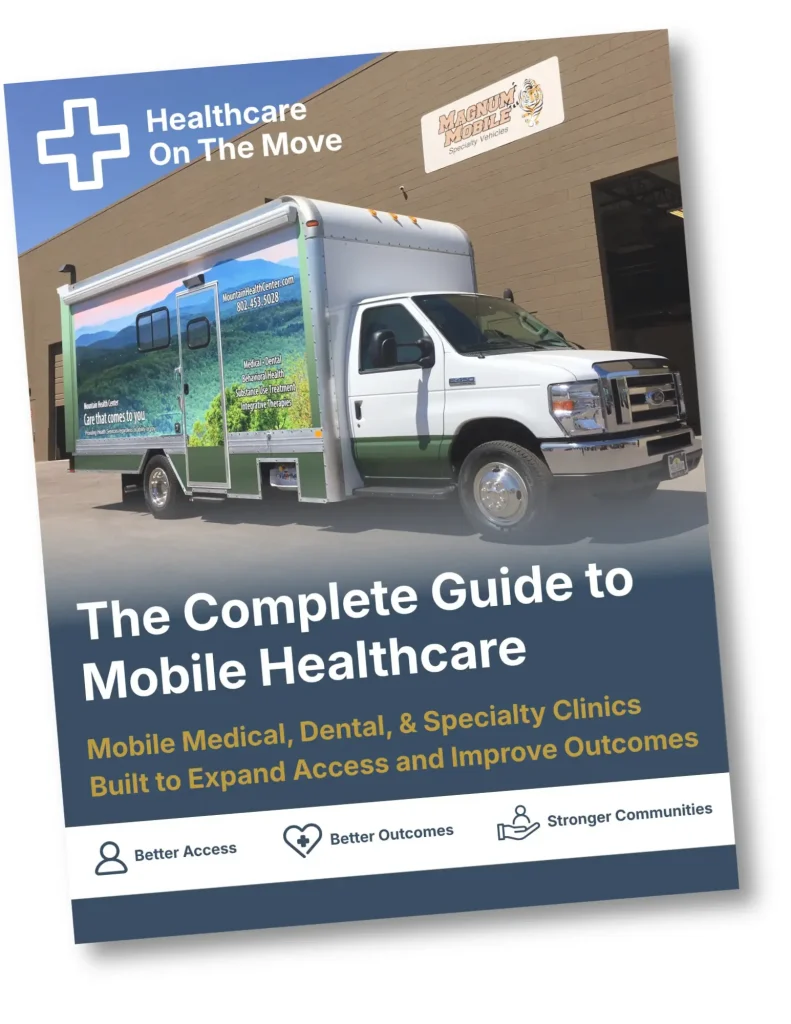
Request the Mobile Healthcare Buyer Guide for considerations covering service goals, staffing, layouts, equipment, and vehicle needs.
Ready to assess the mobile option? Contact Magnum Mobile to discuss a specialty vehicle built around your organization’s services and operating plan.
Discuss Your Expansion Plan
Discuss the vehicle requirements within your mobile-versus-fixed expansion decision with Magnum.
Explore specialty vehicle configurations around your proposed services and outreach schedule.
Explore Magnum Vehicle Options
Request the Mobile Healthcare Buyer Guide to prepare for your vehicle planning discussion.
Trusted Nationwide
Trusted by Leading Healthcare Organizations
Trusted by healthcare providers, public agencies, universities, and nonprofit organizations to deliver high-quality mobile specialty vehicles.







Built to Support
Organizations Across Every Sector
Delivering mobile solutions for healthcare, education, government, nonprofit, and commercial applications.
Healthcare
Education
Government
Non-Profit
Public Safety
Corporate
Ready to Get Started
Let’s Build a Solution That Moves Care Forward
Tell us about your operation and our team will help build the right mobile vehicle solution for your needs.