
Senior Community Outreach • Mobile Healthcare Planning
How Mobile Clinics Can Support Senior Community Outreach
Plan patient access, community partnerships, and dependable follow-up
Quick answer
A mobile clinic for seniors can support a qualified team delivering approved services at community locations. Plan it around local partners, patient entry and assistance, private visits, communication preferences, caregiver involvement when appropriate, and reliable follow-up. Review the entire visit and host site before choosing the vehicle layout, equipment, and utilities.
Senior community outreach may bring a healthcare team closer to places older adults already use, such as community centers or agreed residential sites. A useful vehicle plan starts with the people served, the program’s care model, and the practical path into and through a visit.
Older adults have varied needs and preferences. Do not assume age alone determines assistance, mobility, communication, or clinical requirements. Ask community partners and prospective participants what would make the service easier to use, and review that input with the operating team.
Magnum Mobile can discuss configurable clinical layouts and integrated utilities around your outreach workflow. Explore our mobile medical clinics and request the Mobile Healthcare Buyer Guide through the guide page.
1. Define the outreach purpose and partners
Start with a specific service goal and a defined group of community locations. Explain which access barrier the mobile program is intended to address and how it will connect people with ongoing care.
Community input: Ask older adults, local care teams, and host organizations about preferred times, transportation arrangements, appointment methods, and questions about using a mobile clinic.
Partner roles: Identify who coordinates the site, communicates with participants, books appointments, provides approved care, and handles follow-up. A host’s community relationship and a healthcare operator’s clinical responsibilities are different parts of the plan.
Approved services: Define the services the qualified team is prepared and authorized to provide onboard. Clinical leadership should determine the scope, appropriate equipment, and referral pathways.
Success measures: Agree on practical measures such as service reliability, completed visits, patient feedback, access issues, staff workload, and completed follow-up. Use them to evaluate a pilot before expanding the route.
2. Map a complete community visit
Map the whole visit, beginning with how a participant learns about the service. A convenient parking location is only one part of access; the appointment, waiting, entry, care, and departure arrangements also need to work.
Arrival to departure: Walk through scheduling, arrival, check-in, movement into the clinic, the clinical work, private discussion, departure instructions, and a contact method for later questions. Identify assistance and staff responsibilities at each step.
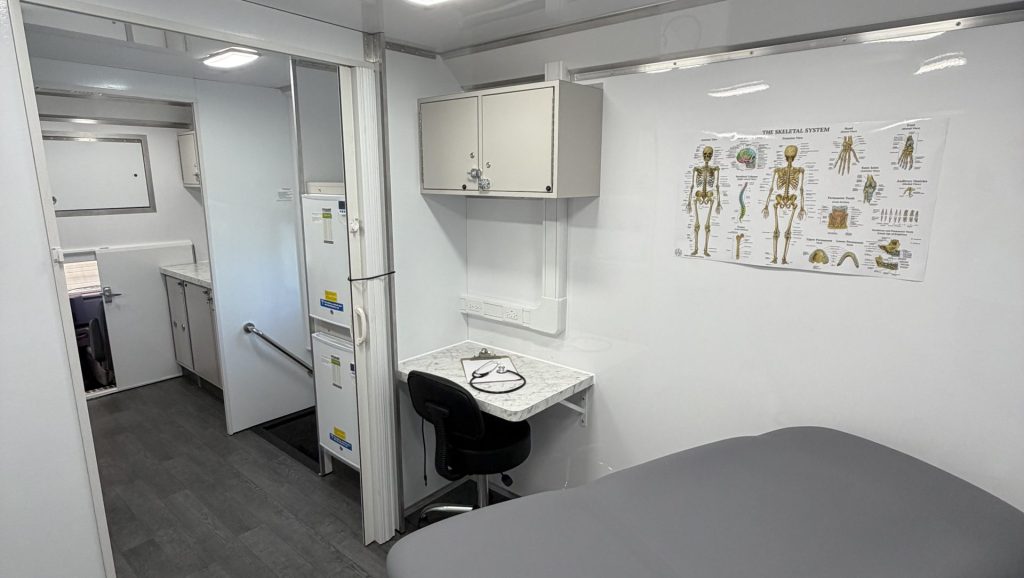
After the vehicle leaves: Assign results, referral, and return-visit responsibilities. Give participants an understandable way to reach the program and confirm how it coordinates with their established care providers under approved procedures.
3. Review access, waiting, and communication
Review the proposed visit with the people who will use and operate the clinic. Consider the trip from a drop-off point or host building to the entrance, not just the vehicle’s interior floor plan.
Boarding and circulation: Discuss entry equipment, assistance, mobility aids, turning or transfer space where relevant, handholds, and staff movement. Ask Magnum to review the proposed configuration and operating clearances for your identified needs.
Waiting arrangements: Confirm where participants wait, seating, weather protection, restrooms, and how they are called for a visit. If the host supplies an indoor waiting area, confirm its availability throughout the planned service hours.
Communication: Review signage, appointment reminders, written instructions, lighting, background noise, and language or communication support with the team. Offer a booking and contact method suited to the people served rather than relying on a single digital channel.
Privacy and companions: Plan where private conversations occur and how a companion or caregiver can participate when appropriate under the operator’s consent and privacy procedures. Preserve the participant’s preferences and decision-making role.
4. Configure the clinic for the outreach workflow
The vehicle should support the approved services and a workable visit flow. Bring Magnum a clear description of patient access, care spaces, staffing, equipment, and representative host sites before narrowing the configuration.
Clinical layout: Review consultation or exam space, patient and staff movement, privacy, work surfaces, cleaning access, and secure storage. Walk through the floor plan with the intended team and identify any competing uses of the same area.
Equipment integration: Supply actual equipment dimensions, weights, power needs, installation requirements, and clearances. Confirm which items are included in the builder’s proposal and which the organization supplies.
Utilities and comfort: Define power, plumbing, heating and cooling, water or waste needs, and expected service conditions. Discuss onboard systems and host connections based on the approved scope and site information.
Records and connectivity: Review workstations, communications, network requirements, and the operator’s privacy procedures. Establish a reviewed plan for service locations with a weak connection before relying on online systems during every visit.
Operating footprint: Obtain site measurements and access photos for parking, turning, patient entry, lift or ramp deployment when specified, pedestrian routes, and emergency access. Compare vehicle formats using the full setup required at each location.
5. Test staffing, costs, and continuity
A dependable senior outreach service needs resources between scheduled stops as well as on service days. Test a manageable route and adjust the operation before committing to broader coverage.
Staff capacity: Assign driving, setup, check-in, patient assistance, clinical, closing, and follow-up roles. Include the time required for private conversations, site movement, cleaning, and restocking when estimating appointment capacity.
Budget: Separate vehicle acquisition from equipment, staffing, supplies, insurance, fuel, connectivity, maintenance, storage, and coordination. Confirm purchasing approvals and what each funding source can cover.
Pilot walkthrough: At an agreed host site, test arrival, waiting, boarding, the visit sequence, and departure with the operating team and appropriate community input. Record practical access and communication issues, then review the proposed adjustments.
Continuity: Plan for weather, staff absence, host cancellations, and vehicle downtime. Give participants and partners a consistent way to learn about changed schedules and alternate care arrangements.
6. Prepare your vehicle brief for Magnum
Your vehicle brief should connect the community outreach goal with the day-to-day work the unit must support. Magnum can use that information to discuss layout options and a configured proposal.
Care and access: Share approved services, staffing, visit flow, patient entry and assistance needs, communication and privacy requirements, equipment specifications, and follow-up arrangements.
Sites and resources: Bring host measurements and photos, waiting arrangements, utility information, route distances, storage plans, acquisition budget, operating responsibilities, and timing.
Community partner resource: The Administration for Community Living’s Aging and Disability Networks overview describes organizations such as Area Agencies on Aging and senior centers. Review relevant local organizations as potential planning partners alongside your clinical and host-site teams.
Senior Community Outreach FAQs
How can a mobile clinic support senior community outreach?
It can provide a planned space for a qualified team to deliver approved services at agreed community locations. The operator should define access, privacy, staffing, communication, and follow-up so the vehicle visit fits into ongoing care.
What access features should a mobile clinic for seniors have?
The appropriate configuration depends on the people served and the services offered. Review boarding, assistance, mobility aids, interior circulation, and site deployment with the operating team and supplier; avoid assuming one entry arrangement fits every program.
Can a caregiver attend a mobile clinic visit?
Plan suitable space and workflow for a companion or caregiver when appropriate under the operator’s consent and privacy procedures. Discuss the participant’s preferences and the intended role of the companion with the care team.
What should a senior outreach program bring to Magnum?
Bring the service plan, staffing, visit sequence, access and privacy needs, equipment, representative sites, utilities, route, budget, and timing. Include host waiting arrangements and the follow-up process so the proposed vehicle supports the complete visit.
Plan Your Senior Outreach Vehicle With Magnum Mobile
Magnum Mobile offers configurable clinical layouts, integrated vehicle systems, and a structured consultation-to-delivery process. Share your senior outreach workflow so our team can discuss a vehicle configuration around patient access and your program’s daily work.
Explore Magnum’s mobile medical vehicles for community outreach.
Request the free Mobile Healthcare Buyer Guide to prepare broader purchase planning questions.
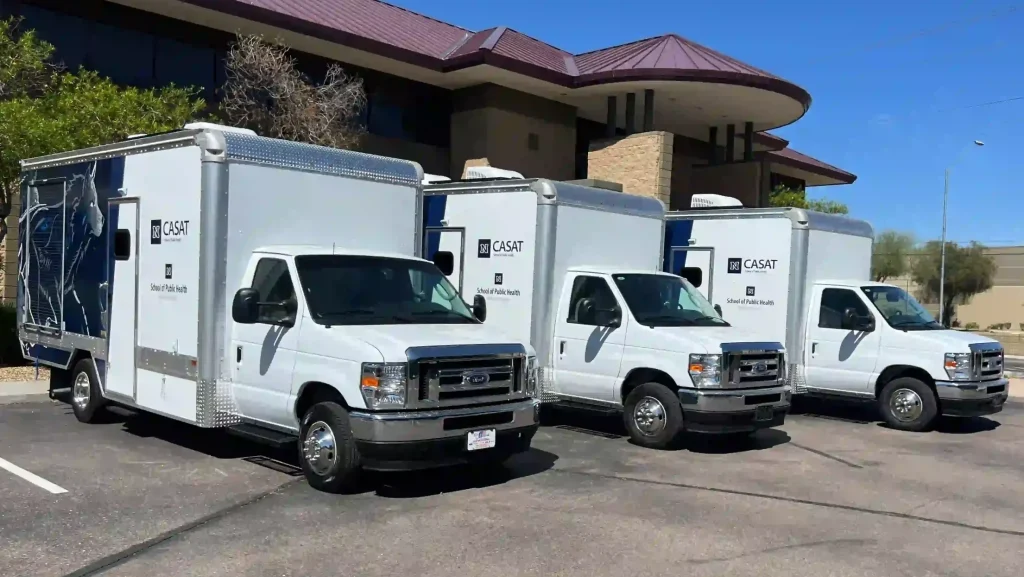
Discuss Your Vehicle
Compare mobile clinic layouts around senior outreach services, patient access, and community host sites.
Bring staffing, equipment, privacy, waiting, utilities, and follow-up requirements to Magnum.
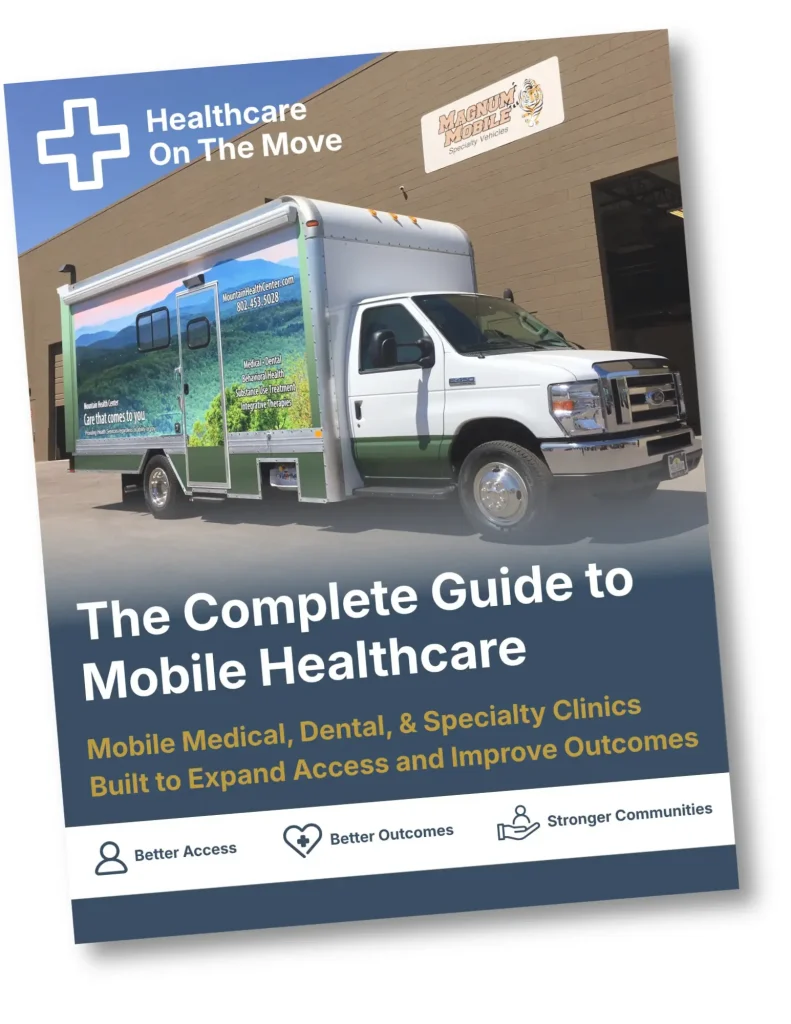
Get the Free Buyer Guide
Request the Mobile Healthcare Buyer Guide through the guide page.
Trusted Nationwide
Trusted by Leading Healthcare Organizations
Trusted by healthcare providers, public agencies, universities, and nonprofit organizations to deliver high-quality mobile specialty vehicles.







Built to Support
Organizations Across Every Sector
Delivering mobile solutions for healthcare, education, government, nonprofit, and commercial applications.
Healthcare
Education
Government
Non-Profit
Public Safety
Corporate
Ready to Get Started
Let’s Build a Solution That Moves Care Forward
Tell us about your operation and our team will help build the right mobile vehicle solution for your needs.