
Mobile Dental Clinics • Equipment Planning
What Equipment Does a Mobile Dental Clinic Need?
Build an equipment schedule that matches your services and vehicle
Quick answer
A mobile dental clinic equipment list starts with the services your clinical team will provide. Review treatment positions, instruments, any planned imaging, instrument processing, supplies, records, water, suction, compressed air, power, and climate control. Specify the actual equipment models and installation requirements before approving the layout. Equipment needs and inclusions vary by program and configured vehicle.
A useful equipment checklist does more than name a dental chair and a sterilizer. It shows how each item fits, operates, travels, and receives maintenance inside the mobile clinic.
Build the list with your clinical lead, equipment supplier, and vehicle builder. That helps separate clinical selections from the vehicle systems needed to support them.
Magnum Mobile can discuss configurable layouts, commercial-grade materials, and integrated vehicle systems around your operating plan. Explore our mobile dental vehicles and request the Mobile Healthcare Buyer Guide through its guide page.
1. Start with the services your team will deliver
Define the intended services before requesting an equipment package. Screening, preventive appointments, and treatment programs may have different equipment and support-space requirements.
Clinical scope: Ask the responsible clinician to specify the planned procedures and the equipment needed for each. Avoid buying around a general description such as full-service dentistry.
Patient needs: Review positioning, assistance, accompanying caregivers, and communication requirements. Consider those needs alongside chair selection and access.
Staffing: State who will operate each position and which tasks may overlap. Equipment capacity should reflect realistic staffing and scheduling.
Future services: Separate launch requirements from possible later additions. Ask what the initial configuration would need to accommodate an upgrade.
2. Organize the equipment schedule by function
Use a written schedule with one row per equipment item. Record who selects, supplies, installs, and commissions it, including equipment purchased directly by the program.
Define the boundaries: A vehicle quote and an equipment quote may cover different work. Confirm responsibilities for mounting, connections, testing, manuals, and training.
| Equipment group | Questions to resolve |
|---|---|
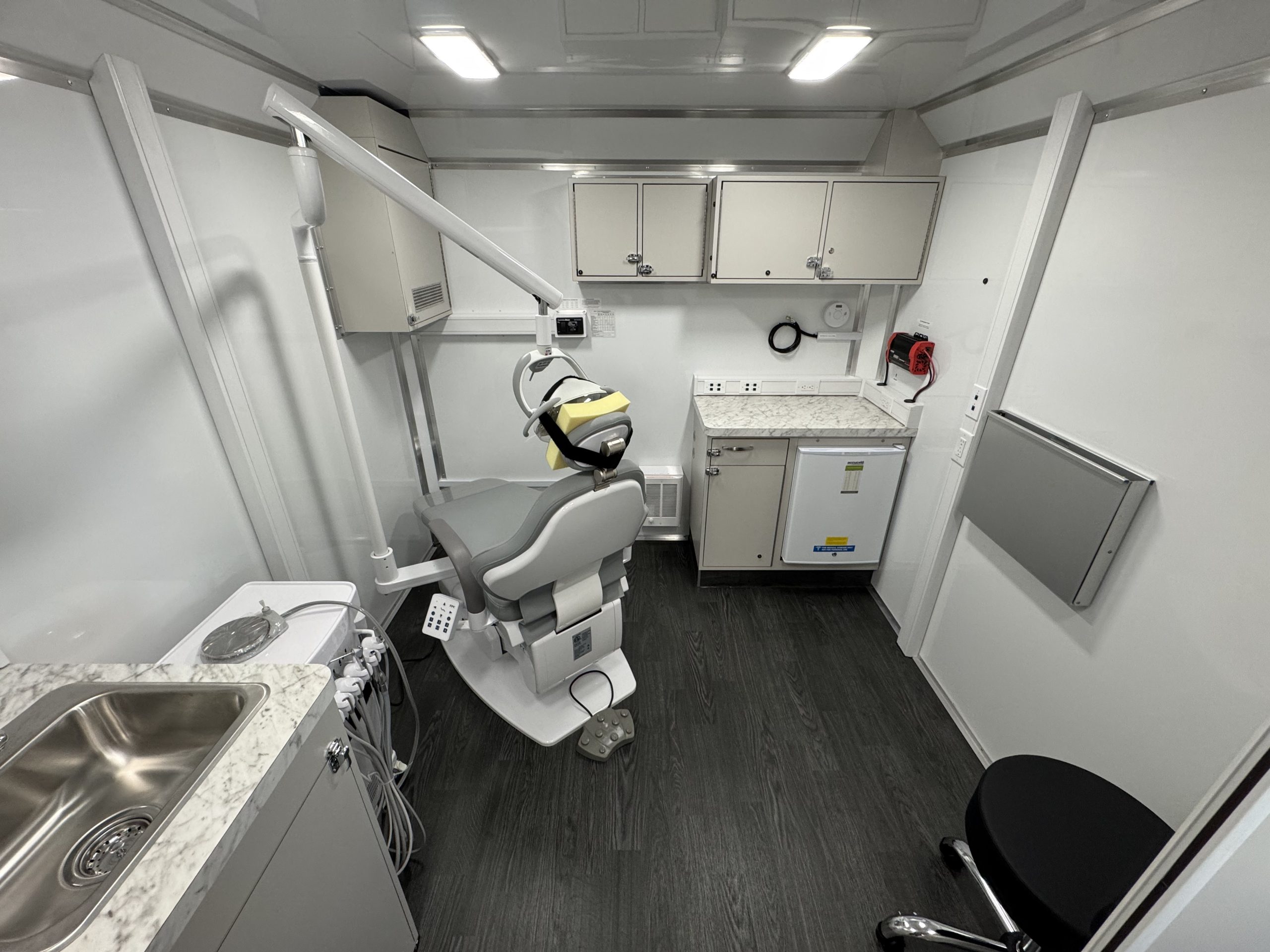
| Treatment positions | Chair, delivery equipment, lighting, clearances, and staff access |
| Clinical instruments and imaging | Service scope, selected devices, storage, installation, and applicable approvals |
| Instrument processing | Equipment, work areas, storage, and the clinical team’s approved workflow |
| Supporting systems | Water, suction, compressed air, electrical loads, and climate requirements |
3. Specify dimensions and installation requirements
Product names are not enough for a configuration review. Provide current manufacturer information for the exact models your team is considering.
Physical fit: Record equipment dimensions, weight, operating clearances, opening doors, and maintenance access. Identify any components located outside the treatment area.
Travel: Ask the equipment supplier and builder to confirm suitability for the planned mobile installation and how each item will be secured.
Utilities: Document voltage, power demand, water, drainage, suction, and compressed-air requirements where relevant. Review intended simultaneous operation.
Imaging: If imaging is planned, involve the qualified equipment and radiation-safety professionals early. Resolve installation and applicable approval requirements before finalizing the layout.
4. Include the equipment behind each appointment
Supporting functions can determine whether the clinic works smoothly. Give them space and ownership in the equipment schedule.
Instrument processing: Have the clinical team define its processing equipment and workflow, including where instruments enter, move through the process, and return to use.
Consumables: Plan storage for the intended visit schedule and reserve stock. Review which supplies must remain accessible while treatment is underway.
Records: Include computers, connectivity equipment, charging, and protected work surfaces. Ask the program team to define its privacy and data-handling requirements.
Water systems: Review both vehicle plumbing and dental equipment maintenance needs. CDC guidance emphasizes routine maintenance and monitoring of dental treatment water.
End-of-day tasks: Include cleaning supplies, waste-handling provisions, restocking, and secure storage under your organization’s procedures. The equipment list should support closing as well as opening.
5. Plan ownership, training, and service access
An equipment selection creates ongoing work after delivery. Decide how the program will manage those responsibilities before placing orders.
Service ownership: Identify the service contact for the chassis, vehicle upfit, and each major equipment item. Confirm the actual warranty terms separately.
Maintenance: Ask for manufacturer maintenance requirements, required supplies, and technician access. Include planned servicing in the deployment schedule.
Training: Specify who needs instruction on operation, shutdown, travel preparation, and routine care. Keep manuals available to the people using the clinic.
Contingencies: Discuss which equipment failures would interrupt the planned services and how the team would respond. Avoid assuming that all work can continue if one shared system is unavailable.
6. Bring a complete equipment brief to Magnum
Magnum Mobile can discuss configurable dental layouts and integrated vehicle systems around the equipment and workflow your program selects. A clear brief makes that discussion more useful.
Share the schedule: Bring exact models, specifications, supplier contacts, and installation responsibilities, with unresolved decisions clearly marked.
Review the drawing: Trace staff access, storage, equipment operation, and servicing on the proposed layout. Compare those tasks with the clinic’s operating day.
Confirm scope: Explore Magnum’s mobile dental clinics and ask what is included in your configured proposal. Do not assume that an item shown in a photo is included.
Discuss your mobile dental equipment requirements with Magnum Mobile. Share the services, staff plan, and equipment schedule so the vehicle review can address the complete operation.
Mobile Dental Clinic Equipment FAQs
Is there one standard mobile dental equipment list?
No. The equipment list depends on the program’s services, staffing, patient needs, and selected vehicle configuration. Have the clinical team approve the requirements.
Should we choose equipment before the vehicle layout?
Develop them together. Exact equipment specifications help the builder review dimensions, utility demands, mounting, and access before the layout is finalized.
Are dental equipment and imaging included with every vehicle?
Inclusions depend on the configured proposal. Confirm each item, the supplier, installation responsibilities, and commissioning requirements in writing.
What equipment details should we send to Magnum?
Send the intended services, equipment models and specifications, chair count, staffing plan, supplier contacts, and questions about space, utilities, installation, or maintenance.
Build Your Dental Vehicle Around the Right Equipment
Magnum Mobile can help connect your equipment requirements with configurable layouts, commercial-grade materials, and integrated systems. Bring the clinical choices and operating constraints so the vehicle discussion starts with how your team will work.
Explore Magnum’s mobile dental vehicles and compare configurations for your program.
Discuss Your Vehicle
Build an equipment list around the services your dental team will deliver.
Review dimensions, utilities, installation, and service access with Magnum Mobile.
Get the Free Buyer Guide
Request the Mobile Healthcare Buyer Guide through the guide page.
Latest From Our Blog
Trusted Nationwide
Trusted by Leading Organizations
Trusted by healthcare providers, animal care programs, public agencies, universities, and nonprofit organizations for mobile specialty vehicles.







Built to Support
Organizations Across Every Sector
Delivering mobile solutions for healthcare, education, government, nonprofit, and commercial applications.
Healthcare
Education
Government
Non-Profit
Public Safety
Corporate
Ready to Get Started
Let’s Build a Solution That Moves Care Forward
Tell us about your operation and our team will help build the right mobile vehicle solution for your needs.