
Mobile Dental Programs • Funding Preparation
How to Build a Funding Proposal for a Mobile Dental Program
Connect the vehicle request with a complete and supportable program plan
Quick answer
A mobile dental program funding proposal should connect a documented community need with a defined service model, qualified operating team, host partnerships, suitable vehicle requirements, a complete budget, measurable goals, and a plan to sustain operations. Follow the specific funder’s instructions and confirm eligibility and allowable costs before building the request around a vehicle purchase.
A vehicle specification alone does not explain why a program should receive support. Funders and internal decision-makers need to understand who the service will reach, how it will operate, and what resources keep it available.
Develop the operating plan and funding narrative together. Use documented needs, clear assumptions, and current configured quotes rather than promising results that the program has not tested.
Magnum Mobile can discuss configurable layouts, commercial-grade materials, and integrated vehicle systems around your operating plan. Explore our mobile dental vehicles and request the Mobile Healthcare Buyer Guide through its guide page.
1. Start with the funder’s actual requirements
Read the current funding opportunity or internal approval instructions before drafting. Make a checklist of required sections, attachments, deadlines, and review criteria.
Eligibility: Confirm that the organization and proposed activities meet the specific requirements. A mobile dental concept does not establish eligibility by itself.
Allowable costs: Check whether the request may include vehicles, equipment, staffing, operating costs, or other proposed items. Obtain clarification from the funder where needed.
Application process: Use official resources such as Grants.gov’s application guidance for federal opportunities. Match the actual opportunity rather than assuming a general checklist covers every request.
Ownership: Assign the application lead and reviewers for program details, financial assumptions, clinical requirements, and organizational commitments.
2. Explain the need and the proposed response
Describe the access problem using evidence your organization can support. Connect the proposed mobile services with that need and explain the limits of the program.
Evidence: Use relevant local information, partner input, and program experience. Identify the source and date of factual claims and keep assumptions separate from observed results.
| Proposal element | What it should explain |
|---|---|
| Need | Who faces an access problem and what evidence supports it |
| Response | Which services the program will deliver and where |
| Readiness | People, partners, systems, and decisions already in place |
| Evaluation | How the organization will assess delivery and follow-through |
3. Describe the complete operating model
Show that the proposed vehicle is part of a workable service. Include responsibilities that occur before and after patient visits.
Clinical scope: Have the responsible team define the services, patient groups, staffing, equipment, and follow-up arrangements.
Route and sites: Identify proposed hosts, visit patterns, parking and utility needs, and who confirms that each location can support the vehicle.
Partners: Document specific commitments rather than describing every interested organization as a confirmed partner.
Readiness: Explain outstanding approvals, hiring, training, site arrangements, and other dependencies. Give each an owner and a realistic planning assumption.
4. Build a budget that separates purchase and operation
Present the full resource requirement within the funder’s required format. Explain what is included, excluded, estimated, or supported by another source.
Configured vehicle: Use a current proposal tied to the service and equipment brief. Identify the configuration and any quoted exclusions.
Equipment and launch: Include relevant equipment, installation responsibilities, initial supplies, training, delivery, and launch costs within the actual funding rules.
Recurring operation: Review staffing, travel, supplies, maintenance, storage, insurance, information systems, and administrative work with the responsible organizational teams.
Other support: Distinguish committed contributions from potential or requested support. Explain how any required match or partner contribution will be documented.
Sustainability: State how operations will be supported after the initial funding period. Use reviewed assumptions and explain unresolved funding needs.
5. Set measurable goals and an honest timeline
Choose measures that support the program’s purpose and can be collected consistently. Avoid presenting a vehicle purchase as evidence that health outcomes are guaranteed.
Delivery: Define measures such as completed visits, operating sites, appointment readiness, or service availability, with clear reporting periods.
Follow-through: Describe how the program will track next steps or referrals where applicable under its approved processes.
Timeline: Include planning, purchasing, staffing, configuration decisions, delivery preparation, training, and launch dependencies. Confirm vehicle timing with the builder.
Reporting: Name the people responsible for data quality, financial reporting, and progress review. Explain how the team will respond when assumptions differ from results.
6. Use a clear vehicle brief to support the request
Magnum Mobile can discuss a configured vehicle proposal around your dental program’s requirements. That information can support the vehicle portion of a broader organizational funding plan.
Bring the requirements: Share the service scope, staffing, route, equipment specifications, host-site needs, and relevant purchasing constraints.
Clarify the proposal: Ask which items are included, which decisions remain open, and what assumptions affect configuration, pricing, or delivery planning.
Review options: Explore Magnum’s mobile dental clinics and use the buyer guide to organize your vehicle questions. Grant decisions and eligibility remain with the funder.
Discuss your dental vehicle requirements with Magnum Mobile. A clear brief helps align the requested configuration with the program described in your proposal.
Mobile Dental Funding Proposal FAQs
Does a mobile dental program automatically qualify for grants?
No. Eligibility, eligible activities, allowable costs, and application requirements depend on the specific current funding opportunity. Confirm them before preparing the request.
Should the budget include more than the vehicle?
Yes, describe the complete program resources while following the funder’s required format and cost rules. Distinguish the vehicle purchase from launch and recurring operating needs.
Can Magnum guarantee funding approval?
Funding decisions belong to the funder. Magnum can discuss vehicle configuration and proposal scope around your requirements, while the organization prepares and submits its funding request.
What information helps obtain a useful vehicle proposal?
Bring the planned services, equipment, staff workflow, route, host requirements, purchasing constraints, and decisions that still need review.
Support Your Funding Plan With a Defined Vehicle Brief
Magnum Mobile can help review a configured dental vehicle around your service and operating requirements. Bring the program brief so the vehicle request is grounded in the work your team intends to deliver.
Explore Magnum’s mobile dental vehicles and compare configurations for your program.
Discuss Your Vehicle
Connect documented need with a complete dental program and operating budget.
Bring clear vehicle requirements to Magnum while following the funder’s instructions.
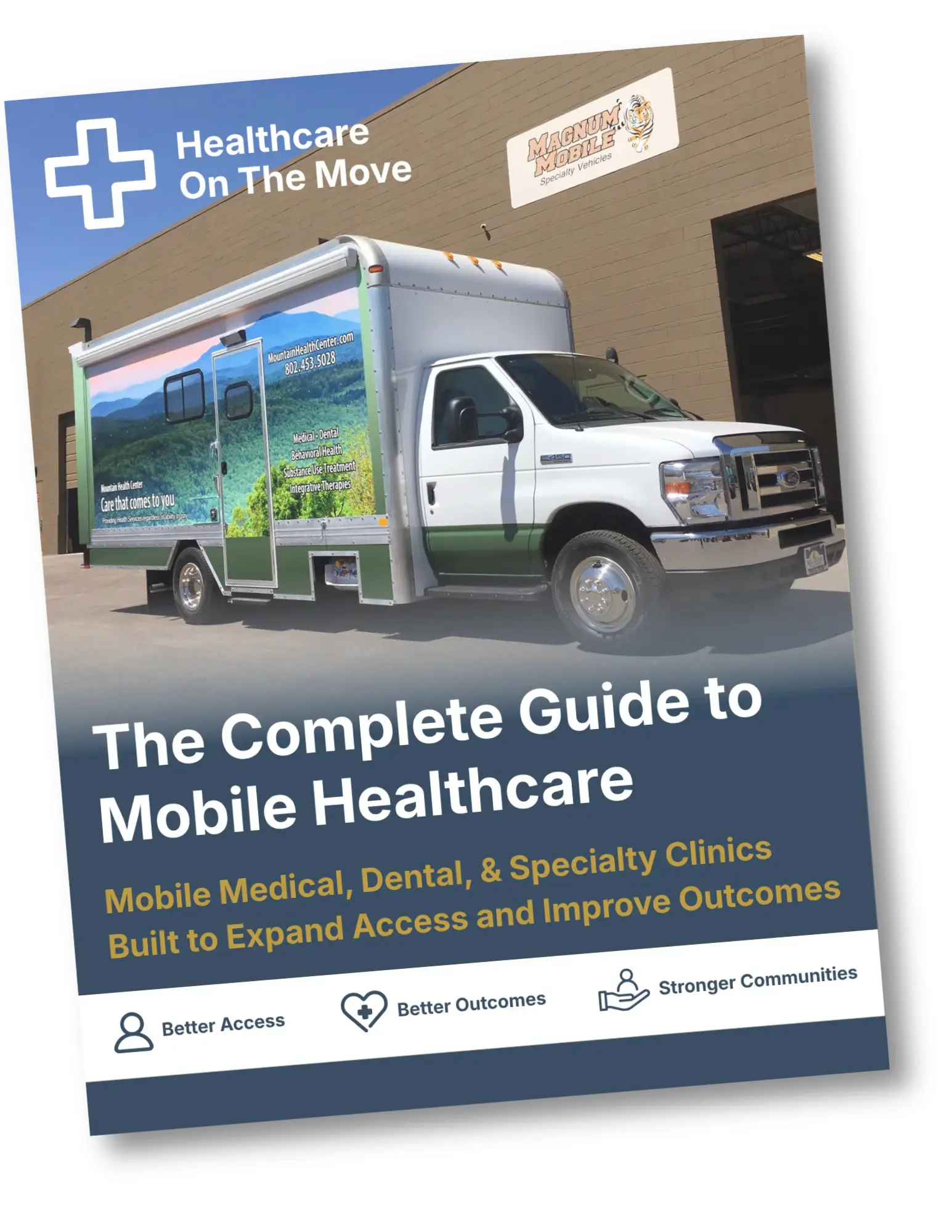
Get the Free Buyer Guide
Request the Mobile Healthcare Buyer Guide through the guide page.
Latest From Our Blog
Trusted Nationwide
Trusted by Leading Organizations
Trusted by healthcare providers, animal care programs, public agencies, universities, and nonprofit organizations for mobile specialty vehicles.






Built to Support
Organizations Across Every Sector
Delivering mobile solutions for healthcare, education, government, nonprofit, and commercial applications.
Healthcare
Education
Government
Non-Profit
Public Safety
Corporate
Ready to Get Started
Let’s Build a Solution That Moves Care Forward
Tell us about your operation and our team will help build the right mobile vehicle solution for your needs.