
Mobile Dental Clinics • Service Scope
Mobile Dental Screening vs. Treatment: How Vehicle Needs Differ
Define the services before selecting the equipment and floorplan
Quick answer
Mobile dental screening and treatment programs can require different vehicle configurations because their clinical tasks, equipment, instruments, appointment patterns, and follow-up processes may differ. Have the clinical team define the exact services, then review the layout, utilities, storage, staff access, and support spaces needed for them. Do not assume that a screening vehicle can add treatment services without another configuration review.
Screening and treatment are broad program descriptions. They do not tell a vehicle builder exactly what equipment will be installed or how the team will work.
A useful buying brief replaces those labels with a defined service list and operating scenario. That makes it possible to compare actual vehicle requirements without assuming that every outreach program needs the same layout.
Magnum Mobile can discuss configurable layouts, commercial-grade materials, and integrated vehicle systems around your operating plan. Explore our mobile dental vehicles and request the Mobile Healthcare Buyer Guide through its guide page.
1. Translate the program label into specific services
Ask the responsible clinical lead to define what will happen during a visit. Separate services planned for launch from possible later additions.
Scope: Specify the clinical activities the program intends to offer. Have the clinical team identify equipment, instrument, and support requirements for each.
Participants: Describe the intended patient groups and relevant access, assistance, or communication needs. Review those needs with the responsible team.
Staffing: Identify who delivers services, supports the clinical work, manages records, and coordinates participants.
Boundaries: State what the program will not provide at launch and how it will connect participants with care beyond its scope.
2. Compare complete visit workflows
Model representative appointments for each proposed service model. Use assumptions approved by the clinical team instead of a general estimate based on chair count.
Full sequence: Include arrival, required information, clinical work, documentation, turnover, and next steps. Note which tasks share staff, equipment, or space.

| Requirement | What to compare |
|---|---|
| Clinical position | Selected equipment, patient positioning, and team access |
| Supporting work | Instruments, processing, supplies, and records |
| Utilities | Requirements of exact equipment and intended simultaneous use |
| Continuity | Communication, referrals, and any planned return visits |
3. Review equipment and utilities against the service list
The same vehicle label can conceal very different equipment requirements. Give the builder current information for the actual products under consideration.
Equipment schedule: List each selected device with dimensions, weight, clearances, installation needs, and supplier responsibilities.
Utilities: Review electrical, water, drainage, suction, compressed air, and environmental requirements where applicable to the selected equipment.
Imaging: If imaging is included, involve the appropriate qualified professionals to resolve installation and applicable review requirements before finalizing the layout.
Simultaneous activity: Identify what the team intends to use at the same time. Shared systems should be reviewed against that operating scenario.
4. Allocate the support spaces each model needs
A service decision affects more than the patient-facing position. Review the supporting work before finalizing counters, cabinets, and circulation.
Instrument workflow: Have the clinical team define the approved processing and storage arrangements for the intended services.
Supplies: List routine stock, reserve supplies, and any equipment carried only for certain appointments. Include access during a visit.
Records: Provide a workable location for the program’s approved documentation and communication process, including connectivity needs.
Privacy and movement: Trace patients, caregivers when needed, and staff through the actual drawing. Identify conflicts with other work underway.
Opening and closing: Include preparation, routine system care, cleaning, restocking, shutdown, and secure travel storage in the operating review.
5. Plan follow-up and possible service changes
The value of a screening or treatment visit depends partly on the next-step process. Define that process as part of program planning.
After the visit: Identify who communicates with participants and coordinates any referrals or further appointments under the provider’s procedures.
Continuity: Review how the route, records, and partner arrangements support the planned follow-up. Do not assume the vehicle visit completes every care need.
Future additions: Ask what a new service would require in equipment, utilities, layout, staffing, and approvals. Keep possible upgrades separate from confirmed capability.
Re-evaluation: If the service scope changes, review the configuration again with the responsible clinical, equipment, and vehicle teams before deployment.
6. Use a service-based brief in your Magnum review
Magnum Mobile can discuss configurable dental layouts and integrated systems around the clinical services and operating requirements your team defines.
Bring the scope: Share the launch service list, staff roles, patient needs, equipment specifications, and follow-up process.
Compare drawings: Walk through screening and treatment scenarios in each proposed configuration. Ask where the requirements differ and what is included.
Review options: Explore Magnum’s mobile dental clinics and our consultation-to-delivery process to prepare the configuration questions.
Discuss your mobile dental service model with Magnum Mobile. Clear clinical requirements help make the vehicle comparison specific and useful.
Dental Screening and Treatment Vehicle FAQs
Does a screening program need less vehicle space?
Space depends on the actual services, equipment, people, and support workflow. Evaluate the defined program and proposed drawing rather than assuming requirements from the label.
Can we add treatment services later?
That requires another review of equipment, utilities, layout, staffing, and applicable clinical or institutional requirements. Ask what the initial configuration can support before planning an upgrade.
Does screening always require less equipment?
The clinical team should identify the equipment for its specific service scope. General program labels are not a substitute for an equipment schedule.
How should buyers compare the two service models?
Use a defined service list, representative appointments, exact equipment specifications, support-space requirements, staffing, route, and follow-up arrangements.
Choose a Vehicle Around the Dental Services You Plan
Magnum Mobile can help connect your defined service scope with configurable layouts, commercial-grade materials, and integrated systems. Bring your clinical and operating brief to compare a vehicle around the work your team will deliver.
Explore Magnum’s mobile dental vehicles and compare configurations for your program.
Discuss Your Vehicle
Translate screening or treatment into a specific service and equipment brief.
Review the complete workflow with Magnum before choosing the layout.
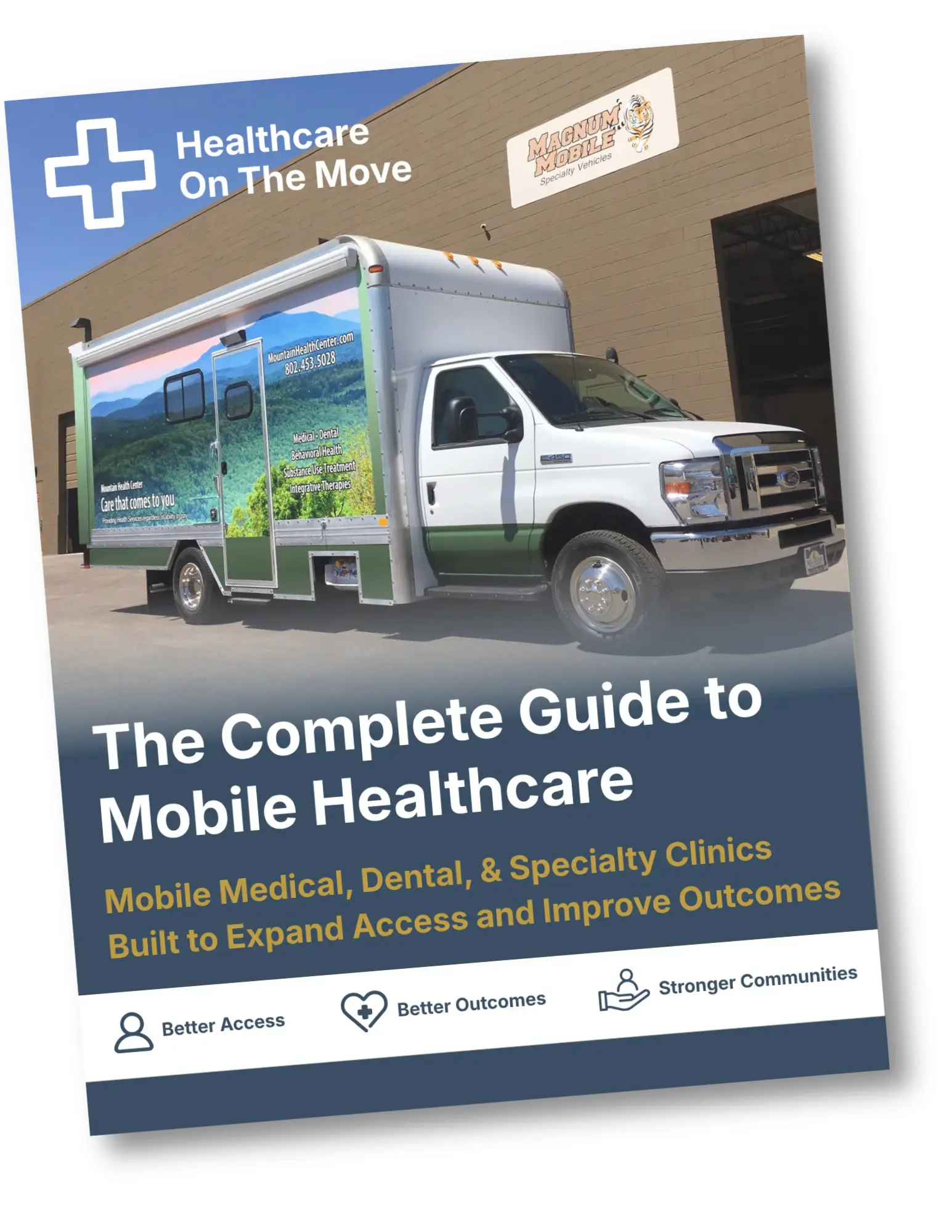
Get the Free Buyer Guide
Request the Mobile Healthcare Buyer Guide through the guide page.
Latest From Our Blog
Trusted Nationwide
Trusted by Leading Organizations
Trusted by healthcare providers, animal care programs, public agencies, universities, and nonprofit organizations for mobile specialty vehicles.







Built to Support
Organizations Across Every Sector
Delivering mobile solutions for healthcare, education, government, nonprofit, and commercial applications.
Healthcare
Education
Government
Non-Profit
Public Safety
Corporate
Ready to Get Started
Let’s Build a Solution That Moves Care Forward
Tell us about your operation and our team will help build the right mobile vehicle solution for your needs.