
Mobile Dental Clinics • Instrument Workflow
How to Plan Sterilization and Instrument Storage Space
Give instrument processing a defined place in the vehicle layout
Quick answer
Plan mobile dental sterilization space by mapping how instruments move from use through your clinical team’s approved reprocessing process and back into protected storage. Specify the equipment, work surfaces, utilities, staff access, and storage needed for that workflow. Review the drawing with the responsible clinician and infection-prevention lead before finalizing the vehicle configuration.
Instrument processing needs more than an available countertop. In a mobile clinic, its location affects staff movement, storage access, and the work happening around the treatment positions.
The vehicle planning task is to provide space and systems for the clinical team’s defined procedures. Make those requirements explicit before selecting cabinets or approving equipment locations.
Magnum Mobile can discuss configurable layouts, commercial-grade materials, and integrated vehicle systems around your operating plan. Explore our mobile dental vehicles and request the Mobile Healthcare Buyer Guide through its guide page.
1. Map the instrument journey before drawing cabinets
Ask the clinical team to describe the complete instrument workflow used by the program. Identify where each task happens and which person is responsible.
Starting point: Show how used instruments leave the treatment position and reach the designated processing area under the organization’s procedures.
Sequence: Identify the work areas and equipment required at each stage. Review where tasks need separation and where items wait between steps.
Return to service: Show how processed instruments reach protected storage and how staff retrieve them for the next appointment.
Clinical review: Have the responsible infection-prevention professional approve the planned workflow. The vehicle drawing should reflect that approved process rather than substitute for it.
2. Document equipment and workspace requirements
List the exact equipment models before allocating counter and cabinet space. Different products can require different clearances, connections, and servicing access.
Reference point: CDC guidance on dental instrument processing describes a sequence of reprocessing steps and emphasizes trained personnel and manufacturer instructions. Use the clinical team’s requirements to translate that workflow into vehicle space.

| Planning item | What to document |
|---|---|
| Equipment | Dimensions, weight, utilities, door movement, and required access |
| Work surfaces | Tasks, separation, and the items present during each stage |
| Storage | Protected space for the instruments and supplies in the operating plan |
| Staff access | Who works here and how others pass or retrieve supplies |
3. Protect storage without blocking daily work
Instrument storage should be evaluated as a working part of the layout. Consider the planned volume of items and how they will be accessed during appointments.
Inventory: List instrument sets, reserve supplies, and the space they require. Separate routine stock from items carried only for particular services.
Protection: Have the clinical team specify the required storage conditions and cabinet arrangement. Review how packages are protected during travel and daily operation.
Retrieval: Trace how staff obtain supplies while another person works in the processing area. Look for reach, door, or circulation conflicts.
Restocking: Decide where incoming supplies are checked, organized, and loaded. Assign a routine method for identifying missing or low stock.
4. Review the area during a realistic clinic session
Use the proposed drawing to walk through an operating scenario with the clinical team. Include tasks outside patient-facing hours.
Opening: Show the equipment checks and preparation your procedures require before appointments begin. Identify needed supplies and working space.
During appointments: Consider how treatment, instrument movement, and storage access overlap. Avoid assuming an aisle will remain empty throughout the day.
Shared equipment: Review demand from every treatment position. Have the clinical lead assess whether the processing plan supports the intended schedule.
Closing: Account for the final processing work, cleaning, storage, equipment shutdown, and travel preparation under approved procedures.
Unexpected delays: Discuss the program’s response to an equipment problem or interrupted workflow. Record when services would need to change or stop.
5. Confirm utilities, travel security, and maintenance
Equipment operation and vehicle operation must be reviewed together. Provide specifications to both the equipment supplier and the vehicle builder.
Connections: Confirm electrical, plumbing, drainage, ventilation, and other requirements for the selected equipment rather than assuming a general package will fit.
Mounting: Ask how equipment and stored items will be secured for travel, including any manufacturer restrictions on mobile installation.
Access: Identify the panels, clearances, and working room needed for routine care or technician service. Review them before cabinetry is finalized.
Records: Decide where manuals, training information, and required operational records will be maintained. Give staff a practical way to find the current instructions.
6. Use the workflow to guide your Magnum layout review
Magnum Mobile can discuss configurable dental spaces and integrated vehicle systems around the clinical workflow your program defines. Bring the sequence of tasks, not just an equipment wish list.
Share the brief: Include the service scope, chair count, instrument inventory, selected processing equipment, and staff roles. Mark decisions that still require clinical approval.
Review the proposed arrangement: Ask the team to trace instruments and people through the layout, including travel preparation and maintenance access.
Compare options: Explore Magnum’s mobile dental clinics and discuss how storage and work areas can fit the overall operating plan.
Discuss your dental vehicle requirements with Magnum Mobile. A clear clinical brief helps the configuration conversation address the support space behind every appointment.
Dental Instrument Space Planning FAQs
How much sterilization space does a mobile dental clinic need?
There is no universal amount for every program. Base the space on the approved workflow, selected equipment specifications, instrument inventory, staff access, and planned services.
Can instrument storage be added after the layout is approved?
Review storage early. Later changes may affect counter space, clearances, utilities, or access. Ask the builder to evaluate any change before assuming it will fit.
Who should approve the instrument workflow?
The program’s responsible clinical and infection-prevention professionals should define and review it, with equipment requirements confirmed by the relevant manufacturers or suppliers.
What should we send to the vehicle builder?
Send the workflow, equipment specifications, instrument storage needs, chair count, staff roles, and requirements for utilities, travel security, and maintenance access.
Plan the Support Space Behind Your Dental Services
Magnum Mobile can help review a vehicle configuration around the workflow your clinical team approves. Bring your equipment details and storage needs to discuss a dental clinic designed around the complete operating day.
Explore Magnum’s mobile dental vehicles and compare configurations for your program.
Discuss Your Vehicle
Map instrument movement and protected storage before finalizing the floorplan.
Bring the approved clinical workflow and equipment specifications to Magnum.
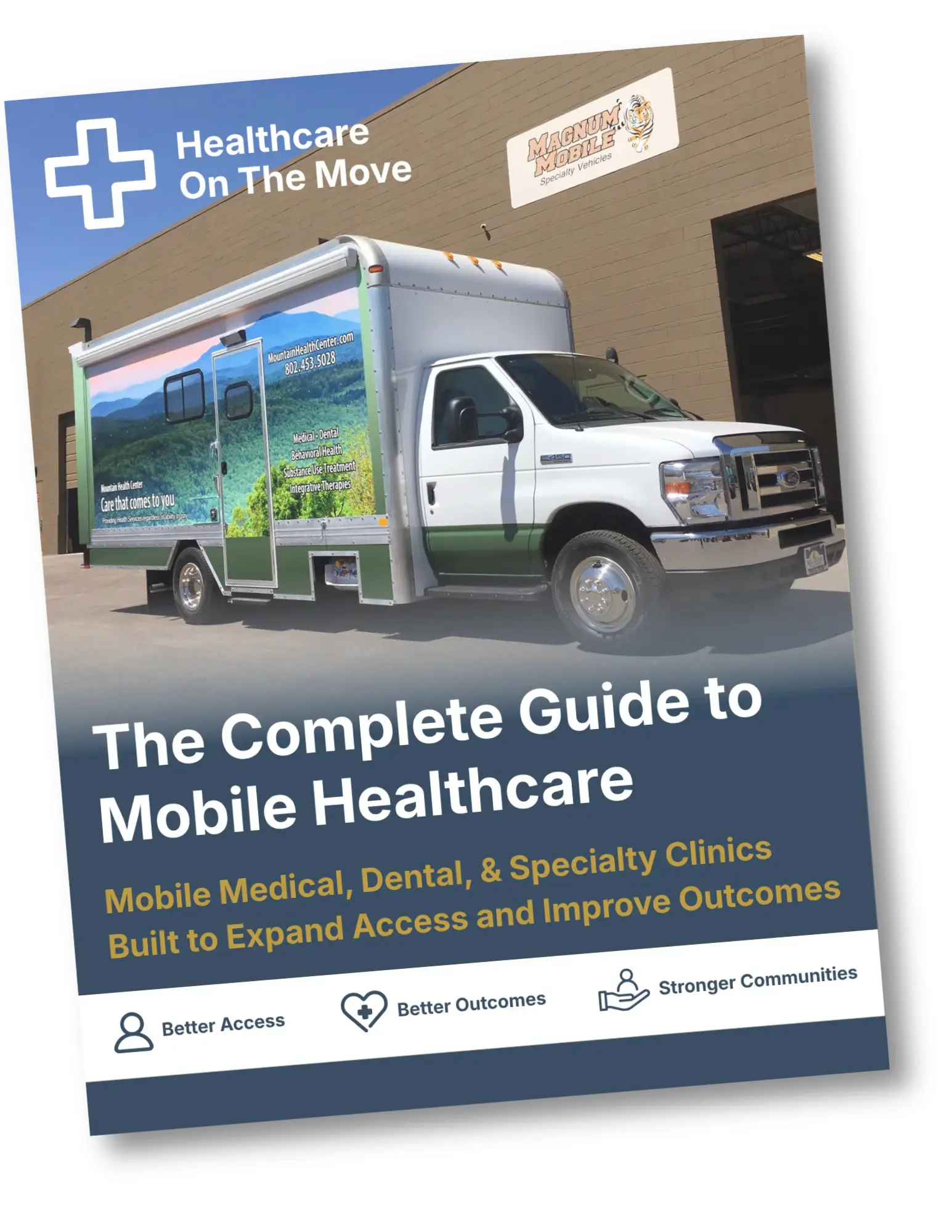
Get the Free Buyer Guide
Request the Mobile Healthcare Buyer Guide through the guide page.
Latest From Our Blog
Trusted Nationwide
Trusted by Leading Organizations
Trusted by healthcare providers, animal care programs, public agencies, universities, and nonprofit organizations for mobile specialty vehicles.







Built to Support
Organizations Across Every Sector
Delivering mobile solutions for healthcare, education, government, nonprofit, and commercial applications.
Healthcare
Education
Government
Non-Profit
Public Safety
Corporate
Ready to Get Started
Let’s Build a Solution That Moves Care Forward
Tell us about your operation and our team will help build the right mobile vehicle solution for your needs.