
Mobile Dental Programs • University Planning
How Dental Universities Can Evaluate a Mobile Teaching Clinic
Review the teaching model and care-delivery workflow together
Quick answer
Evaluate a mobile dental teaching clinic by defining the learning activities, patient services, student and faculty roles, supervision needs, equipment, and host-site requirements. Test those requirements against the actual vehicle layout and operating schedule. Include the university’s clinical, academic, risk, facilities, and transportation teams before approving a configuration.
A university mobile dental clinic has to support patients and the people learning to care for them. The layout needs to reflect what students will do, how faculty will supervise, and how the program will operate beyond a single outreach event.
Begin with the institution’s approved teaching and clinical model. Use it to evaluate the vehicle as a working environment rather than treating a treatment chair as a complete teaching station.
Magnum Mobile can discuss configurable layouts, commercial-grade materials, and integrated vehicle systems around your operating plan. Explore our mobile dental vehicles and request the Mobile Healthcare Buyer Guide through its guide page.
1. Define the teaching activities and service scope
Ask the academic and clinical leads to describe the work the mobile clinic is intended to support. Record which decisions are already approved and which require institutional review.
Learning activities: Specify whether students will observe, assist, perform defined activities under supervision, document visits, or participate in community coordination.
Patient services: Have the responsible clinicians define the services and participant needs. Review how those choices affect equipment and appointment planning.
Student groups: Identify the number and roles of students assigned to a visit, including what each person does when not at a treatment position.
Institutional fit: Confirm how the program will be reviewed under the university’s applicable academic, clinical, safety, and operating requirements. A vehicle configuration does not establish institutional approval.
2. Map people and supervision on the actual drawing
Review who occupies the vehicle at the same time. Include patients, caregivers when needed, students, faculty, clinical support staff, and operating personnel.
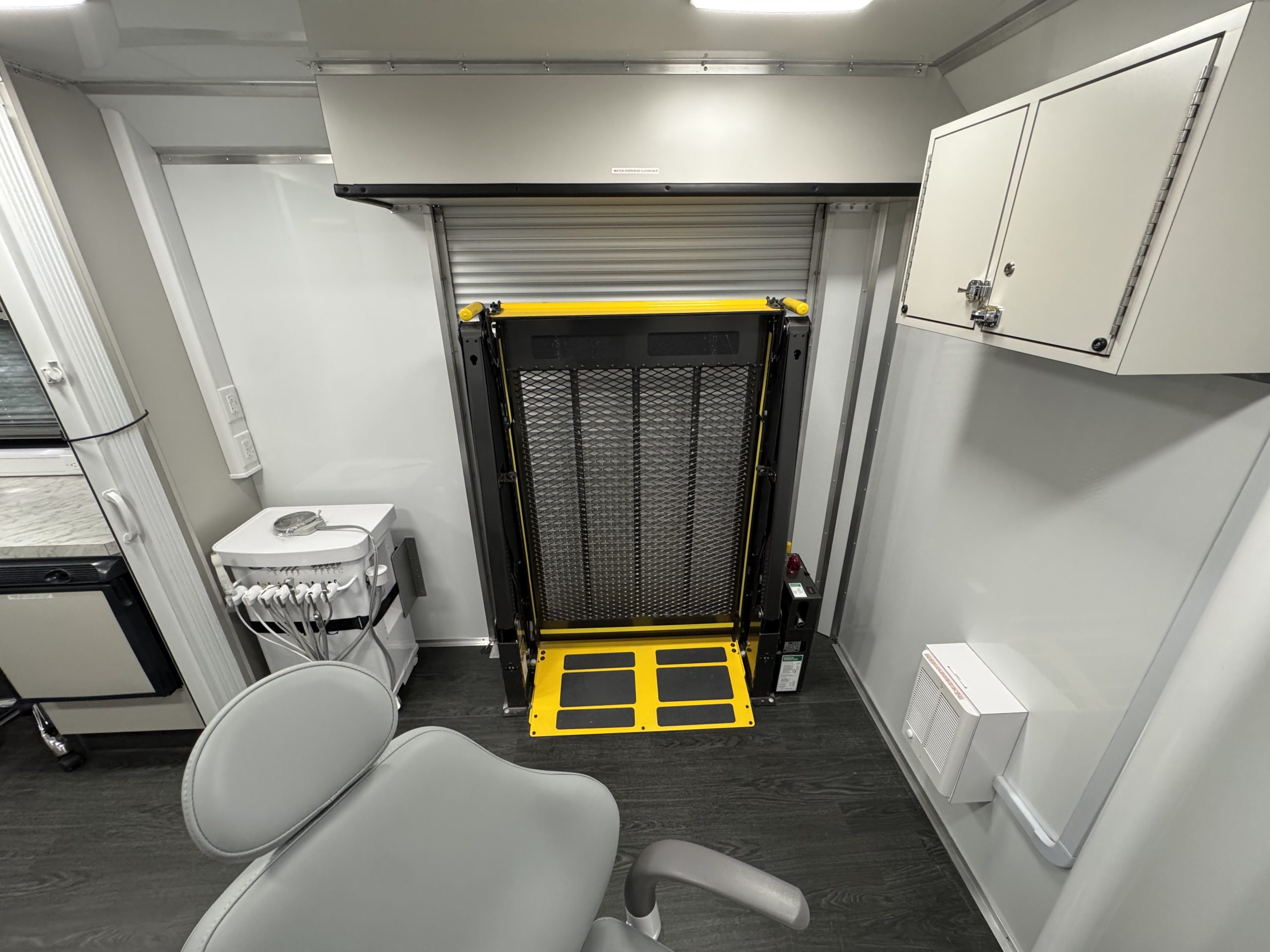
Faculty access: Ask supervisors to trace where they stand, what they need to see, how they reach each work area, and how they communicate without blocking circulation.
| Planning issue | Evaluation question |
|---|---|
| Treatment | Can the intended team work around the selected position? |
| Supervision | How does faculty observe and access the work? |
| Student activity | Where do other assigned students work or wait? |
| Patient journey | How are arrival, privacy, assistance, and departure handled? |
3. Review equipment and support spaces for teaching use
Use exact equipment specifications and the intended teaching workflow to assess the configuration. Include support tasks that are easy to overlook in a treatment-focused drawing.
Equipment access: Review operation, installation, utilities, and service clearances with suppliers and the builder. Explain any teaching-related access requirements.
Instrument workflow: Have the clinical team define the required processing and storage arrangement. Include the people who will carry out those tasks.
Records and discussion: Identify work surfaces, connectivity, and the institution’s approved arrangements for documentation, patient communication, and teaching discussions.
Supplies: Plan storage and retrieval for the intended services and visit schedule. Check how staff and students obtain items while care is underway.
4. Connect the clinic with university and host operations
The operating plan should work when the vehicle leaves campus. Assign responsibilities across the institution and its host partners.
Route: Identify representative sites, travel patterns, parking, setup footprint, and available utilities. Confirm requirements using the actual proposed vehicle.
Transportation: State who drives, manages vehicle records, handles setup, and coordinates maintenance. Include backups for essential responsibilities.
Scheduling: Align faculty availability, student schedules, appointment needs, and travel time. Include opening, closing, and support tasks.
Partners: Define host responsibilities, participant communication, and the process for reporting changes or cancelling a visit.
Follow-up: Agree on the approved process for ongoing care, referrals, and questions after the university team departs.
5. Test a representative teaching day before committing
Ask the team to walk through a realistic visit scenario. Use the exercise to expose conflicts and document questions for the configuration review.
Simulation: Trace arrival, setup, patient movement, student roles, faculty supervision, support work, and closing on the proposed drawing.
Constraints: Record where people compete for space, visibility, equipment, records access, or storage. Distinguish layout issues from staffing or scheduling issues.
Evaluation: Agree on operational and educational measures the institution will use during the first phase. Keep the purpose and definitions clear.
Decisions: Identify what needs a design revision, an institutional procedure, or further supplier information before approval.
6. Bring the teaching brief to Magnum Mobile
Magnum Mobile can discuss configurable dental layouts and integrated vehicle systems around the teaching and service model the university defines.
Share the requirements: Bring student and faculty roles, supervision needs, service scope, equipment models, supplies, and representative host-site details.
Compare complete configurations: Ask how proposed layouts accommodate those activities and what remains subject to institutional or equipment-supplier review.
Review the process: Explore Magnum’s mobile dental clinics and our consultation-to-delivery process. Resolve teaching-related requirements before equipment placement is finalized.
Discuss your university dental program with Magnum Mobile. A clear teaching brief helps connect the proposed vehicle with the work your faculty and students intend to do.
Mobile Dental Teaching Clinic FAQs
Is a mobile teaching clinic the same as a standard dental clinic?
The clinical equipment may overlap, but teaching activities can introduce different requirements for faculty access, student roles, observation, discussion, and scheduling. Evaluate the actual program.
Who should review the proposed vehicle?
Include the responsible academic and clinical leads and the university teams involved in risk, facilities, transportation, information systems, purchasing, and operations as applicable.
How many students can a mobile clinic accommodate?
That requires review of the actual layout, assigned roles, supervision, equipment, patient needs, and institutional requirements. Do not infer usable teaching capacity from vehicle length alone.
What should a university bring to Magnum?
Bring the approved teaching model, service scope, people and roles, supervision needs, equipment specifications, operating sites, and questions still requiring institutional review.
Plan a Vehicle Around Your Dental Teaching Program
Magnum Mobile can help review vehicle options around the university’s teaching and care-delivery requirements. Bring faculty, student, equipment, and route needs together for a more useful configuration discussion.
Explore Magnum’s mobile dental vehicles and compare configurations for your program.
Discuss Your Vehicle
Evaluate faculty supervision, student roles, and patient care together.
Bring your university’s teaching brief to a Magnum vehicle review.
Get the Free Buyer Guide
Request the Mobile Healthcare Buyer Guide through the guide page.
Latest From Our Blog
Trusted Nationwide
Trusted by Leading Organizations
Trusted by healthcare providers, animal care programs, public agencies, universities, and nonprofit organizations for mobile specialty vehicles.







Built to Support
Organizations Across Every Sector
Delivering mobile solutions for healthcare, education, government, nonprofit, and commercial applications.
Healthcare
Education
Government
Non-Profit
Public Safety
Corporate
Ready to Get Started
Let’s Build a Solution That Moves Care Forward
Tell us about your operation and our team will help build the right mobile vehicle solution for your needs.