
Agricultural and Seasonal Workers • Mobile Healthcare Planning
Mobile Healthcare for Agricultural and Seasonal Workers
Build outreach around the working season and continued care
Quick answer
Plan mobile healthcare for agricultural and seasonal workers around where people can comfortably access care, their work schedules, trusted outreach partners, language needs, and continued care after a visit. Match the approved services with a vehicle layout, equipment, rural site conditions, utilities, and a realistic seasonal operating budget.
A mobile program can give a healthcare team another way to reach agricultural communities. Before buying a vehicle, establish where people want to receive services, when they can attend, and how your organization will support follow-up as schedules and locations change.
A successful route requires more than access to a farm or worksite. Listen to workers and community partners, choose practical service locations, and design a care pathway that people can use during and beyond the working season.
Magnum Mobile can help translate your operating brief into configurable clinical spaces and integrated vehicle systems. Explore our mobile medical clinics and use the free Mobile Healthcare Buyer Guide to prepare your planning questions.
1. Understand the community and seasonal schedule
Begin with local information rather than assumptions about workers’ needs. Talk with potential patients, outreach teams, and healthcare partners about the services people seek and the obstacles they encounter.
Population and location: Describe the communities and locations your program intends to reach. Ask whether people prefer a community site, an agreed worksite location, or another setting.
Seasonal calendar: Map busy periods, changing shifts, travel patterns, and weather conditions. Revisit the schedule with local partners as the season develops.
Clinical services: Have qualified clinical leadership define the service scope, staffing, appointment duration, equipment, and referral needs. Build the vehicle requirements around that approved plan.
Access barriers: Discuss transportation, language, appointment communication, and the practical time needed for a visit. Make the service process clear without promising attendance or outcomes.
2. Build trusted outreach partnerships
Trusted partnerships can help your organization choose locations, explain the service, and coordinate ongoing care. Establish what each partner will do and how the healthcare team retains responsibility for care delivery.
Outreach responsibilities: Agree on appointment communication, interpretation arrangements, host coordination, and patient questions. Use a consistent contact so schedule changes reach the people expecting a visit.
Privacy and participation: Keep care conversations and records within the organization’s approved processes. Explain who provides the service, what participation involves, and how patients can ask questions privately.
3. Plan the route and visit workflow
Build a route around usable service hours. Include travel, setup, patient intake, care, documentation, closing, and return travel when estimating a day’s capacity.
Visit timing: Review proposed hours with workers and partners. Account for shift changes and long travel days rather than assuming conventional clinic hours fit every location.
Host site: Confirm permission, turning access, ground conditions, parking, entry-system clearance, pedestrian approaches, utility availability, and an emergency access route.
Patient flow: Decide where check-in, waiting, interpretation, private care, and departure take place. Clarify any host-provided support and how patients move between those spaces.
Schedule changes: Establish how staff will communicate cancellations, delays, and rescheduled visits. Give patients a contact route when the unit is working elsewhere.
4. Specify a vehicle for rural deployments
Rural deployments should shape the vehicle specification early. Bring Magnum examples of the roads, sites, service hours, climate, equipment, and staff workflow your unit will encounter.
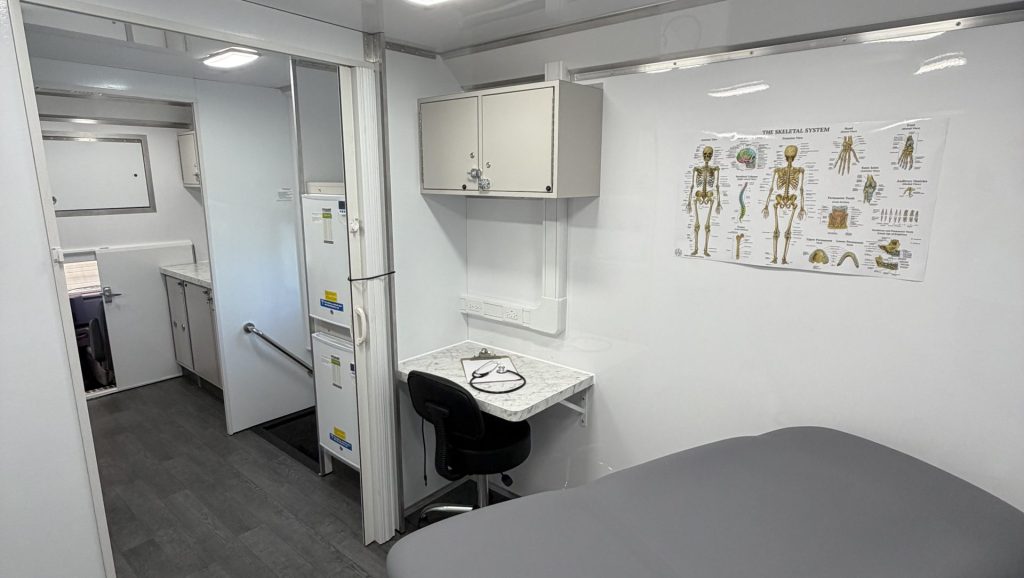
Clinical layout: Identify the spaces needed for your approved services, private discussions, storage, staff circulation, and cleaning tasks. Review an actual floor plan with the operating team.
Equipment: Share model dimensions, electrical requirements, installation details, and operating clearances. Reconcile the quote with equipment the organization already owns or intends to supply.
Power and connectivity: Define what host sites reliably provide and what must operate onboard. Describe simultaneous loads, appointment systems, records access, communications, and service duration.
Environmental conditions: Discuss heating and cooling requirements, cleaning needs, dust exposure, and the expected parking surface. Confirm operating limits rather than assuming any mobile clinic can use every rural location.
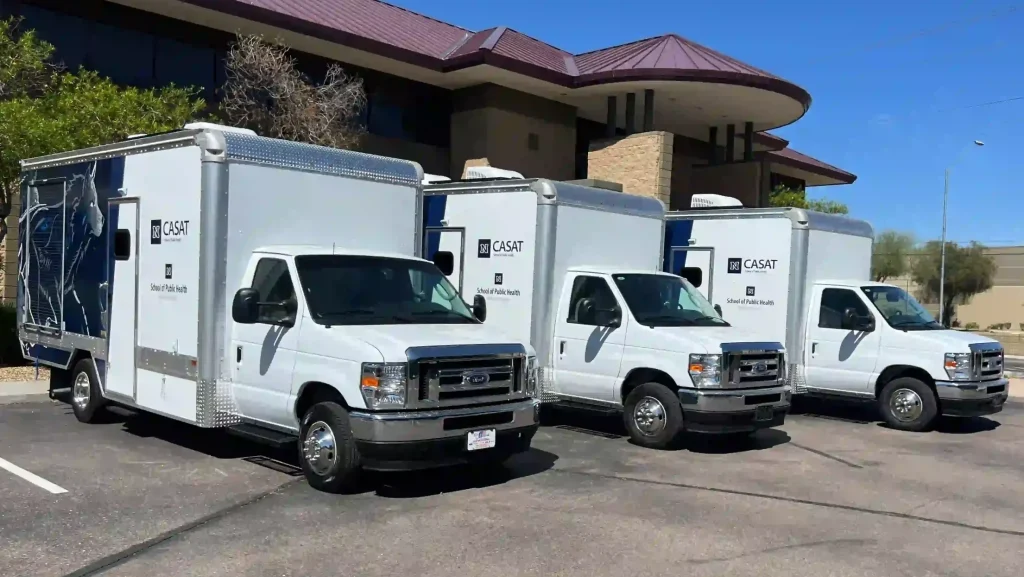
Vehicle format: Compare vans, drivable clinics, and trailers around the equipment, usable space, access, and route. A trailer also needs a suitable towing plan and enough maneuvering and setup space.
5. Budget for changing demand and continuity
A seasonal budget should explain how demand, staffing, travel, and follow-up change throughout the year. Separate the vehicle purchase from the cost of operating the care program.
Operating costs: Include clinical and outreach staff, interpretation, supplies, fuel, maintenance, insurance, connectivity, storage, and coordination time. Confirm assumptions using your own schedule and vendor estimates.
Variable attendance: Test quieter periods and a slower launch as well as expected demand. Distinguish available appointment slots from attended visits and confirmed funding.
Continued care: Assign responsibility for results, referrals, and patients who change locations. Agree on appropriate information handoffs with partner providers through your organization’s approved processes.
Pilot and refine: Test a manageable route first. Review attendance, travel time, appointment flow, staff workload, and completed follow-up before expanding locations or service days.
6. Prepare an agricultural outreach vehicle brief
Your vehicle brief should describe the complete deployment, including care before and after the onboard visit. Magnum can use those requirements to discuss configurations and an itemized vehicle proposal.
Care and team: Bring the audience, approved services, visit sequence, staffing, language support, privacy needs, equipment specifications, and follow-up responsibilities.
Season and route: Share representative locations, travel distances, service hours, host utilities, climate, parking conditions, storage, funding assumptions, and target delivery timing.
Planning resource: The National Center for Farmworker Health’s Health-Related Needs Resource Hub offers resources for organizations serving migratory and seasonal agricultural workers. Use it alongside input from your local outreach and clinical teams.
Agricultural Worker Mobile Healthcare FAQs
How can mobile healthcare serve agricultural workers?
A qualified care team can use a mobile unit to bring approved services to agreed community or worksite locations. Planning should address attendance, privacy, language support, site access, and continued care.
Does the clinic have to park at a farm?
No single location suits every program. Evaluate community sites and other accessible settings with workers and partners. A host’s permission and a workable vehicle operating footprint are essential planning considerations.
How should seasonal demand affect the vehicle plan?
Use peak and quieter schedules to evaluate staff hours, travel, equipment, storage, and recurring expenses. Test a route before expanding and include how the vehicle will be used outside the busiest period.
What should we send Magnum before requesting a quote?
Share services, staffing, equipment specifications, representative sites, utilities, seasonal hours, travel conditions, access needs, budget, and target timing. These details make a configured proposal more useful.
Plan Your Agricultural Outreach Vehicle With Magnum Mobile
Bring Magnum Mobile a practical outreach plan shaped by your workers, community partners, and clinical team. Our configurable layouts and integrated vehicle systems can be evaluated around the work your program needs to deliver.
Explore Magnum’s mobile medical vehicle options for agricultural outreach.
Request the free Mobile Healthcare Buyer Guide for broader vehicle purchase planning.
Discuss Your Vehicle
Compare medical clinic layouts around your rural sites and seasonal service schedule.
Bring equipment, staffing, host utilities, travel, and access needs to your Magnum consultation.
Get the Free Buyer Guide
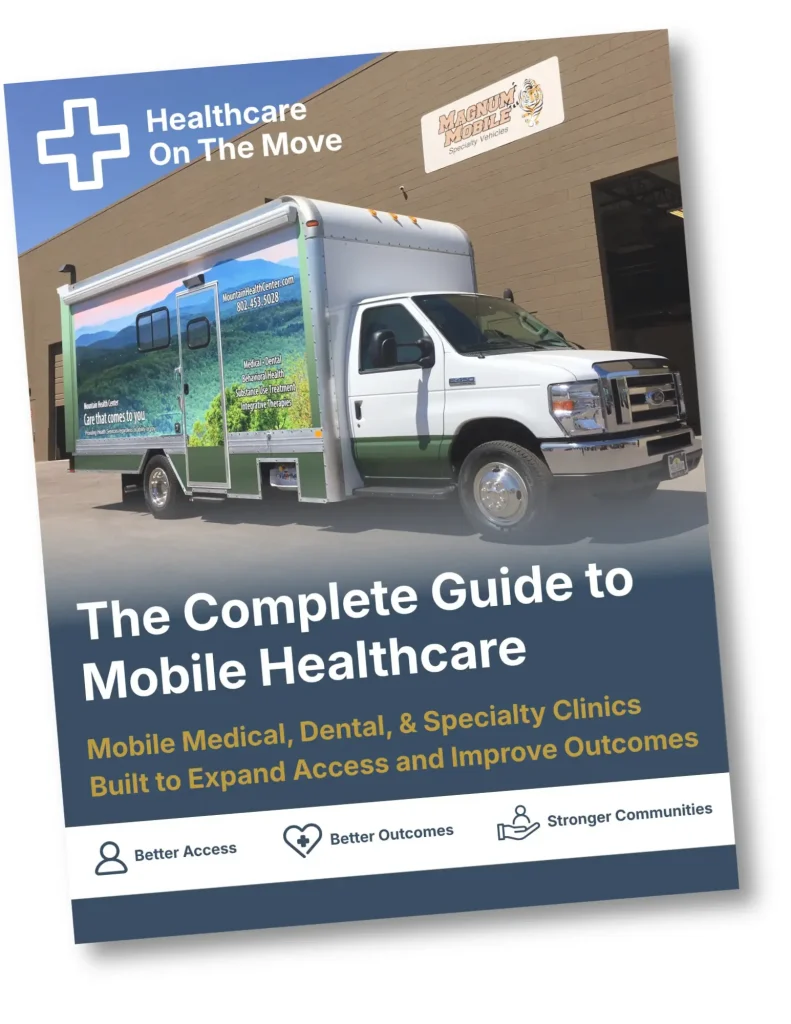
Request the Mobile Healthcare Buyer Guide through the guide page.
Trusted Nationwide
Trusted by Leading Healthcare Organizations
Trusted by healthcare providers, public agencies, universities, and nonprofit organizations to deliver high-quality mobile specialty vehicles.







Built to Support
Organizations Across Every Sector
Delivering mobile solutions for healthcare, education, government, nonprofit, and commercial applications.
Healthcare
Education
Government
Non-Profit
Public Safety
Corporate
Ready to Get Started
Let’s Build a Solution That Moves Care Forward
Tell us about your operation and our team will help build the right mobile vehicle solution for your needs.