
Vehicle Selection
Mobile Medical Van vs. Truck vs. Trailer: Which Is Right for You?
Explore Magnum’s vehicle formats and choose around your services, travel, and operating sites.
The right mobile medical vehicle is the format that fits your services, staff, equipment, travel, and host sites. Compare the actual van, drivable clinic, and trailer configurations rather than choosing from vehicle type alone.
A van can offer a compact working platform, a larger drivable clinic can provide additional configured workspace, and a trailer separates the clinic from its tow vehicle. Each arrangement brings different planning questions.
Magnum offers medical vans, larger drivable clinics, and trailers. That range lets your team explore several formats with one manufacturer, then narrow the configuration around its mission.
Start with what the clinic must accomplish. Exterior size and room count alone cannot establish whether staff can work comfortably, equipment can be integrated, or patients can enter at the intended locations.
Prepare a service brief: clinical services, patient needs, staff roles, equipment, supplies, operating locations, travel patterns, and the budget available to launch and run the program.
Mobile Medical Van vs. Truck vs. Trailer: A Practical Comparison
| Format | Questions to resolve |
|---|---|
| Medical van | Does the proposed working area fit the services, staff, equipment, storage, and patient-entry needs? |
| Larger drivable clinic | Does the selected layout justify the vehicle footprint, and can it reach and operate at the planned sites? |
| Medical trailer | Is there a suitable tow vehicle, operating team, positioning space, storage plan, and setup arrangement? |
These are planning questions rather than guaranteed differences between every vehicle. Dimensions, equipment, access features, utilities, and layouts can vary within each format.
Request measured drawings for the specific options under consideration. Compare usable clinical workspace and the deployed footprint, including doors, steps, ramps, lifts, and required clearance.
Ask each proposal to identify what is included, optional, excluded, or unconfirmed. A configured comparison is more useful than three unrelated starting prices.
Include clinical, fleet, and facilities staff in the review. They can assess different parts of the same vehicle recommendation before your organization approves a build.
When to Explore a Mobile Medical Van
Explore a van when a compact layout appears to fit your service plan and travel is central to the operation. Review equipment and working space before assuming the smaller exterior meets every requirement.
Trace patient entry, the exam or service space, staff movement, supplies, privacy, and departure through the proposed drawing. Identify any host-provided space or utilities the plan depends on.
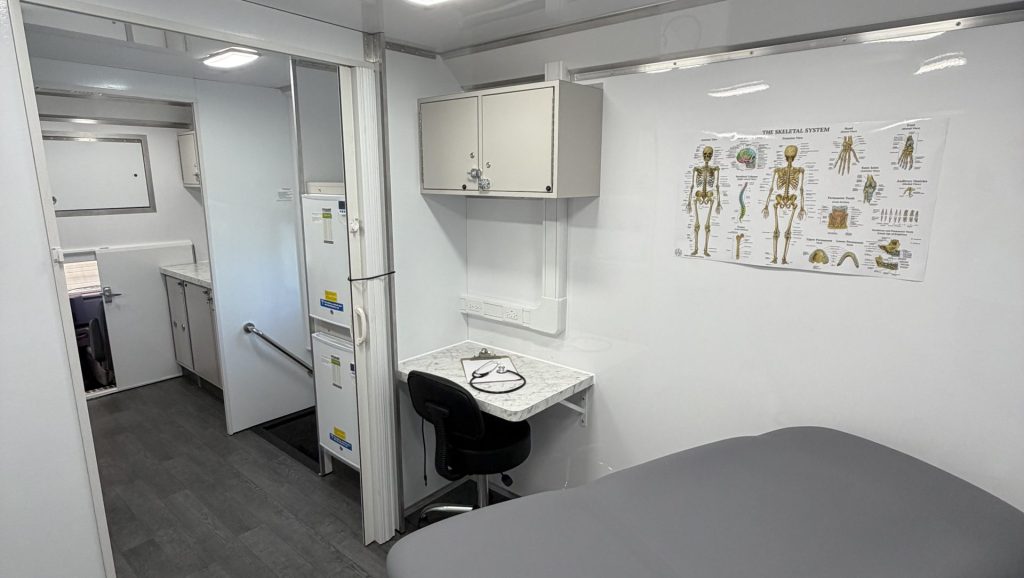
Magnum’s medical van gives buyers a compact format to compare with its larger clinics. Ask the team to show which services and equipment the proposed layout accommodates and explain the tradeoffs.
When to Explore a Larger Drivable Clinic
Explore a larger drivable clinic when the team needs additional configured workspace, separate functions, or equipment that does not fit the van proposal. The arrangement matters as much as overall length.
Distinguish exam rooms, intake areas, storage, restrooms, and other spaces. A higher room count does not automatically mean more treatment capacity.
Use real equipment dimensions to review circulation and service clearance. Ask staff to walk through the drawing as a service day, including cleaning and restocking between visits.
Magnum offers several sizes of drivable medical clinics. That gives organizations a way to compare layout and workspace choices around their services before selecting a vehicle size.
Include the deployed footprint in the site review. Confirm access routes, parking, patient entry, utility availability, and driving requirements for the selected unit.
When to Explore a Mobile Medical Trailer
Explore a trailer when your organization has a suitable towing and site plan and wants to evaluate a clinic that can be positioned separately from its tow vehicle. That arrangement creates its own setup and staffing questions.
Confirm tow-vehicle suitability using the loaded trailer specifications, hitch requirements, and your fleet team’s review. Exterior dimensions alone do not establish towing compatibility.
Review how staff will position, secure, connect, operate, and prepare the unit for departure. Ask the builder to document the procedures and equipment applicable to the proposed configuration.
Consider both the trailer and tow vehicle when evaluating access, turning, staging, parking, and storage. A trailer that remains at a site still needs a practical operating arrangement there.
Magnum’s medical trailer is another format to evaluate alongside its drivable clinics. Compare measured layouts rather than assuming every trailer has more usable workspace than every truck-based model.
Ask your team who handles towing and setup and where the unit stays between visits. Include those responsibilities in the operating plan.
Compare the Program and the Complete Scope
Use one service brief across all three formats. The essential services, equipment, staff, supplies, patient-access needs, and host sites should remain consistent in the comparison.
Identify requirements before optional preferences. If a vehicle cannot accommodate a critical device or entry need, a lower headline price does not resolve the mismatch.
Request configured quotes covering the same scope: vehicle, conversion, equipment, options, delivery, orientation, and exclusions. Include tow-vehicle-related costs where needed.
Review travel, maintenance, storage, utilities, and staffing over the expected ownership period. Compare the selected models and planned use before drawing conclusions about operating costs.
Clarify support for the chassis or trailer, conversion, installed systems, and clinical equipment. Request written terms and contacts for each.
How Magnum Can Help You Narrow the Choice
Bring the program goals to Magnum before finalizing the format. Its consultation-to-delivery process starts with the program and vehicle requirements, then moves through configuration, manufacturing, delivery, and support.
Ask the team to recommend the formats worth comparing and explain why. A useful recommendation connects your services and sites to a proposed layout, equipment plan, and utility arrangement.
Review those proposals with clinical, fleet, and facilities staff. Resolve working-space, travel, maintenance, and site questions before approving a build.
You do not need every design detail settled before the first conversation. Start with a preliminary brief and use the consultation to identify the next decisions.
Magnum’s range gives your organization choices to evaluate around its mission. The next step is an itemized proposal for the configuration that best supports the intended work.
Medical Vehicle Format FAQs
Is a medical van cheaper than a truck or trailer?
Compare configured prices for the actual options under consideration. Equipment, layouts, utilities, access features, and delivery can differ. Include operating and towing needs in the budget.
Do medical trailers always have the most interior space?
No. Compare measured layouts of the specific models. Vehicle format alone does not establish which proposal has the largest usable clinical workspace.
Does a larger mobile clinic serve more patients?
More space can support different arrangements, but capacity also depends on services, staff, visit length, scheduling, and workflow. Your clinical team should establish those assumptions.
What should we send Magnum before choosing a vehicle format?
Send your services, staff roles, equipment list, patient-access requirements, locations, travel pattern, budget, and launch goals. Ask which assumptions need confirmation.
Bring Your Mobile Healthcare Plan to Magnum
Explore the possibilities for your mobile healthcare mission. Magnum’s vans, drivable clinics, and trailers give your team several starting points for a configuration review.
Review Magnum’s mobile medical vehicle options and bring your program brief to the first conversation.
Work with the team to narrow layouts and define the equipment, systems, and support your stakeholders need to assess the proposal.
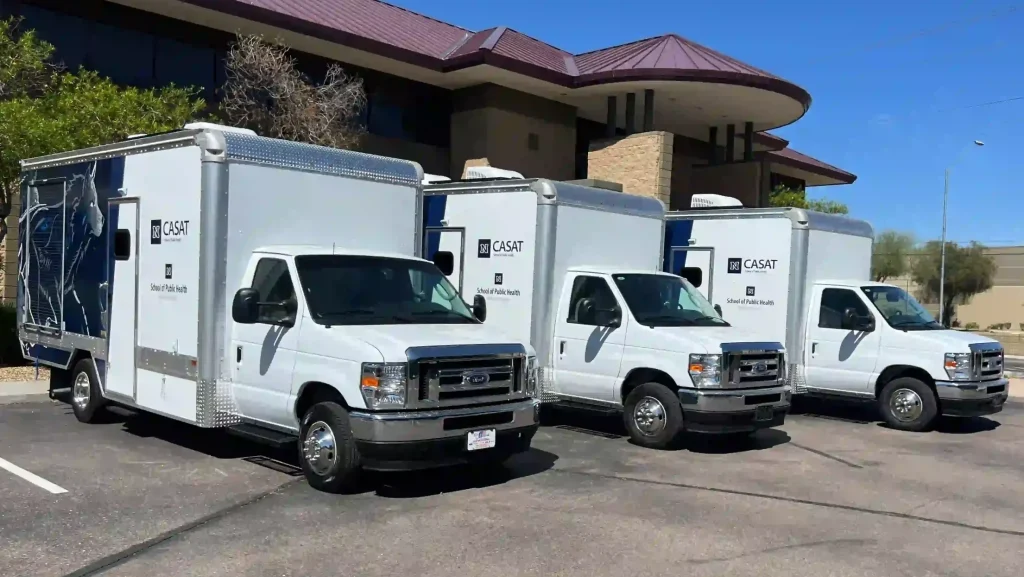
Find Your Magnum Vehicle Format
Your healthcare mission should guide the vehicle format.
Compare Magnum’s vans, drivable clinics, and trailers around your services, staff, equipment, and sites.
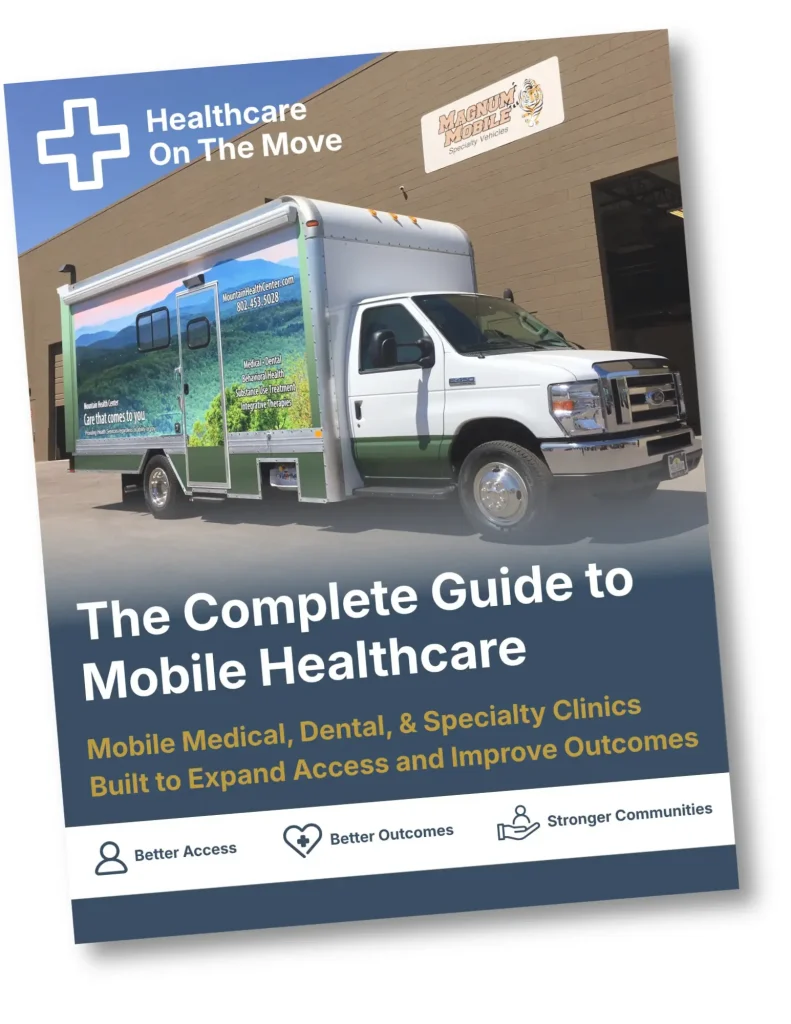
Mobile Healthcare Buyer Guide
Prepare your vehicle-format discussion with Magnum’s mobile healthcare buyer guide.
Trusted Nationwide
Trusted by Leading Healthcare Organizations
Trusted by healthcare providers, public agencies, universities, and nonprofit organizations to deliver high-quality mobile specialty vehicles.







Built to Support
Organizations Across Every Sector
Delivering mobile solutions for healthcare, education, government, nonprofit, and commercial applications.
Healthcare
Education
Government
Non-Profit
Public Safety
Corporate
Ready to Get Started
Let’s Build a Solution That Moves Care Forward
Tell us about your operation and our team will help build the right mobile vehicle solution for your needs.