
Spay & Neuter Clinic Planning
What Equipment and Spaces Does a Mobile Spay and Neuter Clinic Need?
Plan preparation, surgery, recovery, and installed systems together with your veterinary team.
A mobile spay and neuter clinic needs a coordinated plan for intake and preparation, surgery, recovery, equipment, and the utilities that support those activities. The veterinary team should define its clinical requirements before the vehicle layout is finalized.
The right equipment list starts with the animals and services your program will handle. It should describe how the team will work through the day, how animals move between stages, and how supplies are replenished.
Magnum’s mobile animal care buyer guide emphasizes services, expected animal volume, equipment, and operating locations. Those decisions give the builder a useful starting point for a configured spay/neuter clinic.
Use this article to organize the vehicle-planning conversation. Your veterinarian selects clinical equipment and protocols; Magnum reviews the floor plan and integration requirements with your team.
Plan the full care pathway, not only the surgery table. Holding, preparation, recovery, staff movement, and installed systems all compete for working space.
Six Planning Groups for Equipment and Spaces
Six planning groups for a mobile spay/neuter clinic
- Intake, examination, and preparation
- Surgery and equipment access
- Recovery and animal holding
- Instrument processing and supplies
- Power, water, climate control, and connectivity
- Equipment ownership, installation, and delivery checks
For every equipment item, provide: make and model, dimensions, weight, operating clearance, utility requirements, travel-securing needs, and the party responsible for supplying it.
Write down how many people and animals may occupy each stage at the same time. A daily appointment target alone does not describe the space needed at the busiest point.
Distinguish installed equipment, loose supplies, and items provided at a host site. Confirm the boundaries of the vehicle quote so your team can budget and prepare for everything else.
Explore Magnum’s mobile spay and neuter clinics as starting configurations, then discuss the changes your workflow requires.
Intake, Examination, and Preparation
Describe what happens before an animal reaches surgery. Include identification and records, veterinary examination, preparation, and the staff roles involved in your program’s approved workflow.
Decide which intake activities occur inside the vehicle and which have an agreed host-site location. A host arrangement needs its own space, supplies, responsibilities, and contingency plan.
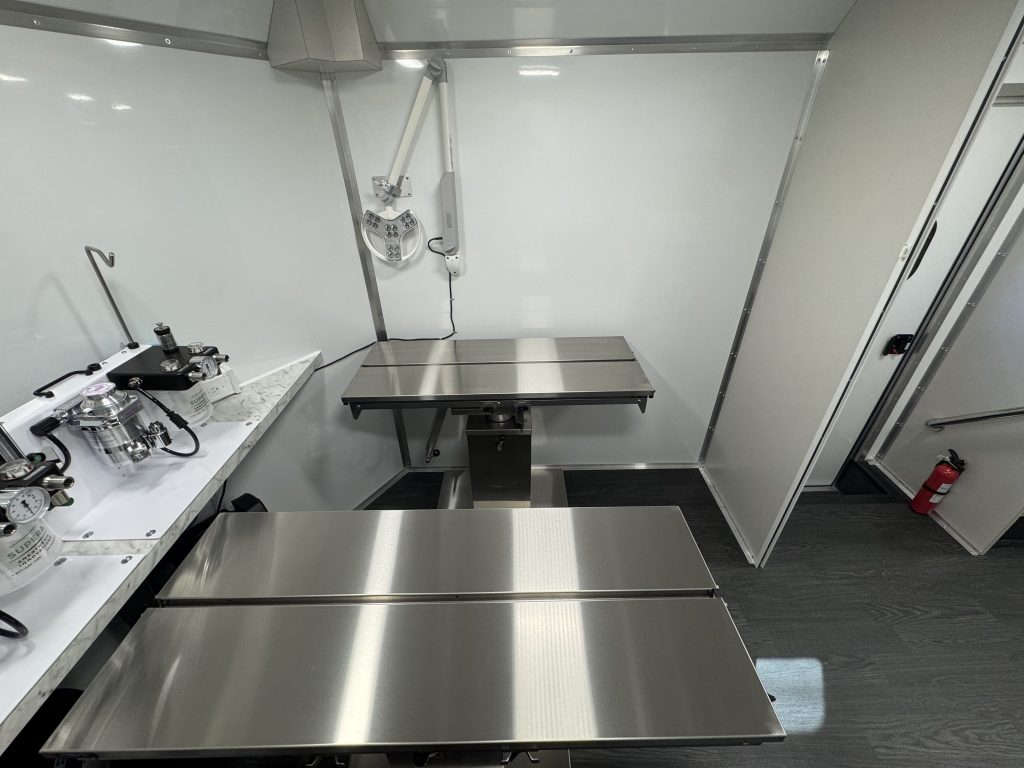
Review exam and preparation workspaces with the actual tables, devices, storage, and people using them. Ask where carriers and other items will go while staff work, so they do not consume the intended circulation space.
Surgery Workspace and Equipment Integration
Have the veterinary team define its surgery equipment package. Planning categories may include tables, lighting, anesthesia and monitoring equipment, oxygen arrangements, and the devices required by its clinical protocols.
Provide the builder with specifications and installation instructions. Equipment connections, mounting, service access, and travel restraint requirements should be reviewed before cabinetry and utility plans are fixed.
Test the proposed work area with the staff positions and equipment footprint. Opening a cabinet, accessing a monitor, or moving an animal should be considered alongside the table location.
If your team requests more than one surgical station, review the supporting workflow too. Preparation, staffing, instrument availability, recovery, and utilities need to support the intended use of those stations.
The Association of Shelter Veterinarians’ spay/neuter resources provide clinical guidance for the veterinary team’s review. Use that expertise to define requirements before discussing how the vehicle will accommodate them.
Recovery and Animal Holding
Recovery is a working area, not leftover storage. The veterinary team should specify the observation, equipment, access, and environmental conditions it needs for postoperative care.
ASV’s published spay/neuter guideline key points emphasize a recovery location that allows direct observation and monitoring. Show the staff position and access to each animal when reviewing the layout.
Separate the number of installed cages from available carrier-storage positions. Ask for dimensions and intended use of each enclosure; an overall storage-space count does not establish recovery capacity.
Account for the animal sizes and types your program accepts. Discuss how the veterinary team’s housing and separation requirements affect cage selection, layout, and staff movement.
Review the movement from preparation to surgery, recovery, and discharge. Staff should be able to explain where each stage occurs and which spaces may be occupied simultaneously.
A vehicle’s cage count does not determine how many surgeries a program can complete. Clinical scheduling, staff, patient selection, and the team’s care requirements also shape capacity.
Instrument Processing, Supplies, and Storage
Plan how instruments and supplies move through the day. The veterinary team should define preparation, cleaning, processing, storage, and replenishment requirements.
If processing equipment is installed onboard, include its operating clearance, electrical and water needs, heat output, and service requirements. Identify who supplies and installs each device.
Locate clean supplies and used items according to the team’s approved procedures. Draw the workflow through counters, sinks where specified, storage, and waste-container locations.
Estimate supplies between replenishment stops and record the containers or packs that need space. Include everyday administrative materials and staff items so clinical cabinets remain usable.
Discuss how storage and equipment will be secured during travel, then accessible during operation. Confirm the intended use and dimensions of the storage shown in the floor plan.
Utilities and Responsibilities Before Delivery
Build the utility plan from the equipment and operating locations. List devices that run at the same time, connections required, and any systems that need continuous service.
Clarify the agreed power source, host-site connections, water filling and servicing, and climate-control configuration. Include conditions expected during the program’s operating season.
For oxygen, anesthesia-related connections, and other specialized systems, provide the veterinary team’s and equipment manufacturers’ requirements. Agree on the builder’s integration scope and the program’s inspection and commissioning responsibilities.
Consider records and communications alongside clinical utilities. Identify how staff will access the information they need at sites where network coverage or host connectivity may vary.
Magnum’s consultation-to-delivery process brings program requirements into design and configuration. Use the proposal to document equipment ownership, integration, walkthroughs, and the checks your team expects before launch.
Mobile Spay and Neuter Equipment FAQs
Is there one standard equipment list for every mobile spay/neuter clinic?
No. The veterinary team should select equipment for its services, animals, protocols, and staffing. The builder needs those requirements to review layout and installation.
Does adding a second surgery table double daily capacity?
Not automatically. Staff, preparation, instruments, recovery, and clinical scheduling all affect throughput. Review the complete workflow before deciding how many stations the clinic needs.
Can recovery cages also be counted as carrier storage?
Confirm each space’s intended use with the veterinary team and builder. Installed cages and carrier-storage positions are different specifications; neither count alone establishes the program’s recovery capacity.
What should we send Magnum before discussing a configuration?
Send your services, expected animal mix, staff roles, workflow, equipment specifications, holding and recovery requirements, operating locations, and launch goals. Identify which equipment your organization will supply.
Plan Your Spay and Neuter Clinic with Magnum
Give your animal-care mission a clinic built around its work. Magnum’s configurable spay/neuter vehicles let your team discuss the spaces and integrated systems needed for its program.
Compare Magnum’s spay and neuter clinic options and bring your veterinary team’s requirements to a layout review.
Start with the mobile animal care buyer guide to organize the planning conversation.

Explore Magnum Spay and Neuter Clinics
Build the vehicle specification around your veterinary team’s workflow.
Explore Magnum’s spay/neuter layouts and discuss preparation, surgery, recovery, equipment, and utilities.
Mobile Animal Care Buyer Guide
Prepare your program’s next steps with Magnum’s mobile animal care buyer guide.
Trusted Nationwide
Trusted by Organizations Nationwide
Trusted by healthcare providers, public agencies, universities, and nonprofit organizations to deliver high-quality mobile specialty vehicles.







Built to Support
Organizations Across Every Sector
Delivering mobile solutions for healthcare, education, government, nonprofit, and commercial applications.
Healthcare
Education
Government
Non-Profit
Public Safety
Corporate
Ready to Get Started
Let’s Build a Solution That Moves Care Forward
Tell us about your operation and our team will help build the right mobile vehicle solution for your needs.