
Mobile Specialty Vehicles • Purchasing & Delivery
What Happens Between Your First Consultation and Vehicle Delivery?
Know the decisions and responsibilities behind each stage of a vehicle project
Quick answer
The mobile specialty vehicle buying process generally moves from consultation and program requirements to configuration decisions, manufacturing, and delivery preparation. The buyer supplies the operating brief, reviews the proposed scope, resolves equipment and layout decisions, and prepares people and sites for launch. Confirm the actual approval steps, responsibilities, and timing in your project documents.
A vehicle purchase is a series of connected decisions, not just a quote followed by delivery. Understanding the stages helps your organization involve the right people and avoid leaving important operating requirements unresolved.
Magnum’s process includes consultation, design and configuration, manufacturing, and delivery with walkthrough and support. Use those stages to organize your questions, while confirming the specific commitments for your project.
Magnum Mobile can discuss configurable layouts, commercial-grade materials, and integrated vehicle systems around your operating plan. Explore our mobile specialty vehicles and request the Mobile Healthcare Buyer Guide through its guide page.
1. Use the first consultation to explain the operation
Begin with the work the vehicle must support. A clear operating brief gives the builder a more useful starting point than a preferred vehicle length alone.
Purpose: Describe the intended services, people or animals served, staff roles, and the problem the mobile program is meant to address.
Deployment: Share visit frequency, representative sites, travel patterns, storage arrangements, and available utilities.
Equipment: Identify selected equipment and decisions still pending. Provide current specifications for items that affect space, weight, utilities, or installation.
Organization: Name the project contact and the people who will review clinical or service requirements, transportation, facilities, purchasing, and finance as applicable.
2. Review the proposed configuration and scope
The configuration review connects your operating brief with a proposed layout and system arrangement. Compare the complete scope rather than relying on photos or general descriptions.
Written clarity: Ask what is included, what is excluded, which selections remain open, and who supplies or installs each major item. Keep an organized record of decisions.

| Stage | Buyer preparation |
|---|---|
| Consultation | Operating brief, sites, staff roles, and equipment needs |
| Configuration | Review drawings, scope, selections, and responsibilities |
| Manufacturing | Follow the agreed communication and change process |
| Delivery | Prepare people, documents, walkthrough questions, and launch arrangements |
3. Resolve decisions before the relevant approval points
Ask the project team which decisions must be finalized and when. Equipment and layout changes can affect other parts of the configuration.
Workflow: Walk through a complete visit on the proposed drawing, including access, service delivery, records, supplies, cleanup, and travel preparation.
Equipment interfaces: Confirm selected models, supplier information, mounting, utilities, and service access with the appropriate teams.
Selections: Identify applicable cabinetry, materials, graphics, and other choices included in the project. Assign an owner for each required approval.
Documentation: Confirm the current approved version of drawings and scope. Do not treat an informal discussion as an agreed change to the project.
4. Follow the agreed manufacturing communication process
Once the project moves into manufacturing, keep decisions and questions within the documented process. Confirm how the team communicates progress and handles changes.
Contacts: Know who represents the buyer and builder for project questions. Avoid conflicting instructions from different departments.
Updates: Ask what progress information is available and how it will be shared for your project. Use the agreed process to raise unresolved questions.
Changes: Request review of proposed changes before assuming they can be accommodated. Confirm any effect on scope, cost, or delivery planning in writing.
Dependencies: Track buyer-supplied information, equipment, graphics, approvals, and organizational tasks that remain outstanding.
Records: Keep the latest approved documents and decision history accessible to the project team so the delivery review uses the correct baseline.
5. Prepare for delivery before the vehicle arrives
Delivery readiness includes the organization as well as the vehicle. Give staff and site preparation their own owners and schedule.
People: Identify who attends the walkthrough and who needs training for vehicle operation, systems, equipment, setup, and shutdown.
Documents: Prepare questions about manuals, service contacts, maintenance responsibilities, project scope, and the actual warranty terms.
Sites: Confirm storage, host access, utilities, supplies, and the first deployment plan using the final vehicle configuration.
Acceptance: Agree on the review and issue-documentation process. Separate the vehicle walkthrough from your organization’s broader approval to begin services.
6. Build a clear project plan with Magnum Mobile
Magnum Mobile can discuss configurable layouts, commercial-grade materials, and integrated vehicle systems around your program. The most useful project conversations connect those choices with real operating requirements.
Bring a complete brief: Share the workflow, equipment, route, staff roles, budget constraints, and organizational approval needs.
Confirm the next decision: Ask what information the team needs from you, who reviews it, and what must be resolved before the project advances.
Explore the process: Review Magnum’s consultation-to-delivery process and our specialty vehicles to prepare your questions.
Discuss your vehicle project with Magnum Mobile. A defined operating brief and decision process help make each stage of the purchase more concrete.
Vehicle Buying Process FAQs
What should we bring to the first vehicle consultation?
Bring the planned services, staff roles, equipment requirements, representative sites, route, storage arrangements, purchasing constraints, and questions still needing review.
When should equipment be selected?
Coordinate equipment decisions with the configuration review. Exact specifications may affect dimensions, utilities, mounting, and access, so confirm the relevant deadlines with the project team.
Can changes be made during manufacturing?
Ask the builder to review the proposed change. Do not assume it is feasible or included; confirm any approved change and its effect on scope, cost, or timing in writing.
Does delivery mean the program is ready to launch?
The organization must also complete its staffing, training, site, supply, operating, and other applicable readiness requirements. Plan those tasks alongside the vehicle project.
Start Your Vehicle Project With a Clear Operating Brief
Magnum Mobile can help review vehicle options around the work your organization intends to deliver. Bring your program requirements to discuss configuration, project decisions, and delivery preparation with the team.
Explore Magnum’s mobile specialty vehicles and compare configurations for your program.
Discuss Your Vehicle
Organize the decisions between the first consultation and delivery.
Bring your operating brief and project questions to Magnum Mobile.
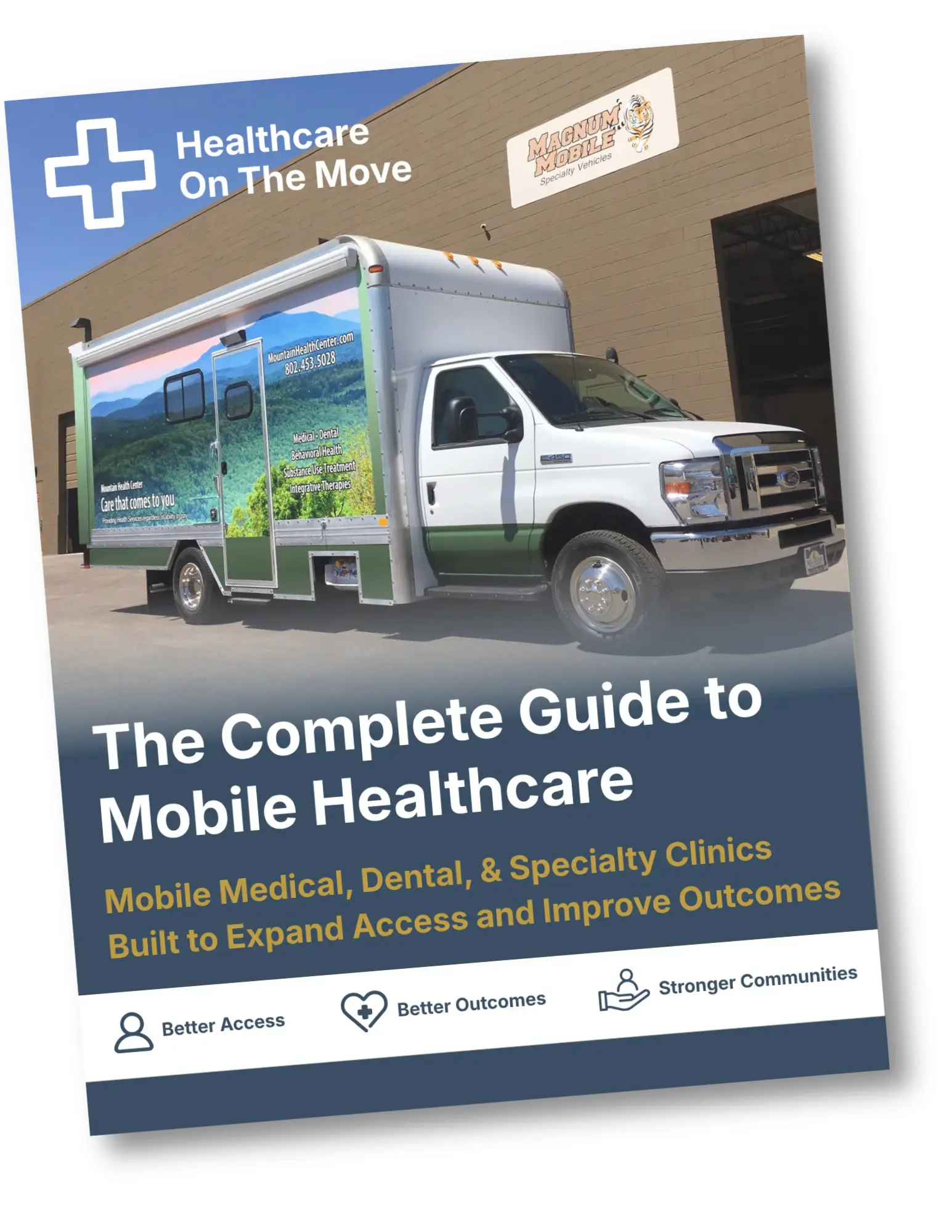
Get the Free Buyer Guide
Request the Mobile Healthcare Buyer Guide through the guide page.
Latest From Our Blog
Trusted Nationwide
Trusted by Leading Organizations
Trusted by healthcare providers, animal care programs, public agencies, universities, and nonprofit organizations for mobile specialty vehicles.






Built to Support
Organizations Across Every Sector
Delivering mobile solutions for healthcare, education, government, nonprofit, and commercial applications.
Healthcare
Education
Government
Non-Profit
Public Safety
Corporate
Ready to Get Started
Let’s Build a Solution That Moves Care Forward
Tell us about your operation and our team will help build the right mobile vehicle solution for your needs.