
Clinical Education • Mobile Teaching Clinic Planning
How to Design a Mobile Clinic for Teaching and Supervised Care
Fit teaching, supervision, and patient care into a workable mobile layout
Quick answer
Design a mobile teaching clinic by defining the approved care services, learner roles, supervisor presence, and patient visit sequence first. Review the space for everyone involved, private conversations, documentation, equipment, and circulation. Set practical scheduling and host-site arrangements, then evaluate configurations with faculty, clinical, and operating teams.
A mobile clinic can support an educational program delivering approved care in community settings. Teaching adds tasks and people to the visit, so a layout designed only around a clinician and patient may not reflect how the team actually works.
Begin with a realistic teaching day. Identify who participates in the room, who supervises, where the next learner waits, how faculty review work, and which discussions need a separate private space.
Magnum Mobile can discuss configurable layouts, commercial-grade materials, and integrated vehicle systems around your operating plan. Explore our mobile medical vehicles and request the Mobile Healthcare Buyer Guide through its guide page.
1. Define the teaching and care model
Describe the clinical and educational purposes of the program before selecting a vehicle. Agree on the approved services, intended learners, faculty responsibilities, community partners, and expected schedule.
Learning goals: Identify what participants should learn and which activities belong in the mobile setting. Distinguish observation, supervised participation, documentation practice, and any simulation activities in the operating plan.
Care responsibilities: Name the qualified clinical leaders and responsible care organization. Faculty and clinical leaders should define supervision, escalation, documentation review, and participant responsibilities through established program procedures.
Patient experience: Explain how patients learn about learner involvement and how the team follows its consent and privacy processes. Account for a visit in which additional participants are not appropriate.
Partner expectations: Clarify the host’s role, community communication, appointment scheduling, follow-up, and service continuity. A teaching objective should fit alongside a dependable care experience for the people served.
2. Map people and tasks through a visit
Use a visit walkthrough with the intended faculty, clinical staff, learners, and operations team. Review the normal scenario and an appointment that requires more discussion or assistance.
Room occupancy: Map where the patient, supervisor, learner, interpreter, or companion would stand or sit. Check access to the patient and equipment without blocking entry, staff movement, or required operating clearances.
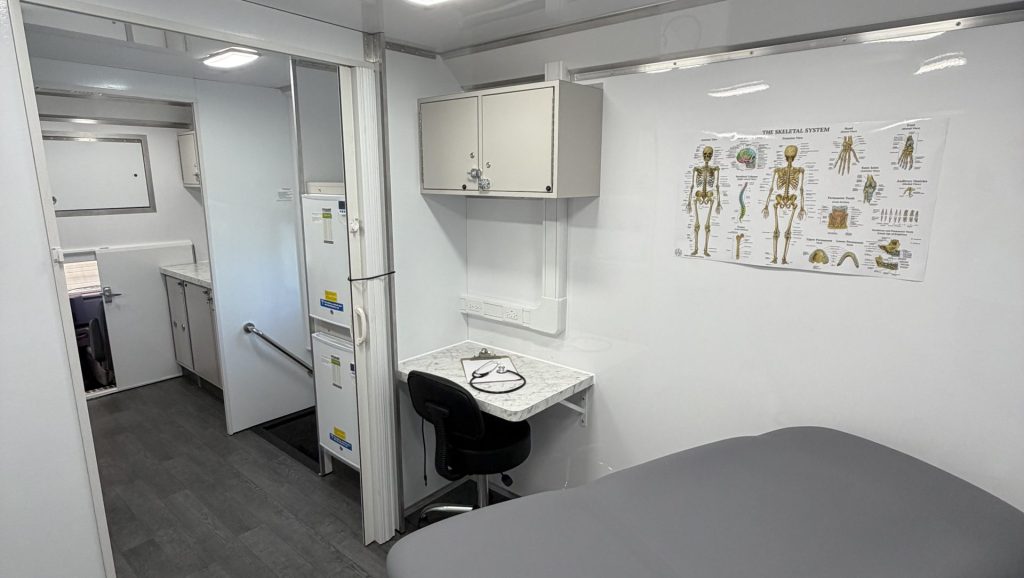
Transitions: Identify who enters and leaves during check-in, care, faculty review, documentation, and departure. Plan where waiting learners and case discussions go so teaching does not repeatedly interrupt another patient’s private visit.
3. Separate learning support from patient space
A mobile teaching clinic needs to accommodate care tasks and the supporting educational work. Consider whether an agreed host facility can provide some activities while preserving a clear operating arrangement.
Briefing and debriefing: Identify a suitable place for pre-visit preparation and post-session discussion. Avoid assuming a waiting area or outdoor location can support confidential case conversations.
Documentation: Determine approved devices, workstations, access permissions, and faculty review procedures. Review visibility of screens and the plan for limited connectivity with the technology team.
Personal items and supplies: Plan secure storage for teaching materials, clinical supplies, devices, and staff or learner belongings. Keep walkways and work surfaces available for their intended use.
Privacy: Review sound, sightlines, door openings, and the number of people present. Discuss both vehicle features and operational procedures with faculty and the teams responsible for privacy.
4. Configure clinical space and utilities
Bring the proposed teaching workflow to Magnum along with the clinical equipment list. Configurable layouts and integrated systems should be evaluated against the actual work rather than a learner count alone.
Clinical spaces: Review exam or consultation areas, staff work surfaces, patient entry, circulation, cleaning access, and storage. Compare the placement of people and equipment using an actual floor plan.
Equipment: Provide model dimensions, weights, installation instructions, electrical loads, and access needed during use. Confirm builder-supplied and organization-supplied items in the written proposal.
Technology: Identify approved clinical software, network requirements, remote participation if planned, and devices used for teaching. Have responsible teams review information handling and any recording arrangements before specifying them.
Utilities: Define power, climate control, lighting, plumbing, and communications needs for the approved services. Include equipment used during faculty review or teaching as well as direct patient care.
Vehicle format: Compare usable spaces, entry needs, site access, travel, storage, and setup across proposed formats. A larger vehicle does not by itself resolve poor scheduling or unclear supervision arrangements.
5. Build a realistic teaching-day schedule
Account for preparation, supervision, feedback, documentation review, and community follow-up when estimating a service day. Test the plan before promising appointment capacity or expanding placements.
Staffing: Assign driving, setup, care, supervision, scheduling, closing, restocking, and follow-up. Decide how the program operates when faculty, learners, or clinical staff are absent.
Sites: Confirm permission, parking and turning space, entrance clearance, utilities, waiting areas, and emergency access. Document the responsibilities for any teaching or waiting space supplied by a host.
Budget: Include faculty and staff time, equipment, supplies, travel, insurance, connectivity, maintenance, storage, and coordination alongside vehicle acquisition. Confirm the relevant institutional purchasing and funding approvals.
Pilot review: Track actual appointment duration, room congestion, supervision access, documentation workload, patient feedback, learner feedback, and completed follow-up. Use the findings to refine the route and workflow.
6. Prepare the teaching clinic vehicle brief
A useful brief shows how patient care and education will work together. Bring Magnum the approved service plan, the proposed teaching day, and the specific space or systems questions needing configuration review.
Care and learning: Provide services, learner roles, supervision arrangements, typical room occupants, visit sequence, privacy needs, equipment, and documentation requirements.
Deployment and resources: Share representative sites, available host spaces, utilities, route distances, storage, schedule, budget, and approval timeline.
Education resource: For medical education programs, the AAMC’s clinical training affiliation agreement resource illustrates the importance of defined institutional responsibilities. Review your own program and partner arrangements with the teams responsible for education and clinical operations.
Mobile Teaching Clinic FAQs
What makes a mobile teaching clinic different from a standard care vehicle?
Teaching may add supervisors, learners, documentation review, observation, and feedback to the visit. Plan the space and schedule around those tasks while preserving patient access and private care.
How many students can work inside a mobile clinic?
There is no universal number. Review the actual floor plan, approved services, equipment, supervisor roles, patient needs, circulation, and operating constraints with the responsible teams.
Can briefing and debriefing happen outside the vehicle?
An agreed host space may support these activities if its availability, privacy, access, and use fit the program. Document the arrangement rather than assuming a public waiting area will be suitable.
What should a university bring to Magnum?
Bring approved services, learner and faculty roles, visit flow, room occupancy, privacy and entry needs, equipment, technology, host sites, budget, and timing.
Plan Your Mobile Teaching Clinic With Magnum Mobile
Magnum Mobile combines configurable clinical layouts, integrated utilities, and a structured consultation-to-delivery process. Share your teaching and care workflow so our team can discuss a vehicle around the requirements of faculty, learners, staff, and patients.
Explore Magnum’s mobile medical vehicles and compare configurations for your program.
Request the free Mobile Healthcare Buyer Guide to prepare your purchase planning questions.
Discuss Your Vehicle
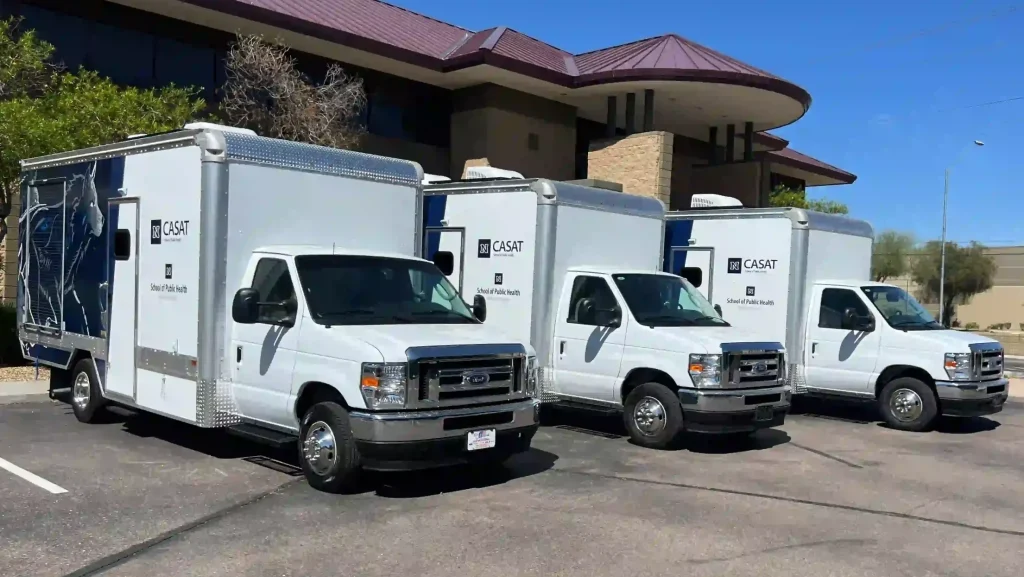
Compare clinic spaces around patient care, faculty supervision, and learner movement.
Bring room occupancy, services, equipment, privacy, documentation, and host-site requirements to Magnum.
Get the Free Buyer Guide
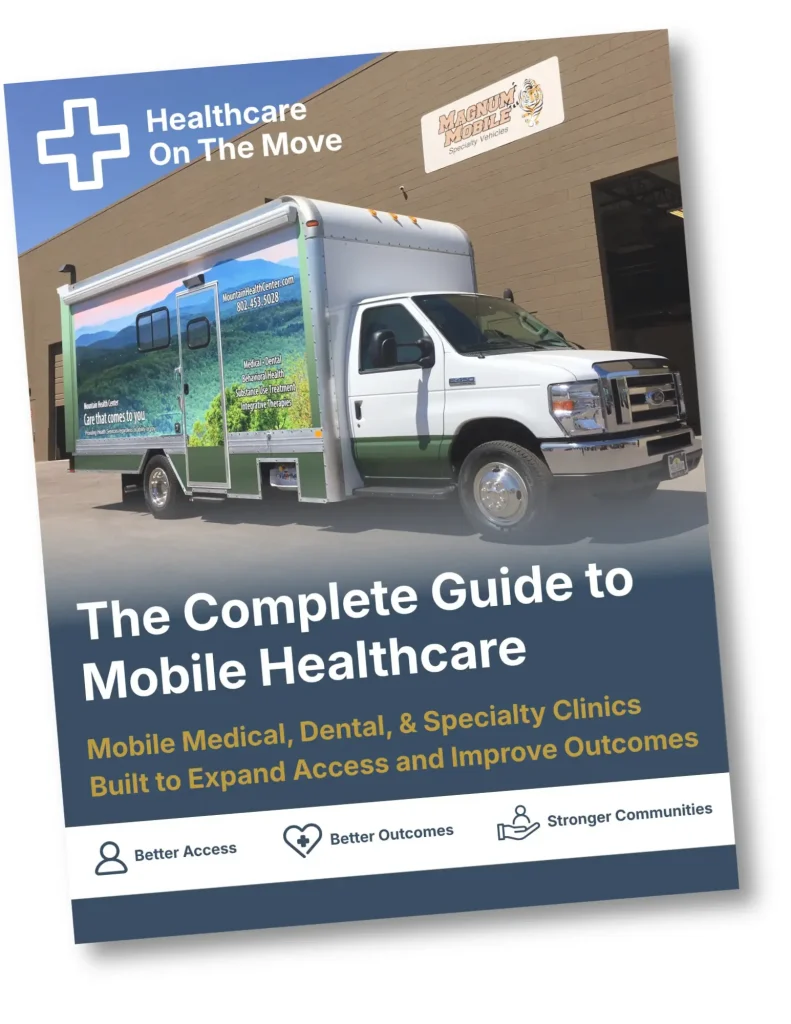
Request the Mobile Healthcare Buyer Guide through the guide page.
Trusted Nationwide
Trusted by Leading Healthcare Organizations
Trusted by healthcare providers, public agencies, universities, and nonprofit organizations to deliver high-quality mobile specialty vehicles.







Built to Support
Organizations Across Every Sector
Delivering mobile solutions for healthcare, education, government, nonprofit, and commercial applications.
Healthcare
Education
Government
Non-Profit
Public Safety
Corporate
Ready to Get Started
Let’s Build a Solution That Moves Care Forward
Tell us about your operation and our team will help build the right mobile vehicle solution for your needs.