
Veterinary Vehicle Selection • Van vs. Larger Clinic
Mobile Veterinary Van vs. Larger Clinic: Which Fits Your Services?
Choose usable clinical space around the work your veterinary team will perform
Quick answer
Choose between a mobile veterinary van and a larger clinic by comparing actual configurations against your approved services, animal sizes, staffing, equipment, holding or recovery needs, and deployment sites. A compact format may suit a focused workflow; additional spaces may be important when clinical tasks must occur separately. Review the complete operating plan before deciding by vehicle length alone.
A vehicle format is a starting point for the purchasing conversation, not a complete description of what your veterinary program can do. Two units with different floor plans or equipment can support different workflows even when they have similar exterior dimensions.
Start with a representative service day and the veterinarian’s approved scope. Map animal arrival, client communication, examination or treatment, any required holding or recovery, cleaning, and departure before comparing formats.
Magnum Mobile can discuss configurable layouts, commercial-grade materials, and integrated vehicle systems around your operating plan. Explore our mobile animal care vehicles and request the Mobile Animal Care Buyer Guide through its guide page.
1. Start with services and animal movement
Write a service list and identify which activities will occur onboard. Have the veterinarian and animal-care team define the space, equipment, staffing, and monitoring needs for the work they intend to perform.
Scope: Distinguish a focused examination or preventive-care visit from a program planning surgery or more complex equipment. Do not assume the same layout will support every veterinary service.
Animals served: Describe the species, expected size range, handling approach, and assistance needed to move animals through the unit. Review working clearances using actual equipment and animal-care procedures.
Client flow: Decide where check-in, consent processes, questions, payment when relevant, and departure instructions happen. Identify whether clients enter the vehicle or use an agreed host area.
Holding and recovery: Explain when animals remain in the team’s care and where that occurs. Kennel counts alone do not establish workable clinical capacity; staff oversight and the complete workflow also matter.
2. Compare actual layouts rather than labels
Review drawings for the configurations under consideration. Ask where each person, animal, device, and supply will be during a typical appointment and between visits.
Focused versus separated work: A compact layout may be worth evaluating for a focused service sequence. A configuration with separate spaces may better support tasks that need distinct work areas, but suitability still depends on the proposed arrangement.
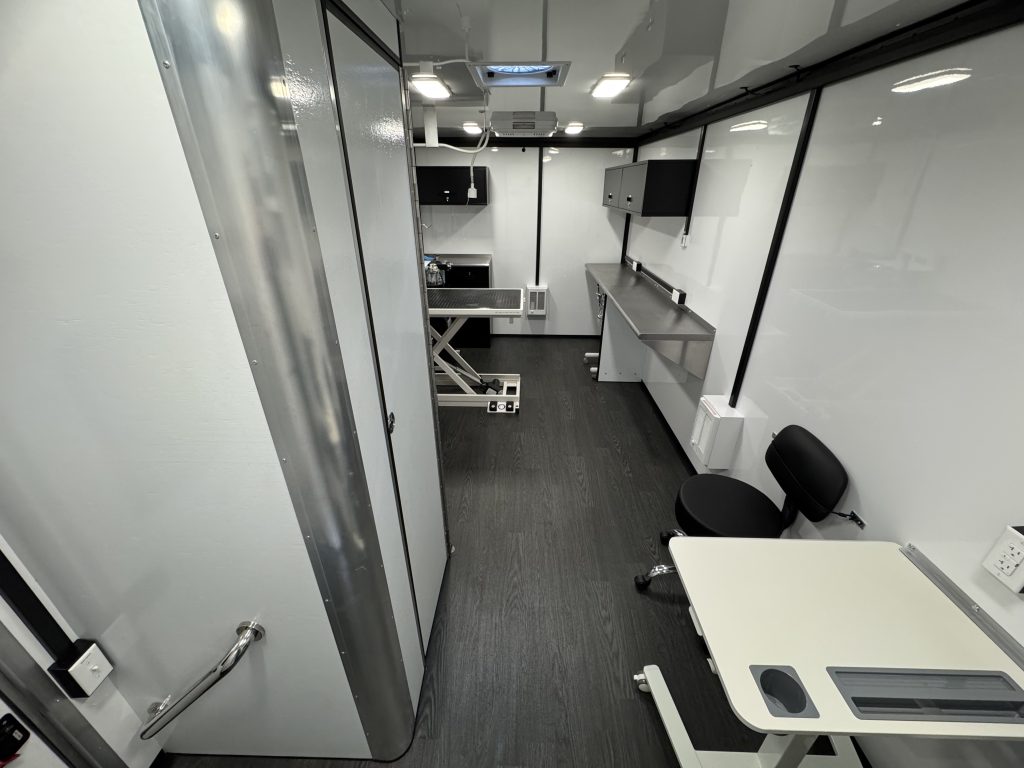
| Planning question | Compact van review | Larger clinic review |
|---|---|---|
| Clinical work | Can the approved sequence fit the available work area? | Do separate spaces solve a defined workflow need? |
| Animals and staff | Can they move and work without blocking access? | Can staff supervise and communicate across the proposed layout? |
| Equipment and supplies | Do devices, clearances, and stock fit the configuration? | Are added spaces and systems justified by the service plan? |
| Deployment | Does the actual vehicle suit routes and host sites? | Can each site accommodate the full operating footprint? |
3. Check equipment and storage requirements
Build an equipment list before choosing a format. Include the devices and supplies used during care and the resources needed for cleaning, restocking, and service between visits.
Physical fit: Provide equipment dimensions, weights, mounting requirements, and clearances for operation and maintenance. Review the equipment in the proposed floor plan instead of relying on a general list of included features.
Clinical workflow: Have the veterinarian identify which tasks need distinct areas and how equipment moves between them. Confirm the proposed layout supports the team’s approved operating procedures.
Storage: Plan secure spaces for clean supplies, records or devices, animal-care items, and waste handling as required by your operating protocols. Account for the stock needed between resupply opportunities.
Scope of supply: Identify builder-supplied, organization-supplied, optional, and future equipment in the written proposal. Discuss integration responsibilities before ordering equipment independently.
4. Evaluate utilities and site fit
The right vehicle must work at the locations your team can realistically serve. Compare the actual operating footprint and systems rather than assuming a smaller unit always has simpler requirements.
Power: Provide the loads and operating requirements of proposed equipment. Review host connections, onboard power systems, startup needs, and the planned duration of service days with the supplier.
Climate control: Define the service conditions, occupied spaces, equipment loads, and animal-care requirements established by the responsible veterinary team. Review the configuration and monitoring arrangements together.
Plumbing and other systems: Describe water, waste, communications, and any clinical utility requirements for the approved services. Identify what must operate onboard and what an agreed host can provide.
Site footprint: Obtain measurements and photos for parking, turning, entry, doors, any specified access equipment, animal movement, and emergency access. Check whether the largest proposed unit can be deployed at representative stops.
Routes and storage: Include travel, driver preparation, fueling, parking between visits, and daily setup. If a trailer is also considered, evaluate a suitable towing and deployment plan separately.
5. Compare operating costs and practical capacity
Compare the complete service model for each configuration. A vehicle’s space and price are only part of the decision; staffing and deployment can determine how much of that space is useful.
Budget: Include acquisition, equipment, staffing, supplies, insurance, fuel, connectivity, maintenance, storage, cleaning, and coordination. Review configurations using the same service assumptions.
Staffing: Identify clinical, handling, reception, driving, setup, and follow-up roles. Test how the team covers the full visit without assuming additional rooms automatically increase throughput.
Pilot assumptions: Model a realistic stop with arrival, care, monitoring when required, cleaning, departure, and restocking. Have the veterinarian review clinical timing and capacity assumptions.
Future uses: Separate confirmed needs from possible expansions. Ask what configuration changes would require later review, new equipment integration, or a different vehicle rather than assuming every future service will fit.
6. Bring a comparison brief to Magnum
A clear brief lets Magnum discuss the tradeoffs between specific veterinary configurations. Bring a representative service day and the requirements each option must satisfy.
Clinical information: Provide approved services, animal sizes, staffing, visit sequence, handling, holding or recovery needs, equipment specifications, and client communication arrangements.
Deployment information: Share site measurements and photos, route distances, utilities, storage, budget, timing, and anticipated service growth.
Configuration resource: Review Magnum’s veterinary clinic lineup with your team. Confirm current floor plans and the written proposal for the specific unit under consideration; model labels alone do not establish suitability for your services.
Veterinary Van vs. Larger Clinic FAQs
When should a veterinary program consider a van?
Evaluate a van when its actual layout, equipment, access, and utilities can support your focused service workflow and sites. Confirm fit with the veterinary team and supplier before purchasing.
When is a larger veterinary clinic worth evaluating?
Consider additional spaces when the approved service plan needs separate clinical areas, more equipment or storage, or defined holding and recovery arrangements. Compare those needs with staffing, site fit, and ongoing costs.
Can a vehicle’s kennel count tell us its appointment capacity?
No. Workable capacity also depends on services, animal needs, staffing, clinical timing, monitoring, cleaning, and the rest of the visit. Have the veterinary team review assumptions.
Does Magnum help compare veterinary configurations?
Bring your approved service plan, equipment, staffing, animal movement, sites, utilities, budget, and timing. Magnum can discuss specific layouts and clarify the scope of a configured proposal.
Compare Veterinary Vehicles With Magnum Mobile
Magnum Mobile brings configurable animal-care layouts, commercial-grade materials, and integrated vehicle systems to the comparison. Share your veterinary workflow so our team can discuss a configuration around the services and operating sites your program needs to support.
Explore Magnum’s mobile animal care vehicles and compare configurations for your program.
Request the free Mobile Animal Care Buyer Guide to prepare your purchase planning questions.

Discuss Your Vehicle
Compare veterinary vehicle formats using actual clinical space, animal movement, and equipment.
Bring approved services, staffing, holding needs, utilities, and site requirements to Magnum.
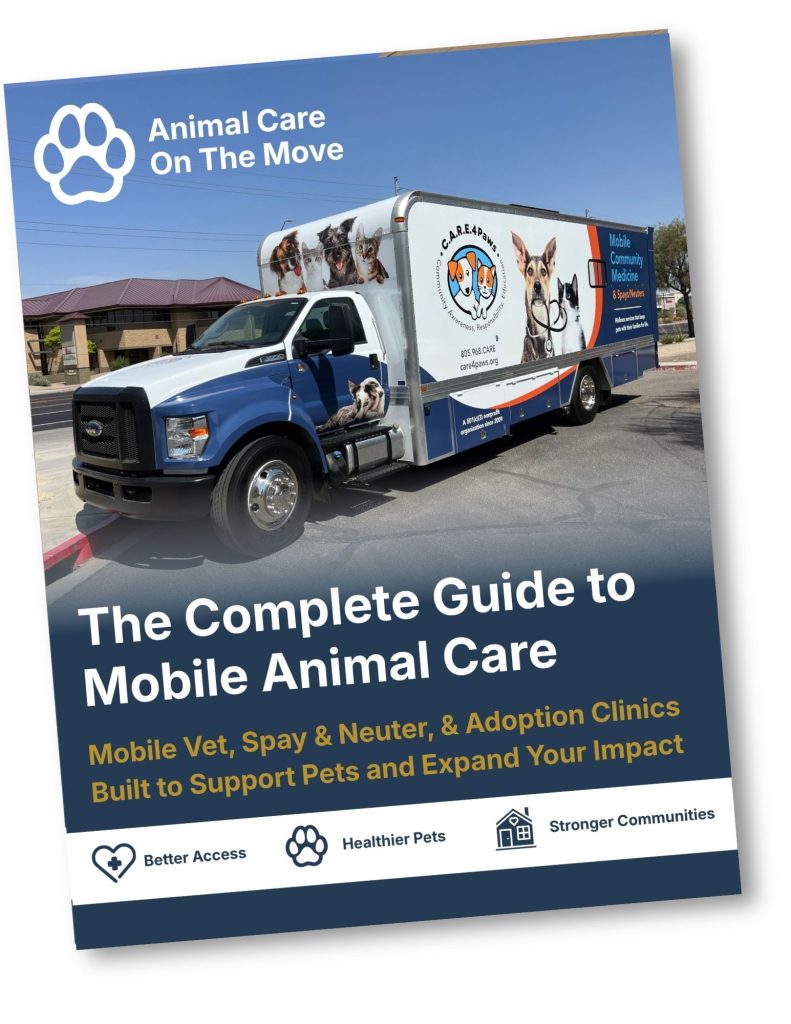
Get the Free Buyer Guide
Request the Mobile Animal Care Buyer Guide through the guide page.
Trusted Nationwide
Trusted by Leading Organizations
Trusted by healthcare providers, animal care programs, public agencies, universities, and nonprofit organizations for mobile specialty vehicles.







Built to Support
Organizations Across Every Sector
Delivering mobile solutions for healthcare, education, government, nonprofit, and commercial applications.
Healthcare
Education
Government
Non-Profit
Public Safety
Corporate
Ready to Get Started
Let’s Build a Solution That Moves Care Forward
Tell us about your operation and our team will help build the right mobile vehicle solution for your needs.