
Mobile Dental Clinics • Layout Planning
One Dental Chair or Two: How to Choose a Mobile Dental Layout
Choose chair capacity around the team and workflow you can support
Quick answer
Choose a one-chair mobile dental layout when your service model, staffing, or available space favors one treatment position. Consider two chairs when the team can use both positions effectively and the vehicle can support their equipment, utilities, privacy, storage, and circulation needs. Compare a full appointment cycle in each layout before deciding. A second chair alone does not establish higher daily capacity.
The number of dental chairs is an early buying decision with consequences throughout a mobile clinic. It affects the working space around each patient, the equipment schedule, staff movement, storage, and the vehicle you can deploy at host locations.
Start with the appointments your team plans to deliver. A drawing with two chairs may look productive, but the useful capacity depends on who works at each position and how the rest of the clinic supports them.
Magnum Mobile can discuss configurable layouts, commercial-grade materials, and integrated vehicle systems around your operating plan. Explore our mobile dental vehicles and request the Mobile Healthcare Buyer Guide through its guide page.
1. Define the service model before counting chairs
Write down the services your clinical team intends to provide and the people who will deliver them. Compare a representative operating day rather than choosing capacity from a floorplan alone.
2. Compare what one and two positions require
A one-chair clinic concentrates care and supporting activity around one treatment position. A two-chair layout adds another position that must fit into the same complete operating system. Neither arrangement is the default choice for every program.

| Decision | One chair | Two chairs |
|---|---|---|
| Staff assignments | One treatment position to support | Defined roles for both positions |
| Support space | Review storage and circulation around one position | Check how the added position affects shared spaces |
| Utilities | Confirm the selected equipment requirements | Review intended simultaneous equipment operation |
| Capacity | Model the full appointment cycle | Model shared tasks and constraints as well as chair time |
3. Test staffing and patient movement together
Map the people as carefully as the furniture. A chair can be physically present without being usable for a second appointment under the planned staffing model.
4. Protect the support spaces behind each chair
Treatment positions rely on supporting functions. Do not treat sterilization, supplies, utilities, and staff access as leftover space after the chairs are placed.
5. Model capacity without assuming double the output
Build a simple schedule for each layout using your own appointment assumptions. The purpose is to expose constraints, not to promise a particular patient count.
6. Review both options with Magnum Mobile
A useful configuration discussion begins with the work the clinic must perform. Magnum Mobile can discuss configurable layouts, commercial-grade materials, and integrated vehicle systems around that operating plan.
Mobile Dental Layout FAQs
Is a two-chair mobile dental clinic always better?
No. Two chairs are useful when staffing, patient flow, equipment, utilities, and support spaces allow both positions to serve the planned program effectively. Compare complete operating scenarios rather than chair count alone.
Can one dentist use a two-chair layout?
The clinical team should define how it would use each position, which supporting staff would be present, and what work could overlap. Do not assume that a second chair means two simultaneous treatment appointments.
Does a second chair double daily capacity?
Not necessarily. Capacity also depends on staffing, appointment types, turnover, instruments, documentation, and other shared tasks. Model a realistic schedule using your program’s own assumptions.
What should we bring to a dental vehicle layout consultation?
Bring the planned services, staff roles, equipment specifications, appointment sequence, storage needs, host-site requirements, and questions about one- versus two-chair operation.
Plan Your Mobile Dental Layout With Magnum
Magnum Mobile can help you review a dental clinic configuration around the care your team plans to deliver. Start with your workflow, equipment, and route requirements to compare chair capacity with the support spaces that make the clinic work.
Explore Magnum’s mobile dental vehicles and compare configurations for your program.
Discuss Your Vehicle
Compare one- and two-chair layouts using your actual staffing and appointment plan.
Bring your equipment list and patient-flow questions to a Magnum vehicle discussion.
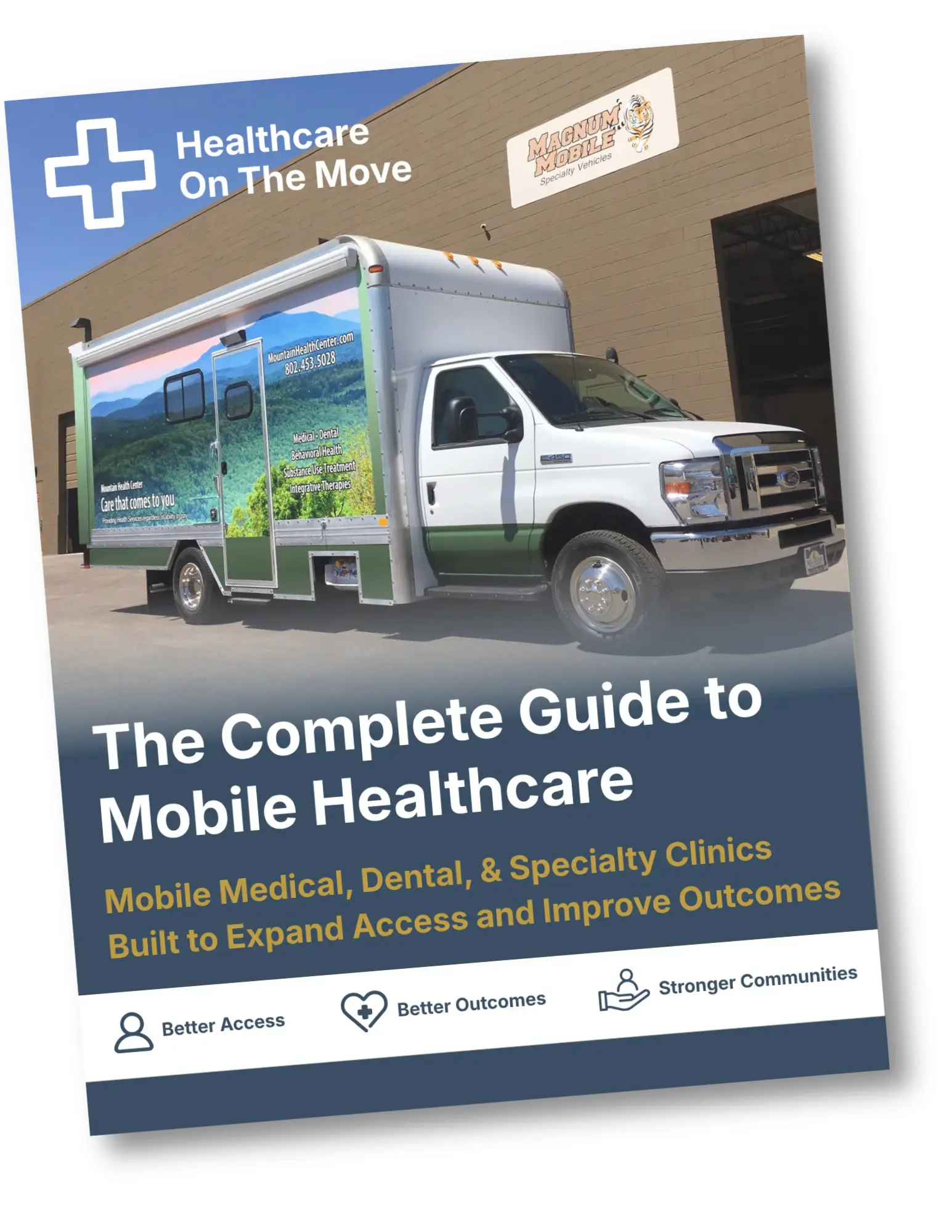
Get the Free Buyer Guide
Request the Mobile Healthcare Buyer Guide through the guide page.
Latest From Our Blog
Trusted Nationwide
Trusted by Leading Organizations
Trusted by healthcare providers, animal care programs, public agencies, universities, and nonprofit organizations for mobile specialty vehicles.







Built to Support
Organizations Across Every Sector
Delivering mobile solutions for healthcare, education, government, nonprofit, and commercial applications.
Healthcare
Education
Government
Non-Profit
Public Safety
Corporate
Ready to Get Started
Let’s Build a Solution That Moves Care Forward
Tell us about your operation and our team will help build the right mobile vehicle solution for your needs.