
Mobile Dental Programs • Rural Outreach
How to Plan a Mobile Dental Program for Rural Communities
Connect the vehicle with a dependable route and follow-up plan
Quick answer
Plan a rural mobile dental program by defining the communities and services, confirming local partners and host sites, modeling travel and staffing, and arranging supplies, maintenance, records, and follow-up. Select the vehicle around those operating requirements. Test a realistic route and appointment schedule before setting expansion or capacity targets.
A mobile dental vehicle can form part of a rural access strategy, but the vehicle is only one part of the program. The route must connect people, clinical staff, host locations, supplies, and continuing care.
Begin with the communities you intend to serve and the work your team can support consistently. A smaller dependable schedule can be a better planning starting point than a large route built on untested assumptions.
Magnum Mobile can discuss configurable layouts, commercial-grade materials, and integrated vehicle systems around your operating plan. Explore our mobile dental vehicles and request the Mobile Healthcare Buyer Guide through its guide page.
1. Define the service area with local partners
Discuss the proposed program with organizations that understand the communities you intend to reach. Document the access problems and the role a mobile service is expected to play.
Population: Identify intended participants, relevant access or communication needs, and the process for learning what residents need from the program.
Partners: Clarify the role of host organizations, community contacts, and existing dental providers. Agree on responsibilities rather than relying on informal enthusiasm.
Service scope: Have the clinical lead define the services planned for launch and how the program connects with care beyond those services.
Success: State what the first phase should establish, such as a dependable route, completed appointments, or a functioning referral process. Avoid treating vehicle visits alone as the final outcome.
2. Build a route around complete operating days
Model travel and support work alongside patient-facing hours. Use actual proposed sites and realistic assumptions that the team can review.
Time: Include loading, travel, positioning, setup, appointments, closing, restocking, documentation, and return. Identify tasks that depend on a particular person or facility.

| Route input | Planning question |
|---|---|
| Travel | What time and operating constraints apply between actual sites? |
| Clinic schedule | Which services and staffing support the planned appointments? |
| Support stops | Where will supplies, servicing, and required system care happen? |
| Contingencies | How will partners handle weather, access, or vehicle interruptions? |
3. Confirm dependable host-site arrangements
Evaluate each host against the actual proposed vehicle and deployed footprint. Record the conditions required for a visit to proceed.
Access: Review approach routes, parking, entrances, assistance features where specified, and areas needed around the unit.
Utilities: Confirm any host connections the configuration relies on. Have the relevant site and vehicle personnel review compatibility.
Communication: Test the connectivity needed for the program’s records and coordination systems, and define the approved response if connectivity is unavailable.
Host agreement: Record contacts, visit hours, permitted parking, responsibilities, and a process for reporting site changes before deployment.
4. Plan the clinical and operating team together
Define the people needed to deliver services and move the vehicle. Include duties that happen before the first appointment and after the last one.
Staff roles: Assign clinical work, coordination, driving, setup, instrument handling, supplies, records, and closing responsibilities.
Appointments: Use assumptions approved by the clinical team. Check how travel, patient needs, and shared tasks affect the schedule.
Supplies: Plan stock, restocking locations, equipment care, and secure travel storage for the planned route.
Follow-up: Agree on how participants receive next steps and how the program connects them with further care when applicable.
Continuity: Describe the response to staff absence, equipment problems, or a cancelled visit. Give partners a clear communication and rescheduling process.
5. Use the first phase to test your assumptions
Start with a defined review period and collect information the team will use. A useful pilot reveals practical constraints before the program expands.
Operations: Record travel and setup time, appointment readiness, staff workload, supplies, and interruptions. Compare these with the original assumptions.
Participation: Review completed visits and missed appointments using consistent definitions. Ask partners about communication or access barriers.
Resources: Track the costs included in your program budget and explain the scope of any efficiency measure. Keep estimates separate from observed results.
Changes: Choose specific improvements to sites, schedules, staffing, or follow-up. Review again before adding locations or promising greater capacity.
6. Translate rural route requirements into a Magnum brief
Magnum Mobile can discuss configurable dental layouts, commercial-grade materials, and integrated vehicle systems around the route your team intends to operate.
Share the route: Bring proposed sites, visit frequency, travel conditions, storage arrangements, and available host utilities.
Share the clinic plan: Include the service scope, staff assignments, chair requirements, equipment specifications, supplies, and records workflow.
Review fit: Explore Magnum’s mobile dental clinics and compare the proposed configuration with complete visit scenarios.
Discuss your rural dental program with Magnum Mobile. A practical route brief helps connect vehicle choices with the services and communities behind the purchase.
Rural Mobile Dental Program FAQs
What should we plan before choosing a rural dental vehicle?
Define the services, communities, partners, sites, route, staffing, equipment, supplies, maintenance, and follow-up arrangements. Use those requirements to guide vehicle selection.
How many sites should a new program serve?
There is no universal number. Start with a schedule the team can support and use the first phase to test travel, appointments, staffing, and partner coordination.
Can a vehicle solve all rural dental access problems?
Vehicle access is one part of the program. Staffing, participation, communication, ongoing care, and dependable operating resources also need a plan.
What should be measured during the first phase?
Review the operational assumptions, completed visits, missed appointments, staff workload, costs within a defined scope, and how follow-up works. Use the findings to guide changes.
Plan a Dental Vehicle Around Your Rural Route
Magnum Mobile can help review a configuration around your communities, clinical workflow, and operating sites. Bring the route assumptions and equipment details to start a grounded vehicle discussion.
Explore Magnum’s mobile dental vehicles and compare configurations for your program.
Discuss Your Vehicle
Build a dependable rural route before setting expansion targets.
Connect host sites, staffing, supplies, and follow-up with the vehicle review.
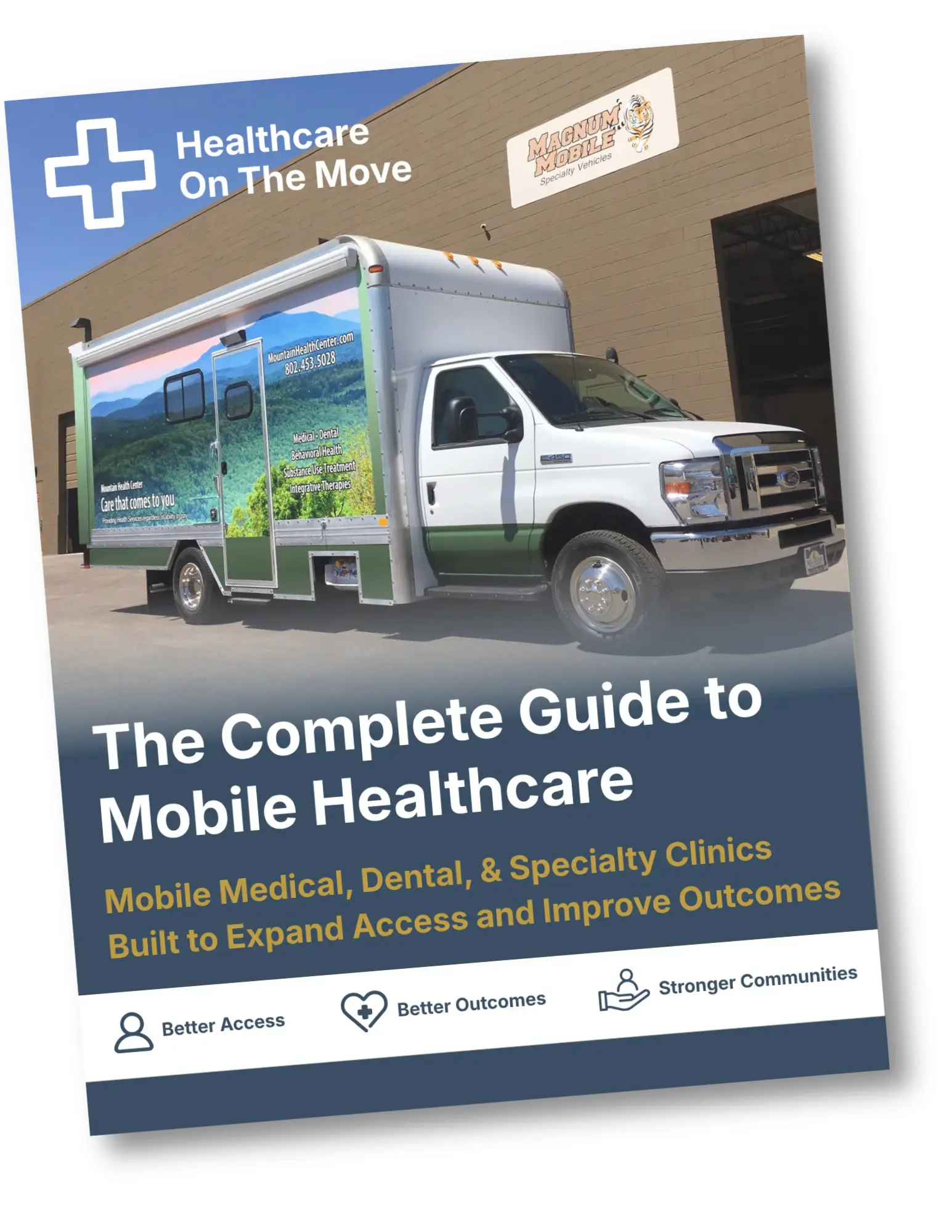
Get the Free Buyer Guide
Request the Mobile Healthcare Buyer Guide through the guide page.
Latest From Our Blog
Trusted Nationwide
Trusted by Leading Organizations
Trusted by healthcare providers, animal care programs, public agencies, universities, and nonprofit organizations for mobile specialty vehicles.







Built to Support
Organizations Across Every Sector
Delivering mobile solutions for healthcare, education, government, nonprofit, and commercial applications.
Healthcare
Education
Government
Non-Profit
Public Safety
Corporate
Ready to Get Started
Let’s Build a Solution That Moves Care Forward
Tell us about your operation and our team will help build the right mobile vehicle solution for your needs.