
School Health Programs • Mobile Clinic Evaluation
How School Health Programs Can Evaluate a Mobile Clinic
Bring school partnerships, student access, and vehicle planning together
Quick answer
Evaluate a school mobile clinic by defining the services and students it will support, assigning clinical and school responsibilities, planning consent and follow-up, checking campus access, and matching equipment to a workable floor plan. Bring that operating brief to Magnum Mobile, then test a realistic school-day schedule before expanding.
A school mobile clinic can bring a healthcare team to participating campuses on a planned schedule. Its value depends on the partnership behind it: who provides care, how students reach appointments, and what happens after the vehicle leaves.
Start with an access problem your team can describe, such as transportation barriers or a gap in an existing service. Compare a mobile route with using available campus space or a fixed clinic partnership. The right model should fit demand, staffing, and the school calendar.
Magnum Mobile helps organizations connect their program requirements with configurable layouts and integrated vehicle systems. Explore our mobile medical clinics and prepare for a discussion using the free Mobile Healthcare Buyer Guide.
1. Define the school health service and audience
Choose the initial service before choosing a vehicle. Clinical leadership should define the scope, staffing, equipment, and referral arrangements. School leaders can help identify access barriers and a workable way to reach the intended students.
Audience: Identify participating schools, student age groups, expected demand, language needs, and access needs. Separate students who could benefit from the service from those likely to attend the first route.
Service scope: Describe what an appointment includes, its expected duration, and the staff involved. A medical consultation, dental visit, and private counseling session can require different spaces and equipment.
Role in existing care: Decide how the mobile program will coordinate with school nurses and students’ usual providers. Avoid creating a new appointment pathway without a clear handoff for ongoing care.
Decision criteria: Agree on what would justify the investment: a sustainable schedule, demonstrated demand, reliable follow-up, and a layout that supports the approved services.
2. Establish the school and clinical partnership
A strong school mobile clinic partnership makes responsibilities visible before procurement. Name a clinical lead, a district or campus contact, and an operations owner. Write down which team handles each part of the visit.
Participation and communication: Set a process for explaining the service to families, collecting the required participation documentation, handling appointment questions, and arranging language support. Have the appropriate clinical and administrative teams review the process.
Records and follow-up: Establish which organization maintains care records, how information is shared appropriately, who communicates results, and who tracks referrals. Review consent, privacy, and information-sharing requirements with your organization’s qualified advisers.
3. Map the student visit and campus schedule
Walk through a visit from classroom departure to return. Include the time required to escort students, register them, deliver the service, complete records, and communicate next steps.
School schedule: Account for instruction, lunch, exams, assemblies, and campus arrival and dismissal. A vehicle parked on campus does not automatically make every hour available for appointments.
Student flow: Identify where students wait, who supervises them, and how they reach the vehicle. Decide which tasks happen onboard and which use an agreed school space.
Campus access: Check parking measurements, turning access, pedestrian routes, entry-system clearance, utility availability, and emergency access. Keep the vehicle operating footprint separate from its parking dimensions.
Continuity: Plan for absent students, cancelled visits, weather, school breaks, and rescheduling. Families need a clear contact and follow-up route even when the vehicle is at another campus.
4. Match the vehicle to equipment and workflow
Evaluate the actual floor plan against a typical school visit. Magnum can discuss a configuration around your planned services, staff movement, equipment, privacy, and deployment conditions.
Equipment specifications: Bring model dimensions, electrical loads, installation requirements, and operating clearances. Identify what the organization supplies and what the vehicle proposal includes.
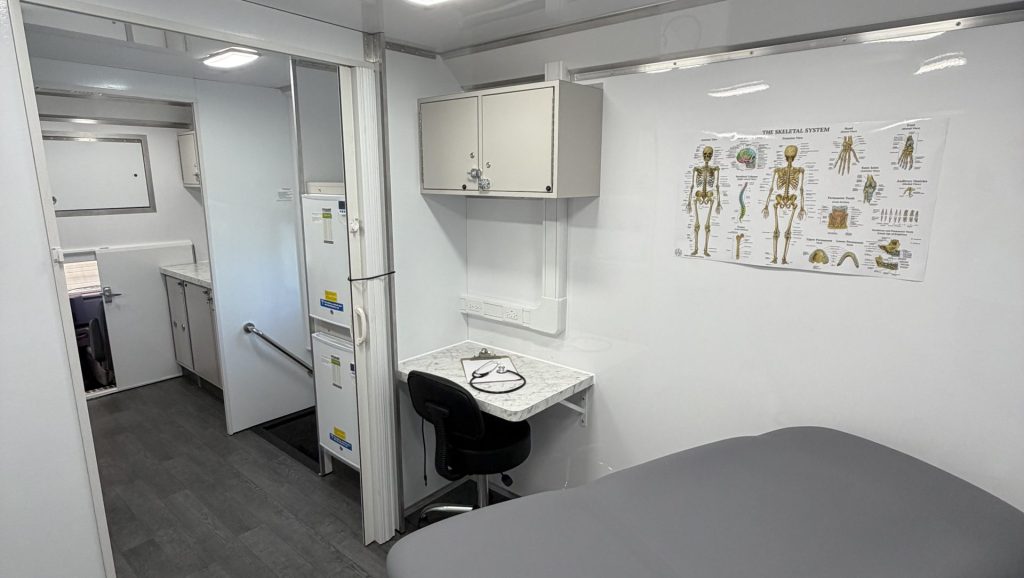
Workspaces: Review consultation or treatment areas, staff circulation, storage, cleaning tasks, and the separation needed for private conversations. Assess the layout with the people who will use it.
Utilities: Define heating and cooling needs, simultaneous equipment use, connectivity, and any plumbing requirements. Confirm what each campus can provide and what must operate independently onboard.
Entry and assistance: Review the proposed entrance and interior movement against the needs of the people served. Confirm accessibility arrangements and applicable requirements with the responsible teams.
Vehicle format: Compare drivable clinics, vans, or trailers around usable space and the route. Trailer planning also needs a suitable tow vehicle, trained staff, maneuvering space, and setup time.
5. Budget and pilot a realistic school route
Build the budget around a school year and an actual route. Separate the vehicle purchase from equipment, staffing, operations, and the work required between campus visits.
Complete costs: Include travel, setup, clinical and coordination time, supplies, insurance, maintenance, connectivity, storage, and any financing costs. Confirm funding restrictions with the funding organization.
Appointment capacity: Estimate from visit duration and available staff time after travel, setup, breaks, and documentation. Test a lower-attendance scenario rather than treating every available slot as a completed visit.
Pilot the route: Start with a manageable campus schedule. Track attendance, delays, student movement, staff workload, and completed follow-up to identify changes before adding schools.
Long-term operation: Confirm who funds recurring expenses and who schedules the unit during school breaks. Revisit the service agreement as demand and participating campuses change.
6. Prepare a school mobile clinic brief for Magnum
A useful vehicle brief connects the school partnership with the everyday work of care delivery. Magnum’s consultation and configuration process can help your team evaluate how those requirements translate into a vehicle.
Program brief: Share the audience, approved services, appointment sequence, staffing, privacy needs, equipment list, and follow-up responsibilities.
Route brief: Bring representative campus sites, parking and utility details, visit frequency, service hours, travel distances, storage plans, budget, and target launch timing.
Partnership resource: HRSA’s school and health center partnership tips describe collaboration between schools and HRSA-supported health centers, including mobile service settings. Use the resource with your program team to discuss partnership responsibilities.
Review Magnum’s consultation-to-delivery process and discuss a school health vehicle built around your operating plan.
School Mobile Clinic Frequently Asked Questions
What is a school mobile clinic?
It is a mobile healthcare vehicle used by a care team to deliver planned services at participating schools. Services, staffing, schedules, and student participation arrangements are established by the operator and school partners.
Does a school mobile clinic replace the school nurse?
The program’s role should be agreed with school leadership and the clinical team. A mobile service can complement existing support, with clear responsibilities for student coordination and continued care.
How many students can a mobile clinic see each day?
Capacity depends on the service, appointment duration, staffing, available school-day hours, travel, setup, and documentation. Estimate it from a realistic schedule and validate it during a pilot.
Which vehicle is best for a school health program?
The best fit depends on services, equipment, private spaces, entry needs, campus sites, and operating staff. Compare actual floor plans with Magnum rather than selecting solely by vehicle size or format.
Plan Your School Health Vehicle With Magnum Mobile
Bring Magnum Mobile a clear school service plan and route. Our team can help connect your workflow, equipment, access needs, and deployment conditions with a configured vehicle proposal.
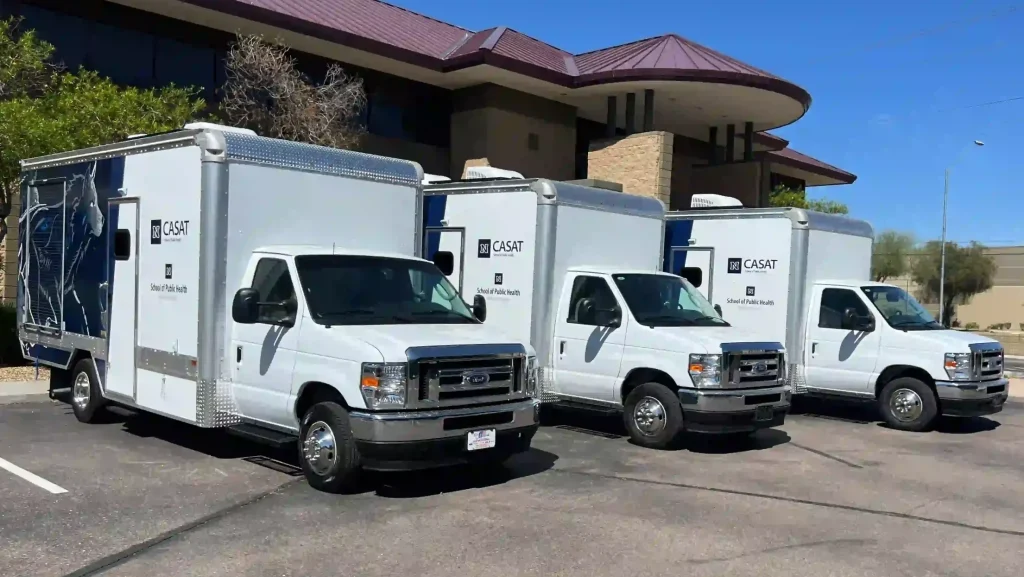
Explore Magnum’s mobile medical vehicles for your school health program.
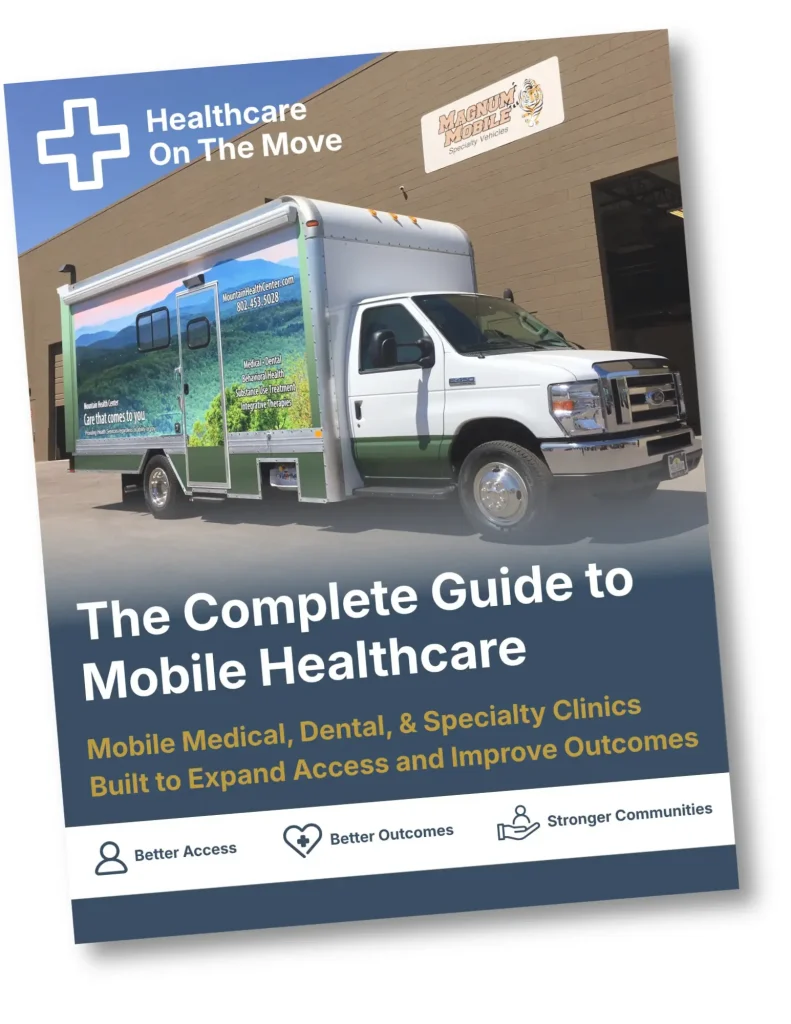
Request the free Mobile Healthcare Buyer Guide to prepare your vehicle planning questions.
Discuss Your Vehicle
Review mobile medical clinic options for your school services and route.
Bring your school partnership, equipment, staffing, and campus access plan to Magnum.
Get the Free Buyer Guide
Request the Mobile Healthcare Buyer Guide through the guide page.
Trusted Nationwide
Trusted by Leading Healthcare Organizations
Trusted by healthcare providers, public agencies, universities, and nonprofit organizations to deliver high-quality mobile specialty vehicles.







Built to Support
Organizations Across Every Sector
Delivering mobile solutions for healthcare, education, government, nonprofit, and commercial applications.
Healthcare
Education
Government
Non-Profit
Public Safety
Corporate
Ready to Get Started
Let’s Build a Solution That Moves Care Forward
Tell us about your operation and our team will help build the right mobile vehicle solution for your needs.