
Mobile Clinic Expansion and Fleet Planning
When Should a Mobile Clinic Program Add a Second Vehicle?
Define the Expansion Need Before Choosing the Next Unit
Quick answer
Consider a second mobile clinic vehicle when documented demand exceeds the current program’s usable capacity and the organization can support another team, route, and operating budget. Define what the second unit will do, compare other ways to address the gap, and confirm staffing, sites, equipment, upkeep, and funding before committing to expansion.
A busy clinic is a reason to review capacity, but it does not by itself establish the case for another vehicle. The program needs to understand which constraint prevents it from serving the intended community.
Start with evidence from the current operation. Separate demand for more appointments from requests for new locations, additional services, or a different deployment schedule.
Magnum Mobile can discuss a second configuration around the gap your program identifies. Bring the current workflow, equipment requirements, site information, and intended role of the next unit into the consultation.
Identify the Capacity Gap Your Program Needs to Address
Describe the specific work the existing program cannot currently cover. Use consistent records and partner input to distinguish a recurring gap from a short period of unusually high activity.
Appointment demand: Review waitlists, unserved requests, attendance, cancellations, and whether patients can use the appointments currently available.
Geographic coverage: Identify locations that cannot be reached reliably within the current route and service schedule.
Service needs: Record requests for services or equipment that do not fit the existing unit’s approved operating plan.
Document the source, period, and limitations of the evidence. A request from a potential host needs further review before it becomes a dependable deployment commitment.
Review the Current Operation and Other Options
Review where the current operation loses usable capacity. The constraint may involve staffing, appointment design, travel, host coordination, equipment, room turnover, or the vehicle itself.
Compare a second unit with realistic adjustments to the existing schedule, route, outreach, staffing, or partner support. Identify what each option can address and the resources it would require.
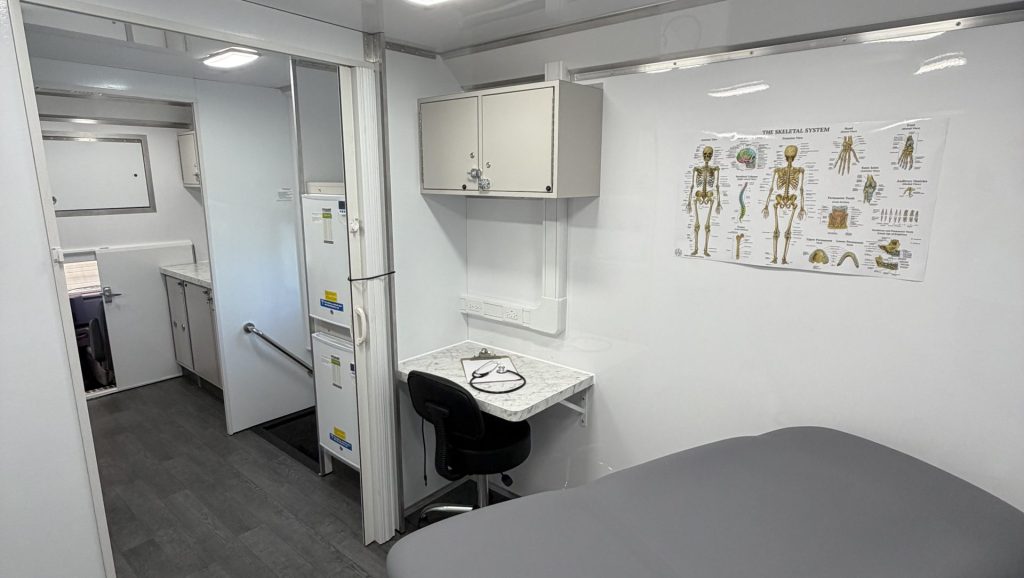
Use consistently defined activity, feedback, costs, and operational observations. Mobile Health Map’s evaluation resources can support program review alongside the organization’s own data and decisions.
Define the Role of the Second Mobile Clinic Vehicle
State the purpose of the second vehicle before choosing its size or layout. A duplicate unit may fit some programs, while others need a different workspace or deployment role.
More locations: Describe the proposed route, frequency, host arrangements, and team responsible for the additional coverage.
Concurrent services: Define which activities need to run at the same time and the staffing and equipment each unit requires.
Different services: Identify the clinical workflow, equipment, utilities, privacy, and space needs of the new service plan.
Continuity: If availability is part of the rationale, explain which services another unit could actually support when the first is unavailable.
Confirm the Resources Needed to Operate Both Units
Build an expansion plan for the full operation, including both vehicles. Purchasing the second unit does not create another clinical team, host network, or recurring budget.
Staffing: Confirm recruitment, coverage, leadership, driving or towing responsibilities, setup, and follow-up across the proposed schedule.
Sites and routes: Review permission, access, setup space, patient paths, utilities, travel time, and the conditions required by the selected configuration.
Equipment and supplies: Decide what must be available in each unit and which resources can be shared without disrupting services.
Funding: Separate acquisition from recurring costs. Confirm commitments and review what happens if activity or funding is lower than expected.
Assign owners and dates to unresolved items. Leadership should be able to see what is confirmed and what must happen before the additional service schedule can begin.
Plan Maintenance, Training, and Fleet Coordination
Review how the organization will support a fleet rather than a single unit. Some procedures can be shared, while differences in equipment and configuration need their own records.
Upkeep: Assign maintenance, cleaning, inspections, storage, and service coordination for each vehicle and its equipment.
Training: Confirm that staff understand the specific systems, setup, shutdown, and equipment in the unit they will use.
Coordination: Keep schedules, host contacts, supply replenishment, and support information clear when teams work at different locations.
Discuss fleet-related vehicle questions with Magnum. Share the existing configuration and the purpose of the second unit so the team can review where consistency or different equipment may be useful.
Prepare an Expansion Brief for the Vehicle Builder
Turn the expansion findings into a purchase brief with enough detail to compare configurations and quotes. Explain the intended operation rather than asking only for another vehicle like the first.
Purpose and evidence: Summarize the capacity gap, proposed services, audience, locations, and the evidence supporting expansion.
Workflow and systems: Describe the team, patient flow, equipment models, utilities, storage, and deployment needs of the next unit.
Readiness: List funding, staffing, hosts, training, and launch dependencies. Mark assumptions that still need approval or confirmation.
Use the brief in a Magnum consultation to review vehicle options around the expansion plan. Keep the final purchase and launch decisions connected to the resources required to operate both units.
Second Mobile Clinic Vehicle FAQs
Does a full schedule mean a clinic needs a second vehicle?
It is a reason to review capacity. First identify the constraint, the demand the program cannot meet, and whether changes to staffing, routes, or scheduling could address the gap.
Should the second vehicle match the first one?
That depends on its role. Similar services may benefit from consistent systems, while a different service or route may need another layout, equipment plan, or vehicle format.
Will a second unit double patient capacity?
Not automatically. Capacity depends on staff, service times, equipment, sites, travel, patient attendance, and follow-up processes as well as vehicle availability.
What should be confirmed before adding a second unit?
Define the unit’s purpose and confirm the staffing, recurring budget, hosts, equipment, upkeep, training, and launch dependencies needed to operate it.
Plan Your Next Mobile Clinic With Magnum
Magnum Mobile builds configurable specialty vehicles for different services and workflows. Evidence from your first unit gives the next design discussion a practical starting point for layout, equipment integration, and deployment.
Explore Magnum’s vehicle configurations and build process to prepare a second-unit consultation around your program’s expansion requirements.
Request the Mobile Healthcare Buyer Guide for planning considerations covering services, layouts, equipment, and vehicle selection.
Ready to discuss your next mobile clinic vehicle? Contact Magnum Mobile with your expansion brief, current workflow, and equipment requirements for a consultation.
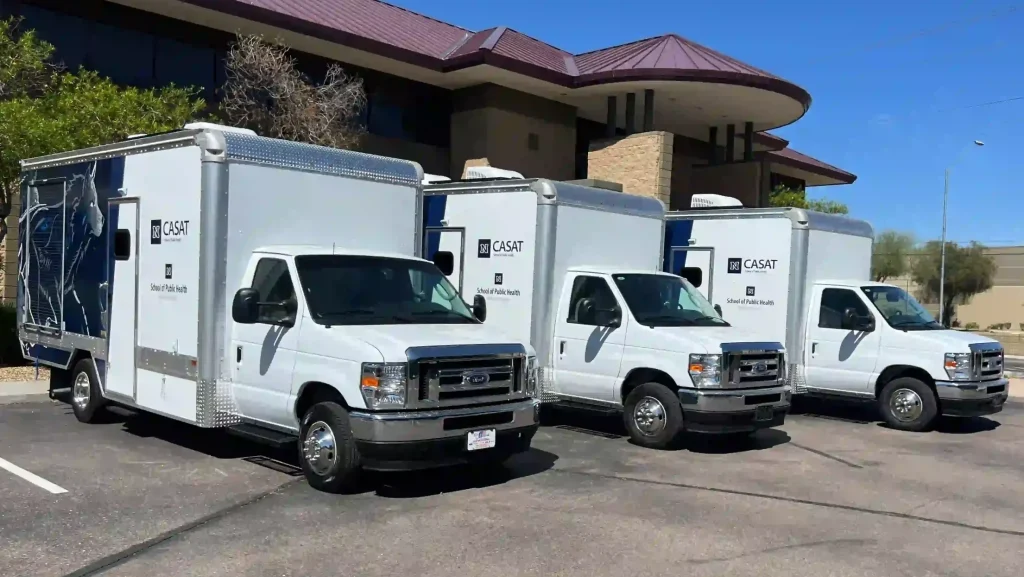
Discuss Your Vehicle
Bring your expansion brief and current vehicle workflow to a Magnum consultation.
Discuss the configuration that fits the purpose of your program’s next unit.
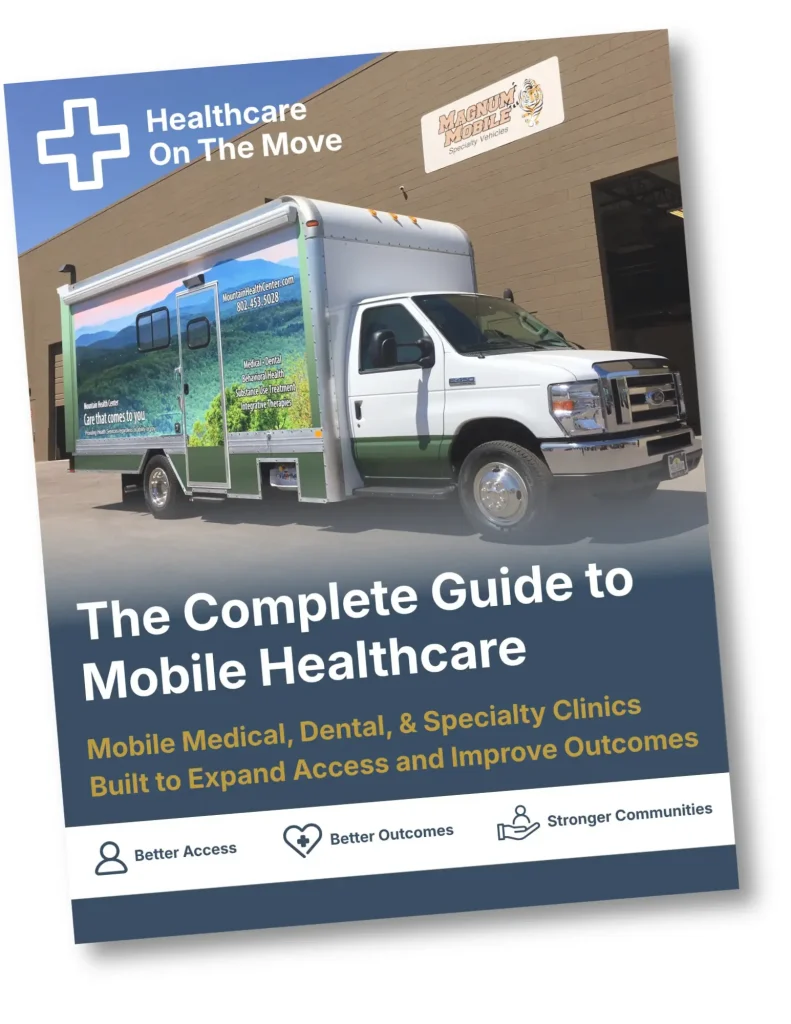
Get the Free Buyer Guide
Get planning considerations for services, layouts, equipment, and vehicle selection.
Trusted Nationwide
Trusted by Leading Healthcare Organizations
Trusted by healthcare providers, public agencies, universities, and nonprofit organizations to deliver high-quality mobile specialty vehicles.







Built to Support
Organizations Across Every Sector
Delivering mobile solutions for healthcare, education, government, nonprofit, and commercial applications.
Healthcare
Education
Government
Non-Profit
Public Safety
Corporate
Ready to Get Started
Let’s Build a Solution That Moves Care Forward
Tell us about your operation and our team will help build the right mobile vehicle solution for your needs.