
Mobile Healthcare Program Planning
Should Your Organization Launch a Mobile Healthcare Program?
Connect community needs, services, partners, and sustainable operation before choosing the vehicle.
Your organization should consider a mobile healthcare program when bringing defined services to specific communities addresses an access gap and you can sustain the people, partnerships, and operating resources it requires. Start with the community and service plan, then choose a vehicle that supports them.
Going mobile can expand where care is offered. The decision still needs a clear purpose: who you will serve, what you will deliver, where you will operate, and how the program connects to your organization’s wider work.
Magnum’s healthcare buyer guide starts with services, patient volume, equipment, and operating needs. Those questions help turn interest in mobility into a program your team can assess and a clinic the builder can configure.
Use the five decision areas below to decide whether to move forward, refine the idea, or test it further. You do not need every detail settled before a consultation, but you should know the questions that matter.
A strong launch decision connects a real community need with a workable service model. The vehicle is one part of that model, alongside staff, hosts, funding, and follow-up care.
Five Decision Areas Before Launching Mobile Healthcare
Five decision areas before launching mobile healthcare
- Community need and barriers to access
- Services and connection to existing care
- Host partners and operating locations
- Staffing, funding, and sustainability
- Vehicle fit, pilot learning, and results
Write a clear decision statement: “We want to bring these services to this community at these locations because this access barrier exists.” Then identify the evidence and resources needed to support it.
Separate known facts from assumptions. For example, an interested host is useful information, but a confirmed site arrangement needs more detail about space, scheduling, utilities, and responsibilities.
Compare mobility with other options your organization can actually provide. The goal is to improve access using a model that fits the community and your resources.
When the program direction becomes clearer, explore Magnum’s mobile medical clinics and discuss configurations around that mission.
Identify the Community Need and Access Gap
Begin by listening to the people you want to reach. Ask community partners and prospective patients what makes care difficult to access and which services they would find useful nearby.
Combine that feedback with your organization’s local information, such as service gaps, referral patterns, missed visits, or location-specific demand. Use the evidence available to your team rather than assuming every community has the same needs.
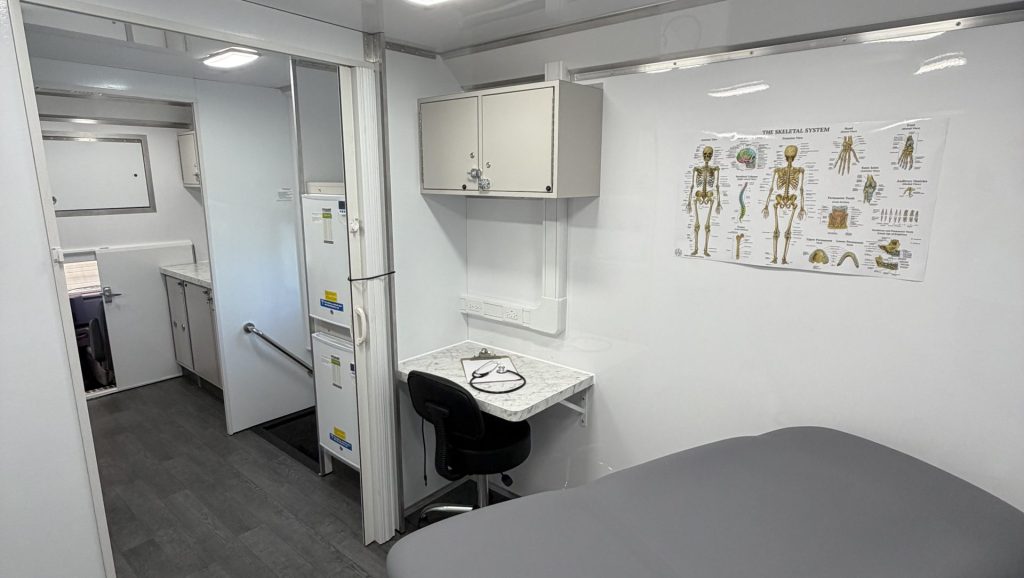
Mobile Health Map’s starting-a-clinic resources emphasize community relationships, local needs and assets, and sustainability. Use those resources alongside Magnum’s guide as you shape the proposal.
Define the Services and Follow-Up Model
Define a service scope your team can staff and support. Describe what will happen during a visit, which patients the program will serve, and how those activities fit the organization’s clinical capabilities.
Identify what happens after the visit. Your team should define referrals, test-result handling where relevant, follow-up, documentation, and the connection to ongoing care.
Ask whether the proposed services benefit from being offered at the selected sites. A useful location and calendar should fit patients’ needs as well as the operator’s travel plan.
Review the equipment, privacy, access, and working spaces the service scope requires. Changes in services can change the clinic configuration and operating budget.
Keep future expansion visible without designing every possible service into the first program. Discuss which future requirements would affect the initial vehicle and which can be revisited later.
Develop Partners and Suitable Operating Locations
Partners help turn a service idea into a repeatable calendar. Identify organizations that can offer suitable locations, community connections, or support for the planned activities.
Discuss the host’s space, access, utilities, event or clinic hours, and visitor arrangements. Write down who handles communications, appointments, setup, and cleanup.
Review the full deployed vehicle footprint, including entry features and staff or patient movement. A parking space that holds the vehicle may still need additional room for operation.
Check whether the calendar is realistic once travel, setup, service time, and replenishment are included. Use the operator’s expected day rather than treating every scheduled hour as patient-care time.
Identify an owner for each partner relationship and site arrangement. Consistent contacts make it easier to confirm the details and handle changes.
Bring the locations and operating assumptions to Magnum during configuration. The vehicle and its utility arrangements should be evaluated for the places you expect it to work.
Review Staffing and Long-Term Sustainability
A funded purchase is different from a sustainable program. Build both the acquisition plan and the ongoing operating plan before treating the project as ready to launch.
Assign clinical roles and the work of driving, setup, scheduling, supplies, records, maintenance, and partner coordination. Some roles may be shared, but the responsibilities still need owners.
Estimate operating costs using the actual service schedule, staffing model, travel, equipment, insurance, utilities, and upkeep your organization expects. Identify the assumptions that need quotes or additional review.
Mobile Health Map encourages an operational and financial plan for the first three to five years. Consider how the program will continue as funding periods, demand, staff, or partners change.
Involve finance, operations, and clinical leadership in this review. A program is easier to sustain when the organization understands the resources it has committed and how it will assess progress.
Match the Vehicle and Test Your Assumptions
Translate the service model into vehicle requirements. Define staff positions, patient flow, equipment installation, storage, access, and utilities before comparing vehicle formats.
Magnum’s range of mobile clinics and configurable layouts provides options to review with the work at the center. Ask the design team which configurations deserve a closer look for your program.
If important assumptions remain uncertain, identify a practical way to test them using resources available to your organization. A pilot may help you refine site demand, scheduling, or staffing before committing to a larger program.
Define a few measures you can collect consistently, such as service days, visits, access feedback, completed follow-up steps, or operational workload. Choose measures relevant to your mission and service model.
Use your findings in Magnum’s consultation and design process. A clear program plan helps the team develop a vehicle configuration and scope your organization can review.
Mobile Healthcare Launch Decision FAQs
Should we choose a vehicle before defining the program?
Start by defining the community, services, staff, and operating locations. You can explore vehicles early, but those requirements should guide the configuration you evaluate.
Does mobile healthcare work only in rural areas?
No. Magnum’s buyer guide includes rural, underserved, and urban communities among potential settings. The relevant question is whether your selected services and locations address the access needs you have identified.
Is vehicle funding enough to launch the program?
No. Your organization also needs a plan for staff, operating costs, sites, supplies, service procedures, and ongoing support. Review acquisition and operation together.
When should we contact Magnum?
Contact Magnum when you can describe your mission and the requirements you know, even if some questions remain open. Bring the service scope, staffing, equipment, locations, budget framework, and launch goals to the consultation.
Explore Your Mobile Healthcare Program with Magnum
Turn your healthcare mission into a vehicle-planning conversation. Magnum’s configurable mobile clinics and consultation-through-delivery process help your team develop the vehicle side of its program.
Explore Magnum’s mobile medical clinic options and compare layouts around the services your community needs.
Start with the mobile healthcare buyer guide to organize your program-planning questions.
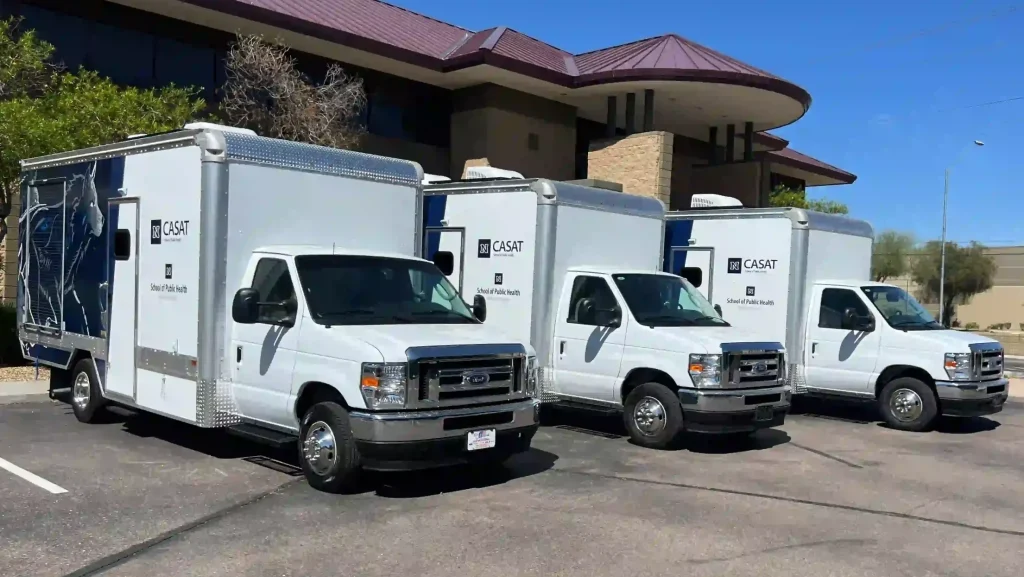
Explore Magnum Mobile Medical Clinics
Connect your community’s needs with a workable mobile service plan.
Explore Magnum’s clinic options and discuss services, staffing, equipment, access, and operating locations.
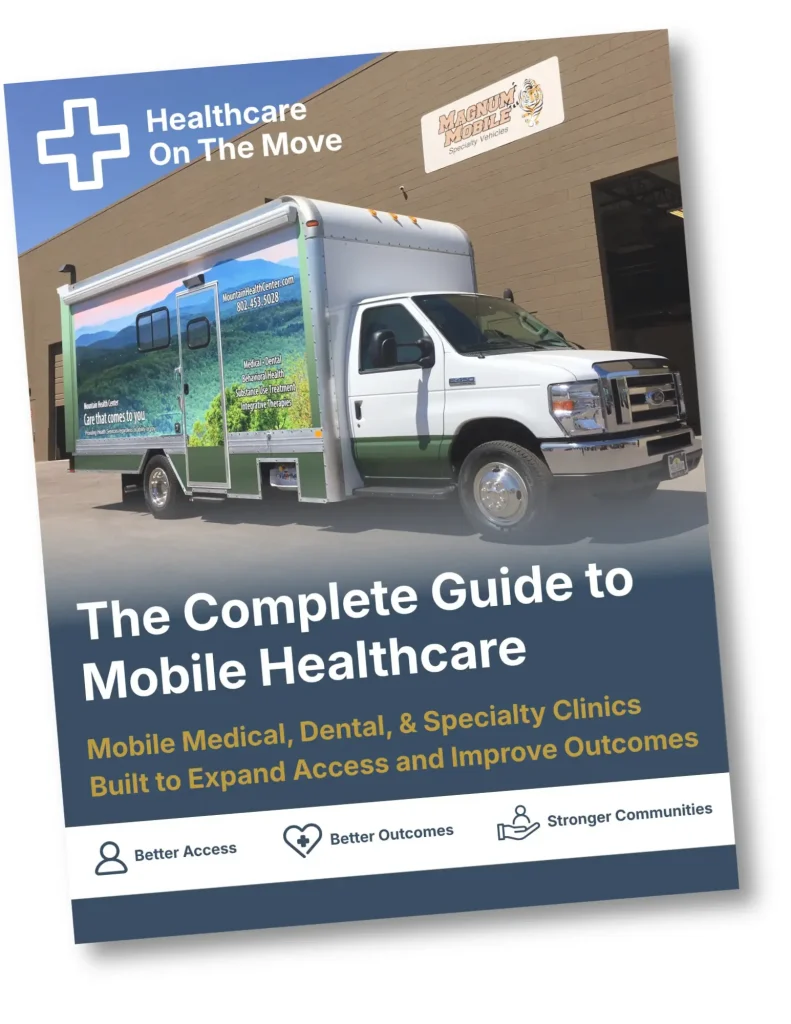
Mobile Healthcare Buyer Guide
Organize your launch decision with Magnum’s mobile healthcare buyer guide.
Trusted Nationwide
Trusted by Leading Healthcare Organizations
Trusted by healthcare providers, public agencies, universities, and nonprofit organizations to deliver high-quality mobile specialty vehicles.







Built to Support
Organizations Across Every Sector
Delivering mobile solutions for healthcare, education, government, nonprofit, and commercial applications.
Healthcare
Education
Government
Non-Profit
Public Safety
Corporate
Ready to Get Started
Let’s Build a Solution That Moves Care Forward
Tell us about your operation and our team will help build the right mobile vehicle solution for your needs.