
Veterinary Vehicle Design • Services First
Wellness Visits vs. Surgery: How Services Change Veterinary Vehicle Design
Build the floor plan around the care your veterinary team intends to provide
Quick answer
Wellness visits and surgery can create different veterinary vehicle design requirements. A wellness workflow may center on examinations, client communication, supplies, and efficient turnover. A surgical program also needs a veterinarian-defined plan for preparation, procedure space, anesthesia equipment, instrument processing, monitored recovery, and discharge. Compare complete workflows before choosing the vehicle, room count, or kennel arrangement.
A mobile veterinary vehicle should be planned around the services your team has approved. An examination table and storage may be useful in both a wellness program and a surgical program, but that shared equipment does not make the two operating models interchangeable.
Describe a representative day from animal arrival through departure. Identify where people and animals will be, which activities overlap, and what the team needs between appointments. That brief gives your builder more useful information than a general request for a mobile clinic.
Magnum Mobile can discuss configurable layouts, commercial-grade materials, and integrated vehicle systems around your operating plan. Explore our mobile animal care vehicles and request the Mobile Animal Care Buyer Guide through its guide page.
1. Define the services and the boundaries of the program
Start with a written service list reviewed by the responsible veterinarian. Describe what the program will provide onboard, what a host may provide, and what will be referred to another facility.
Wellness scope: Specify the actual examination, preventive-care, diagnostic, or other services under consideration. Even a focused program can have equipment, refrigeration, privacy, waste, and follow-up needs that affect the layout.
Surgical scope: Identify the procedures the team intends to support and the requirements the veterinarian sets for each stage of care. A surgery-ready label should never substitute for review of the proposed configuration.
Animals served: Record species, expected sizes, handling requirements, and any planned appointment restrictions. These choices influence movement, working clearances, equipment, and holding arrangements.
Planning reference: Shelter and spay/neuter programs can review the Association of Shelter Veterinarians’ care guidelines with their veterinary team. Translate applicable guidance and operating requirements into a project-specific vehicle brief.
2. Compare the complete visit rather than the main procedure
Map the animal, client, staff, equipment, and supplies through every stage. Include the activities that happen before and after the most visible part of the appointment.
Wellness example: A proposed sequence might include check-in, history, examination, approved services, client instructions, departure, cleaning, and restocking. Confirm what belongs inside the vehicle and what can reliably occur at the host site.
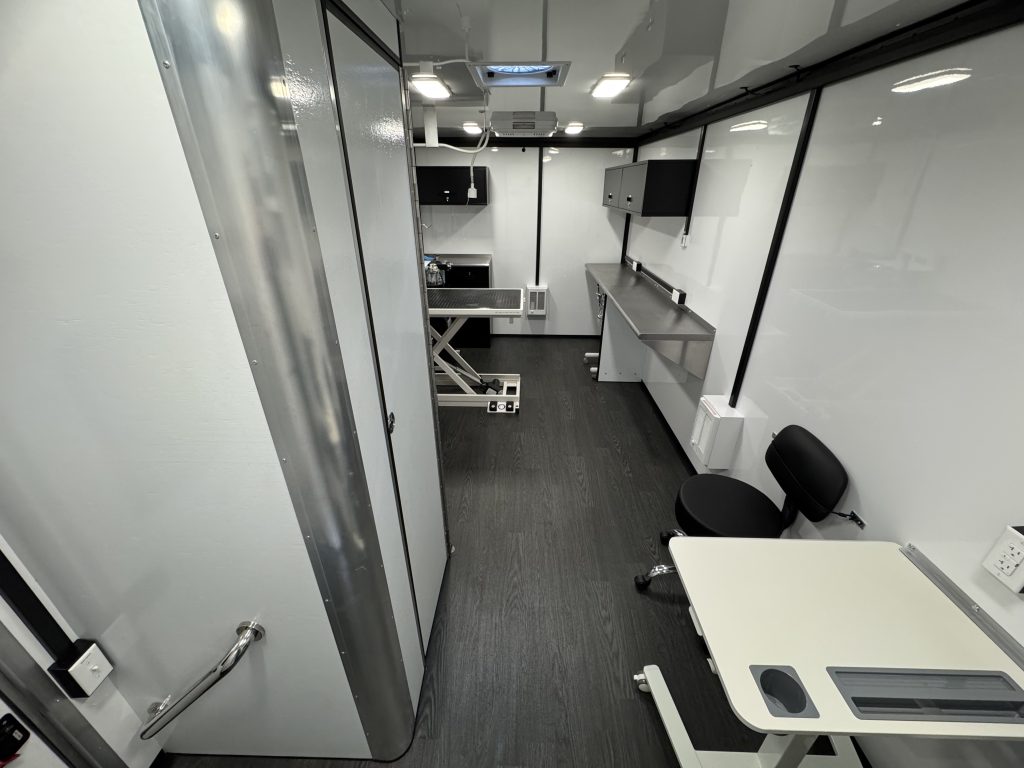
| Design question | Wellness-focused review | Surgical-program review |
|---|---|---|
| Work sequence | How do examination, client discussion, and turnover fit? | How do preparation, procedure, recovery, and discharge connect? |
| Equipment | What does the approved visit require? | What additional devices, utilities, clearances, and processing areas are specified? |
| Animal holding | Are animals waiting or remaining with staff? | Where will animals receive the supervision required during preparation and recovery? |
| Practical capacity | Can staff complete the whole visit and follow-up? | Can staff cover all stages, including monitoring and room turnover? |
3. Give equipment and utilities a defined place in the design
Provide actual equipment specifications as early as possible. Ask your builder to review the proposed devices and their supporting systems together, rather than fitting equipment into leftover floor space.
Physical fit: Include dimensions, weight, mounting needs, and working or service clearances. Review access to controls, supplies, and maintenance points with the staff who will use the equipment.
Power and clinical utilities: Supply electrical requirements and any veterinarian-specified needs for anesthesia equipment, gas storage or supply, scavenging, suction, water, or other systems. Confirm integration responsibilities with the builder and qualified equipment suppliers.
Instrument and supply flow: Define storage, preparation, cleaning, processing, and waste-handling arrangements appropriate to the approved services. The veterinarian’s protocols should inform the plan for clean and used items.
Written scope: Identify builder-supplied, organization-supplied, optional, and future equipment. Confirm which installation, testing, training, and documentation tasks each party will perform.
4. Plan animal holding, recovery, and staff supervision
Determine where animals will be throughout the service day, not just during treatment. Holding and recovery spaces need a clear operating purpose and a staffing plan.
Before care: Identify whether animals wait with clients, in carriers, in approved holding spaces, or elsewhere under an agreed arrangement. Explain how staff track identification and movement between stages.
After surgery: Have the veterinarian define recovery space, monitoring, equipment access, environmental needs, and discharge criteria. Choose a layout that supports those requirements and the staff assigned to them.
Visibility and access: Review how staff observe and reach animals while other work continues. A kennel bank or separate room is useful only when the team can operate and supervise it as intended.
Capacity: Set appointment assumptions around the full clinical sequence and available staff. Additional kennels or a second work area do not automatically create additional safely supported appointments.
Contingencies: Establish veterinary plans for interrupted services, equipment problems, clinical escalation, and ongoing care. Discuss how those plans affect the vehicle, host site, communications, and transport arrangements.
5. Test the layout against a realistic deployment day
Walk through the proposed floor plan with clinical staff, animal handlers, and the people responsible for deployment. Test several representative appointments before approving the design.
Simultaneous tasks: Place staff and equipment where they would be during intake, examination, preparation, treatment, recovery, cleaning, and departure. Look for blocked access or competing uses of the same space.
Host-site dependence: Document parking, doors and access equipment, client waiting, utilities, emergency access, and any indoor host area the program needs. An unconfirmed host resource should not be treated as guaranteed space.
Daily support: Include setup, climate control, communications, equipment readiness, restocking, cleaning, shutdown, and storage between events. Assign responsibilities for each task.
Combined services: If wellness and surgery will share a vehicle, explain whether they occur simultaneously or on different days. Ask what layout, equipment changes, cleaning, stocking, and staffing each service model requires.
6. Bring a service-specific vehicle brief to Magnum
Magnum Mobile can discuss configurable veterinary spaces and integrated vehicle systems around the operating plan your team provides. A clear service brief helps focus the comparison on usable clinical space.
Clinical brief: Bring approved services, species and sizes, visit stages, equipment specifications, holding or recovery needs, staff roles, and client communication arrangements. Identify decisions that still require veterinary review.
Deployment brief: Share site measurements, host commitments, utility availability, routes, storage, budget, and launch goals. Separate confirmed launch needs from possible future additions.
Compare configurations: Review Magnum’s mobile veterinary clinic options against that brief. Request a written scope for the proposed configuration rather than assuming every model includes the same clinical systems.
Use Magnum’s consultation-to-delivery process to organize your next questions and start a veterinary vehicle design conversation.
Veterinary Vehicle Design FAQs
Can one mobile veterinary vehicle support wellness visits and surgery?
It may, if the actual layout, equipment, utilities, staffing, and operating procedures support both service plans. Have the veterinarian and builder review whether activities will occur together or on separate schedules.
Does a surgical program always need a larger vehicle?
Vehicle size alone does not answer that question. Compare specific floor plans against preparation, procedure, equipment, recovery, storage, access, and supervision requirements established by your veterinary team.
Should recovery space be planned before choosing kennels?
Yes. Define the animals served, the care stages, access, monitoring, and staffing requirements first. Use that plan to evaluate holding and recovery arrangements rather than choosing capacity from kennel count alone.
What should we bring to a veterinary vehicle consultation?
Bring approved services, animal sizes, workflow, equipment specifications, staffing, holding or recovery needs, host sites, utilities, budget, and timing. Magnum can use that information to discuss a specific configuration and proposal.
Plan Your Veterinary Vehicle Around Your Services
Magnum Mobile combines configurable animal-care layouts, commercial-grade materials, and integrated vehicle systems with a consultation-led planning process. Share the work your veterinary team intends to perform so we can discuss a vehicle configuration around your program.
Explore Magnum’s mobile animal care vehicles and compare configurations for your program.
Request the free Mobile Animal Care Buyer Guide to prepare your purchase planning questions.

Discuss Your Vehicle
Plan the vehicle around wellness visits, surgery, or a clearly defined combination of services.
Bring your veterinary workflow, equipment, holding or recovery needs, and sites to Magnum.
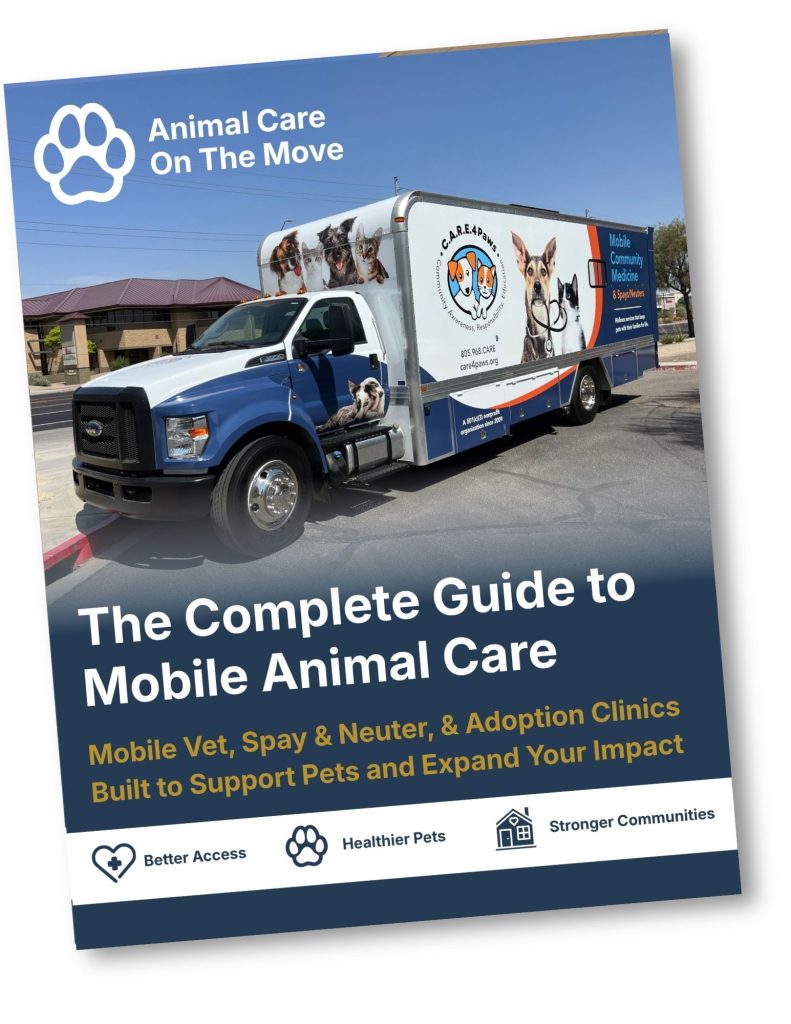
Get the Free Buyer Guide
Request the Mobile Animal Care Buyer Guide through the guide page.
Trusted Nationwide
Trusted by Leading Organizations
Trusted by healthcare providers, animal care programs, public agencies, universities, and nonprofit organizations for mobile specialty vehicles.







Built to Support
Organizations Across Every Sector
Delivering mobile solutions for healthcare, education, government, nonprofit, and commercial applications.
Healthcare
Education
Government
Non-Profit
Public Safety
Corporate
Ready to Get Started
Let’s Build a Solution That Moves Care Forward
Tell us about your operation and our team will help build the right mobile vehicle solution for your needs.