
Mobile Dental Clinic Planning
How Much Does a Mobile Dental Clinic Cost?
Compare dental vehicle starting prices and build a budget for equipment, utilities, staffing, and long-term operations.
Magnum’s published mobile dental clinic starting prices range from $145,000 for a dental van or 26-foot Professional Series clinic to $314,500 for a 37-foot clinic. A dental trailer starts at $160,500, and the other 26-foot model starts at $203,500.
The purchase budget should be based on a configured quote, not the lowest advertised figure. Dental equipment, utility requirements, accessibility features, layout choices, graphics, and delivery can affect what your organization needs to spend.
A screening program and a treatment program may need different equipment and operating plans even when both use one chair. Define the services your dental team intends to provide before comparing vehicle prices.
This guide explains Magnum’s current model starting prices and the questions that help community organizations, schools, and dental providers build a realistic purchase and operating budget.
Prices were checked against Magnum’s published dental vehicle pages on October 6, 2026. Request a current written quote that confirms your exact vehicle, equipment, options, and delivery scope.
Mobile Dental Clinic Starting Prices
| Model | Starting price |
|---|---|
| Dental van | $145,000 |
| 26-foot Pro | $145,000 |
| Dental trailer | $160,500 |
| 26-foot clinic | $203,500 |
| 37-foot clinic | $314,500 |
The dental van provides a compact treatment workspace on a Ford Transit platform. It can suit a program that values maneuverability, provided the team’s equipment, staffing, and access needs fit the plan.
The 26-foot Professional Series and 26-foot dental clinic have different base packages. Length alone does not explain the price difference; compare the equipment, finishes, utilities, and floor plans.
The dental trailer and 37-foot clinic list two dental chairs in their standard equipment. Review how those workspaces support your staffing and treatment plan rather than assuming they double daily capacity.
Use the mobile dental clinic lineup to shortlist models. Then request matching configurations so the quoted prices reflect the same clinical requirements.
Confirm the Complete Dental Equipment Package
Ask for an equipment schedule showing what is included, optional, and supplied by your organization. A listed dental chair does not by itself confirm that every device needed for your treatment scope is part of the vehicle price.
For example, Magnum’s dental model pages list a dental cart with scaler and light, and a chair LED light, among available options. Confirm the exact package and any installation work in writing.
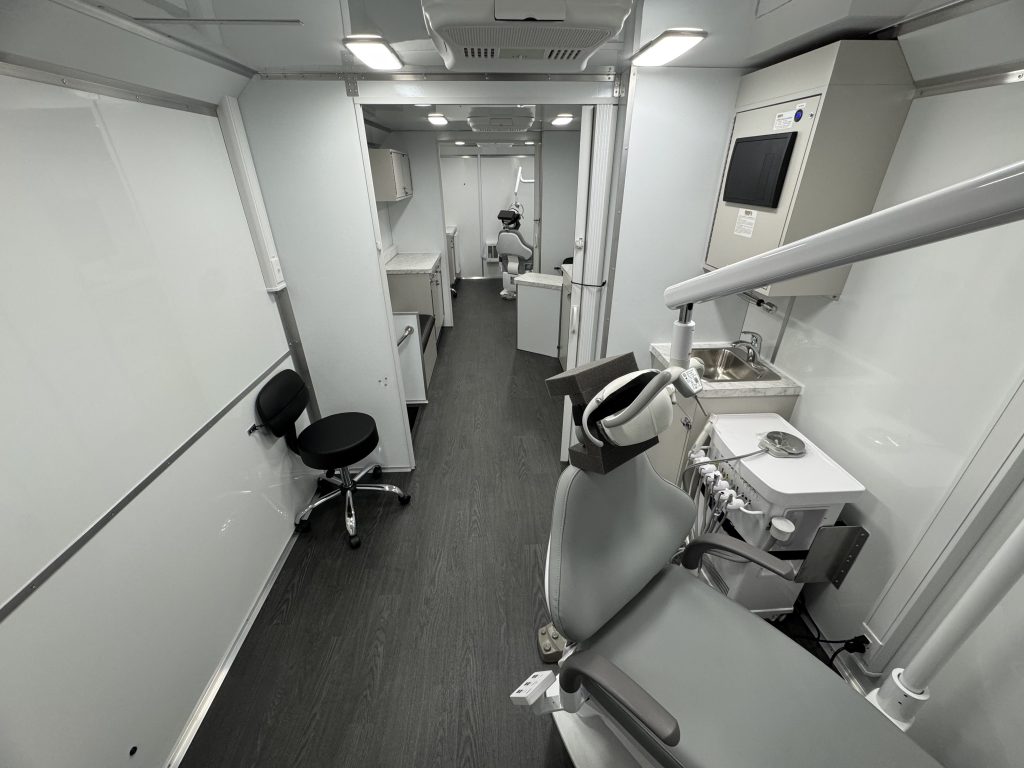
Have your dental team specify instruments, imaging needs, sterilization equipment, suction, compressed air, and water requirements. The builder and equipment suppliers can then confirm what the vehicle must accommodate.
Compare Chairs, Rooms, and Clinical Workflow
Vehicle room counts and dental chair counts describe different things. A reception area or restroom can be part of the floor plan without being an additional treatment position.
Walk through intake, seating, treatment, documentation, checkout, and room turnover on the proposed layout. Include space for providers and assistants to work around the chair and reach supplies.
A second chair is useful only when the staffing, equipment, scheduling, and instrument workflow support it. Ask the clinical team to explain how it would use each treatment position during a typical service day.
Review clean storage, used-instrument handling, and sterilization arrangements with your clinical team. These requirements should shape the equipment list and cabinetry before production decisions are finalized.
Identify accessibility needs at the start of the quote process. Lift or ramp configurations depend on the vehicle and application; confirm the complete patient access plan for your selected model.
Plan Utilities, Access, and Host Sites
List the equipment you expect to run at the same time, then have the builder review the electrical load. Include heating and cooling, dental devices, lighting, refrigeration, and planned additions.
Power packages vary by model. The van lists a portable generator and a 30-amp, 110-volt shore-power connection, while the larger drivable models have different generator and shore-power specifications.
The dental trailer lists a 50-amp, 220-volt shore-power connection. Confirm the power plan for host locations and ask what equipment is needed when a suitable connection is unavailable.
Discuss fresh water, wastewater, suction, compressed air, and any equipment-specific connections. Tank capacities and installed plumbing need to fit your service plan; ask suppliers to confirm compatibility.
For school or community sites, document arrival access, parking, patient entry, utility connections, and the space needed around the vehicle. Site preparation and host coordination can affect launch costs.
A trailer budget should include the tow vehicle and towing arrangements if they are not already available. A drivable clinic has a different ownership and service plan. Compare both using your actual routes and staffing.
Build the Launch and Operating Budget
Separate the launch budget into the vehicle, clinical equipment, installation, initial instruments and supplies, branding, delivery, insurance, training, and any site preparation.
Build a recurring budget for dental staff, administration, consumables, travel, vehicle maintenance, equipment service, utilities, insurance, storage, and communications. Use supplier quotes and your organization’s staffing assumptions.
Include time for travel, setup, instrument processing, restocking, cleaning, and documentation. A schedule based only on chair time can underestimate the labor required to keep the program running.
If the program plans to charge or bill for care, validate revenue assumptions with the responsible team before relying on them. Vehicle capacity alone does not establish collections, reimbursement, or financial sustainability.
Add a reserve for repairs and interruptions. Identify how patients would be rescheduled or referred if the vehicle or a critical piece of dental equipment were temporarily unavailable.
Compare Quotes and Prepare for Funding
Give each builder the same service scope, chair requirement, equipment list, access needs, utility plan, and delivery location. Ask each quote to identify included items and options clearly.
Compare equipment models, installation responsibilities, warranties, training, and after-delivery support alongside the price. A lower quote may describe a different scope rather than a lower cost for the same clinic.
For funding discussions, explain the community need, host partners, staffing, service schedule, and ongoing funding source. Keep vehicle purchase costs separate from the cost of providing care.
Organizations exploring a purchase can review Magnum’s financing information. Eligibility, approval, and terms depend on the financing provider and the specific project.
Ask for a timeline tied to the selected vehicle and configuration. Current availability and production requirements should be confirmed directly before setting a public launch date.
Mobile Dental Clinic Cost FAQs
What is the starting price of a mobile dental clinic?
Magnum’s published dental van and 26-foot Professional Series start at $145,000. The dental trailer starts at $160,500, the other 26-foot clinic at $203,500, and the 37-foot clinic at $314,500. Confirm the configured price in a current quote.
Does the price include all dental equipment?
Review the selected model’s equipment list and options. A dental chair may be included while other devices or upgrades are quoted separately. Specify the full clinical package and installation requirements before comparing prices.
Are two-chair clinics always the better investment?
No single layout fits every program. Consider staffing, treatment scope, turnover, instruments, host locations, and the budget. Two chairs should support a defined operating plan rather than an assumed increase in patient volume.
What costs should we budget beyond the vehicle?
Include equipment and installation, initial supplies, delivery, insurance, training, staffing, travel, utilities, maintenance, equipment service, and storage. Separate launch expenses from the recurring cost of operating the dental program.
Request a Quote for Your Dental Program
Start with the services your dental team plans to offer, the communities and host sites you intend to serve, and the staff available to run the program.
Bring a preliminary equipment list, preferred chair count, access requirements, and launch goals. Identify any equipment you already own so the quote can address installation and compatibility.
Compare Magnum’s mobile dental clinics and use the Mobile Healthcare Buyer’s Guide to organize your planning questions.
Request a dental clinic quote around your program requirements. A clear written scope helps your team compare models, seek funding, and plan for the full cost of ownership.
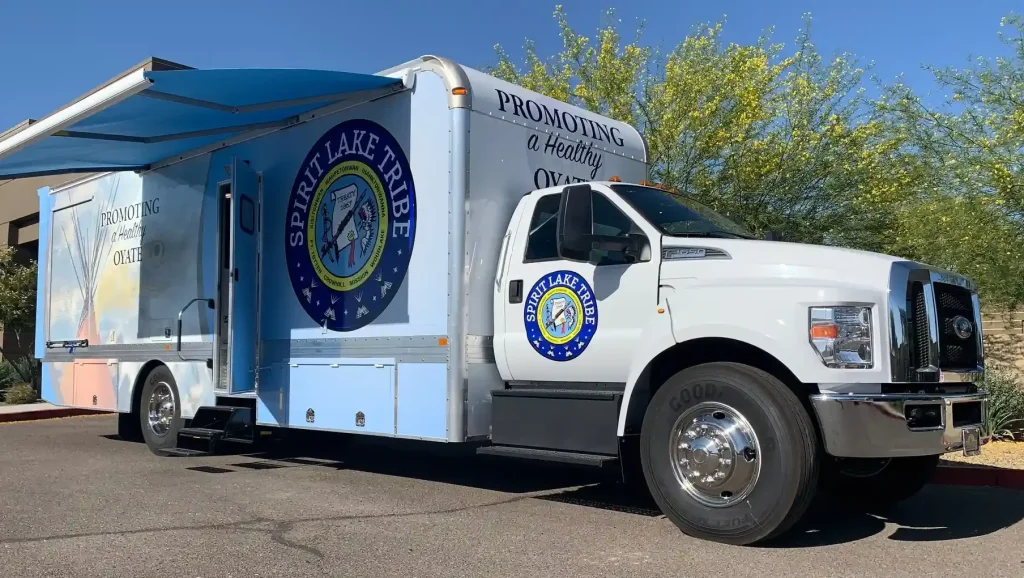
Compare Dental Vehicle Models
Compare five dental vehicle models using your services, chair needs, staff, and host locations.
Request a configured quote covering dental equipment, utilities, access options, and delivery.
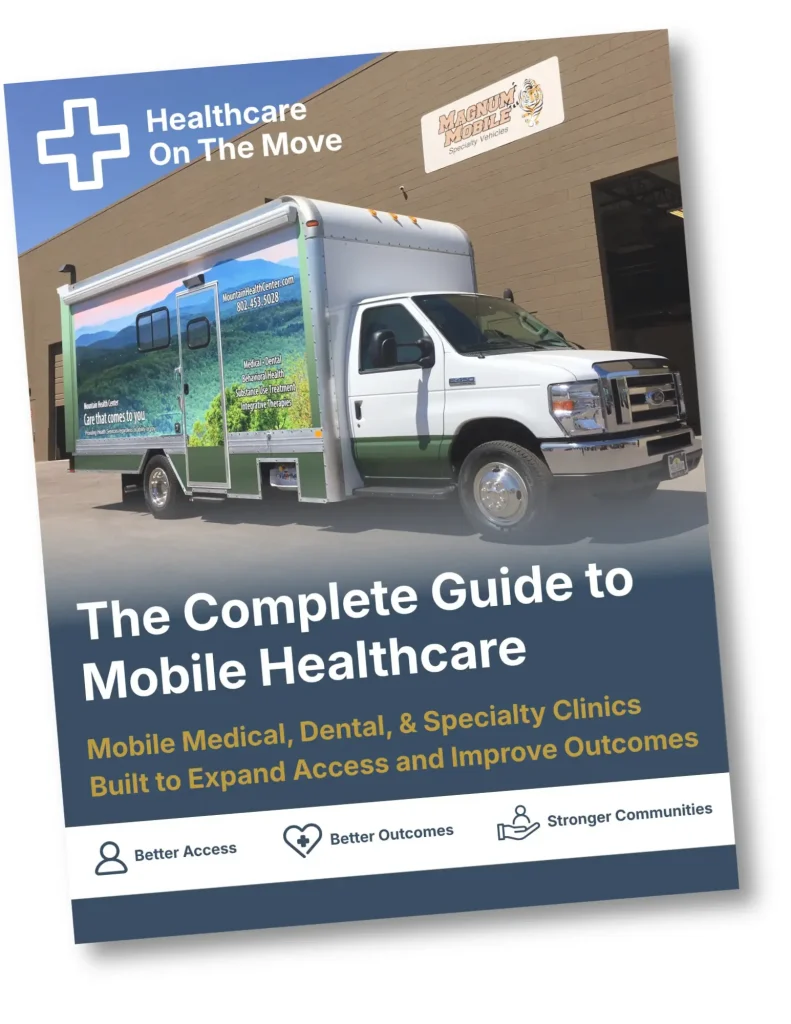
Plan Your Mobile Dental Program
Use the Mobile Healthcare Buyer’s Guide to prepare your vehicle, equipment, and launch questions.
Trusted Nationwide
Trusted by Leading Healthcare Organizations
Trusted by healthcare providers, public agencies, universities, and nonprofit organizations to deliver high-quality mobile specialty vehicles.







Built to Support
Organizations Across Every Sector
Delivering mobile solutions for healthcare, education, government, nonprofit, and commercial applications.
Healthcare
Education
Government
Non-Profit
Public Safety
Corporate
Ready to Get Started
Let’s Build a Solution That Moves Care Forward
Tell us about your operation and our team will help build the right mobile vehicle solution for your needs.