
Mobile Spay and Neuter Planning
How Much Does a Mobile Spay and Neuter Clinic Cost?
Compare starting prices, surgical equipment, recovery space, and the budget your program needs to operate.
Magnum’s published starting prices for mobile spay and neuter clinics range from $159,500 for a 25-foot trailer to $317,500 for a 37-foot vehicle. The 26-foot drivable model starts at $217,500. These are vehicle starting prices, not complete program budgets.
Your final quote depends on the vehicle, surgical layout, equipment package, utilities, graphics, and delivery requirements. Staffing, medical supplies, insurance, travel, and ongoing maintenance belong in a separate operating budget.
The right comparison begins with how your veterinary team will work: which animals you serve, how intake and discharge happen, and where patients recover. A longer vehicle does not automatically mean more procedures per day.
This guide explains Magnum’s model starting prices, the equipment questions that can change a quote, and the expenses shelters and nonprofits should include before seeking funding.
Prices below were checked against Magnum’s published model pages on October 6, 2026. Confirm current pricing and the exact included equipment with a written quote for your program.
Mobile Spay and Neuter Clinic Starting Prices
| Model | Starting price |
|---|---|
| 25-foot trailer | $159,500 |
| 26-foot clinic | $217,500 |
| 37-foot clinic | $317,500 |
The 25-foot spay and neuter trailer provides a dedicated surgical workspace at the lowest published starting price in this lineup. Budget separately for a suitable tow vehicle if your organization does not already have one.
The 26-foot drivable clinic combines the vehicle and clinical workspace in one unit. Its published specifications include a generator and shore-power connection; confirm the complete electrical package in your quote.
The 37-foot clinic offers a larger footprint for a program that needs more working space. Review the floor plan with the clinical team before deciding that the additional space justifies the investment.
Compare the complete spay and neuter lineup using the same written equipment list. A model’s starting price is a useful reference, but the configured quote is the number to use in a purchase decision.
What Equipment Is Included in the Quote?
Separate equipment into three lists: included in the selected model, optional equipment supplied by the builder, and equipment your organization will supply. This prevents an attractive starting price from being mistaken for a fully equipped surgical program.
For example, Magnum’s trailer and 26-foot product pages list items such as a second surgical table, anesthesia equipment, active gas systems, and additional equipment options separately. Have your veterinarian specify the required configuration rather than assuming every surgical item is standard.
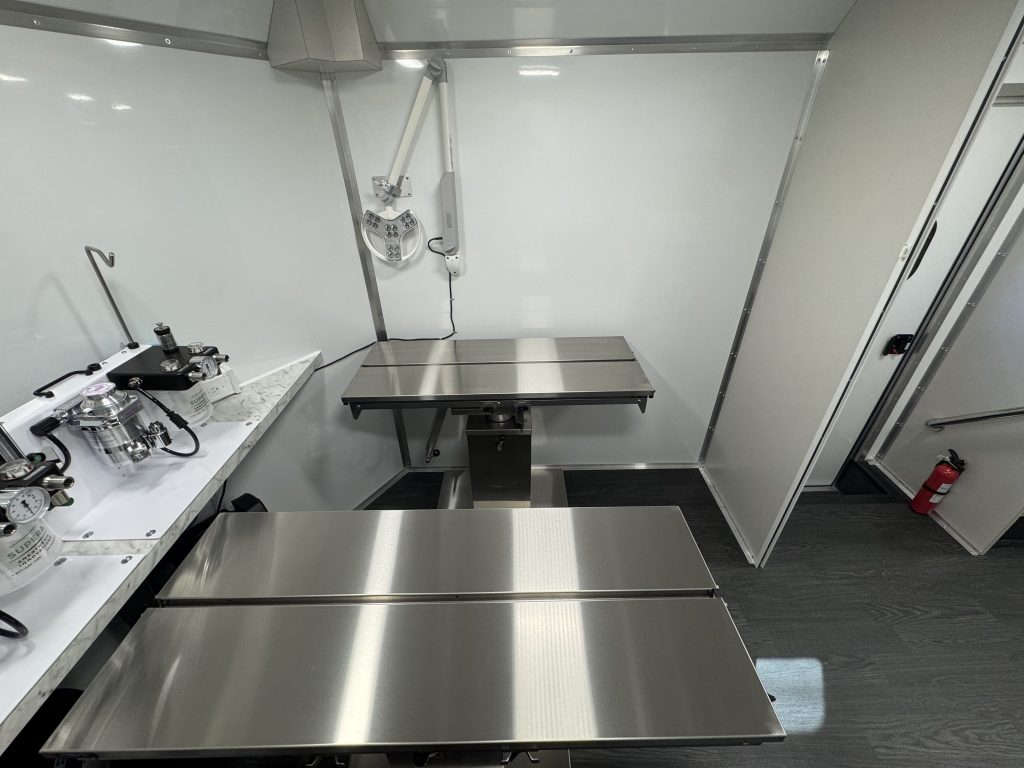
Ask who installs each item and whether installation, mounting, plumbing, electrical connections, testing, and delivery are included. Equipment compatibility can matter as much as its purchase price.
Plan the Surgical and Recovery Workflow
A practical floor plan should connect animal intake, preparation, treatment, recovery, and discharge without unnecessary movement through the surgical area. The clinical team should review the layout for its species mix and care protocols.
Count cages, recovery positions, and carrier storage separately. The trailer’s published description lists 27 spaces made up of 18 cages and nine carrier-storage spaces. Those categories do not represent 27 identical recovery cages.
Likewise, the 26-foot model lists space for up to 19 cages. Ask which cages are supplied, how they are sized, and what the final configuration supports. Available space and included equipment are different purchasing details.
Procedure capacity depends on staffing, patient needs, preparation, surgical time, recovery supervision, and the service day. Do not use a cage count or table count alone to promise a daily surgical volume.
Have the team walk through a representative service day on the proposed plan. Identify where paperwork, clean supplies, used instruments, personal belongings, and waste will go before the layout is finalized.
Compare Power, Utilities, and Travel Needs
Power planning starts with the equipment you intend to run at the same time. Ask the builder to review the electrical requirements for clinical equipment, heating and cooling, refrigeration, lighting, and any planned additions.
The trailer’s published specifications include a 50-amp, 220-volt shore-power connection. Confirm the electrical service available at host sites and the plan for locations that cannot provide suitable power.
The 26-foot clinic lists an onboard generator as well as shore power. A trailer should not be assumed to include the same power package; compare the specifications and quote line by line.
Include fuel, power connections, water filling, wastewater handling, and climate control in the operating plan. Your clinical team and facilities staff should confirm which utilities are needed for the proposed service day.
Travel costs differ between a trailer and a drivable clinic. Consider the tow vehicle, driver availability, routes, parking, storage, and maintenance responsibilities, then verify the requirements for the selected configuration.
Before choosing a model, collect details from likely host locations. A low purchase price will not solve a recurring mismatch between the vehicle’s utility requirements and the locations where your program needs to operate.
Budget Beyond the Vehicle Purchase
Build the launch budget around the vehicle quote plus equipment, initial supplies, branding, delivery, insurance, training, and any host-site preparation. Keep one-time expenses separate from recurring costs.
Then estimate the first year of staffing, clinical consumables, fuel, vehicle service, equipment service, utilities, storage, scheduling, and administration. Use your organization’s actual assumptions rather than a generic cost-per-procedure estimate.
Account for time spent traveling, setting up, cleaning, restocking, and completing records. Those activities use staff time even when procedures are not underway.
Include a reserve for repairs and service interruptions. Ask how the program would handle an unavailable vehicle and what support options apply to the chassis, coach, and clinical equipment.
A sustainable budget explains who pays for the vehicle and who funds ongoing care. A donation or grant for the purchase does not automatically cover staffing and supplies in later years.
Prepare a Funding or Financing Proposal
For a funding proposal, connect the requested vehicle to the community need, the planned service area, the staffing model, and the organizations that will host or support the program.
Use the configured quote as the capital-cost source. Explain optional equipment separately so donors or decision-makers can see why it is needed for the intended clinical scope.
Support service targets with the veterinary team’s operating assumptions. Make clear which projections still need validation through a pilot or early operating experience.
Magnum offers financing information for organizations exploring a purchase. Eligibility, terms, and approval depend on the financing provider; request details for your specific organization.
Compare the full ownership plan, not only a monthly payment. Purchasing, financing, maintaining, and operating the clinic need to fit the same long-term program budget.
Mobile Spay and Neuter Clinic Cost FAQs
What is the starting price of a mobile spay and neuter clinic?
Magnum’s published lineup starts at $159,500 for the 25-foot trailer, $217,500 for the 26-foot clinic, and $317,500 for the 37-foot clinic. Final pricing depends on the selected configuration and current quote.
Does the starting price include all surgical equipment?
Do not assume it does. Review the included and optional equipment for the selected model, then ask the builder to quote your veterinarian’s complete equipment requirements and any installation work.
Is a trailer cheaper to operate than a drivable clinic?
It depends on your program. A trailer has a lower published starting price in this lineup, but towing, host-site power, staffing, travel, storage, and maintenance can change the ownership comparison.
How many animals can a mobile clinic serve each day?
Daily capacity must be planned with the veterinary team. Vehicle size, tables, and cages support the workflow, but staffing, patient needs, preparation, procedures, and recovery determine a realistic service target.
Build a Quote Around Your Program
Start with your service goals, species mix, staffing, likely host sites, and desired surgical workflow. Those details help Magnum recommend a vehicle and prepare a useful configuration discussion.
Bring a preliminary equipment list and identify what your organization already owns. Ask which items the builder can supply or accommodate and what needs to be confirmed before production.
Explore Magnum’s mobile spay and neuter clinics or read the Mobile Animal Care Buyer’s Guide to prepare for the conversation.
Request a quote from Magnum with your program requirements. A written vehicle and equipment scope gives your team a stronger basis for budgeting, fundraising, and comparing options.

Compare Spay and Neuter Models
Compare the trailer, 26-foot, and 37-foot models using your surgical workflow and equipment requirements.
Ask for a written quote that separates the vehicle, options, installation, and delivery.
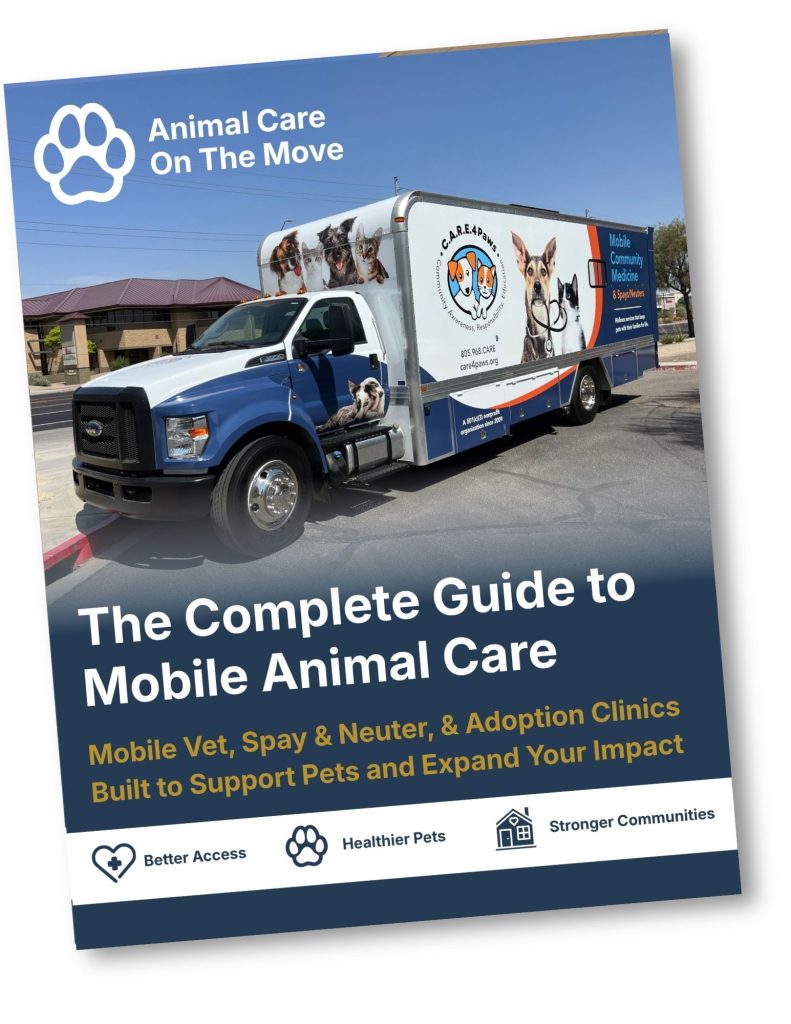
Plan Your Animal Care Program
Use the Mobile Animal Care Buyer’s Guide to organize your program goals and vehicle questions.
Trusted Nationwide
Trusted by Organizations Nationwide
Trusted by healthcare providers, public agencies, universities, and nonprofit organizations to deliver high-quality mobile specialty vehicles.







Built to Support
Organizations Across Every Sector
Delivering mobile solutions for healthcare, education, government, nonprofit, and commercial applications.
Healthcare
Education
Government
Non-Profit
Public Safety
Corporate
Ready to Get Started
Let’s Build a Solution That Moves Care Forward
Tell us about your operation and our team will help build the right mobile vehicle solution for your needs.